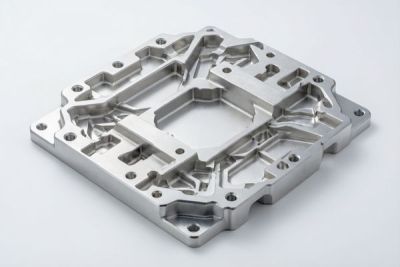
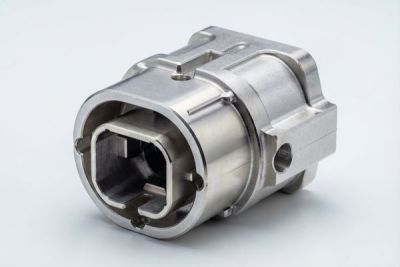
Buyer's Guide: Sourcing Interchangeable Industrial Automation Parts
Sourcing industrial automation parts is not like buying fasteners. A linear module, a fixture, or a servo mount is a repeatability device: it has to locate and align the same way every single time, and it has to be interchangeable so a line can be serviced without re-calibrating the whole cell. When the supplier gets the geometry or the interchangeability wrong, you do not get a returned shipment - you get a stopped line and a rework scramble.
So the real question is not 'who quotes the lowest price?' It is 'who can I trust to hold the geometry, the interchangeability, and the traceability, batch after batch?' This buyer's guide walks through exactly what we, as a precision shop, would verify in ourselves - and what you should verify in any supplier you are considering. Written plain, the way an engineer would brief a colleague.
We are Dongguan Licun Technology Co., Ltd., brand LusterControl - a Dongguan source factory focused on stainless steel mirror machining since 2015, now 15 years in. We run 60+ CNC machines on a 2,000 m2 floor at roughly 500,000 parts a month, holding ISO 9001, with ISO 13485 completed and IATF 16949 in application. We serve the industrial automation supply chain alongside medical, automotive, and UAV programs, and we have shipped precision parts to brands such as De'Longhi, Donlim, and Breville.
Table of Contents
- 1. Why Sourcing Interchangeable Industrial Automation Parts Protects Your Line
- 2. CNC Fixtures: The First Question a Buyer Should Ask
- 3. Linear Modules: Verifying the Geometry Before You Buy
- 4. Fixture Machining: What Good 3-2-1 Location Looks Like
- 5. Aluminum 6061 Machining: Frame and Servo Mount Choices
- 6. Precision Brackets and Servo Mounts That Stay Aligned
- 7. A Buyer's Verification Checklist for Industrial Automation Parts
- 8. Common Sourcing Mistakes in Fixture Machining Programs
Industrial Automation CNC precision component
Why Sourcing Interchangeable Industrial Automation Parts Protects Your Line
Interchangeability is what lets you service a cell without re-calibrating it.
A part is interchangeable when any unit off the shelf drops into the cell and lands in the same place as the last one. For an automation line that means a failed servo mount or linear module can be swapped in minutes, not re-aligned for an afternoon. Interchangeability is a machining discipline: tight, datumed tolerances plus lot-level consistency, so the tenth part behaves like the first.
What interchangeability protects
- Uptime - swap a failed part without re-calibrating the cell.
- Yield - every part lands in the same place, so defects stay low.
- Spare strategy - hold generic spares instead of custom rebuilds.
- Lead time - a rejected lot does not restart your whole clock.
The good news: a disciplined shop makes interchangeability boring - predictable process, documented controls, repeatable geometry. That is what you are really buying.
Industrial Automation CNC precision component
CNC Fixtures: The First Question a Buyer Should Ask
Ask for the fixture's location scheme, not its photo.
The first question a buyer should ask about any fixture is not 'what does it look like' but 'how does it locate the part?' A fixture that references the workpiece to fixed 3-2-1 datums will locate repeatably; one that locates by a vague 'seat against the wall' will vary load to load. The locating scheme is the fixture, and it is the first thing a real shop will show you.
What to verify before you quote
- Do they define explicit 3-2-1 datums on the fixture drawing?
- Are locator pads and bores machined to the same datum chain?
- Do they use wear-resistant pads at the contact points?
- Will they CMM-verify locator positions against the design datums?
- Can they hold the part without distorting the features you cut?
| Capability | What it gives you | Our floor |
|---|---|---|
| 3-2-1 locating | Repeatable load every time | Designed per fixture |
| Wear-resistant pads | Locator holds over volume | Hardened / coated |
| CMM verification | Prove the datums | Full report per FAI |
| Material certs | Known melt, traceable | Every lot |
Linear Modules: Verifying the Geometry Before You Buy
A linear module is a rail, a carriage, and a housing that must all stay true.
Linear modules carry a carriage along a rail in a housing, and the travel is only as straight as the geometry. The rail seat must be flat and parallel to the housing datum, the carriage face must be square to travel, and the end supports must be coplanar. Verify these before you buy - a module that binds or wanders costs you throughput for the life of the cell.
What to verify on a module
- Rail-seat flatness held to 0.01 mm.
- Seat parallel to the housing datum at 0.02 mm.
- Carriage mounting face square to travel at 0.01 mm.
- End faces coplanar so the rail ends align.
- CMM report covering all of the above, not just easy diameters.
| Feature | Typical tolerance | Why it matters |
|---|---|---|
| Rail seat flatness | 0.01 mm | Rail sits without binding |
| Seat parallel to datum | 0.02 mm | Straight, smooth travel |
| Carriage face square | 0.01 mm | Load stays axial |
| End-face coplanarity | 0.02 mm | Rail ends align |
Industrial Automation CNC precision component
Fixture Machining: What Good 3-2-1 Location Looks Like
Good location is geometry solved at the drawing, not luck at the bench.
Fixture machining lives by the 3-2-1 principle: three points locate one face, two locate a second, one locates the third - removing all six degrees of freedom with exactly six contacts. Get the datums right and the part can only sit one way. A supplier who cannot sketch their 3-2-1 scheme on the quote is not machining for repeatability.
Red flags in a fixture quote
- No explicit datums called out on the fixture drawing.
- More than six locators - a sign of over-constraint and bind.
- Locators that sit in chip paths with no relief.
- No CMM verification of locator positions.
- Tolerance 'smooth' or 'precise' instead of real numbers.
| Datum | Points | Removes |
|---|---|---|
| Primary face | 3 | Z, Rx, Ry |
| Secondary edge | 2 | Y, Rz |
| Tertiary stop | 1 | X |
Aluminum 6061 Machining: Frame and Servo Mount Choices
6061 is the default for a reason - stable, cheap, and easy to hold true.
Aluminum 6061 machining covers most automation frames, plates, and servo mounts because it is stable, weldable, and easy to hold to tight tolerances. Around 2.81 g/cc with a modulus near 71 GPa, it is light enough for a gantry and cheap enough for the whole structure. For servo mounts we machine the bore and pilot to hold the motor concentric to the coupling, then anodize Type II for a durable, handling-resistant finish.
Our 6061 machining recipe
- Rough at high feed, leaving 0.2-0.3 mm for finish.
- Finish at lower depth of cut to hold form and surface.
- Machine bores slightly undersize to leave room for coating.
- Anodize per the specified class, then verify the coated bore.
- CMM the motor-pilot and bolt pattern on every first article.
| Alloy | Use it for | Watch out for |
|---|---|---|
| 6061-T6 | Frames, plates, servo mounts | Lower strength vs 7075 |
| 7075-T6 | High-stress arms, joints | Corrosion; anodize required |
| 304/316L stainless | Washdown or clean cells | Heavier, needs mirror finish |
Industrial Automation CNC precision component
Precision Brackets and Servo Mounts That Stay Aligned
A servo mount is a precision bracket that must hold a motor dead-true to its load.
Precision brackets are the small parts that mount a sensor, motor, or axis to the frame. A servo mount is the most demanding of them: it holds the servo motor concentric to the coupling or gear so the shaft runs true and the bearing lives. If the mount's bore and pilot are off by a few microns, the motor misaligns, the coupling wears, and the axis loses repeatability. In an automation cell, the mount's accuracy is the joint's accuracy.
What to get right on a servo mount
- Hold the motor bore and pilot concentric to the load axis.
- Keep the bolt pattern true so the motor seats without skew.
- Specify the real corner radius the mill can actually cut.
- Anodize for handling resistance without losing the fit.
- Coordinate the mount datum with the module it bolts to.
| Feature | Typical tolerance | Why it matters |
|---|---|---|
| Motor bore concentricity | 0.005 mm | Shaft runs true, bearing lives |
| Pilot perpendicular | 0.01 mm | No coupling misalignment |
| Bolt pattern position | 0.02 mm | Motor seats without skew |
A Buyer's Verification Checklist for Industrial Automation Parts
Copy this and send it to every shop on your shortlist. The answers will sort them fast.
- Do they define explicit 3-2-1 datums for fixture machining?
- Can they hold rail-seat flatness and parallelism to the spec?
- Do they machine 6061 and 7075 regularly, not as a one-off?
- Do they anodize and verify the coated condition?
- Will they CMM-verify locator and servo-mount positions?
- Do they provide material certs and lot-level traceability?
- Do they answer engineering questions with numbers, not sales talk?
- Can they scale from prototype to volume without re-qualifying the process?
A supplier that clears all eight is rare - and worth keeping. One that stumbles on location or interchangeability should not be on a line that needs to run unattended. Send us your module, fixture, or servo-mount drawing for a free DFM review and we will return the answers with data, not a brochure.
Industrial Automation CNC precision component
Common Sourcing Mistakes in Fixture Machining Programs
Most cell downtime was decided at the drawing, not the machine.
- Designing locators that over-constrain the part and guarantee a bind.
- Drawing a fixture with no explicit 3-2-1 datums.
- Designing press-fits into 6061 and forgetting the anodize thickness.
- Skipping first-article inspection to 'save time' - the cheapest insurance you have.
- Tolerancing 'smooth' instead of real numbers, then arguing after shipment.
- Ignoring traceability until a single complaint forces a full program review.
The cheapest fixture is the one that locates right the first time - because the second time costs you a stopped line.
Industrial Automation CNC precision component
Industrial Automation CNC precision component
Industrial Automation CNC precision component
Industrial Automation CNC precision component
FAQ: industrial automation parts & Industrial Automation Buyer Questions
A: It means any unit off the shelf drops into the cell and lands in the same place as the last one, so a failed part can be swapped in minutes without re-calibrating. It is delivered by tight, datumed tolerances plus lot-level consistency, so the tenth part behaves like the first.
A: Ask for the 3-2-1 locating scheme, wear-resistant locator pads, and a CMM report of locator positions against the design datums. A supplier who cannot sketch the location scheme on the quote is not machining for repeatability.
A: We routinely hold rail-seat flatness to 0.01 mm and parallelism to the housing datum at 0.02 mm, with the carriage face square to travel at 0.01 mm, verified by CMM rather than estimated. Tolerances are aimed at the features that set travel quality.
A: Yes. We machine the motor bore and pilot to hold the motor concentric to the load, anodize Type II (or Type III hard coat where abrasion hits), then verify the coated bore so the motor still seats. We also run 7075-T6 for higher-stress members.
A: Every lot is tied to its material mill certificate, machine, operator, and inspection records, plus a Certificate of Conformance - so any shipped part can be traced back to its full history from raw bar to finished component.
A: Yes. We run first-article inspection on new designs, support low-volume custom runs, and scale to monthly volume across 60+ CNC machines while keeping the same documented process and traceability - no re-qualification of the source required.
Sourcing linear modules, fixtures, or servo mounts and unsure which tolerances actually drive interchangeability? Send us your drawing for a free DFM review - we will flag the features that need single-datum work, the tolerances worth holding tight, and the anodize condition that keeps your fits seating swap after swap. No obligation, just a clear engineering answer.
Request a Free CNC Quote