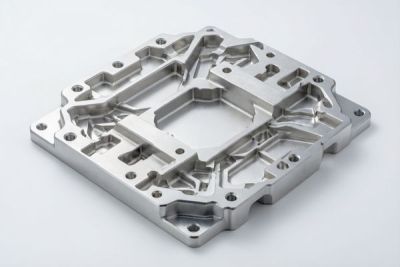
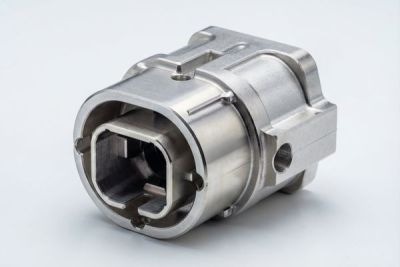
CNC End Caps for Semiconductor Applications: A Complete Technical Guide 2026
An end cap looks like the least interesting part on a semiconductor fluid system. It is a disc, a cap, a cover for a port that nobody sees once the tool is assembled. But ask any process engineer who has watched a wafer batch scrap because of a slow leak at a chamber port, and they will tell you the cap is where the qualification either passes or quietly fails. In ultra-clean gas lines and vacuum chambers, the end cap is the component that decides whether your sealing face stays leak-tight, whether particles stay trapped below the spec, and whether the system survives thermal cycling without weeping at the groove.
This guide walks through how semiconductor CNC parts like end caps are actually made, what tolerances and surface finishes move the needle on leak rate and particle count, and how to specify them so your supplier ships parts that pass qualification the first time. We cover material selection between 304 and 316L stainless, the role of electropolishing and passivation per ASTM A967, a tolerance budget you can hand to any machine shop, and the questions a buyer should ask before placing the order.
We are LusterControl (Dongguan Licun Technology Co., Ltd.), a Dongguan source factory founded in 2015 with 15 years of CNC lathe stainless mirror-finishing experience. Our floor runs 60 CNC machines across 4,000 sqm (expanded in 2026; the old 2,000 sqm plant is retired) with monthly output around 500,000 parts, certified to ISO 9001, with ISO 13485 completed and IATF 16949 in application. The numbers and trade-offs below are the ones we argue about with customers before a single chip is cut.
Table of Contents
- 1. What Are Semiconductor End Caps and Why Every Micron Matters
- 2. CNC Precision Machining of Semiconductor End Caps: A Process Walkthrough
- 3. Tight Tolerance CNC for End Caps: Holding +/-0.005 mm on Sealing Faces
- 4. Stainless Steel Mirror Finishing for Semiconductor End Caps
- 5. End Caps vs Other Chamber Seals: Which Semiconductor CNC Parts Win
- 6. Choosing Custom CNC Parts: End Caps Material and Standard Choices
- 7. A Buyer's Sourcing Checklist for Semiconductor End Caps
- 8. Common Mistakes When Specifying Semiconductor End Caps
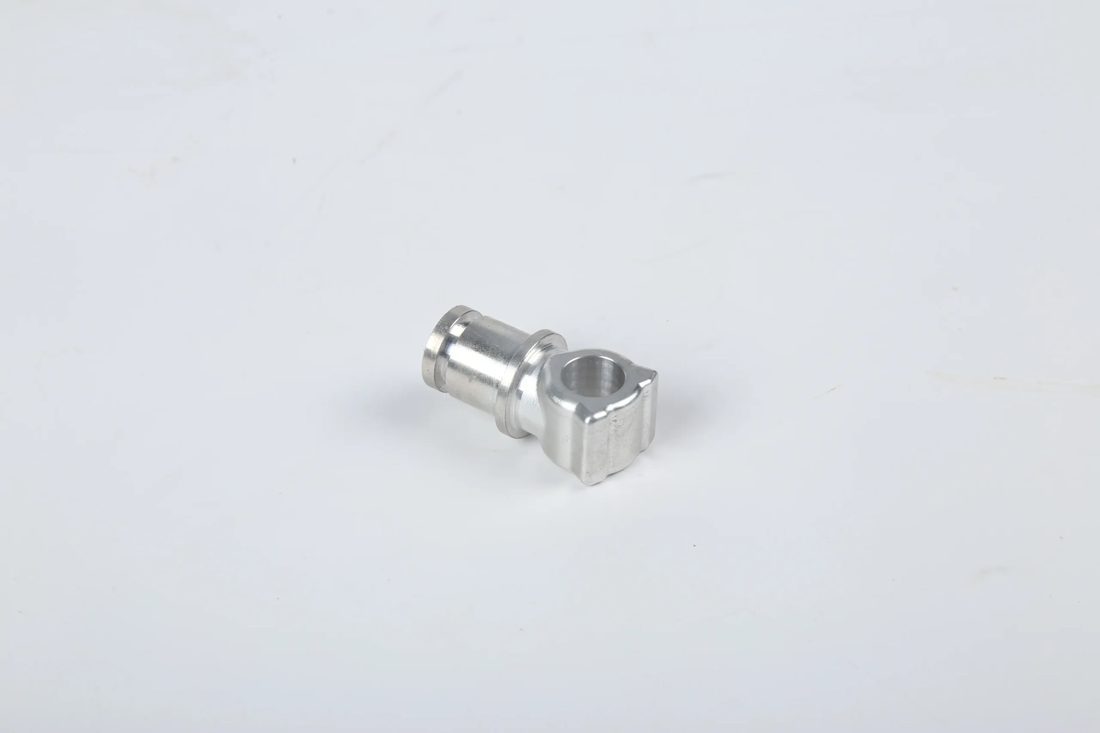
Semiconductor CNC precision component
What Are Semiconductor End Caps and Why Every Micron Matters
The cap is small, but the leak path through it is not.
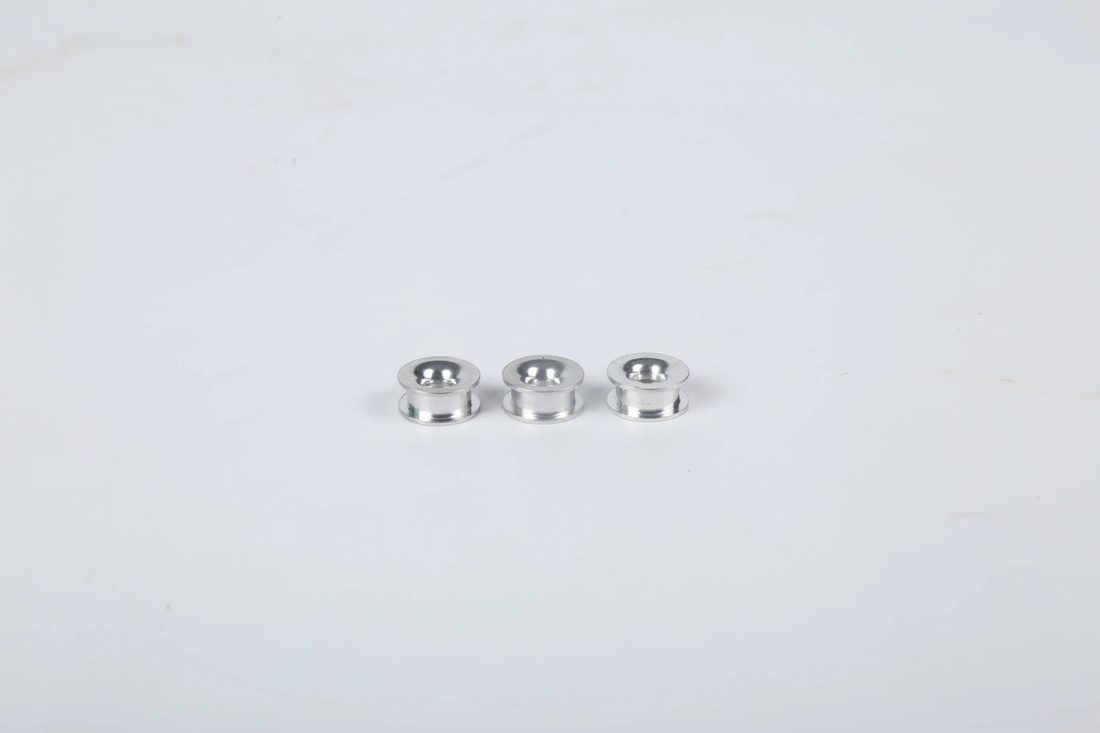
In a semiconductor tool, an end cap is the closure for a chamber port, a tube end, or a manifold branch that must seal against vacuum or high-purity gas. You will find them on vacuum chamber doors, on gas-distribution manifolds, on exhaust lines, and on instrument ports that are opened only during maintenance. Their job is unglamorous: hold a seal, shed no particles, and survive thousands of thermal cycles without creeping at the groove.
- End cap
- A machined closure that seals the open end of a chamber port, tube, or manifold branch in a vacuum or high-purity gas system.
- O-ring groove
- A precision channel cut into the sealing face that compresses an elastomer or metal seal to a controlled percentage of its cross-section.
- Outgassing
- The release of trapped gases from a surface under vacuum; driven down by smoother, cleaner, electropolished finishes.
- Particle shed
- Loose or flaked material released into the gas stream, where a single micron can contaminate a wafer surface.
- Flatness
- Deviation of the sealing face from a perfect plane, measured in microns; the single biggest driver of leak rate at the cap.
Why does every micron matter? A leak path at the O-ring groove scales with how far the groove diameter and the face flatness drift from nominal. A surface that is too rough traps process residue and sheds particles during thermal cycling. In a 300 mm wafer line, a single contaminated port can scrap an entire lot, so the cap is qualified as hard as any active component. That is why we treat the end cap as a flight-critical part, not a commodity disc.
Where end caps sit in a semiconductor fluid system
- Vacuum chamber maintenance ports that are sealed for months at a time
- High-purity gas distribution manifolds feeding process chambers
- Exhaust and pump-line branches where corrosive byproducts condense
- Instrument and gauge ports opened only during service
- Dead-end tube closures where flow must stop without a leak
Semiconductor CNC precision component
CNC Precision Machining of Semiconductor End Caps: A Process Walkthrough
Three stages, one datum: cut the body, machine the groove, finish and verify.
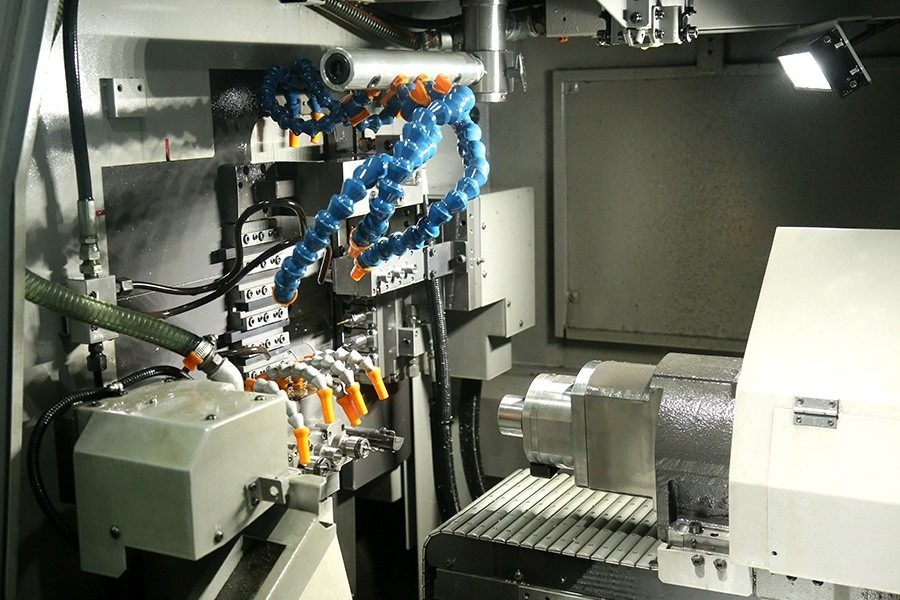
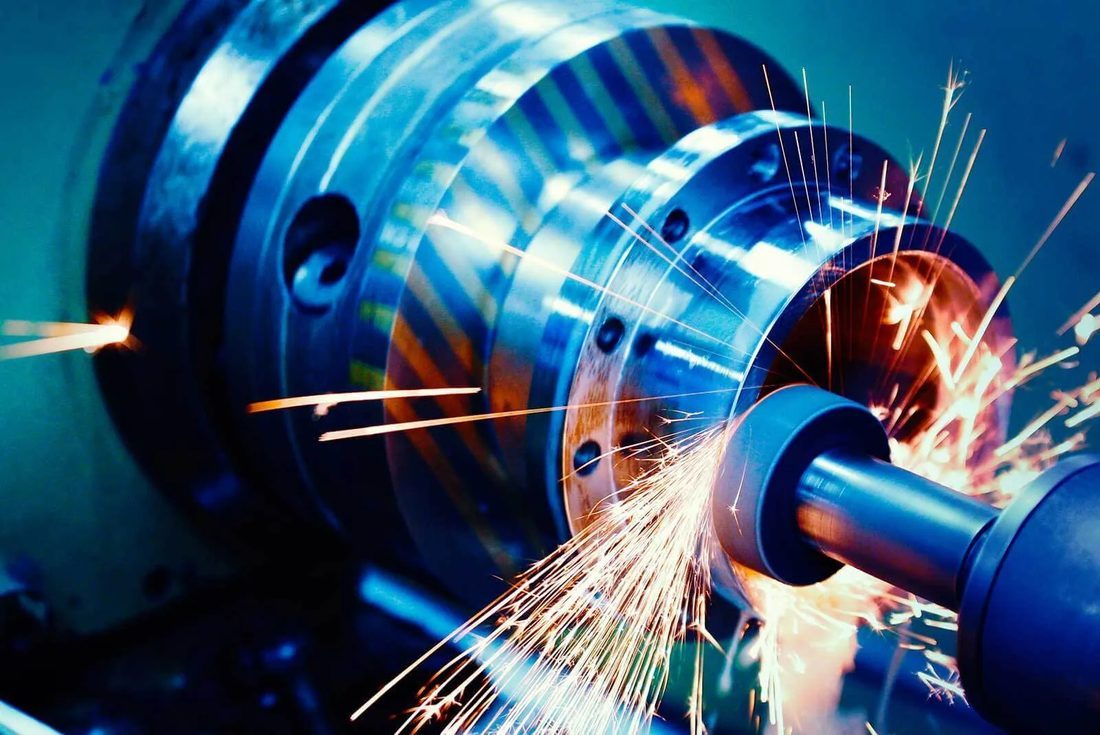
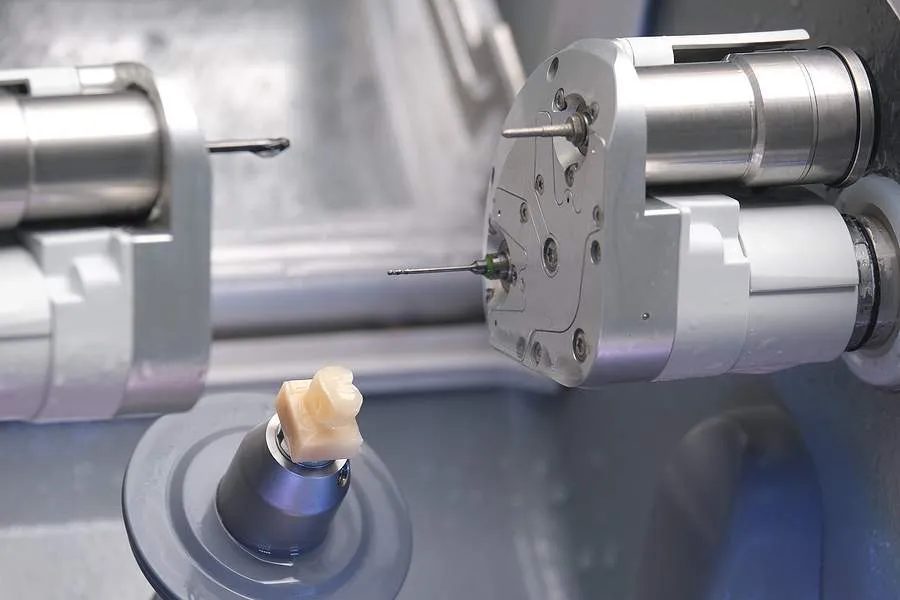
CNC precision machining of an end cap is a three-stage problem. The body geometry is simple, but the sealing face and the O-ring groove are not - they are what the whole part is for. We run the part on Swiss-type lathes and multi-axis CNC centers so the groove and the face are cut in one setup, on one datum, with no re-clamp that could shift the coordinate system.
Stage 1 - Turning the body on Swiss-type and CNC lathes
The blank starts as a 316L or 304 stainless bar, traceable to the heat lot. On a Swiss-type lathe the part is supported close to the cut, which keeps deflection low on thin-walled caps. We leave 0.1 mm on the sealing face and groove for the finishing pass, then hold the contour to +/-0.01 mm before the final cut. For higher-volume runs we move the same program to a twin-spindle CNC lathe so cycle time drops without losing the datum.
Stage 2 - Groove and port machining
- Rough the O-ring groove to within 0.05 mm of final form
- Finish the groove diameter and cross-section in one light pass
- Machine the sealing face flatness to the agreed micron budget
- Drill or thread any instrument port on the same setup
- Deburr every edge by hand and by tumbling, never by flame
Stage 3 - Finish and inspect
After machining we electropolish the wetted surfaces to drop roughness toward Ra 0.2-0.6 um, then passivate per ASTM A967 so the surface resists fingerprint corrosion during handling. First article goes on the CMM with a full datum report; batch parts get in-process gauging plus lot-level CMM audit so a drift in the process shows up before a bad lot ships.
| Process | CNC lathe (Swiss-type) | 5-axis CNC center | Turn-mill compound |
|---|---|---|---|
| Best for | Round caps, high volume | Caps with angled ports | Caps + integral features |
| Setups | 1 | 1 | 1 |
| Face flatness | +/-0.005 mm | +/-0.005 mm | +/-0.005 mm |
| Our capacity | 60 CNC machines | 5-axis cells | turn-mill cells |
| Volume fit | Up to 500k/month | Mid volume | Low-mid volume |
Tight Tolerance CNC for End Caps: Holding +/-0.005 mm on Sealing Faces
Tolerance is a budget - spend it where the seal depends on it.
Tight tolerance CNC on an end cap is not about making everything tiny; it is about spending the tolerance budget where the seal lives. We concentrate it on three relationships: the O-ring groove diameter, the groove cross-section, and the flatness of the face that meets the flange. Everything else - the outer diameter, the back face, the wrench flats - gets commercial tolerances to keep cost sane.
| Feature | Typical callout | Why it matters |
|---|---|---|
| Groove diameter | h8 / +/-0.01 mm | Sets seal squeeze; too loose leaks, too tight cold-flows |
| Groove cross-section | R0.3 min radius | Sharp corners cut the O-ring |
| Face flatness | 0.005-0.01 mm | Directly drives leak rate |
| Face perpendicularity | 0.02 mm | Keeps cap parallel to flange |
| Port thread | 6H/4g | Repeatable wrench torque |
How we hold the micron budget
- Single-setup machining so the datum never moves
- Finished groove and face in one light pass, no re-clamp
- Tensioning fixture for thin-walled caps so they do not spring
- CMM first article with full datum references
- In-process gauging and lot-level CMM audit for batches
Semiconductor CNC precision component
Stainless Steel Mirror Finishing for Semiconductor End Caps
Roughness is not cosmetics - it is contamination control.
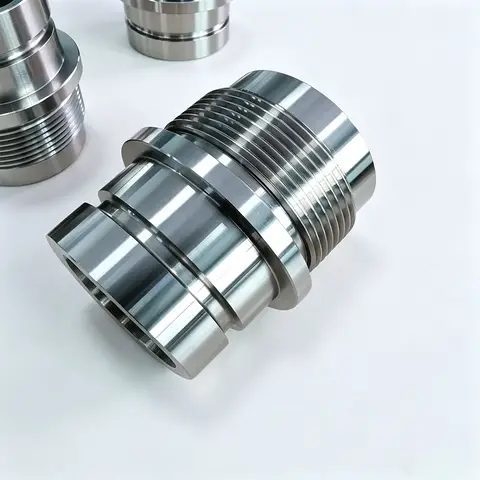
Stainless steel mirror finishing on an end cap is a contamination-control decision, not a beauty decision. A smoother wetted surface traps less process residue, outgasses less under vacuum, and sheds fewer particles during thermal cycling. That is why semiconductor caps are almost always electropolished rather than just bead-blasted.
- Electropolishing
- An electrochemical process that removes a controlled layer of surface metal, leaving a passivated, low-roughness, non-directional finish.
- 8K mirror finish
- Our top surface grade reaching Ra 0.2 um, used where the wetted face must be near-optically smooth.
- ASTM A967
- The standard for passivating stainless steel; we follow it so the surface resists corrosion without plating.
Ra targets by application
| Application | Target Ra | Finish route |
|---|---|---|
| Exhaust / pump line | Ra 0.8 um | Machined + passivated |
| Gas distribution | Ra 0.4 um | Electropolished |
| Process-chamber port | Ra 0.2 um (8K) | Electropolish + mirror |
| Back / non-wetted face | Ra 1.6 um | Machined, as-cut |
We passivate every stainless end cap per ASTM A967 so the surface resists fingerprint corrosion during handling and storage. For a customer's optical-grade chamber port we took the wetted face to our 8K mirror finish at Ra 0.2 um, which cut their post-machining cleaning cycle roughly in half because there was less residue to remove.
End Caps vs Other Chamber Seals: Which Semiconductor CNC Parts Win
Pick the seal by how often you open it and what you bolt it to.
An end cap is one of several ways to close a port, and the right choice depends on whether the port is opened often, what flanges you already use, and how much leak margin you need. Below is the comparison we walk customers through before they commit to a drawing.
| Option | Open often? | Leak margin | Best fit |
|---|---|---|---|
| End caps | Rarely | High (O-ring groove) | Maintenance ports, dead ends |
| Blind flanges | Sometimes | High | Large chamber doors |
| Swagelok-style fittings | Often | Medium | Instrument take-offs |
| Weld caps | Never | Highest | Permanent closures |
Pros
- End caps seal at a precision groove, so leak margin stays high
- Cheaper than a full flange for small ports
- Easy to machine in volume on Swiss-type lathes
- Electropolish and passivate cleanly
Cons
- Not meant for frequent open/close cycles
- Need a flat mating flange to work
- Groove must be cut to tight tolerance or it leaks
- Wrong material choice defeats the finish
Choose end caps if / Choose flanges if
- Choose end caps if the port is sealed for months and you want a low-cost, high-margin seal on a flat face
- Choose blind flanges if the port is large or opened during routine service
- Choose Swagelok-style fittings if you need to break the line often for instruments
- Choose weld caps if the closure is permanent and leak margin must be absolute
Semiconductor CNC precision component
Choosing Custom CNC Parts: End Caps Material and Standard Choices
304 saves money; 316L earns its keep where corrosion lives.
Choosing custom CNC parts like end caps starts with material. Most semiconductor caps are 304 or 316L stainless. 304 is cheaper and fine for dry, benign gas paths. 316L earns its premium where chloride, moisture, or corrosive byproducts sit - the extra molybdenum resists pitting that would later shed particles into the line.
| Material | Use it for | Watch out for |
|---|---|---|
| 304 stainless | Dry, benign gas paths | Pits in corrosive service |
| 316L stainless | Exhaust, wet, corrosive lines | Higher blank cost |
| 316L + EP | Process-chamber wetted faces | Extra finishing step |
| Custom alloy | Special outgassing needs | Lead time and cert work |
Standards you should ask for
Beyond the material cert, ask your supplier for passivation to ASTM A967, a documented quality system (we run ISO 9001 with ISO 13485 completed and IATF 16949 in application), and full lot traceability from the raw bar to the finished cap. If the part touches a medical or ultra-clean line, the traceability is not optional - it is what lets you recall a lot if a downstream failure points back to the seal.
- Material cert traceable to the heat lot
- Passivation per ASTM A967 on every stainless cap
- Electropolish spec agreed before quoting
- CMM first-article report with full datum references
- Lot traceability from raw bar to finished part
A Buyer's Sourcing Checklist for Semiconductor End Caps
Hand this to a supplier and the tire-kickers filter themselves out.
Sourcing end caps is less about finding a cheap lathe and more about finding a shop that understands sealing intent. The steps and the document list below are the ones we are happy to answer with data, and the ones that separate a real precision source from a broker with a logo.
- Send the drawing with the sealing face and groove called out explicitly
- State free-state vs clamped flatness so the number means something
- Agree the electropolish and passivation spec up front
- Request a CMM first-article report, not just a photo
- Confirm lot traceability from raw bar to finished cap
- Ask how thin-wall caps are fixtured so they do not spring
- Ask for the cert stack: ISO 9001 minimum, ISO 13485 a strong plus
- Request material certs traceable to the heat lot
- Confirm single-setup capability so the datum never moves
- Get a CMM first-article report with full datum references
- Verify batch traceability and a real rework path
Semiconductor CNC precision component
Common Mistakes When Specifying Semiconductor End Caps
Most scrap caps fail on the drawing, not on the machine.
- Calling out face flatness without stating free vs clamped state
- Drawing a sharp groove corner that an end mill cannot cut
- Forgetting that electropolish removes material and shifts the bore
- Specifying 316L then refusing to pay for passivation
- Tolerancing every feature tight when only the groove and face matter
- Leaving the O-ring spec off the drawing entirely
The two that cost the most
The most expensive mistake is the sharp groove corner: designers draw R0 corners, the shop leaves an undocumented radius, and the O-ring gets nicked on assembly - a leak that passes incoming inspection and fails three months later. The second is ignoring the electropolish stock removal: if you machine the bore to nominal and then electropolish, the bore grows by a few microns and a press-fit seal suddenly will not seat. Both are fixed on the drawing, before the first chip.
The cheapest end cap is the one that passes qualification the first time - because the second time costs you a launch date.
Semiconductor CNC precision component
Semiconductor CNC precision component
Semiconductor CNC precision component
Semiconductor CNC precision component
FAQ: end caps & Semiconductor Buyer Questions
A: We hold positioning to +/-0.005 mm and face flatness in the 0.005-0.01 mm range on a single setup, so the datum never shifts. The key is specifying free-state vs clamped flatness, because a thin cap measured free can show spring that disappears once bolted to the flange.
A: Electropolishing removes a controlled surface layer and leaves a low-roughness, passivated, non-directional finish. It drops Ra toward 0.2-0.6 um, which traps less residue, outgasses less under vacuum, and sheds fewer particles during thermal cycling - exactly what a wafer-grade gas path needs.
A: Use 304 for dry, benign gas paths where cost matters. Choose 316L where moisture, chlorides, or corrosive byproducts sit, because its molybdenum resists pitting that would later shed particles into the line. For process-chamber wetted faces, 316L plus electropolish is the common call.
A: Yes. Every stainless cap is passivated per ASTM A967, and we supply material certs traceable to the heat lot, a CMM first-article report with full datum references, in-process gauging for batch parts, and lot-level traceability from raw bar to finished component.
A: End caps suit ports sealed for months where you want a low-cost, high-margin seal on a flat face. Blind flanges fit large or often-serviced ports; Swagelok-style fittings fit lines broken often for instruments; weld caps are for permanent closures needing absolute leak margin. Match the cap to how often the port opens.
A: Single prototypes are routine, and our floor is built for both small custom batches and volume - around 500,000 parts a month across 60 machines. For a new cap we typically qualify at low volume with a CMM first article, then scale once the sealing data is locked.
Send us your end-cap drawing for a free DFM review - we will flag the groove radius that will nick your O-ring, the tolerances that are costing you money, and the electropolish-and-passivation spec that gets you to a clean, leak-tight seal the first time. Reach out and let's cut the first article.
Request a Free CNC Quote