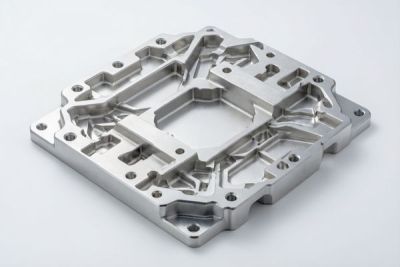
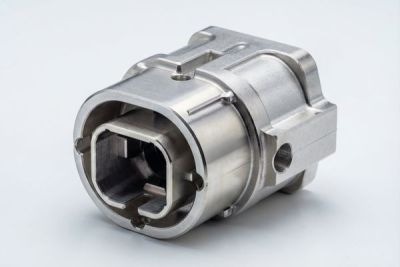
CNC End-Effector Parts for Medical Devices: A 2026 Technical Guide
The end-effector is the only part of a surgical robot or automated medical instrument that ever meets the patient. It is the jaw that grips tissue, the tip that cuts, the seal seat that keeps fluids where they belong. When that part's surface is too rough, bacteria hide in the valleys and the part fails reprocessing. When its pivot bore is a few microns off, the instrument drifts and the surgeon feels it as lost control. For anyone specifying these components, the finish and the tolerance are not cosmetic line items - they decide sterility, instrument life, and clinical confidence.
This guide walks through how CNC end-effector parts are actually made for medical use: which alloys hold up, why mirror-grade stainless finishing matters, where the tolerance budget should be spent, and how an ISO 13485 quality system keeps every lot traceable. We also give you a six-point sourcing checklist you can hand a supplier today, plus the common mistakes that turn a qualified drawing into a rejected lot.
We write this from the shop floor. Dongguan Licun Technology (brand LusterControl) has machined precision stainless and titanium components since 2015 - 60 CNC machines, a 4,000 sqm Dongguan factory, and about 500,000 parts a month across prototype and volume runs. We are a contract precision-machining source operating under a completed ISO 13485 quality system; the regulatory clearance for a finished medical device always stays with the brand owner. The numbers below are the ones we argue about with customers before a single chip is cut.
Table of Contents
- 1. What Are CNC End-Effector Parts in Surgical Robotics?
- 2. Why Medical CNC Parts Demand Mirror-Grade Surface Finishes
- 3. CNC Precision Machining of Surgical Robot Wrist Housings
- 4. Tight Tolerance CNC for Kinematic Joint and Tip Surfaces
- 5. Custom CNC Parts: From Prototype to Surgical Volume
- 6. Stainless Steel Mirror Finishing for Biocompatible Instrument Tips
- 7. Choosing Materials for End-Effector Parts: Ti-6Al-4V vs 316L
- 8. A Buyer's Sourcing Checklist for Medical CNC Parts
- 9. Common Mistakes When Sourcing End-Effector Parts for Hospitals
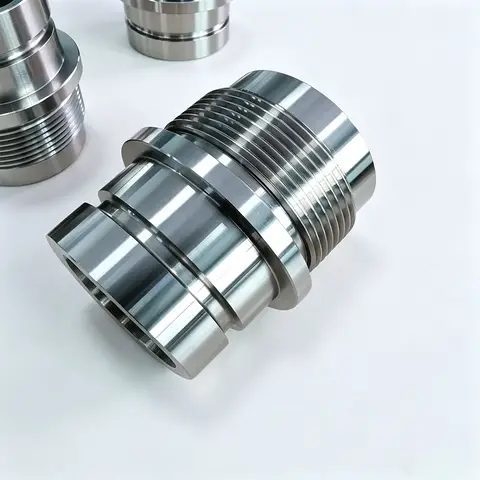
Medical CNC precision component
What Are CNC End-Effector Parts in Surgical Robotics?
The end-effector is the only part of the robot that touches the patient - specify it like one.
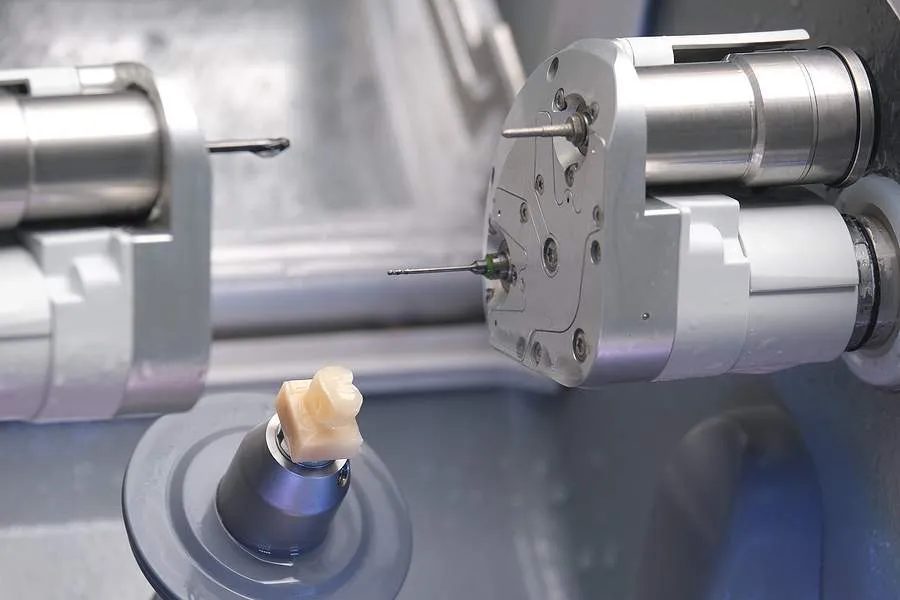
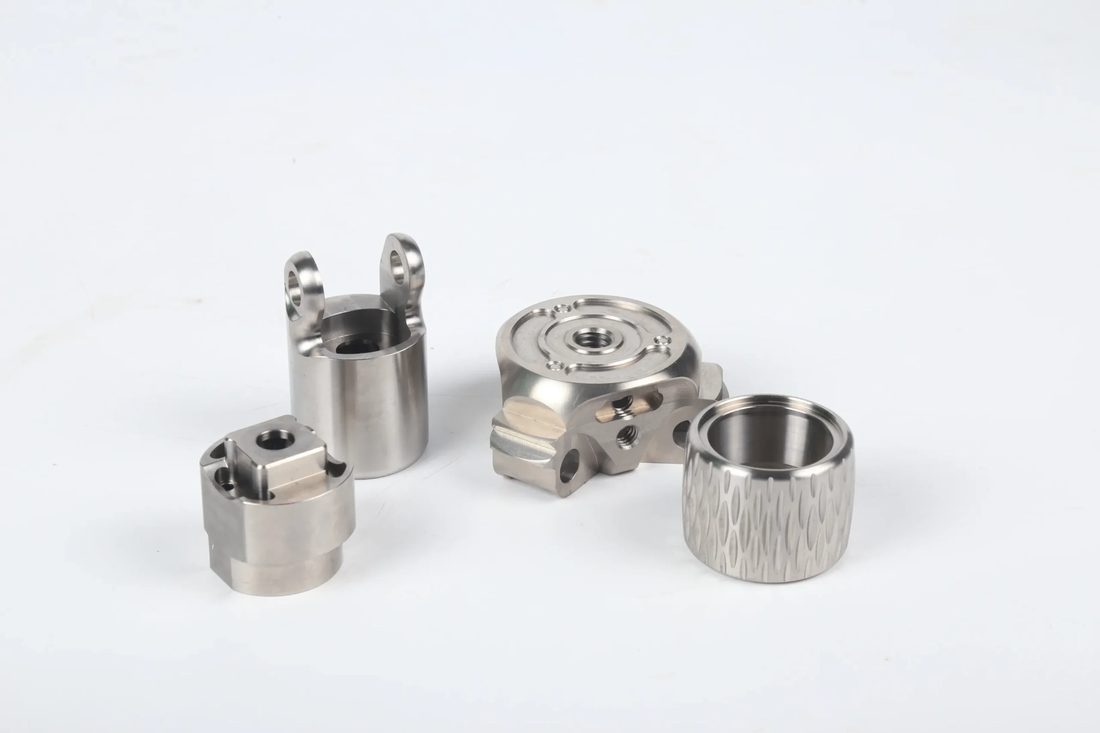
An end-effector is the distal working end of a surgical instrument or robotic arm - the assembly that interfaces with tissue, implants, or fluid. In a laparoscopic or robotic platform it typically includes a wrist housing, a clevis or yoke, jaw linkages, drive shafts, tip inserts, and the seal seats that keep the sterile field sealed. Each of these is a CNC-machined metal component, and each carries a different combination of tolerance, finish, and material demands.
Which parts actually get CNC-machined
- Wrist housing and clevis - the multi-axis body that articulates the instrument
- Jaw and grasper links - the levers that open, close, and rotate the tip
- Drive shafts and pulleys - transmit torque from the handle to the tip
- Seal seats and fluid barriers - keep saline and tissue fluids separated
- Tip inserts and cutting edges - the working surface that meets tissue
- Pivot pins and bushings - the kinematic joints that define repeatability
- End-effector
- The distal working assembly of a surgical instrument or robotic arm that interacts with tissue, fluid, or an implant.
- Kinematic joint
- A pivot or sliding interface whose geometric accuracy determines how repeatably the tip moves.
- Biocompatibility
- The ability of a material and its surface to reside in or contact the body without causing an adverse reaction.
What surprises first-time specifiers is how much of the instrument's clinical behavior lives in these small parts. A 5-micron error in a pivot bore does not show up on a CMM report as a disaster, but it shows up in the operating room as lost tip repeatability after fifty sterilizations. That is why medical CNC parts are judged on consistency across a lot, not just on a single hero sample.
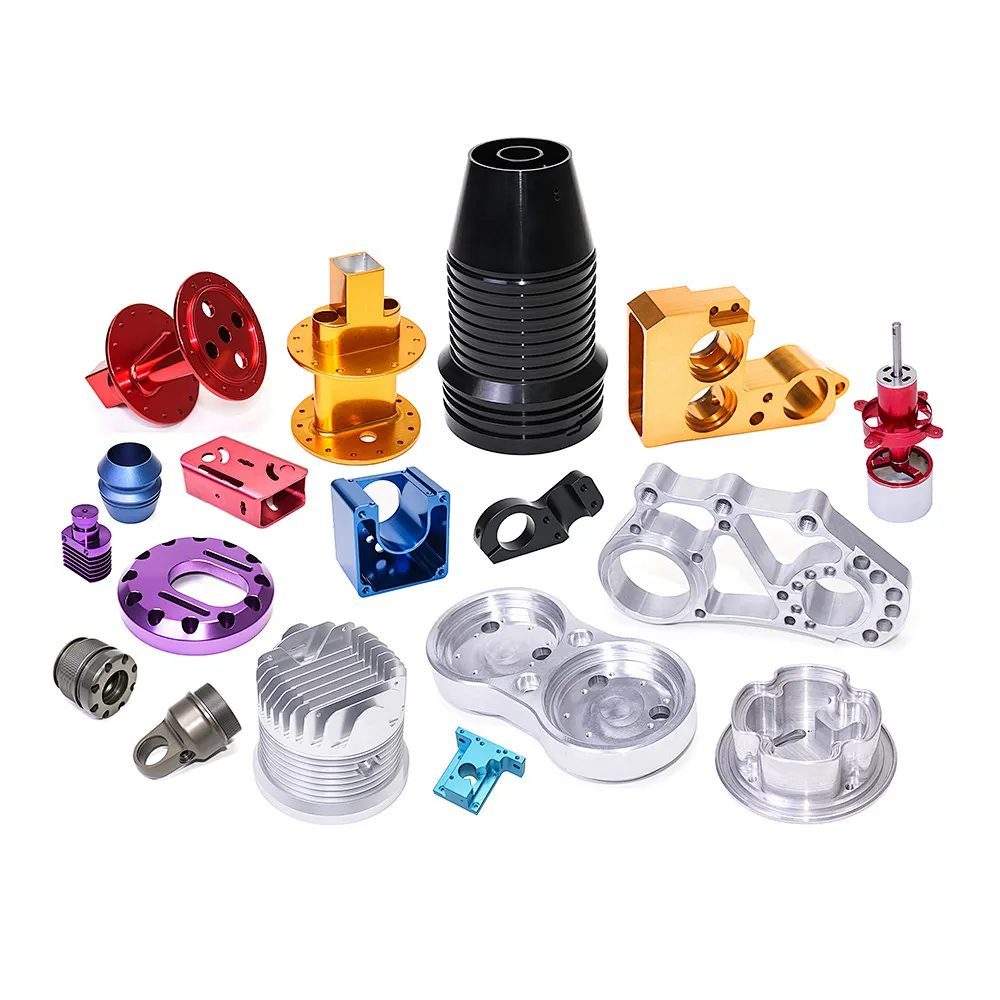
Medical CNC precision component
Why Medical CNC Parts Demand Mirror-Grade Surface Finishes
A rough surface is a bacteria hotel and a fatigue-crack starter - finishing is clinical, not cosmetic.
In a consumer part, a rough machined face is a cosmetic complaint. In a surgical instrument it is a patient-safety problem. Reprocessing departments run instruments through enzymatic wash, high-temperature sterilization, and aggressive disinfection cycles. Any microscopic valley in the surface traps organic residue, and over repeated cycles that residue becomes a biofilm the cleaning chemistry cannot reach. Mirror-grade stainless steel mirror finishing removes those valleys before they exist.
Finish tiers and where each one earns its cost
| Finish tier | Typical Ra | Use on end-effector parts | Process |
|---|---|---|---|
| Standard machined | Ra 0.8-1.6 um | Internal non-contact bodies, structural yokes | Sharp tool, single pass |
| Fine machined | Ra 0.6 um | Handle-side shafts, low-wear pivots | Finishing pass + deburr |
| Mirror | Ra 0.2 um (8K) | Tip inserts, seal seats, fluid barriers | Electropolish + passivate |
| Ultra mirror | Ra <0.1 um | Optical-adjacent or ultra-clean fluid paths | Multi-stage electropolish |
Electropolishing does double duty: it strips the work-hardened, contaminated surface layer (which is where corrosion starts) and leaves a passive, chemically clean skin. We then passivate per ASTM A967 so the chromium oxide layer reforms uniformly. The result is a surface that survives hundreds of sterilization cycles and resists the fingerprint corrosion that plagues poorly finished stainless.
If you are unsure where the mirror finish should land on your drawing, we are happy to review the spec. Our free DFM review for medical device components flags exactly which faces need Ra 0.2 um and which can stay at a standard machined finish - usually saving more than the polish would have cost.
CNC Precision Machining of Surgical Robot Wrist Housings
The wrist is a multi-axis puzzle that has to be cut in one clamp to stay true.
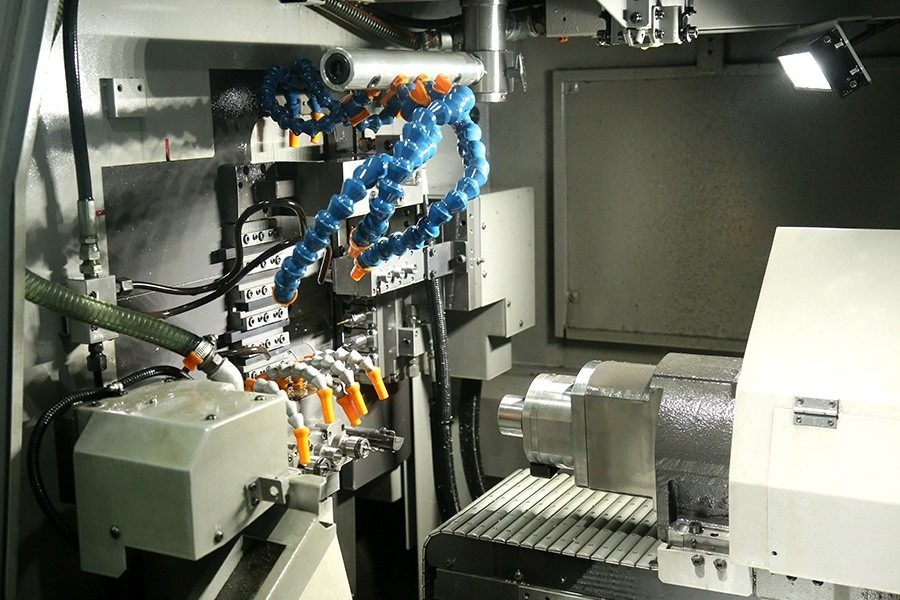
A wrist housing is the hardest part of the end-effector to machine well. It has angled drive pockets on one face, a clevis on another, and a bore that must stay concentric to both after heat and finish. Cut it on a 3-axis center and you re-fixture two or three times; every re-clamp risks a datum shift of 0.02-0.05 mm, which is exactly the drift a surgeon feels as lost control. CNC precision machining on a 5-axis or turn-mill center holds the part on one datum and rotates the axes around it.
Single-setup accuracy is the whole game
| Process | Setups | Datum shift risk | Our accuracy |
|---|---|---|---|
| 3-axis, multi-fixture | 2-3 | 0.02-0.05 mm per re-clamp | +/-0.01 mm |
| Turn-mill compound | 1 | None after first clamp | +/-0.005 mm |
| 5-axis machining center | 1 | None after first clamp | +/-0.005 mm |
| Swiss-type lathe | 1 (bar fed) | Minimal, axial parts | +/-0.008 mm |
For wrist housings we routinely hold true position to +/-0.005 mm across all three faces because the coordinate system never moves. That single-setup consistency is what lets a customer drop the hand-lapping step they used to run after machining - and hand-lapping is where repeatability goes to die. The trade-off is cycle time and programming cost, which is why we quote each medical CNC part on the cheapest process that still meets the true-position callout rather than defaulting to the most expensive machine.
Medical CNC precision component
Tight Tolerance CNC for Kinematic Joint and Tip Surfaces
Tolerance is a budget - spend it where the joint actually moves, not on a face nobody sees.
Every tight tolerance CNC callout you add costs money, and most of it is wasted if it lands on a non-functional face. The skill in specifying end-effector parts is concentrating the tolerance budget on the relationships that decide clinical performance: the pivot-bore-to-seat perpendicularity, the tip-repeatability after articulation, and the seal-seat flatness that keeps fluid where it belongs.
Tolerance-by-feature map
| Feature | Recommended callout | Why it matters |
|---|---|---|
| Pivot bore diameter | h7 / +/-0.005 mm | Defines joint play and tip repeatability |
| Seal seat flatness | 0.01 mm over face | Prevents fluid leakage at the barrier |
| Bore-to-seat perpendicularity | 0.02 mm | Keeps tip aligned to instrument axis |
| Clevis slot width | +/-0.02 mm | Linkage clearance, low risk |
| External body contour | +/-0.05 mm | Cosmetic / non-kinematic |
| Threaded boss | 6H standard | Assembly only, not kinematic |
- Spend the tight tolerance on pivot bores and seal seats first
- Relax non-functional and cosmetic faces to commercial limits
- Request a CMM first-article report with full datum references
- Agree on free-state vs clamped tolerances for thin-walled parts
- Require lot-level CMM audits, not just a hero-sample measurement
Custom CNC Parts: From Prototype to Surgical Volume
A surgical program is a marathon from drawing to fifty thousand units - design your supply for both ends.
Most end-effector programs do not start at volume. They start with a handful of prototypes to prove the kinematic concept, move to a low-volume first-in-human batch, then ramp to steady production. The trap is choosing a supplier who is great at one and helpless at the other. A prototype-only shop cannot hold the lot-to-lot consistency a surgical program demands; a volume-only shop will not touch your ten-piece first article without a punishing setup fee.
How we bridge prototype to surgical volume
- Machine the first article on the same process family you will scale on, so the CMM data is comparable
- Lock the DFM feedback (radii, tolerances, finish) into the released drawing before volume
- Qualify the material cert and passivation spec once, then apply it to every lot
- Run small custom CNC parts batches with full traceability, then scale to monthly volume
- Audit each lot with in-process gauging and a CMM report so drift shows up before a bad lot ships
Our floor is built for exactly this shape: small-batch customization and mass production under one roof, about 500,000 parts a month across 60 machines. The same discipline that let a drone customer's first production order with us reach 1.2 million RMB - and that keeps precision parts flowing to brands like De'Longhi, Donlim, and Breville - is what we bring to a surgical instrument ramp. The precision bar is identical; only the regulatory paperwork differs.
Medical CNC precision component
Stainless Steel Mirror Finishing for Biocompatible Instrument Tips
Mirror finishing is the last line of cleanability - and for tips, it is non-negotiable.
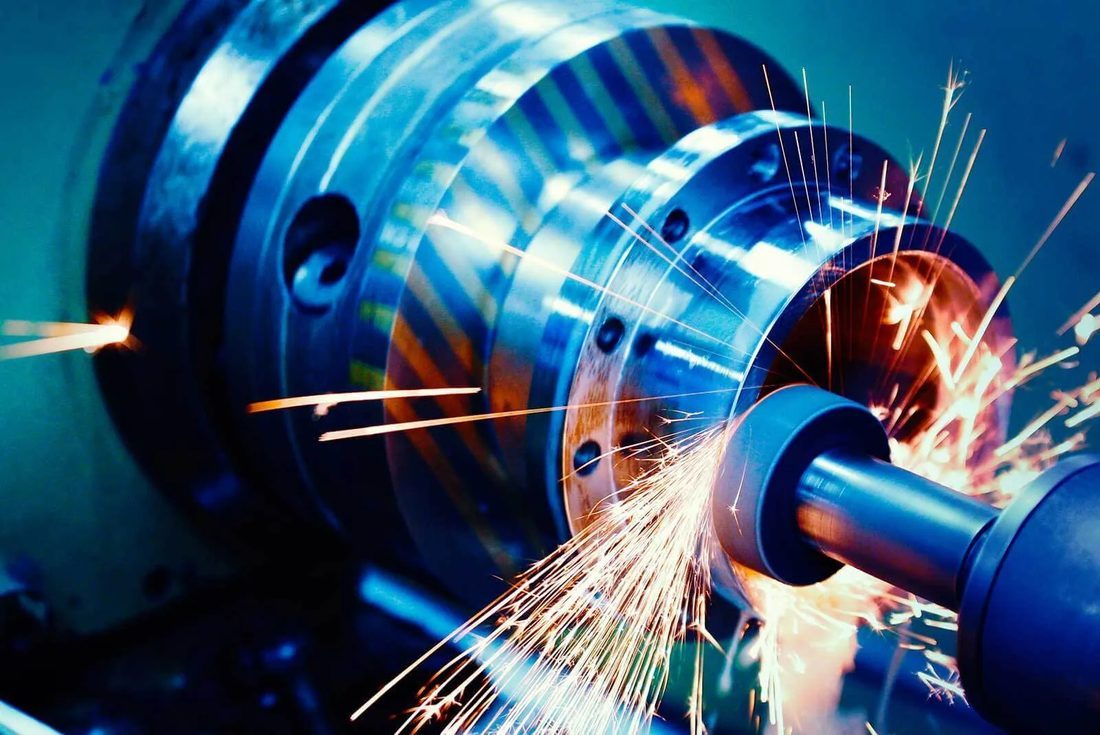
The working tip of an end-effector sees tissue, blood, and saline every cycle. A mirror finish here is not about looks; it is about giving biofilm nowhere to lodge and giving the reprocessing chemistry a smooth surface to wet and clean. We take functional tip surfaces to Ra 0.2 um (8K) by electropolishing, then passivate so the surface is both clean and corrosion-resistant.
Passivation per ASTM A967
Passivation is often confused with electropolishing, but they solve different problems. Electropolishing removes the contaminated, work-hardened surface layer and smooths it; passivation (ASTM A967) uses a nitric or citric acid bath to rebuild the chromium-rich passive film. You want both on a surgical tip: the polish for cleanability, the passivation for the corrosion ceiling. Skipping either is how a tip develops pitting after a year of sterilization.
| Step | Standard | What it achieves | When to specify |
|---|---|---|---|
| Electropolish | ASTM B912 | Ra 0.2 um, removes contaminated layer | Tip, seal seat, fluid path |
| Passivation | ASTM A967 | Rebuilds passive chromium film | All 300-series stainless |
| Bright anneal | AMS 2700 (equiv.) | Cleans surface, relieves stress | Before machining thin sections |
| Validated clean | ISO 13485 SOP | Removes particulates and residues | Final, before packaging |
Choosing Materials for End-Effector Parts: Ti-6Al-4V vs 316L
Material choice sets your corrosion ceiling and your machining bill at the same time.
Two alloys dominate surgical end-effectors: 316L stainless for cost-sensitive, non-magnetic, corrosion-resistant bodies, and Ti-6Al-4V for strength-to-weight and MRI compatibility where mass or imaging matters. A third, 17-4PH, shows up when you need hardness for wear surfaces but can accept its magnetic nature. The right call is driven by which property your instrument actually depends on.
Material decision matrix
| Property | 316L stainless | Ti-6Al-4V | 17-4PH |
|---|---|---|---|
| Corrosion resistance | Excellent | Excellent | Good (needs passivation) |
| Density | 8.0 g/cc | 4.43 g/cc | 7.8 g/cc |
| Hardness (aged) | ~150 HB | ~330 HB | up to ~400 HB |
| MRI compatibility | Non-magnetic | Non-magnetic | Magnetic |
| Machinability | Good | Difficult (work-hardens) | Fair |
| Relative cost | Low | High | Medium |
Pros
- 316L: cheap, non-magnetic, easy to mirror-finish
- Ti-6Al-4V: light, strong, MRI-safe for imaging suites
- 17-4PH: hard wear surfaces for repeated articulation
Cons
- 316L: heavier, lower strength than titanium
- Ti-6Al-4V: 2-3x cycle time, hot cutting
- 17-4PH: magnetic, limits MRI-adjacent use
- Choose 316L if: cost and non-magnetic cleanability drive the design and loads are moderate
- Choose Ti-6Al-4V if: mass matters (handheld or articulating tips) or the instrument enters an MRI suite
- Choose 17-4PH if: a wear surface needs hardness and magnetism is acceptable
- Avoid exotic alloys unless a documented clinical need exists - they only add cost and audit burden
Medical CNC precision component
A Buyer's Sourcing Checklist for Medical CNC Parts
These six questions separate a real ISO 13485 shop from a broker with a logo.
Sourcing medical CNC parts is less about finding the cheapest machine and more about finding a shop that understands that a rejected lot means a delayed clinical program, not just a late shipment. The questions below are the ones we are happy to answer with data, and the ones that separate a real precision source from an intermediary.
- Confirm the quality system: ISO 9001 certified and ISO 13485 completed, with the scope covering machined medical components
- Request material certs traceable to the heat lot (mill cert, not a generic statement)
- Ask for a CMM first-article report with full datum references - not just a photo of a good part
- Verify passivation and electropolish specs (ASTM A967 / ASTM B912) are written into the PO
- Agree on lot traceability from raw bar to finished part, with a documented rework path
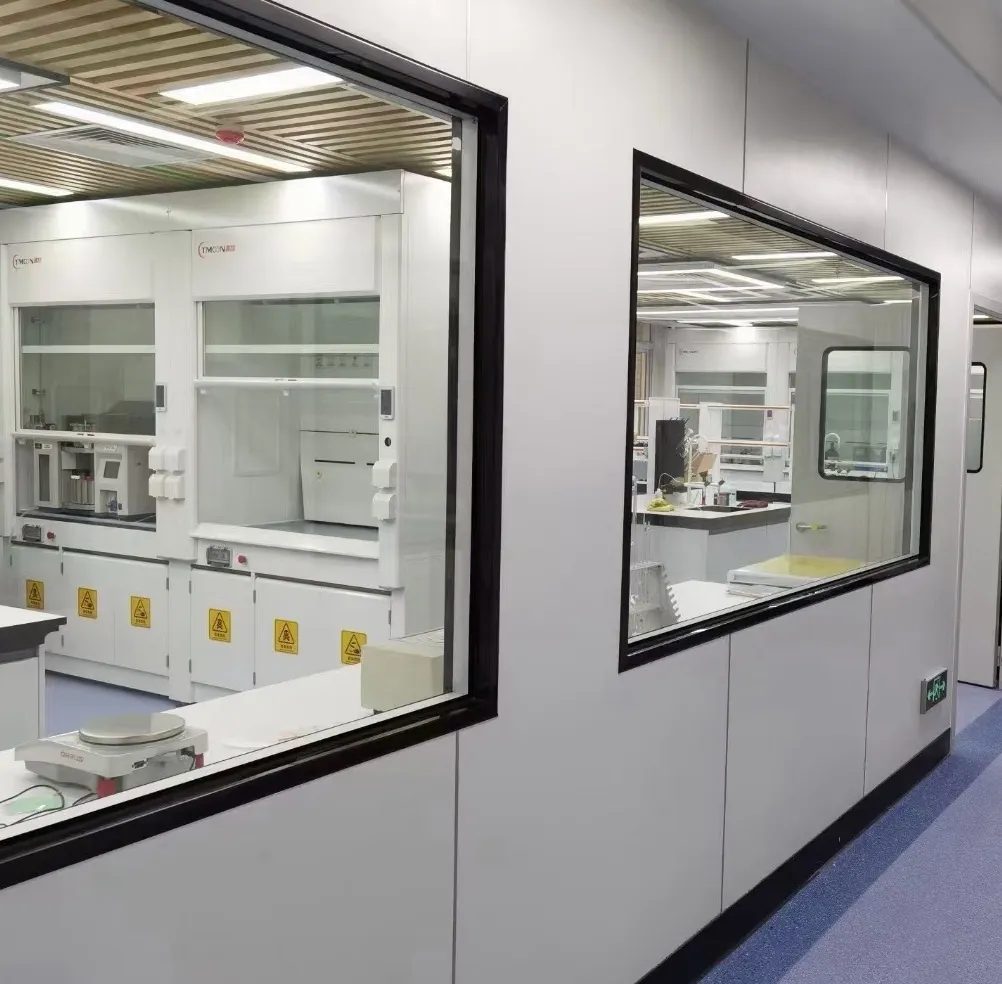
- Require validated cleaning and cleanroom or controlled packaging for the finished components
For deeper reading on our process discipline and other industry programs, see our CNC precision machining guides covering tolerances, finishes, and material selection across medical and other precision sectors.
Common Mistakes When Sourcing End-Effector Parts for Hospitals
Most rejects trace back to the drawing, not the machine - here is what to fix first.
After years of running precision medical and instrument components, the failure modes repeat. None of them are the machinist's fault; they are specification gaps that surface only at incoming inspection or, worse, after first sterilization.
- Calling out Ra 0.2 um on the whole part instead of only the functional surfaces - inflates cost, adds no clinical value
- Forgetting to write ASTM A967 passivation and ASTM B912 electropolish into the PO, so the shop ships a raw machined surface
- No material-cert or lot-traceability requirement, making a bioburden failure impossible to root-cause
- Tight tolerance on every dimension instead of only the three kinematic relationships that matter
- Assuming 'ISO 13485 shop' without checking the certificate scope covers machined medical components
- Skipping the validated cleaning step, so a mirror-finished part still fails particulate or residue testing
- Drawing R0 internal corners that no end mill can produce, forcing an undocumented radius or a scrap part
If any of these sound familiar from a past supplier, our medical device components machining guides walk through how we close each gap, from tolerance allocation to validated cleaning, before the first article is cut.
Medical CNC precision component
Medical CNC precision component
Medical CNC precision component
Medical CNC precision component
FAQ: end-effector parts & Medical Buyer Questions
A: On a single setup with turn-mill or 5-axis equipment we hold positional accuracy to +/-0.005 mm and bore diameters to h7. The key is spending that tolerance on the kinematic features - pivot bores, seal seats, and tip repeatability - rather than on every dimension. We inspect the first article on a CMM with full datum references and audit each lot.
A: A robust ISO 13485 quality system is effectively required for serious medical machining because it governs traceability, cleaning validation, and lot control that a finished-device brand owner will audit. We operate under a completed ISO 13485 system (with ISO 9001 certified and IATF 16949 in application). Note that ISO 13485 covers the manufacturing quality system - the regulatory clearance for the finished device remains with the brand owner.
A: 316L is the default for cost-sensitive, non-magnetic, corrosion-resistant bodies and is the easiest to mirror-finish. 17-4PH steps in when a wear surface needs hardness, but it is magnetic and limits MRI-adjacent use. Choose 316L unless a documented hardness or wear need justifies the extra cost and audit burden of 17-4PH.
A: Electropolishing takes functional surfaces to Ra 0.2 um (8K), removing the microscopic valleys where biofilm hides and stripping the contaminated work-hardened layer where corrosion starts. Passivation per ASTM A967 then rebuilds the passive chromium film. Together they let reprocessing chemistry wet and clean the surface and resist pitting through hundreds of sterilization cycles.
A: Yes. We supply mill material certs traceable to the heat lot, a CMM first-article report with full datum references, in-process gauging for batch parts, and lot-level traceability from raw bar to finished component under our ISO 13485 system. Each lot ships with the documentation your regulatory file will require.
A: It depends on the surface. Functional tips, seal seats, and fluid paths should be electropolished to Ra 0.2 um (8K); low-wear pivots and handle-side shafts are fine at Ra 0.6 um; structural and cosmetic bodies can stay at a standard machined Ra 0.8-1.6 um. Specify the finish on the functional face only to avoid paying for polish you cannot clinically use.
Sending us your end-effector or instrument drawing gets you a free DFM review - we will flag which faces need Ra 0.2 um mirror finishing, where the tolerance budget should land, and whether 316L or Ti-6Al-4V is the right call for your program. Reach out and let's cut the first article with the lot data already built in.
Request a Free CNC Quote