CNC Gear Machining: DIN Standards, Tolerances, and Tooth Geometry
A gear is only as good as its worst tooth. The whole point of a precision gear is that every tooth shares the load evenly; if one tooth is a few microns proud or the profile is off, that tooth takes the hit, the mesh gets noisy, and the life of the whole drive collapses. Gear quality is therefore a geometry problem long before it is a materials problem.
This guide is written the way one engineer would brief another. We walk through why precision gears demand real CNC gear machining, how tooth geometry is actually held, what spline shaft and coupling machining involve, what DIN gear standards mean in plain terms, and how turn-mill compound machining lets us build an integrated gear-and-shaft part in one chuck. Every shop number here is a real process number from our floor.
We are Dongguan Licun Technology Co., Ltd., brand LusterControl - a Dongguan source factory focused on stainless steel mirror machining since 2015, now 15 years in. We run 60+ CNC machines on a 2,000 m2 floor at roughly 500,000 parts a month, holding ISO 9001, with ISO 13485 completed and IATF 16949 in application. We serve the precision transmission supply chain alongside medical, automotive, and UAV programs, and we have shipped precision parts to brands such as De'Longhi, Donlim, and Breville.
Table of Contents
- 1. Why Precision Gears Demand True CNC Gear Machining
- 2. CNC Gear Machining: How Tooth Geometry Is Held
- 3. Spline Shaft Machining for Torque Transmission
- 4. Coupling Machining: Aligning Two Shafts Without Runout
- 5. DIN Gear Standards: What the Numbers Actually Mean
- 6. Turn-Mill Compound for Integrated Gear and Shaft Features
- 7. A Practical Sourcing Checklist for Precision Gears
- 8. Common Sourcing Mistakes in DIN Gear Standards Compliance
Precision Transmission CNC precision component
Why Precision Gears Demand True CNC Gear Machining
A gear is only as good as its worst tooth.
Precision gears transmit torque through the gradual contact of their teeth. When the tooth profile, lead, and pitch are all held to a tight band, the load spreads evenly and the mesh runs quiet and cool. When they drift, one tooth carries the load, the contact stress spikes, and pitting starts. The accuracy is not cosmetic - it is the difference between a gear that lasts and one that fails in service.
What gear accuracy buys you
- Quiet running - even tooth contact means less vibration and noise.
- Load sharing - no single tooth is overloaded into premature failure.
- Longer life - lower contact stress slows pitting and wear.
- Higher efficiency - less sliding friction means less heat and loss.
So when a spec calls out a DIN quality grade, it is naming the exact band of tooth accuracy the application needs - and the machining has to be able to deliver it consistently, lot after lot.
Precision Transmission CNC precision component
CNC Gear Machining: How Tooth Geometry Is Held
Tooth geometry is a chain of tolerances - break one link and the mesh suffers.
There are two ways to cut gear teeth. Hobbing is the high-volume method: a hob rolls along the blank and generates the involute profile in one continuous motion. CNC gear machining - milling the teeth on a 5-axis or turn-mill center - is the method of choice for prototypes, low volumes, and integrated parts where the gear is cut in the same setup as the shaft features. We machine gears this way for the flexibility it gives on complex, low-volume transmission parts.
Our CNC gear machining steps
- Generate the true involute in CAM from the module, teeth count, and pressure angle.
- Rough the tooth spaces, leaving stock for the finishing pass.
- Finish the flanks and root in one pass to hold profile and lead.
- Cut any shaft, bore, or keyway features in the same clamp where possible.
- Inspect pitch, profile, and runout on a gear-check or CMM before release.
| Method | Best for | Our use |
|---|---|---|
| Hobbing | High-volume, simple gears | Outsourced for volume runs |
| CNC milled teeth | Prototypes, low volume, integrated parts | Our in-house 5-axis / turn-mill |
| Shaped / broached | Internal or face gears | Case by case |
Spline Shaft Machining for Torque Transmission
A spline is a gear that slides - and that changes how you machine it.
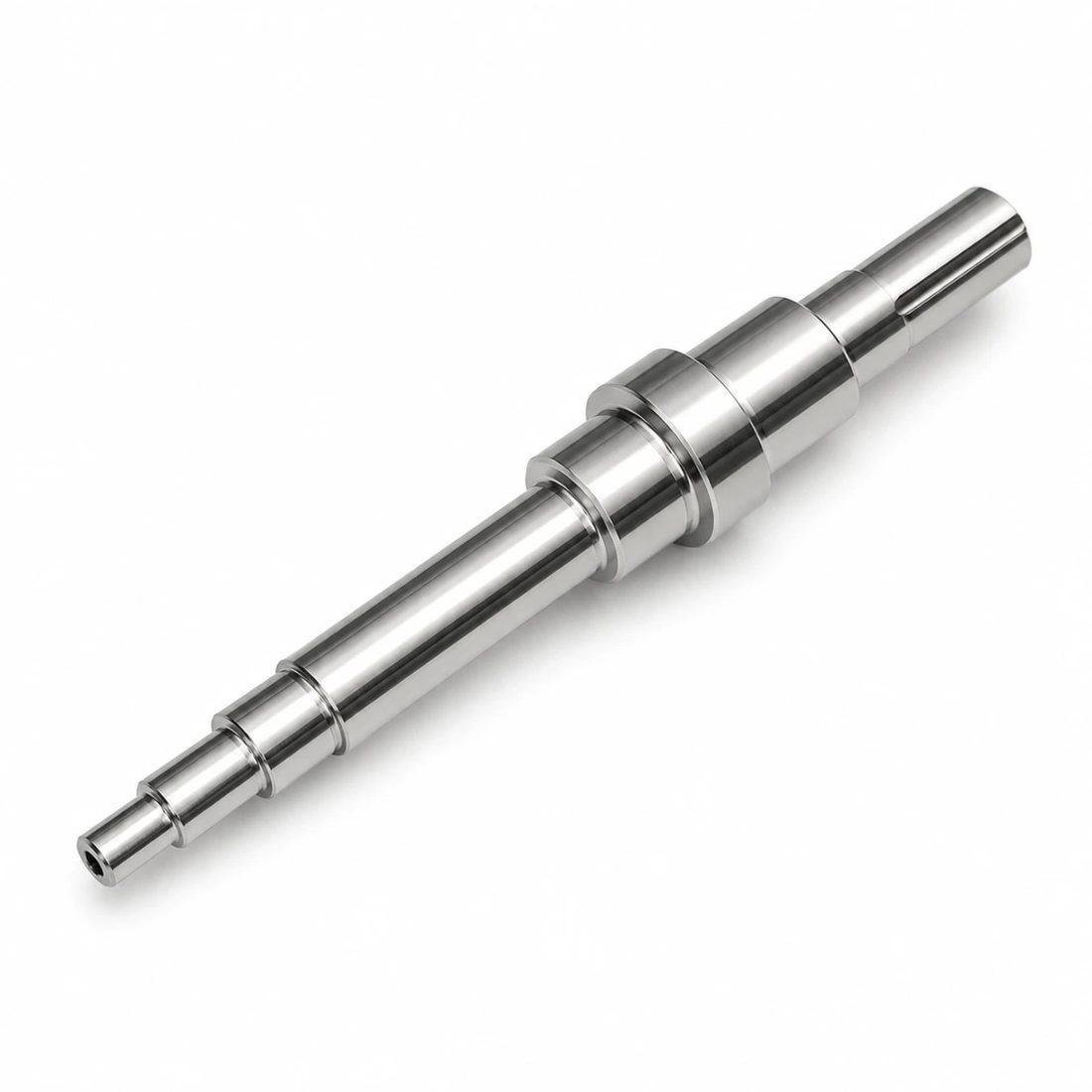
Spline shaft machining is the art of cutting a row of teeth along a shaft so it can carry torque while sliding or indexing. The most common standard we see is DIN 5480 (involute splines), but straight and ball splines show up too. The design challenge is the same as a gear - accurate flank form and pitch - plus a root radius that will not become a stress riser under repeated load.
What to get right on a spline shaft
- Match the flank form to the standard (DIN 5480 involute is the usual one).
- Control the major, minor, and pitch diameters to the fit class.
- Use a generous root radius so the spline does not crack in service.
- Keep the spline concentric to the shaft axis - turn-mill helps here.
- Chamfer the ends so the mating hub slides on without galling.
| Spline type | Use it for |
|---|---|
| Involute (DIN 5480) | High-torque, self-centering shafts |
| Straight-sided | Indexing, moderate torque |
| Ball spline | Precision linear plus rotary transfer |
Precision Transmission CNC precision component
Coupling Machining: Aligning Two Shafts Without Runout
A coupling exists to forgive misalignment - but only if it is itself true.
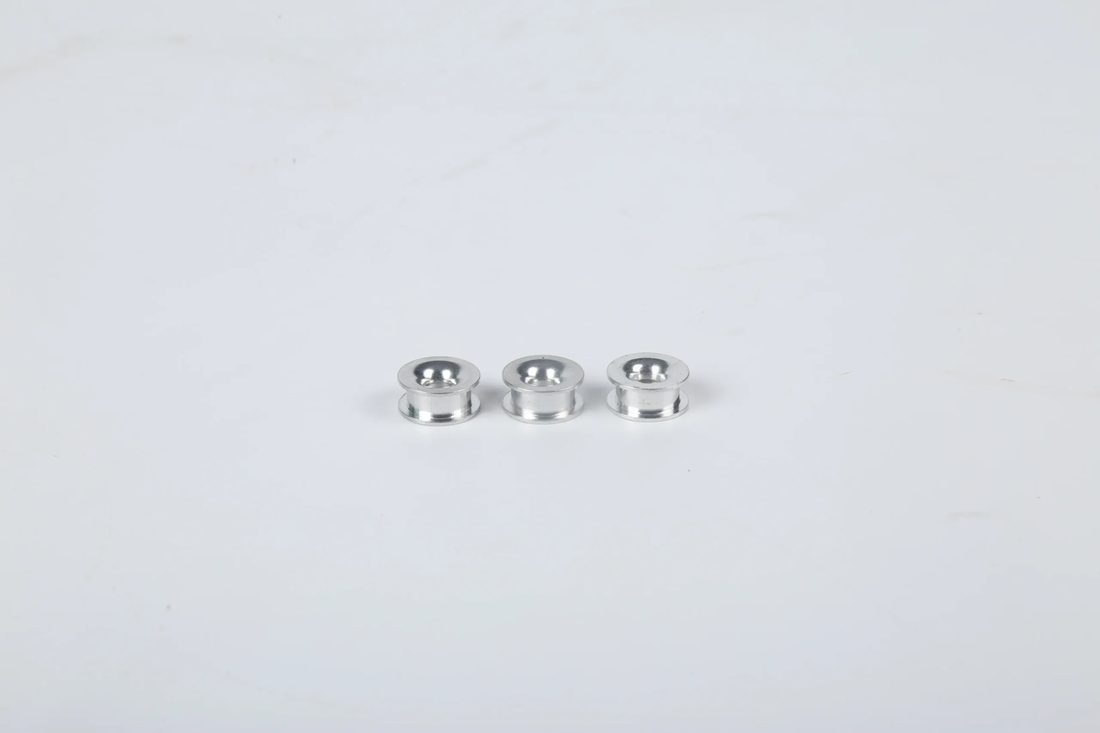
Coupling machining is about holding the bore, the keyway, and the mounting flange all true to one axis. A coupling that is out of round or off-axis becomes a vibration source that the whole driveline feels. The parts are simple in shape but unforgiving in geometry: bore-to-shaft fit, keyway position, and face runout all matter.
Coupling types we see most
| Coupling type | Best use |
|---|---|
| Rigid flange | Precise, fixed alignment |
| Jaw / spider | Light servo and instrument drives |
| Oldham | Parallel misalignment, zero backlash |
| Bellows / disc | High-precision, low runout |
Pros
- True bore means no induced vibration
- Keyway located to the feature, not by eye
- Single-setup hold keeps flange square
- Repeatable across the batch
Cons
- Tight runout needs single-datum work
- Keyway timing adds an operation
- Harder materials add cycle time
- Inspection must include runout
DIN Gear Standards: What the Numbers Actually Mean
DIN 3962 is not a suggestion - it is the language of gear quality.
DIN gear standards give you a shared vocabulary for how accurate a gear is. DIN 3962 defines the quality grades for the tooth deviations - profile, lead, and pitch - on a scale where a lower number is tighter. DIN 5480 covers involute splines, and DIN 3967 covers the gear's reference dimensions. Naming a grade tells a supplier exactly how much deviation the application can tolerate.
Terms you will hear (and should specify)
- DIN 3962
- The German standard for gear accuracy grades - defines allowable deviation in profile, lead, and pitch.
- DIN 5480
- The standard for involute splines - flank form, diameters, and fit classes for torque shafts.
- DIN 3967
- Reference dimensions for gears - tip, root, and base-circle geometry.
- Module
- The size of the tooth (pitch diameter divided by tooth count) - sets the whole gear's scale.
| DIN 3962 grade | Typical use |
|---|---|
| 5-6 | Precision servo, instrument, aerospace |
| 7-8 | General industrial drives |
| 9-10 | Non-critical, low-speed gearing |
Precision Transmission CNC precision component
Turn-Mill Compound for Integrated Gear and Shaft Features
A gear that is also a shaft should be cut as one part, not two.
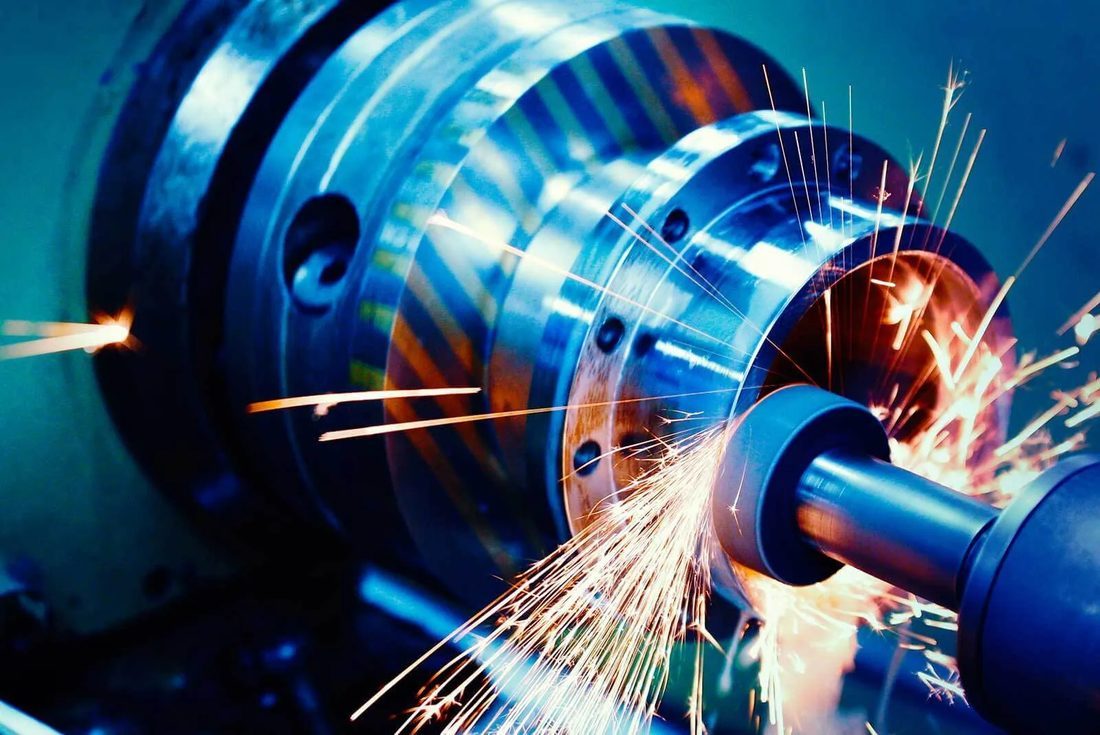
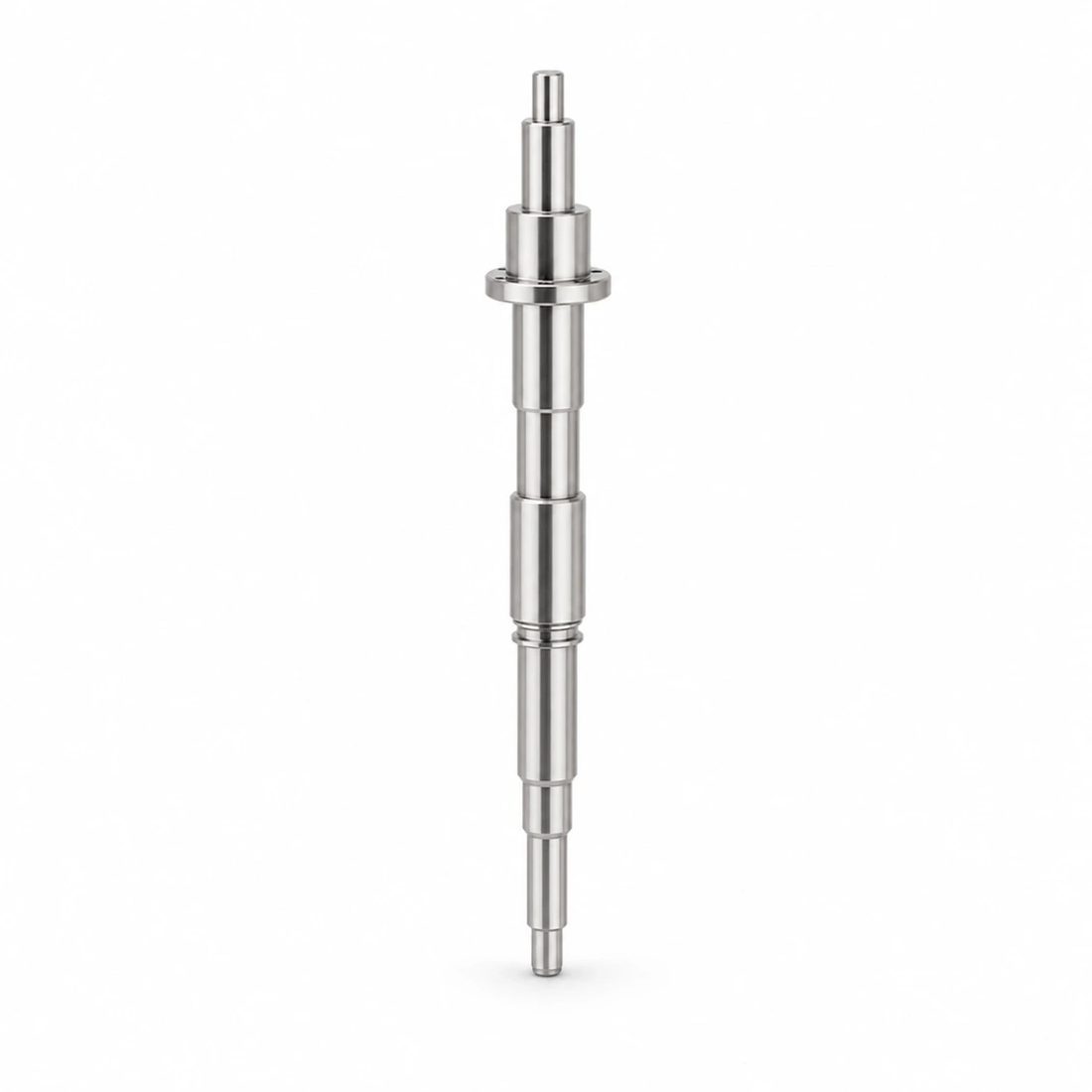
Many transmission parts are a gear at one end and a shaft, flange, or bore at the other. Doing the gear on one machine and the shaft features on another means re-clamping and re-establishing the datum - a 0.01 to 0.03 mm runout risk on every move. Turn-mill compound machining cuts the gear teeth and the shaft features in one chuck, so everything stays referenced to the same spindle axis.
What turn-mill does in one clamp
- Turn the shaft and bore to size and roundness.
- Mill the gear teeth with the part still on the axis.
- Cut flanges, keyways, and cross-holes without releasing the part.
- Drill and tap on the same datum.
- Inspect concentricity and runout in-process before removal.
| Approach | Setups | Runout risk |
|---|---|---|
| Gear machine + lathe/mill | 2-3 | 0.01-0.03 mm per re-clamp |
| Turn-mill, single chuck | 1 | None after first clamp |
A Practical Sourcing Checklist for Precision Gears
Hand this to a supplier and the weak ones will quietly bow out.
- Do they machine the gear and shaft features in one setup (turn-mill)?
- Can they state a DIN 3962 grade and inspect to it, not just 'precise'?
- Do they hold the bore and teeth concentric to the same datum?
- Can they machine spline shafts to DIN 5480 with a controlled root radius?
- Do they provide material certs and lot-level traceability?
- Will they verify runout and pitch on a gear-check or CMM?
- Do they answer engineering questions with numbers, not sales talk?
- Can they scale from prototype to volume without re-qualifying the process?
A supplier that clears all eight is rare - and worth keeping. One that stumbles on concentricity or cannot name a DIN grade should not be on a transmission program. Send us your gear or spline-shaft drawing for a free DFM review and we will flag the features that should move to turn-mill and the tolerances worth holding tight.
Precision Transmission CNC precision component
Common Sourcing Mistakes in DIN Gear Standards Compliance
Most gear failures were decided at the drawing, not the machine.
- Specifying a gear without naming a DIN 3962 quality grade.
- Holding the bore tight but ignoring tooth runout to that bore.
- Drawing a sharp spline root radius that the cutter cannot cut.
- Skipping first-article inspection to 'save time' - the cheapest insurance you have.
- Splitting gear and shaft work across shops and wondering why they drift.
- Ignoring traceability until a single complaint forces a full program review.
The cheapest gear is the one that passes qualification the first time - because the second time costs you a launch date and a warranty claim.
Precision Transmission CNC precision component
Precision Transmission CNC precision component
Precision Transmission CNC precision component
Precision Transmission CNC precision component
FAQ: precision gears & Precision Transmission Buyer Questions
A: Precision servo, instrument, and aerospace gears typically run DIN 3962 grade 5-6; general industrial drives sit at 7-8. We machine to the grade you specify and inspect profile, lead, and pitch against it rather than quoting a vague 'high precision'.
A: Yes. We cut involute splines to DIN 5480 with controlled major, minor, and pitch diameters and a generous root radius to avoid stress risers, keeping the spline concentric to the shaft axis via single-setup turn-mill work.
A: Hob for high-volume, simple gears where the tooling pays off. For prototypes, low volumes, and integrated gear-plus-shaft parts, CNC milling the teeth on a 5-axis or turn-mill center is faster to set up and keeps the teeth concentric to the bore. We do the latter in-house.
A: We routinely hold +/-0.005 mm positioning and keep total indicated runout under 0.01 mm on integrated gear-and-shaft parts, verified by CMM and gear-check rather than estimated.
A: Every lot is tied to its material mill certificate, machine, operator, and inspection records, plus a Certificate of Conformance - so any shipped part can be traced back to its full history from raw bar to finished component.
A: Yes. Turn-mill compound machining cuts the gear teeth and the shaft, bore, keyway, and flange features in a single chuck, so everything stays referenced to the same spindle axis and runout stays controlled.
Planning a precision gear, spline shaft, or coupling and unsure which DIN grade and tolerances your application really needs? Send us your drawing for a free DFM review - we will flag the features that should move to turn-mill, the geometry worth holding tight, and the inspection that proves the grade. No obligation, just a clear engineering answer.
Request a Free CNC Quote