CNC Heat Sink Manufacturing: Materials, Tolerances, and Fin Design for EVs (2026)
Every watt of wasted energy in an electric vehicle turns into heat, and heat is the enemy of range, reliability, and warranty cost. As power electronics, onboard chargers, and battery packs push higher currents, thermal management has moved from a footnote to a core design constraint.
This guide walks mechanical, thermal, and sourcing engineers through how CNC heat sinks are actually made: which aluminum alloys machine cleanly, why fin-wall tolerances of ±0.005 mm matter, how fin geometry changes the thermal picture, and what to look for in a supplier. We draw on fifteen years of stainless and aluminum precision machining at our Dongguan shop.
Table of Contents
- 1. CNC Heat Sinks 101: What They Are and Why Thermal Management Matters in EVs
- 2. Aluminum CNC Machining: The Material Choice Behind Efficient Heat Sinks
- 3. Heat Sink Machining Tolerances: Holding ±0.005 mm on Fin Walls
- 4. Fin Design Geometries in CNC Precision Machining
- 5. Automotive CNC Parts: Where Heat Sinks Live Under the Hood
- 6. Surface Finishes for Aluminum CNC Machining Heat Sinks
- 7. Common Thermal Management Mistakes in Heat Sink Machining
- 8. Choosing a CNC Heat Sinks Supplier: A Buyer's Checklist
Automotive&EV: electric,car
CNC Heat Sinks 101: What They Are and Why Thermal Management Matters in EVs
Start with the physics, then the manufacturing that serves it.
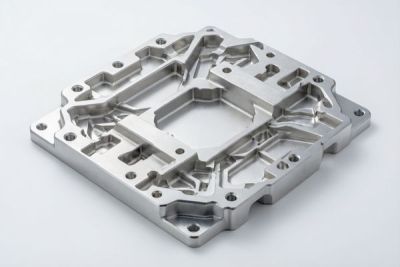
A CNC heat sink is a passive cooling body, usually aluminum, whose extended fins increase surface area so a component can shed heat to moving air. In an EV the biggest loads are the traction inverter, DC-DC converter, onboard charger, and battery junction box.
Where the heat comes from
Silicon carbide (SiC) inverters switch faster and run hotter than older IGBT designs, so junction temperatures climb past 150 degC. The heat sink is what keeps the die alive. Undersize it and you derate power; oversize it and you add mass the vehicle does not need.
- Traction inverter and onboard charger modules
- DC-DC converters and low-voltage auxiliaries
- Battery junction boxes and busbar supports
- Motor controller housings with integral fins
Automotive&EV: car,engine
Aluminum CNC Machining: The Material Choice Behind Efficient Heat Sinks
Aluminum is the default for a reason, but the grade changes everything.
Aluminum combines high thermal conductivity, low weight, and excellent machinability. For CNC heat sinks the workhorse grades are 6061, 6063, and 1070. 1070 trades strength for the highest conductivity; 6061 is the all-rounder; 6063 anodizes beautifully for a clean finished look.
| Grade | Thermal conductivity (W/mK) | Machinability | Typical use |
|---|---|---|---|
| 1070 | ~230 | Good | Max-conductivity, low-stress sinks |
| 6061 | ~170 | Excellent | Structural + thermal combined parts |
| 6063 | ~200 | Very good | Anodized visible heatsinks |
| MIC-6 / cast plate | ~130 | Fair | Large flat baseplates |
Why not just extrude it
Extrusion is cheap for constant-cross-section fins but cannot deliver thin, variable, or skived geometries or tight local features. CNC precision machining removes material to reach fin walls as thin as 0.3 mm and complex 3D fin shapes that extrusion simply cannot form.
Heat Sink Machining Tolerances: Holding ±0.005 mm on Fin Walls
Thin fins are where machining discipline shows.
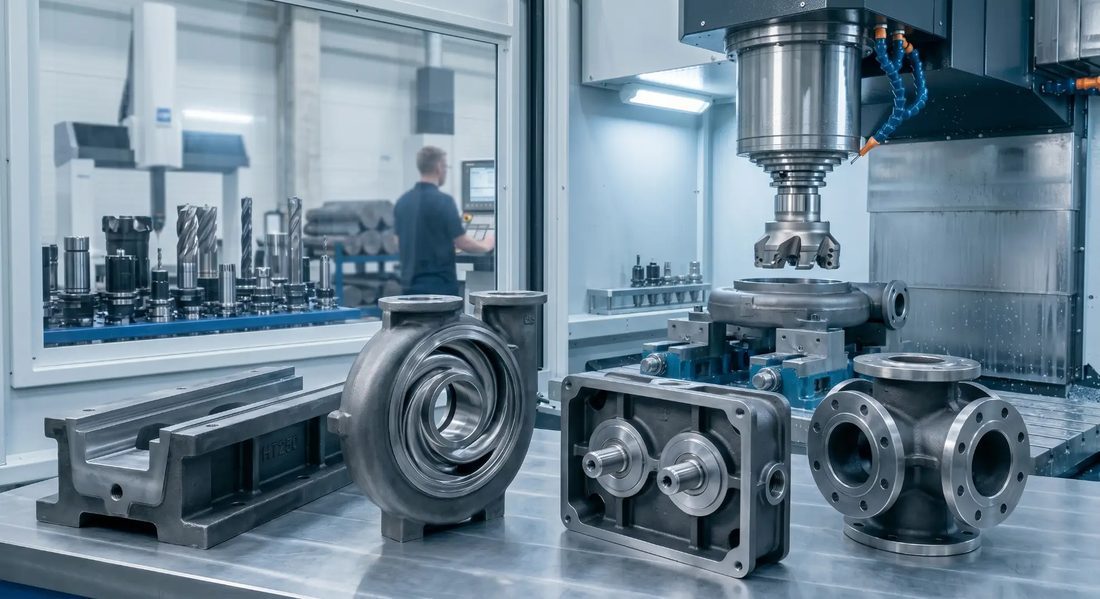
Fin walls of 0.3 to 0.8 mm maximize surface area, but thin aluminum deflects under the cutter. Holding ±0.005 mm wall tolerance demands rigid 5-axis or high-speed machining centers, sharp tooling, and controlled chip load. Burrs at the fin root are the silent killer of thermal contact.
- Select sharp, polished carbide tooling and a high spindle speed with low chip load
- Climb-mill to keep side loads and deflection down
- Deburr fin roots with cryogenic or abrasive flow, not hand work
- Verify on a vision system, not a caliper, because fins are flexible
Automotive&EV: factory
Fin Design Geometries in CNC Precision Machining
The shape of the fin is the shape of the thermal solution.
CNC precision machining unlocks fin shapes extrusion cannot: pin fins, staggered louvers, tapered fins, and embedded heat pipes. The right geometry depends on airflow. Forced airflow favors straight thin fins; natural convection favors taller, spaced pin fins.
| Fin type | Best airflow | Machining note |
|---|---|---|
| Straight thin | Forced | Fast, high density |
| Pin / staggered | Natural | Slower, best omnidirectional |
| Tapered | Mixed | Better stiffness, more tool time |
| Louver / offset | Forced | Breaks boundary layer, +15 pct |
A quick rules of thumb
- Fin spacing below 2 mm chokes natural convection but shines with a fan
- Taller fins help until tip-to-base conduction loss outweighs area gain
- A skived or bonded fin beats a solid block when mass is constrained
Automotive CNC Parts: Where Heat Sinks Live Under the Hood
Thermal parts rarely travel alone.
In practice the heat sink is one of several automotive CNC parts in the powertrain. We often machine the sink, the housing, and the busbar clamp from the same aluminum lot so coefficients of thermal expansion match and clamping stays stable across temperature cycles.
Co-locating these parts with one supplier also simplifies PPAP documentation and lot traceability, which procurement teams care about as much as the thermal number.
Automotive&EV: metal
Surface Finishes for Aluminum CNC Machining Heat Sinks
Finish affects both looks and heat.
A clear or black anodize is common, but note: anodizing adds a thin insulating layer (a few microns) that slightly raises interface resistance. For maximum conduction, a bare machined or chromate-free passivated surface with a good thermal interface material beats a heavy anodize.
Pros
- Clear anodize: corrosion resistant, clean look
- Black anodize: hides stains, absorbs a little radiation
- Bare machined: best conduction, needs coating for shelf life
Cons
- Anodize adds micro-insulation at the interface
- Black anodize can hide finish defects
- Bare aluminum oxidizes if not protected
Specify the finish after you size the thermal interface, not before, or you will pay a few percent of margin you never budgeted for.
Common Thermal Management Mistakes in Heat Sink Machining
The failures we see most often.
- Sizing the sink from datasheet ambient instead of your real under-hood air temp
- Ignoring interface material thickness and its spread resistance
- Choosing the thinnest fin without a deburring plan, then getting burrs
- Treating anodize as free when it costs a little conduction
- Forgetting that vibration loosens clamps and opens air gaps over time
Automotive&EV: robotic,arm
Choosing a CNC Heat Sinks Supplier: A Buyer's Checklist
What to verify before you release the PO.
- Can they hold and prove ±0.005 mm on fin walls (not just 'precision')?
- Do they show a fin-root deburring process?
- Is material lot traceable to a mill certificate?
- Do they run the right aluminum grade for your conductivity target?
- Can they machine the sink, housing, and clamps together for stack-up control?
- Do they support PPAP and first-article inspection for automotive?
Pick a partner who treats the heat sink as a system component, not a commodity block, and your thermal margin will survive both the simulator and the road.
Automotive&EV: circuit,board
Automotive&EV: welding
Automotive&EV: warehouse
Automotive&EV: machining
FAQ: CNC heat sinks & Automotive&EV Buyer Questions
A: 1070 leads on pure conductivity (~230 W/mK) but is soft; 6061 is the practical all-rounder with great machinability and strength, while 6063 anodizes cleanly for visible sinks. Match the grade to your conductivity and structural needs.
A: We routinely hold fin walls from 0.3 mm with ±0.005 mm tolerance, provided the supplier uses rigid high-speed machining, sharp tooling, and a real fin-root deburring process.
A: A thin anodize layer adds a few microns of insulation at the interface, slightly raising contact resistance. For maximum conduction use a bare machined or passivated surface with a quality thermal interface material.
A: Extrusion is cheaper for constant cross-sections, but CNC precision machining reaches thin, tapered, pin, and louvered fins and tight local features that extrusion cannot form, which is why high-performance EV sinks are machined.
A: Yes, and it is preferable. Machining related automotive CNC parts from one aluminum lot controls the thermal stack-up and simplifies PPAP and traceability.
A: Specify fin-wall tolerance at ±0.005 mm, base flatness to your interface-material thickness, and lock the inspection method (vision system, not caliper) so production does not drift from your prototype.
Send us your heat sink drawing and we will return a free DFM review with a thermal-stack tolerance plan.
Request a Free CNC Quote