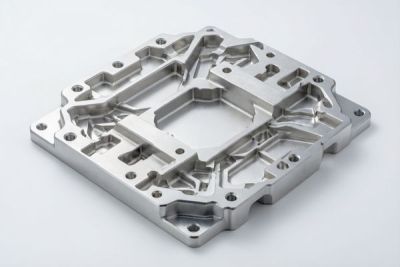
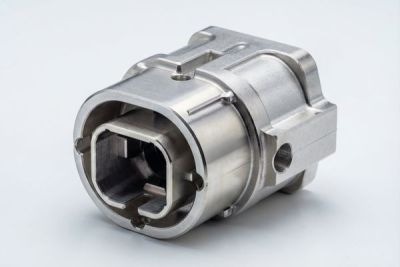
CNC Hinge Fittings: Machining & Tolerances for Smart Home (2026 Guide)
You can spec a phone that folds 200,000 times, a laptop lid that closes like a vault, or an oven door that swings smoothly for a decade — and still ship a product that rattles on day one. In our experience, the failure is almost never the motor or the screen. It is the hinge fitting: the small machined pivot that decides how the whole device feels in a customer's hands.
If you source consumer electronics and smart home CNC parts, the hinge is where fit, feel, and lifecycle quietly meet. This 2026 guide walks you through how hinge fittings are actually machined, what tolerances and finishes your product really needs, how to choose material, and exactly what to demand from a CNC shop before you release a purchase order. We write it the way we machine it — from the buyer's side, with numbers you can verify.
Everything below uses real figures from our Dongguan floor: 60+ CNC machines, a 4,000 m2 plant, ±0.005 mm capability, and an 8K mirror finish down to Ra 0.2 um. No marketing inflation — just the same discipline we apply for brands like De'Longhi, Donlim, and Breville.
Table of Contents
- 1. What Are Hinge Fittings and Why CNC Precision Machining Matters for Them
- 2. How Hinge Fittings Are Machined: The CNC Precision Machining Process
- 3. Tight Tolerance CNC for Hinge Fittings: Achieving +/-0.005 mm
- 4. Stainless Steel Mirror Finishing on Hinge Fittings: Why Surface Finish Counts
- 5. Consumer Electronics and Smart Home CNC Parts: Where Hinge Fittings Live
- 6. Custom CNC Parts vs Standard Hinges: Choosing What Your Product Needs
- 7. Hinge Fittings Material Choices: Stainless, Aluminum, and Brass Compared
- 8. A Buyer's Checklist for Sourcing Hinge Fittings from a CNC Shop
- 9. Common Mistakes When Specifying Hinge Fittings (and How to Avoid Them)
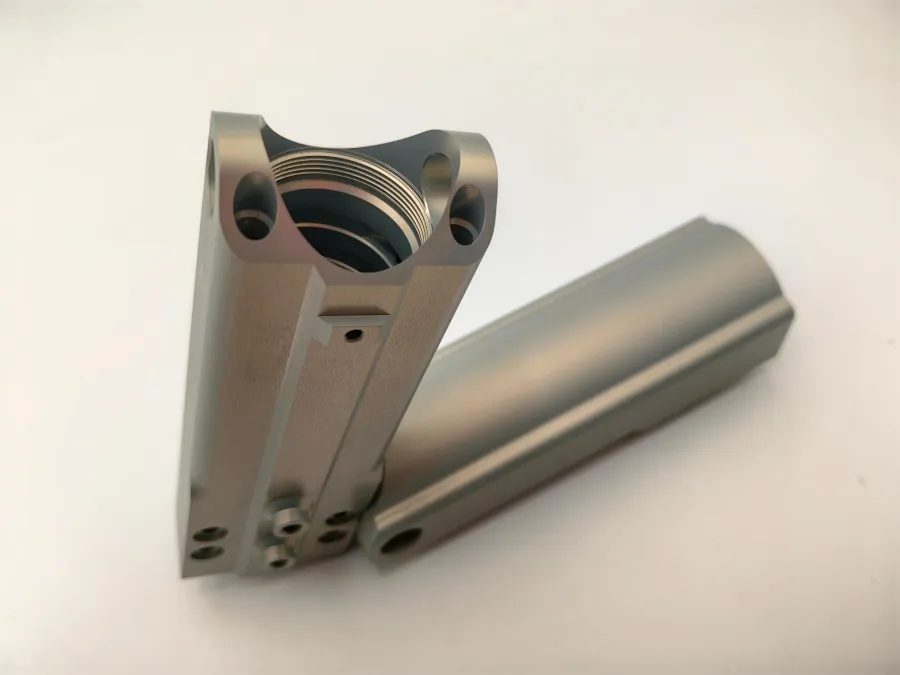
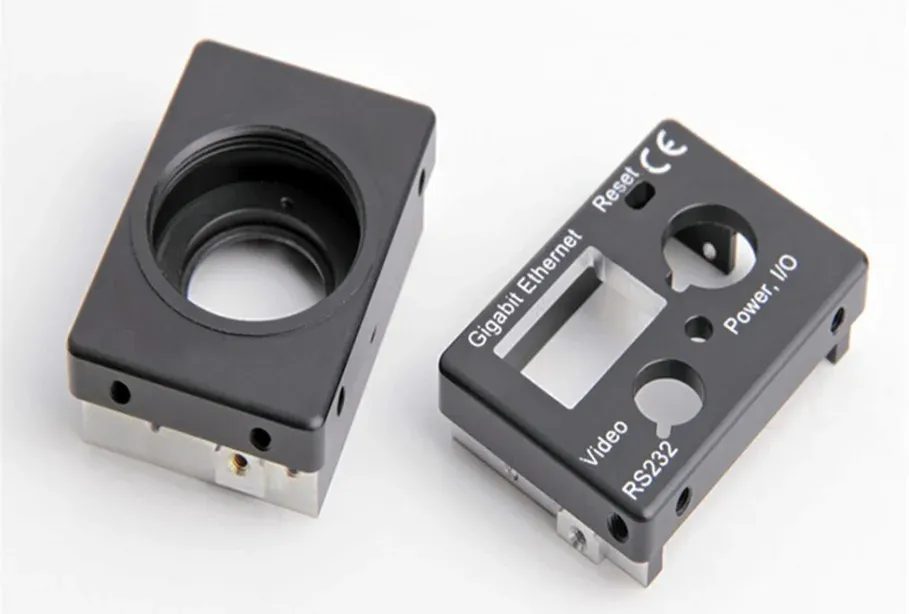
Consumer Electronics&Smart Home CNC precision component
What Are Hinge Fittings and Why CNC Precision Machining Matters for Them
Before you spec a hinge, know what load, swing, and finish your product actually demands.
A hinge fitting is a machined pivot assembly that couples two panels and controls their relative rotation. In consumer electronics and smart-home products it is rarely just two leaves and a pin. The fitting often carries a wire channel, a damping detent, a spring, or a cosmetic cap — and it must hold its geometry through tens of thousands of open-close cycles while the rest of the product ages around it.
- Hinge fitting
- A machined pivot assembly that couples two panels and controls their rotation, often carrying wires, dampers, or detents.
- Detent
- A deliberate stop in the swing arc that holds a lid open at a chosen angle without a separate lock.
- Pivot bore
- The reamed through-hole the pin or bushing rides in; its roundness and position tolerance decide wobble and rattle.
Why does CNC precision machining matter here more than almost anywhere else in a device? Because the hinge is the one moving interface a user touches every single day. A 0.02 mm oversize on the pivot bore does not show up on a CMM report as a crisis — it shows up six months later as a lid that will not stay up, or a door that creaks. The feel of a premium product is built on tolerances most spec sheets never mention.
Where hinge fittings show up in consumer electronics and smart home
- Laptop and tablet lid hinges — thin-wall, high-cycle, smooth detent.
- Oven and refrigerator door hinges — heat, load, and corrosion resistance.
- Robot-vacuum and appliance lids — lightweight, snap-free opening.
- Coffee-machine access panels — food-contact stainless with a mirror face (the De'Longhi/Donlim/Breville class of program).
- Smart-speaker and display grille pivots — cosmetic, tactile, low load.
If you are building any of these, our consumer electronics and smart home CNC parts guides cover the surrounding components, but the hinge is where we tell buyers to start the design conversation. Get the pivot right and the rest of the assembly behaves.
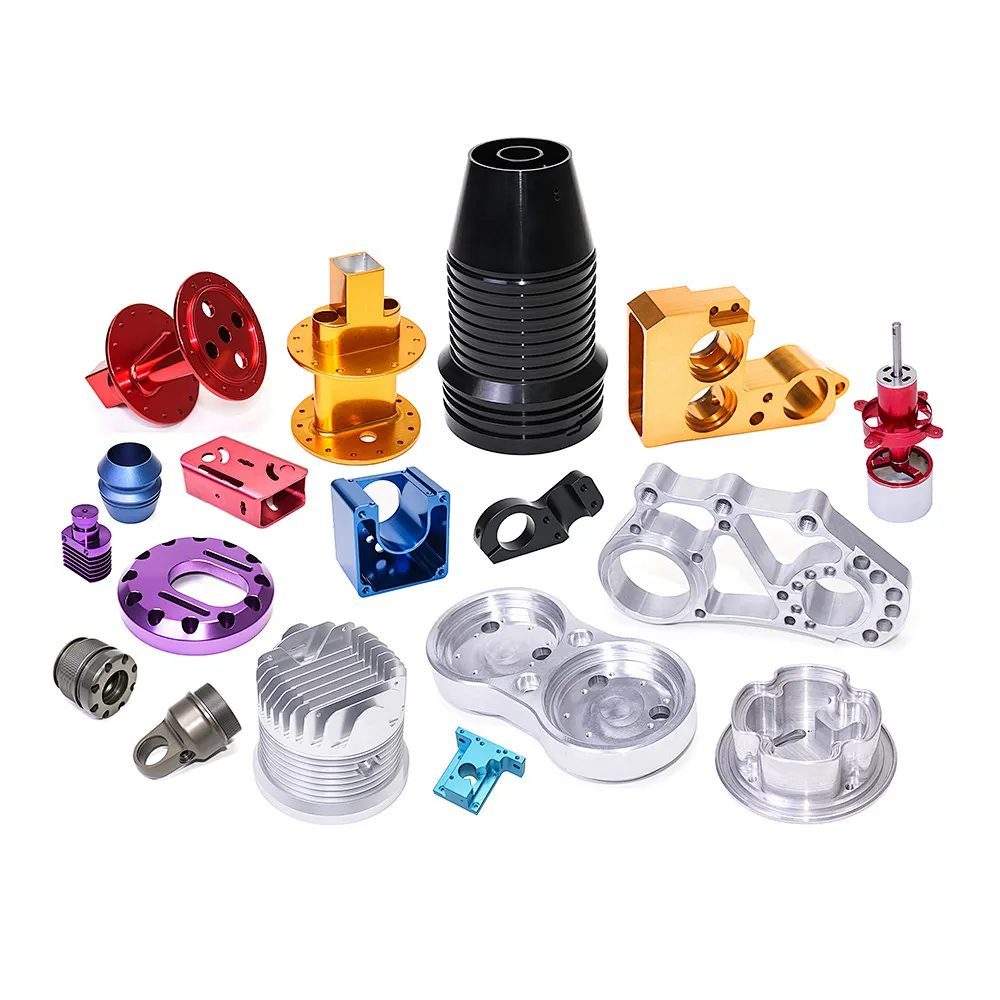
Consumer Electronics&Smart Home CNC precision component
How Hinge Fittings Are Machined: The CNC Precision Machining Process
Three stages decide whether your hinge feels like a tool or a toy.
A hinge fitting looks simple on the screen and is unforgiving on the floor. We run it as a three-stage CNC precision machining process, where each stage hands a tighter budget to the next. The mistake most shops make is trying to hold the final tolerance in a single aggressive cut — which work-hardens the bore and wrecks roundness.
Stage 1 — Turn-mill roughing and feature creation
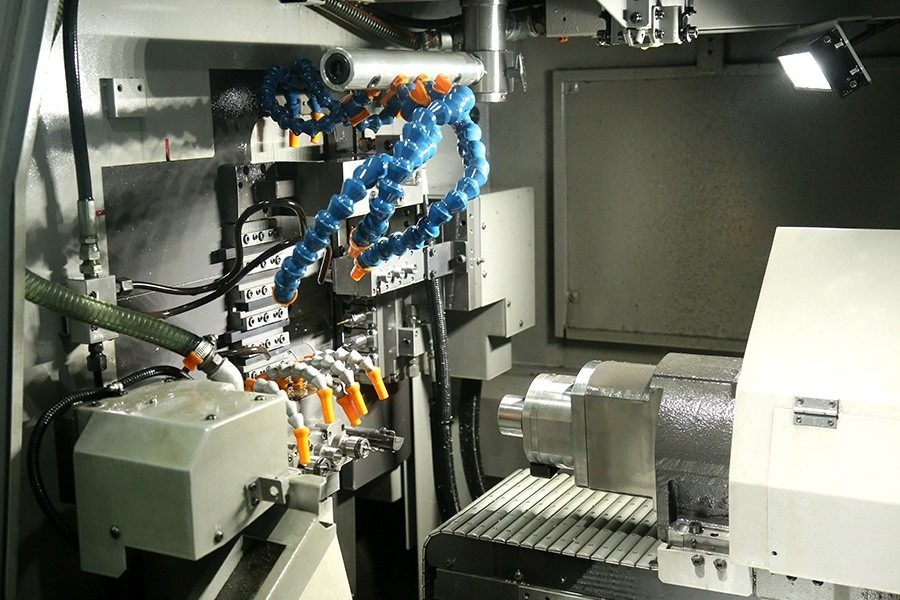
We start on turn-mill compound centers and Swiss-type automatic lathes, which create the shaft, leaves, and mounting features in one setup. Single-setup machining removes the re-clamp error that destroys positional accuracy on a thin hinge leaf. For our high-mix smart-home work this also means a prototype can be cut within days, not weeks.
- Rough the blank to leave a uniform 0.15 to 0.3 mm stock on every finished face.
- Create the leaf profile, screw bosses, and wire channels in one clamp.
- Separate parts with a clean part-off that leaves no burr on the pivot boss.
Stage 2 — Boring, reaming, and the +/-0.005 mm pivot
The pivot bore is finished last, after the part has settled from roughing. We bore close, then ream or fine-bore to the final size, holding position with in-process probing. This is the stage where tight tolerance CNC separates a real precision shop from a jobbing shop. Our floor holds +/-0.005 mm on pivot bores as a standard capability, verified on a CMM first-article.
- Bore the pivot to within 0.05 mm of final size to relieve stress.
- Ream or fine-bore to nominal with a position tolerance of +/-0.005 mm.
- Probe the bore position in-cycle; reject and re-cut before the part leaves the machine.
Stage 3 — Mirror finishing and passivation
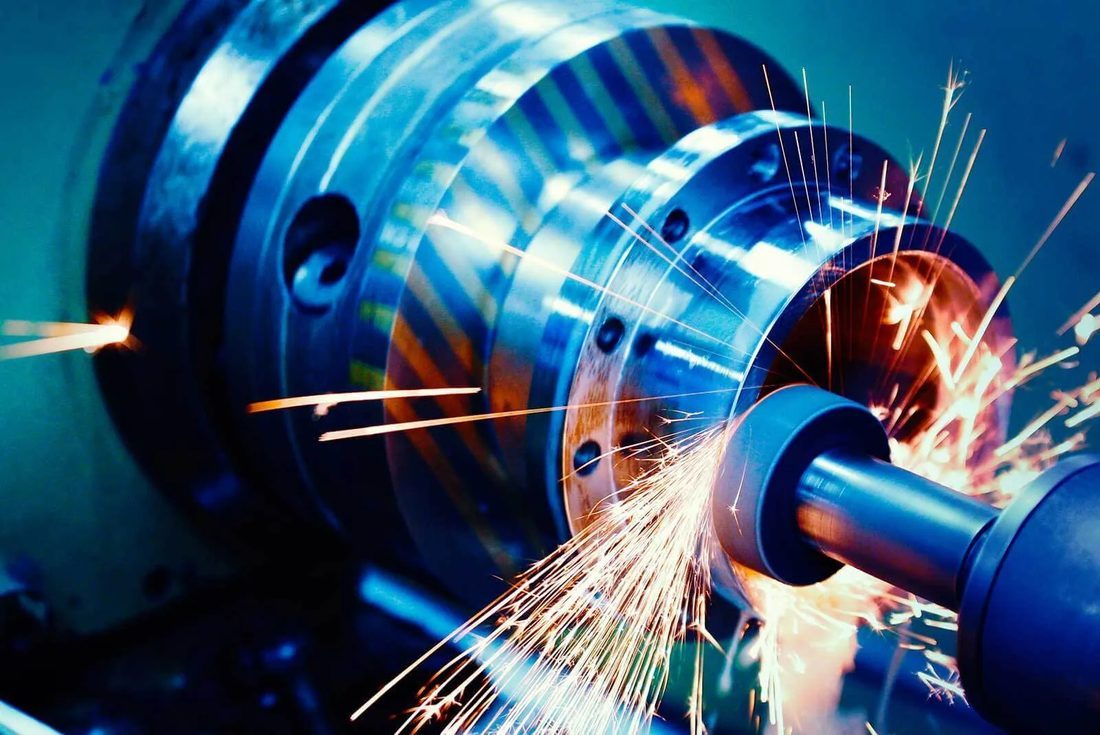
For visible or food-contact hinges we apply stainless steel mirror finishing — our standard mirror is Ra <= 0.6 um, and our top 8K mirror reaches Ra 0.2 um, reflective enough to read text in. Stainless parts are then passivated to ASTM A967 to restore corrosion resistance after machining. This is the step that makes a coffee-machine hinge look and feel like a premium appliance, not a stamped bracket.
| Stage | Primary process | Typical tolerance | Surface result |
|---|---|---|---|
| 1. Rough + feature | Turn-mill / Swiss lathe | +/-0.05 mm | As-machined |
| 2. Pivot bore | Bore + ream + probe | +/-0.005 mm | Fine bored |
| 3. Finish | Mirror polish + ASTM A967 | Form held | Ra 0.2 to 0.6 um |
Our Dongguan plant runs 60+ CNC machines including turn-mill compound and 5-axis centers, so a hinge program can move from prototype to mass production — up to 500,000 pieces a month — on the same process window, without re-tooling.
Tight Tolerance CNC for Hinge Fittings: Achieving +/-0.005 mm
Tolerance is not a number you print on a drawing — it is a budget you spend across features.
When buyers say 'make it precise', what they usually mean is 'make the pivot not wobble'. Tight tolerance CNC should be spent where motion lives — the bore, its position, and the leaf flatness — not sprinkled across the whole part. Spending tolerance on a non-bearing face just raises cost with no benefit to feel.
- GD&T position
- A geometric tolerance controlling where a feature's center must sit; far more useful for hinges than a simple +/- dimension on a drawing.
- Roundness
- How close the bore cross-section is to a true circle; poor roundness = rattle even when the diameter is 'in tolerance'.
| Feature | Function it serves | Recommended tolerance | Why it matters |
|---|---|---|---|
| Pivot bore diameter | Pin fit, no play | +/-0.005 mm | Wobble and rattle live here |
| Bore position (GD&T) | Leaf alignment | 0.01 mm pos. | Lid sits square every time |
| Leaf flatness | No bind on swing | 0.02 mm | Smooth, damped motion |
| Mounting boss | Screw seat | +/-0.05 mm | Holds, but not load-bearing |
How we hold +/-0.005 mm on pivot bores
- Temperature-stable shop and gauging so steel does not drift between cut and measure.
- In-process probing feeds position back before the part is released.
- Ream after a relieved bore so the cutting force cannot distort the wall.
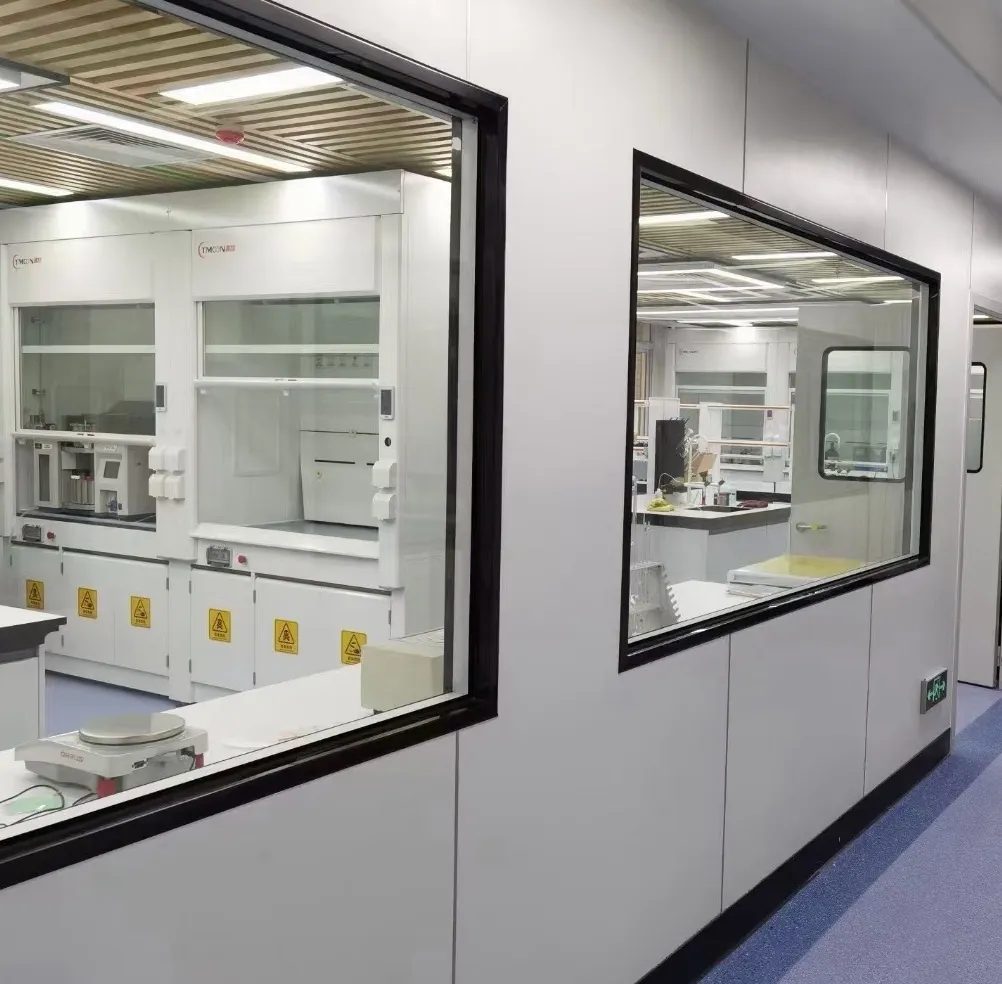
- CMM first-article report at +/-0.005 mm before any production batch runs.
- Incoming-batch traceability so a material lot can be tied to every shipped hinge.
For food-contact or medical-adjacent hinges, ASTM A967 passivation is not optional — it is what keeps a mirror-finished stainless surface from rusting at the grain boundaries the cutter exposed. We treat it as a drawing requirement, not a finish-up.
Consumer Electronics&Smart Home CNC precision component
Stainless Steel Mirror Finishing on Hinge Fittings: Why Surface Finish Counts
Finish is the first thing a customer touches and the last thing most specs describe well.
Stainless steel mirror finishing is where a hinge stops being a bracket and starts being a brand signal. On a coffee-machine door or a smart-speaker pivot, the user sees and feels the surface every day. A raw machined face (Ra ~1.6 um) reads as 'industrial'; an 8K mirror (Ra 0.2 um) reads as 'premium' — and resists fingerprints and cleaning chemicals far better.
- 8K mirror
- The highest commercial stainless finish, about Ra 0.2 um, reflective enough to read text in the surface.
- Ra
- Roughness average, the mean deviation of the surface profile; lower means smoother and more corrosion-capable.
| Finish tier | Roughness (Ra) | Process | Best for |
|---|---|---|---|
| Standard machine | 1.6 um | As-cut | Hidden internal hinges |
| Standard mirror | <= 0.6 um | Mirror polish | General visible hinges |
| 8K mirror | 0.2 um | Mirror + electrolytic | Food-contact, cosmetic, flagship |
Why mirror finishing matters for smart-home hinges
- Fingerprint and smudge resistance on touch surfaces.
- Better corrosion behavior after ASTM A967 passivation.
- A tactile 'expensive' feel on lids and doors.
- Easier cleaning on kitchen and appliance hinges.
- A cosmetic face that hides micro-burr and tool marks.
If your program needs a unique pivot shape or a cosmetically critical face, our custom CNC parts team will DFM-review the finish tier against your real visibility and budget before you cut steel.
Consumer Electronics and Smart Home CNC Parts: Where Hinge Fittings Live
A hinge never ships alone — it is part of a system you must design as a whole.
Hinge fittings sit inside a larger assembly, and the right spec depends entirely on what that assembly must survive. A laptop lid hinge and an oven door hinge share the word 'hinge' and almost nothing else. Mapping the application before you choose tolerance, material, and finish prevents the most expensive mistake: over-engineering one property while under-engineering another.
| Product | Hinge role | Must-have property | LusterControl fit |
|---|---|---|---|
| Laptop / tablet lid | High-cycle, thin wall | +/-0.005 mm, 5-axis | Turn-mill + probe, 60+ CNC floor |
| Oven / fridge door | Heat + load + corrosion | 304/316 + ASTM A967 | Passivated stainless, traceable |
| Robot-vacuum lid | Lightweight, snap-free | Aluminum 7075 | 5-axis light alloy |
| Coffee machine | Food contact + mirror | 8K Ra 0.2 + passivation | De'Longhi/Donlim/Breville class |
| Smart speaker grille | Cosmetic pivot | Mirror finish | Ra 0.2 um cosmetic |
Designing the hinge into the product
- Define the swing angle and detent torque before the industrial design is frozen.
- Reserve wall thickness for the pivot boss; thin leaves need ribs, not just tolerance.
- Pick material by environment (heat, moisture, food) not by catalog price.
- Tie finish tier to visibility so you pay only for what the user sees.
- Release the DFM review early — re-work after tooling is 10x the cost.
For context on the factory behind these programs, Dongguan Licun Technology has supplied precision parts to De'Longhi, Donlim, and Breville since 2015, with a UAV customer first order of RMB 1.2M and annual output above RMB 20M.
Consumer Electronics&Smart Home CNC precision component
Custom CNC Parts vs Standard Hinges: Choosing What Your Product Needs
Off-the-shelf hinges are cheap until they define your product's failure mode.
Every sourcing conversation eventually hits this fork: buy a catalog hinge or machine a custom CNC part. Standard hinges win on price and lead time for low-stakes panels. They lose the moment your product needs a specific detent, a thin-wall leaf, a mirror face, or a tolerance the catalog cannot hold. The right answer is almost always 'custom for the moving interface, standard for the cover'.
| Factor | Standard hinge | Custom CNC hinge |
|---|---|---|
| Fit and form | Generic, one size | Exact to your panels |
| Tolerances | Loose, unverified | +/-0.005 mm, CMM-proven |
| Surface finish | Plated or raw | Mirror to 8K Ra 0.2 um |
| Lead time | In stock | 7 to 15 days prototype |
| Volume | Any | Small-batch + mass (500k/mo) |
Pros
- Exact fit to your panels and detent spec
- Tolerance and finish verified, not assumed
- Material chosen for your environment
- Scales from prototype to mass on one process
Cons
- Higher unit cost at very low volume
- Needs a clean drawing and DFM review
- Longer first-article cycle than buying stock
Choose custom CNC parts if
- The hinge is a visible or load-bearing brand surface.
- You need a detent torque or swing angle the catalog cannot give.
- Food-contact or corrosion environment demands passivated stainless.
- Volume is enough to amortize one setup across a real run.
- You are protecting a new design and need an NDA before release.
Choose standard hinges if
- The panel is hidden and non-load-bearing.
- Tolerance and finish are not customer-visible.
- You need 10 pieces tomorrow and will redesign later.
- Cost per unit dominates the whole BOM.
When in doubt, send the drawing to our free DFM review — we will tell you plainly whether a custom CNC part earns its cost on your specific hinge.
Hinge Fittings Material Choices: Stainless, Aluminum, and Brass Compared
Material sets the ceiling on corrosion, weight, and the finish you can reach.
The material you pick for a hinge fitting decides three things at once: how light it is, how long it survives, and how good a mirror finish it can take. Stainless wins on corrosion and cosmetics, aluminum wins on weight for lids and UAV-class parts, and brass wins on low-friction, cosmetic pivots. There is no single right answer — only the one that matches your environment.
| Material | Strength | Weight | Corrosion | Finish ceiling | Typical use |
|---|---|---|---|---|---|
| 304 stainless | High | Medium | Good | 8K Ra 0.2 um | Appliances, food contact |
| 316 stainless | High | Medium | Excellent | 8K Ra 0.2 um | Marine, medical-adjacent |
| Aluminum 7075 | High | Low | Fair (anodize) | Good (before anodize) | Lids, robot, UAV |
| Brass | Medium | Medium | Good | Mirror | Cosmetic low-friction pivot |
- ASTM A967
- The US standard for passivating stainless steel to restore its corrosion resistance after machining cuts expose fresh grain boundaries.
Which material for which smart-home hinge
- Kitchen and appliance hinges: 304 or 316 stainless, passivated to ASTM A967, mirror-finished.
- Lightweight lids and robot hinges: aluminum 7075 for mass savings, anodized after machining.
- Cosmetic low-load pivots: brass for a warm mirror face and natural slip.
- Any food-contact part: stainless only, with passivation as a drawing requirement.
Consumer Electronics&Smart Home CNC precision component
A Buyer's Checklist for Sourcing Hinge Fittings from a CNC Shop
Before you send the PO, make the supplier prove these five things.
Sourcing hinge fittings is less about finding the cheapest quote and more about avoiding the shop that cannot prove what it ships. A real precision supplier answers this checklist without hesitation. If a shop stalls on item three or four, that is your answer.
- Drawing plus 3D model with GD&T position callouts, not just +/- dimensions.
- Material mill cert for stainless or aluminum, tied to the batch.
- First-article CMM report proving +/-0.005 mm on the pivot bore.
- Passivation to ASTM A967 on every stainless hinge.
- Batch traceability plus ISO 9001 / ISO 13485 on the quality system.
- A written prototype lead time (we run 7 to 15 days on the 60+ machine floor).
Red flags to walk away from
- No CMM, only caliper claims of 'precise'.
- No material cert or passivation record for stainless.
- Cannot hold tighter than 0.01 mm and will not say so.
- No NDA process for a new product design.
- Vague lead times with no first-article step.
Confidentiality is routine for us, not a special favor — brand programs like De'Longhi, Donlim, and Breville run under NDA as standard, and your CAD stays controlled from quote to shipment.
Common Mistakes When Specifying Hinge Fittings (and How to Avoid Them)
Most hinge failures are designed in, not manufactured in.
After thousands of hinge programs, the same specification mistakes repeat. None of them are the machinist's fault — they are written into the drawing before steel is cut. Fix them at the DFM stage and your hinge feels right on the first run.
- Specifying +/-0.01 mm on every feature — you pay for tolerance you do not need on non-pivot faces.
- Forgetting wall thickness on a thin laptop leaf — add ribs instead of hoping tolerance saves it.
- Leaving detent torque out of the spec — the lid then drifts or slams.
- Calling for 8K mirror on a hidden internal hinge — pure wasted cost.
- Releasing a new design with no NDA — your pivot becomes a competitor's benchmark.
The cheapest hinge is the one designed once, correctly. A short DFM review against these five mistakes typically saves more than the entire machining margin — and it is the difference between a product that feels premium and one that rattles in warranty.
Consumer Electronics&Smart Home CNC precision component
Consumer Electronics&Smart Home CNC precision component
Consumer Electronics&Smart Home CNC precision component
Consumer Electronics&Smart Home CNC precision component
FAQ: hinge fittings & Consumer Electronics&Smart Home Buyer Questions
A: Hold the pivot bore to +/-0.005 mm with a GD&T position callout, not a simple diameter tolerance. Roundness matters as much as size — a bore that is 'in diameter' but not round will still rattle. We verify this on a CMM first-article before any production batch.
A: Yes. We machine stainless hinge fittings to an 8K mirror finish (Ra 0.2 um) and passivate them to ASTM A967 after machining. This is the same discipline we apply for De'Longhi, Donlim, and Breville-class coffee programs where the hinge is both visible and food-adjacent.
A: Typically 7 to 15 days for prototypes, because our Dongguan floor runs 60+ CNC machines including turn-mill compound and 5-axis centers. Small-batch custom work and mass production (up to 500,000 pieces a month) share the same process window, so scaling does not mean re-tooling.
A: Yes, and it is routine rather than a special request. Brand programs we support run under NDA as standard, with CAD held under controlled access from quote through shipment. Confidentiality is part of how we handle new-product work, not an add-on.
A: Choose aluminum 7075 when mass savings dominate — robot vacuums, drone-class lids, and portable devices. Choose stainless (304 or 316, passivated to ASTM A967) when corrosion, food contact, or a mirror cosmetic face matters more than weight. The right pick follows the environment, not the catalog.
A: We are ISO 9001-certified and ISO 13485-completed, with IATF 16949 in application. We act as a contract precision-machining source, not a finished-device maker, so regulatory clearance for a finished medical or automotive device remains the brand owner's responsibility. Our QMS and traceability are what we certify and prove.
Send us your hinge fitting drawing for a free DFM review — we will flag tolerance, finish, and material risks before you cut steel, and tell you plainly whether a custom CNC part earns its cost on your product.
Request a Free CNC Quote