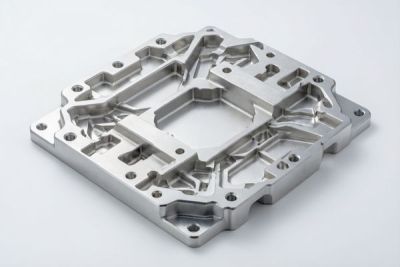
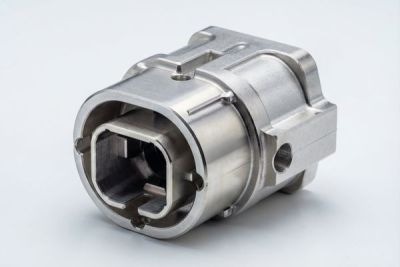
CNC Retaining Rings for Medical Devices: A Complete Technical Guide 2026
A retaining ring is one of the smallest parts in a medical assembly and one of the easiest to get wrong. When a surgical handpiece, an infusion pump, or a diagnostic cartridge relies on a circlip to seat a bearing or lock a shaft, a ring that is 0.02 mm too thick, or one whose edge burrs during cutting, can turn a calibrated mechanism into a field failure. If you are specifying parts for a medical device program, the ring is not a commodity — it is a load-bearing interface you will be asked to defend in a design review.
In this guide we walk through how CNC precision machining turns a flat steel blank into a medical-grade retaining ring with a true, burr-free edge and a tolerance you can verify on a CMM. We cover the dimensional envelope that actually matters for safety, the stainless finishes that survive repeated sterilization, and how to decide between a standard ring and a custom CNC part when your assembly is unusual. Along the way we use real numbers from a 15-year Dongguan source shop so you can benchmark what a capable supplier should be able to show you.
We have machined precision components since 2015, run 60 CNC machines under one roof, and ship around 500,000 parts a month from a 4,000 sqm plant. This is written from the shop floor — the tolerances, finishes, and trade-offs are the ones we argue about with engineers before a single ring is cut, not catalog copy.
Table of Contents
- 1. What Are Retaining Rings and Why Medical CNC Parts Depend on Them
- 2. How CNC Precision Machining Produces a Medical-Grade Retaining Ring
- 3. Retaining Rings vs Snap Rings vs Threaded Fasteners: A Medical Comparison
- 4. Tight Tolerance CNC: Dimensional Specs That Keep Implants Safe
- 5. Choosing Stainless Steel Mirror Finishing for Retaining Rings
- 6. Custom CNC Parts: When Off-the-Shelf Rings Fail in Medical Assemblies
- 7. A Buyer's Sourcing Checklist for Medical Retaining Rings
- 8. Common Mistakes When Specifying Medical Retaining Rings
- 9. Why LusterControl: A 15-Year Dongguan Source for Medical CNC Parts
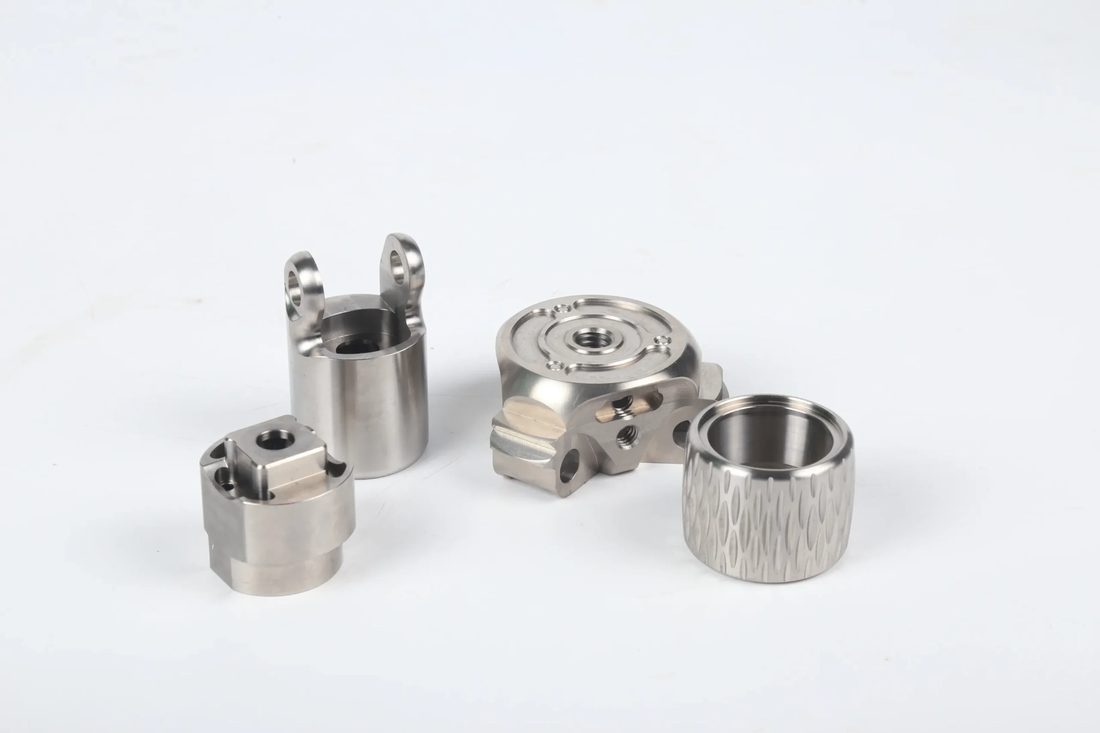
Medical CNC precision component
What Are Retaining Rings and Why Medical CNC Parts Depend on Them
Tiny part, large consequence — the ring is a load path, not an afterthought.
A retaining ring, often called a circlip, is a circumferential fastener that holds a component on a shaft or inside a bore by seating in a precision groove. It replaces a nut, a washer stack, or a snap-fit where axial space is too tight for threaded hardware. In medical equipment the ring carries real radial and thrust load: it retains the bearing in a surgical handpiece, locks the optical module in an endoscope, or holds the actuator shaft in a drug-delivery pump. When it lets go, the device does not just rattle — it stops being safe.
- Retaining ring / circlip
- A split or solid ring that seats in a machined groove to axially locate a part; it transfers load into the groove wall rather than into threads.
- Groove
- The turned or milled channel that captures the ring. Its width, depth, and edge break decide whether the ring stays seated under vibration and thermal cycling.
- Radial vs axial ring
- An axial ring loads sideways into a bore or over a shaft face; a radial (Spiral/E-ring) type pops into a groove from the side. Medical designs usually favor the axial type for cleaner edges.
- Pretension
- The elastic clamp force the ring exerts on its mating face. Too little and it walks; too much and it plastically deforms on install.
Why medical is a different game from industrial: the part is sterilized, sometimes hundreds of times, and it cannot shed a burr or corrode into the fluid path. A ring that is fine in a garden tool can be a contamination event in an operating room. That is why the material, the edge condition, and the finish are specs you write down, not features you hope for. You can see how we group these requirements across our medical CNC parts guides so the ring is treated as a system component, not a bolt-on.
Where you actually find them in medical equipment
- Surgical handpieces and powered drills — bearing retention under high RPM and vibration
- Infusion and drug-delivery pumps — actuator and valve shaft locating
- Endoscopic articulation joints — small-bore rings that survive flexing
- Diagnostic centrifuge spindles — high-speed radial load retention
- Lab automation actuators and pipette carriages — repeatable, low-backlash seating
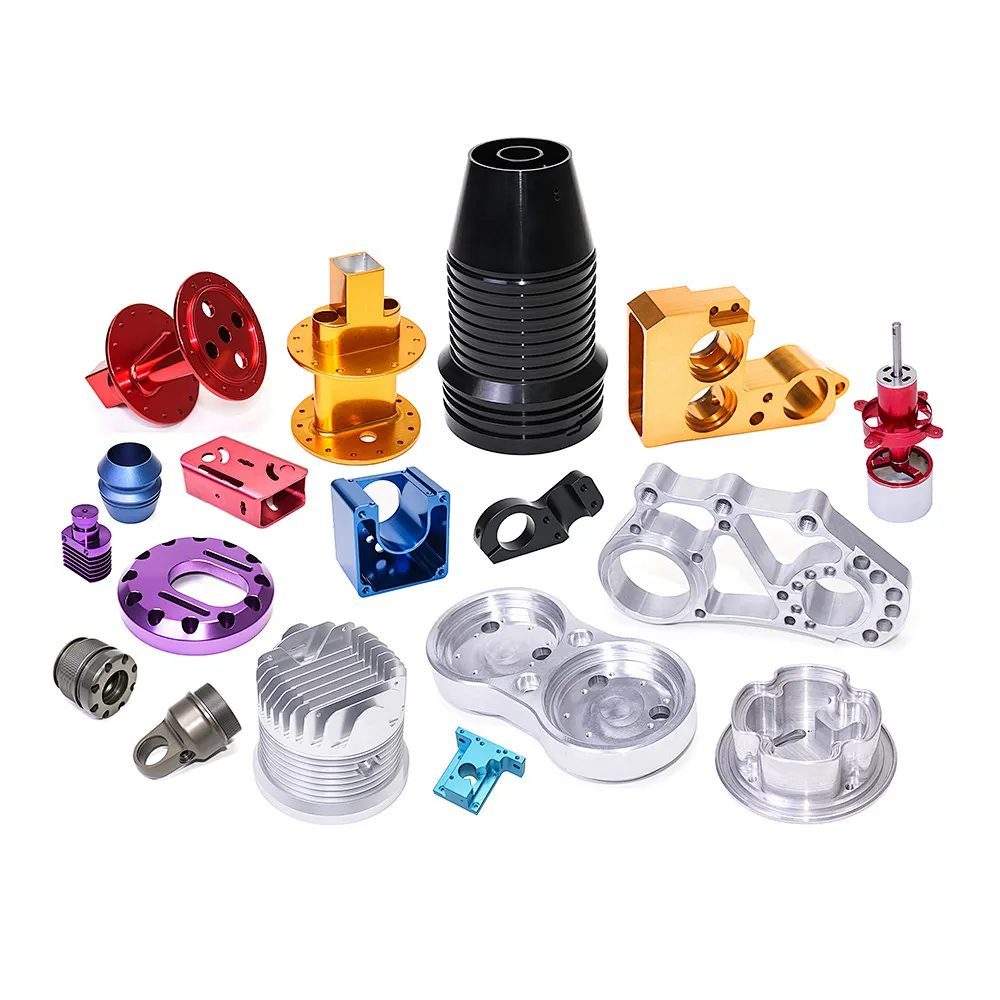
Medical CNC precision component
How CNC Precision Machining Produces a Medical-Grade Retaining Ring
Five operations, one datum, zero burrs you can feel.
A medical retaining ring is not stamped-and-filed; it is cut. CNC precision machining lets us control the groove geometry, the edge break, and the flatness on the same datum that the ring will later seat against. That single-datum logic is the whole reason a CNC ring beats a drawn one when the interface is load-critical. Below is the three-stage flow we run on every medical ring program, written so you can ask a supplier the right questions.
Step 1 — Material prep and blanking
We start from certified stainless — typically 316L for corrosion resistance or 17-7PH when spring properties matter — and we keep the material cert traceable to the heat lot. The blank is roughed to leave a uniform stock allowance so the final contour cut is consistent part to part. For medical work we agree the passivation route up front, usually per ASTM A967, because the chemical plan affects which surface defects are acceptable.
Step 2 — Turning and contouring on the CNC
On Swiss-type and turn-mill centers we cut the ring profile and the groove in a single setup, holding the part on one datum so the groove width and the ring thickness stay mutually true to ±0.005 mm. Running the contour in one clamp is what lets us skip the hand-lapping step that stamped rings need, and it is why we can promise a groove width that your bearing supplier can design around. The edge break is cut intentionally, not deburred as an afterthought.
Step 3 — Deburring, passivation, and finish
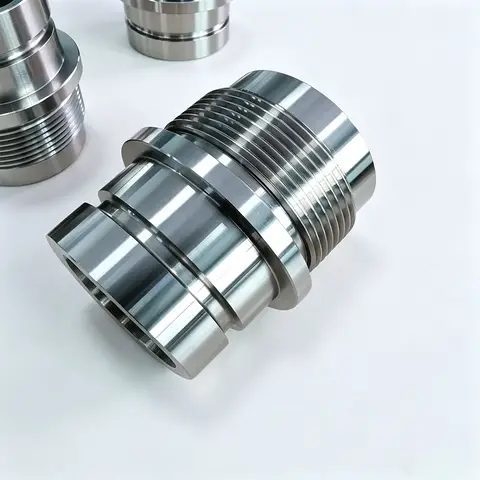
After machining we radius every edge, passivate per ASTM A967 so the surface resists fingerprint and process corrosion, and — where the application demands it — electropolish the ring to a mirror Ra 0.2 µm (8K). Electropolishing is not cosmetics here: it removes micro-crevices where biofilm hides, which is exactly the failure mode you do not want in a sterilized instrument. The finished ring is gauged, not just looked at.
| Process step | What it controls | Typical spec we hold |
|---|---|---|
| Material prep | Chemistry and traceability | 316L / 17-7PH, heat-lot cert |
| CNC contour | Groove + ring geometry | ±0.005 mm positional, one datum |
| Edge break | Burr-free seating | R0.05–0.15 mm controlled radius |
| Passivation (ASTM A967) | Corrosion resistance | Citric or nitric per spec |
| Finish (optional) | Cleanability | Ra 0.2 µm mirror / 8K |
Retaining Rings vs Snap Rings vs Threaded Fasteners: A Medical Comparison
Same job, three philosophies — pick by failure mode, not by price.
When you need to locate a part axially, you have three families of solution, and they fail in different ways. A retaining ring is compact and reusable but depends entirely on groove quality. A snap ring is cheaper and faster to install but tolerates more edge variation. A threaded fastener is the most robust axially but eats space and adds a torque-spec headache in a sterilized assembly. The table below puts real numbers next to the marketing.
| Factor | Retaining ring (CNC) | Stamped snap ring | Threaded fastener |
|---|---|---|---|
| Axial space used | Lowest (sits in groove) | Low | Highest (nut + thread) |
| Edge / burr control | Cut radius, burr-free | Variable, needs deburr | N/A |
| Reusability | High (elastic) | Medium | High |
| Sterilization fit | Excellent with passivation | Good if deburred | Good, but crevices at thread |
| Typical tolerance | ±0.005 mm groove | ±0.02 mm class | Thread class dependent |
| Best medical use | Load-critical seats | Non-critical retention | High-thrust joints |
Pros
- Smallest axial envelope of the three options
- Burr-free cut edge survives sterilization cycles
- Groove geometry is fully controllable on one datum
- Reusable and serviceable without special tools
Cons
- Entirely dependent on groove machining quality
- Slightly higher unit cost than a stamped ring
- Requires a designed groove, not a retrofitted one
- Wrong material choice still corrodes under autoclaving
Choose a retaining ring if the joint is load-critical, space-constrained, and sterilized repeatedly. Choose a threaded fastener if you have axial room and need maximum thrust retention and service torque. Choose a stamped snap ring only where the seat is non-critical and you accept a deburring step in your incoming inspection.
Medical CNC precision component
Tight Tolerance CNC: Dimensional Specs That Keep Implants Safe
Tolerance is a budget — spend it on the groove, not the face.
Not every dimension on a ring deserves a tight callout. The groove width and the ring thickness are what decide whether the assembly seats with the right pretension; the outer face flatness rarely does. We push the tight tolerance CNC budget toward the features that carry load and relax the rest so your cost stays sane. A supplier who quotes everything to ±0.005 mm is either padding the price or does not understand where the risk lives.
| Dimension | Typical spec | Why it matters |
|---|---|---|
| Groove width | ±0.01 mm | Sets the ring's axial play and pretension |
| Ring thickness | ±0.01 mm | Must match groove or it walks under load |
| Ring ID / OD | ±0.02 mm | Seating and clearance to mating part |
| Edge break radius | R0.05–0.15 mm | Burr-free seating, no contamination |
| Face flatness | 0.02 mm | Parallelism to the load face |
What a CMM first-article report should show you
- Full datum references (A/B/C) tied to your drawing
- True position of the groove relative to the bore axis
- Groove width and ring thickness measured, not estimated
- Edge-break radius confirmed on the critical lips
- Surface-finish readings at the seat, not just a claim
Choosing Stainless Steel Mirror Finishing for Retaining Rings
Finish is not cosmetics — on a medical ring it is contamination control.
The surface finish decides how easily the ring sheds cleaning chemistry and how many micro-crevices exist for biofilm. Stainless steel mirror finishing is the top of that range: our electropolished mirror line reaches Ra 0.2 µm, the 8K grade that makes the surface look and behave like glass. You do not need it on every ring, but on anything that touches a fluid path or sits in a sterilized instrument, the upgrade pays for itself in cleanability.
| Finish grade | Typical Ra | Best for |
|---|---|---|
| As-machined | Ra 0.8 µm | Non-contact, dry assemblies |
| Brushed / bead-blast | Ra 0.4 µm | General medical housings |
| Mirror (electropolished) | Ra 0.2 µm / 8K | Fluid-path and sterilized rings |
| Passivated only | Per ASTM A967 | Corrosion resistance baseline |
When mirror finishing earns its cost
Electropolishing removes the disturbed surface layer the cutter leaves behind and rounds the micro-peaks, which is exactly where cleaning chemistry gets trapped. For rings that see autoclave or chemical sterilization, the smoother surface means fewer trapped residues and a lower chance of a failed cleanliness audit. We pair it with passivation per ASTM A967 so the part is both clean and corrosion-resistant, not just shiny.
Medical CNC precision component
Custom CNC Parts: When Off-the-Shelf Rings Fail in Medical Assemblies
A catalog ring fits a catalog problem — your assembly is rarely that.
Standard retaining rings are engineered for general machinery, not for the tight, sterilized, load-specific world of medical devices. When your groove is non-standard, your material is exotic, or your ring must carry a feature the catalog never imagined, a custom CNC part is the cheaper path once you count the scrap, the rework, and the delayed clearance. We machine custom rings in the same cell as our standard medical work, so you get the same ±0.005 mm discipline without a separate qualification.
- Your groove width or depth is outside the catalog range
- You need a combined feature — ring plus pilot, or ring plus seal land
- The material is 17-7PH, Nitinol, or a specialty stainless
- Sterilization and cleanability push you to electropolished Ra 0.2 µm
- Volume is low enough that a custom run beats minimum catalog buys
| Signal | Go standard | Go custom CNC |
|---|---|---|
| Groove in catalog range | Yes | No |
| Combined features needed | No | Yes |
| Exotic material | No | Yes |
| Mirror / electropolished finish | Rarely | Yes |
| Low-to-mid volume | Maybe | Usually yes |
A Buyer's Sourcing Checklist for Medical Retaining Rings
Hand this to a supplier and you will filter out the brokers.
Sourcing medical retaining rings is less about finding the cheapest circlip and more about finding a shop that treats the ring as a qualified component. The list below is the one we are happy to answer with data, and it is the same list that separates a real precision source from a trading company with a logo. Keep it in your RFQ.
- Ask for the cert stack: ISO 9001 minimum, ISO 13485 for medical systems
- Request material certs traceable to the heat lot, not just a grade name
- Confirm single-setup CNC capability so groove and ring stay mutually true
- Get a CMM first-article report with full datum references, not a photo
- Agree the passivation spec up front (ASTM A967) and the finish grade
- Verify lot-level traceability from raw bar to finished ring
- Confirm cleanroom or controlled handling for sterilized-path parts
- Put an NDA in place before you release the drawing
Medical CNC precision component
Common Mistakes When Specifying Medical Retaining Rings
These are the calls that show up as returns, not as warnings.
- Drawing a sharp groove root corner instead of a real edge-break radius
- Forgetting that passivation (ASTM A967) adds microns and shifts the fit
- Mixing material grades across a joint and creating galvanic corrosion
- Leaving the surface finish unspecified and hoping for the best
- Over-tolerancing the non-critical face and under-tolerancing the groove
- Skipping the sterilization-cycle note so the supplier guesses the finish
Why LusterControl: A 15-Year Dongguan Source for Medical CNC Parts
Real numbers beat adjectives — here is what we can show.
Dongguan Licun Technology Co., Ltd., trading as LusterControl, has machined precision stainless components since 2015 — fifteen years of accumulated process knowledge on exactly the kind of small, load-critical parts this guide covers. We are a South-China source factory, not a broker: 60 CNC machines, 4,000 sqm of floor space after our 2026 expansion, and around 500,000 parts a month of real output. When you ask what a capable shop looks like, those are the numbers to benchmark against. Meet the Dongguan Licun Technology team and you will see the same people who sign your first-article report.
The cheapest retaining ring is the one that passes qualification the first time — because the second time costs you a clearance date, not just a reorder.
Medical CNC precision component
Medical CNC precision component
Medical CNC precision component
Medical CNC precision component
FAQ: retaining rings & Medical Buyer Questions
A: On a single setup we hold positional accuracy to ±0.005 mm and groove width and ring thickness to about ±0.01 mm. We concentrate the tight tolerance on the groove and the ring thickness — the features that set pretension — and relax non-critical faces to keep cost sane. Every critical dimension is confirmed on a CMM first-article report.
A: 316L is the default for corrosion resistance in sterilized assemblies; 17-7PH is the choice when you need spring properties and elastic pretension. Both are supplied with heat-lot material certs and passivated per ASTM A967. The right pick depends on whether the ring is load-critical or just locating.
A: Yes. We supply material certs traceable to the heat lot, a CMM first-article report with full datum references, in-process gauging for batch parts, and lot-level traceability from the raw bar to the finished ring. That paper trail is what your design review and audit will ask for.
A: They can when the material, the passivation, and the finish are specified for it. We passivate per ASTM A967 and, for fluid-path or sterilized instruments, electropolish to Ra 0.2 µm (8K) so micro-crevices that trap cleaning chemistry are removed. A ring that is only as-machined will not survive the audit.
A: Go custom when your groove is outside the catalog range, you need a combined feature such as a ring plus pilot or seal land, the material is exotic, or the volume is low enough that a custom run beats minimum catalog buys. Custom CNC lets you keep the same ±0.005 mm discipline without a separate qualification.
A: Yes — an NDA and controlled CAD access are routine for our brand and OEM programs, not a special request. We treat your drawing as confidential from first contact, and our traceability and handling controls extend to how your files and parts are stored and shipped.
Send us your retaining-ring drawing for a free DFM review — we will flag the groove dimensions that should move to tight-tolerance CNC work, the finish grade that meets your sterilization cycle, and whether a standard ring or a custom CNC part is the cheaper path to a reliable assembly.
Request a Free CNC Quote