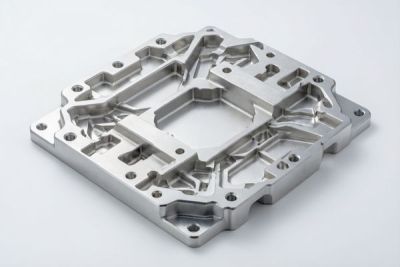
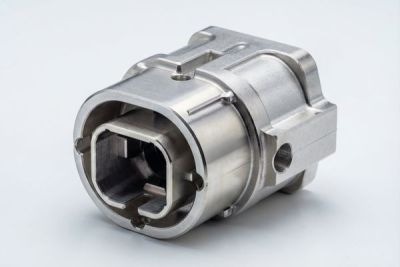
Catheter Connector φ0.5 mm Micro-Hole Burr and Bore Control
A catheter connector can look perfect under a loupe and still fail on the assembly line. The customer sees a clean PEEK or 316L part with a 0.5 mm bore; what they cannot see is the ten-micron burr hiding at the outlet, or the bore that drifts three microns between the first and the ten-thousandth piece. In minimally invasive surgery and endoscopy, that invisible detail is the difference between a smooth guidewire pass and a stuck device at a critical moment.
If you are sourcing MIS and endoscope connectors, this guide is written for the questions you should be asking before a purchase order, not after a nonconformance report. We walk through why micro-hole burr control dominates connector reliability, how medical catheter connector machining actually holds a 0.5 mm bore, where Swiss-type micro machining earns its keep, and how to choose between PEEK and 316L. Then we cover inspection, traceability, and a checklist you can hand to any supplier today.
We are a Dongguan source factory established in 2015, with a team whose stainless mirror-finishing experience goes back more than 15 years. Our floor runs 60 CNC machines across 4,000 sqm (expanded in 2026) with monthly output around 500,000 parts. This is written from the shop floor - the numbers and trade-offs are the ones we argue about with medical customers before a single chip is cut.
Table of Contents
- 1. Why MIS and Endoscope Connectors Demand Burr-Free Micro-Holes
- 2. How Medical Catheter Connector Machining Holds a 0.5 mm Bore
- 3. Micro Parts Swiss-Type Machining: The One-Setup Advantage
- 4. Swiss-Type Micro Machining: PEEK vs 316L for Catheter Connectors
- 5. CNC Precision Machining: Burr and Bore Consistency at Scale
- 6. Tight Tolerance CNC: Inspection and Traceability for Medical Lots
- 7. A Sourcing Checklist for MIS and Endoscope Connectors
Medical Catheter / Intervention Devices CNC precision component
Why MIS and Endoscope Connectors Demand Burr-Free Micro-Holes
The bore is small; the consequence of a bad bore is not.
MIS and endoscope connectors are the quiet interface between a device and the patient anatomy. A guidewire, a biopsy channel, an irrigation line, or a sensor fiber passes through a bore measured in fractions of a millimeter. The connector itself is usually unremarkable - a short cylindrical body with one or several axial or cross-drilled holes. What makes it critical is that any burr, recast layer, or bore taper becomes a mechanical obstacle or a particle source the moment the device is used.
Buyers often specify the nominal diameter and stop there. That is a mistake. A 0.5 mm hole can be on size yet still be unusable if the inlet has a lip, the outlet carries a curl of swarf, or the bore is slightly conical from a worn micro-drill. In an endoscopic channel, a burr can catch a guidewire tip; in an irrigation connector, a burr can shed a metal particle into the fluid path. Neither failure shows up in a simple go/no-go gauge check, which is why burr-free is a process requirement, not a dimension.
The three failure modes that start at the bore
First, burr-induced blockage: a lip at the outlet partially occludes the channel and raises insertion force. Second, particle generation: a loosely attached burr breaks free during assembly or flushing and becomes a contaminant. Third, sealing failure: a connector that mates to a luer or O-ring seat relies on a clean, cylindrical bore and a flat land; a burr on that land creates a micro-gap that leaks under pressure. Each of these is a direct result of how the micro-hole was drilled and deburred.
Why this is a process problem, not an inspection problem
You cannot inspect burr-free into a part. At 0.5 mm, 100 percent microscopic inspection is slow, subjective, and still misses the inside of a cross-hole. Reliable MIS and endoscope connectors come from a controlled process: sharp micro-tools with controlled geometry, peck drilling to break chips, stable fixturing, and a validated deburr step. The role of inspection is to confirm the process stayed in control through a sample plan - not to sort good parts from bad ones.
Medical Catheter / Intervention Devices CNC precision component
How Medical Catheter Connector Machining Holds a 0.5 mm Bore
Hole size is easy. Hole consistency is the hard part.
Medical catheter connector machining at the half-millimeter scale is an exercise in controlling variables most shops take for granted. A standard twist drill deflects, wanders, and produces a conical entry; at that diameter, runout of a few microns is a large fraction of the hole. We use micro-grain carbide drills in high-precision holders, keep tool overhang short, and run a peck cycle that retracts to clear chips rather than letting them pack into the flute.
For through-holes and cross-holes we machine the connector in a single clamping where possible, so entry and exit stay coaxial to the same datum. Where the geometry demands a second operation, we use a soft-jaw or collet fixture that locates on a turned diameter rather than on a finished face, and we prove the setup with a first-article CMM report. The goal is a bore that is cylindrical, on-size, and free of a stepped transition at the cross-drill intersection.
Tooling and speeds that keep the bore honest
In 316L stainless we run lower surface speeds with flood or through-tool coolant to avoid work hardening and built-up edge, then use a fresh finish drill or a reamer for the final pass. In PEEK we control temperature - the polymer softens if the cut runs hot, which smears the bore wall and creates a false burr. Sharp tools, light axial load, and chip evacuation matter more than raw spindle speed at this scale.
- Micro-grain carbide drills, replaced on a fixed part-count interval
- Peck cycles to break chips and avoid packing
- Fresh finish pass or reamer for bore finish and size
- Coolant matched to material to prevent work hardening or polymer smear
- In-process gauge checks at defined intervals, not just final inspection
The practical takeaway for a buyer: ask how the shop controls tool life and chip evacuation, not just what drill size it uses. A supplier who can show you a tool-change interval, an in-process gauge plan, and a first-article report is controlling the process. One who only quotes a diameter is hoping.
Micro Parts Swiss-Type Machining: The One-Setup Advantage
Fewer setups mean fewer chances to lose the bore.
Micro parts Swiss-type machining is built around a simple idea: the bar stock is fed through a guide bushing and supported right at the cutting zone, so a long, thin connector body can be turned and drilled without deflection. The part stays held in the collet from the first facing cut to the final part-off. For a catheter connector whose outer diameter, stepped shoulders, and axial bore must be mutually true, that single-setup discipline is a structural advantage, not a convenience.
On a conventional lathe, a connector that needs front boring and back-side features must be reversed and re-clamped. Each reversal risks losing concentricity between the bore axis and the outside diameter - the exact relationship that determines whether the connector seats straight in a mating port. A Swiss-type machine completes the turning, drilling, and often the cross-holes in one cycle, holding that relationship within a few microns.
Where Swiss-type earns its cost
Swiss-type is at its best on small-diameter, high-precision parts made from bar stock - exactly the profile of most catheter and endoscope connectors. It is less compelling for large, blocky housings or parts that need extensive milling on multiple faces, where a 5-axis center is the better tool. We quote each medical connector on the process that holds the required relationships at the lowest cost, and we will say so plainly when a simpler process will do.
| Factor | Swiss-type micro machining | Conventional turn + re-clamp |
|---|---|---|
| Setup count | Single clamping | Two or more reversals |
| Bore-to-OD concentricity | Held in one setup | Depends on re-clamp repeatability |
| Channel true position | Typically +/-0.005 mm | Typically +/-0.02 mm or worse |
| Best for | Small bar-stock connectors | Large or multi-face housings |
| Unit cost at volume | Competitive on small parts | Lower only on simple geometry |
Medical Catheter / Intervention Devices CNC precision component
Swiss-Type Micro Machining: PEEK vs 316L for Catheter Connectors
Material choice changes the burr, the finish, and the cleaning path.
Swiss-type micro machining handles both polymers and stainless, but PEEK and 316L behave very differently at a 0.5 mm bore. PEEK is light, radiolucent, chemically resistant, and easy to machine - it is the default for many disposable connectors. It is also softer, so it can smear if the tool runs hot and it can deform under aggressive clamping. 316L stainless brings strength, a familiar sterilization path, and a well-understood biocompatibility track record, at the cost of higher cutting forces and a real burr risk if tools are dull.
For buyers, the decision usually comes down to three questions: does the part need metal strength or temperature resistance, will it be sterilized repeatedly, and what surface finish does the fluid path require? A PEEK connector with a polished bore is often the lowest-risk choice for a single-use fluid line. A 316L connector is the safer bet where torque, thread integrity, or repeated sterilization drives the design.
| Property | PEEK | 316L stainless |
|---|---|---|
| Density | About 1.3 g/cc (light) | About 8.0 g/cc (heavy) |
| Machinability | Excellent, sharp tools, cool cut | Moderate, work-hardens if rubbed |
| Burr behaviour | Soft smear if hot; little hard burr | Hard burr if tool dull |
| Sterilization | Good chemical resistance | Excellent, standard autoclave path |
| Typical use | Disposable fluid or optical connectors | Threaded, torque-bearing connectors |
Pros
- PEEK: light and radiolucent
- PEEK: clean cut with sharp tooling
- 316L: high strength and thread durability
- 316L: mature sterilization and cleaning route
Cons
- PEEK: thermal smear and clamp deformation
- PEEK: higher material cost
- 316L: burr risk and heavier part
- 316L: longer cycle time at micro scale
CNC Precision Machining: Burr and Bore Consistency at Scale
The first article is easy. The ten-thousandth is the program.
CNC precision machining of a micro-bore is not won on the first part; it is won on the production curve. A sharp new drill makes a clean 0.5 mm hole for a few hundred pieces, then slowly wears, raises cutting temperature, and begins to leave an entry lip or a slightly larger, tapered bore. Without a tool-life rule and in-process gauging, that drift is invisible until an assembly problem appears downstream.
Our approach is to lock the variables that drift: fixed tool-change intervals, coolant concentration checks, and gauge checks at defined part counts. When a bore starts to trend toward the tolerance edge, we change the tool before it goes out of spec rather than sorting the output afterward. That is the difference between a process that is capable and one that merely passes final inspection on a good day.
Deburring a 0.5 mm hole without damaging it
Deburring is where many micro-bore programs quietly fail. A deburring tool that is too aggressive rounds the bore edge and changes the mating land; one that is too gentle leaves the burr. For PEEK we favour a controlled manual micro-deburr under magnification; for 316L we use a controlled micro-abrasive or electrochemical approach followed by a verified clean. In both cases the deburr step must be validated on a sample and then frozen - not improvised by the operator.
- Set a maximum allowable edge break on the drawing
- Validate the deburr method on first-article samples
- Define tool-change intervals by part count
- Gauge bore size at fixed production intervals
- Record each lot results for traceability
| Deburr method | Best for | Risk to control |
|---|---|---|
| Manual micro-deburr | Low-volume PEEK parts | Operator-to-operator variation |
| Micro-abrasive media | 316L batch work | Edge rounding, media lodging |
| Electrochemical | Hard-to-reach metal cross-holes | Process control and cleaning |
| Thermal or defining tool | Polymer micro-bores | Heat-affected lip |

Medical Catheter / Intervention Devices CNC precision component
Tight Tolerance CNC: Inspection and Traceability for Medical Lots
If you cannot prove it, you did not make it.
Tight tolerance CNC work in the medical field is as much about evidence as it is about metal removal. A buyer needs to know not only that a connector measured correctly once, but that every lot can be traced back to the material, the machine, the tool, and the inspection results that released it. That evidence is what turns a supplier from a vendor into a qualified source.
We build the evidence into the routine: a CMM first-article report with datum references, in-process gauge records at defined intervals, and lot-level traceability from incoming bar to finished, packed part. For medical connector programs the quality system behind that work matters too. Our ISO 9001 certification is in hand (certificate 25025Q13824R0S, valid to 2028-12-02); the ISO 13485 system has been established with certification progressing; IATF 16949 is in application.
What to ask for in a first-article report
A useful report does more than list measured values. It states the datum scheme, the actual nominal and tolerance for each controlled feature, the measured result, and the instrument used with its calibration status. Ask specifically for bore size at multiple depths, bore-to-OD concentricity, and the deburred-edge condition. A report that only shows an overall photo and a few dimensions is not a first-article inspection.
- CMM report with datum scheme and calibration status
- Bore size at multiple depths, not a single point
- Concentricity of bore to outside diameter
- Documented deburr method and edge condition
- Material certificate traceable to the heat or lot
- Lot traceability from raw bar to packed part
- Confirm the quality system: ISO 9001 minimum
- Ask how ISO 13485 alignment is handled for medical lots
- Request a sample CMM first-article report before ordering
- Verify material certs and lot traceability
- Agree on the burr limit and deburr method in writing
- Define the rework and nonconformance path
A Sourcing Checklist for MIS and Endoscope Connectors
Six questions that separate a real micro-machining source from a broker.
Sourcing MIS and endoscope connectors is less about finding the lowest quoted price and more about finding a shop that can prove process control at the micro scale. The questions below are the ones we are glad to answer with data. Any supplier who cannot answer them with a document, a sample report, or a process description is guessing - and you will be the one who finds out.
- Can you hold a 0.5 mm bore (and 0.2 mm if needed) with a stated burr limit and edge-break spec?
- Will you machine the bore and datum features in one setup, and can you show the first-article CMM report?
- What is your tool-change interval and in-process gauge plan for micro-drills?
- Which materials do you run - PEEK, 316L - and can you supply traceable material certs?
- How do you validate and control the deburr step, and how do you clean the part afterward?
- Do you support 0 MOQ sampling, and what is the path from prototype to volume?
Red flags to walk away from
Be careful of quotes that specify only diameter with no burr or taper control, suppliers who cannot produce a first-article report, and shops that treat deburring as a purely manual, undocumented step. Also watch for a reluctance to discuss tool life: at 0.5 mm, a supplier who has never counted drills has never controlled a micro-hole process.
The cheapest connector is the one that passes qualification the first time - because the second time costs you a regulatory deadline.
Medical Catheter / Intervention Devices CNC precision component
Medical Catheter / Intervention Devices CNC precision component
Medical Catheter / Intervention Devices CNC precision component
Medical Catheter / Intervention Devices CNC precision component
Medical Catheter / Intervention Devices CNC precision component
FAQ: MIS and endoscope connectors & Medical Catheter / Intervention Devices Buyer Questions
A: Yes, but not by inspection alone. It requires sharp micro-grain carbide drills, peck cycles to clear chips, a validated deburr step, and a fixed tool-change interval with in-process gauge checks. Ask for the burr limit, the edge-break spec, and a sample first-article report before you order.
A: Choose PEEK when low weight, radiolucency, and chemical resistance matter and the joint is not torque-bearing. Choose 316L when you need thread strength, torque capability, or a well-established sterilization path. The load case and sterilization method should drive the decision.
A: Swiss-type holds the bar in a guide bushing right at the cut, so a small connector is turned and drilled in one setup. That keeps the bore axis true to the outside diameter without reversing and re-clamping the part, which is where concentricity is usually lost.
A: The datum scheme, nominal and tolerance for each controlled feature, the measured result, and the instrument with calibration status. For a connector, insist on bore size at multiple depths, bore-to-OD concentricity, and a documented deburr or edge condition - not just an overall photo.
A: At this scale, 100 percent internal visual inspection is impractical. The reliable route is a controlled process plus sampled verification under magnification, a defined maximum edge break, and in-process bore gauging that catches drill wear before burrs appear. Inspection confirms the process; it does not replace it.
A: Yes. We support 0 MOQ sampling and small batches, with a clear path to volume on the same 60-machine floor. Medical lots are run with material certs, CMM first-article data, in-process gauge records, and lot traceability from raw bar to finished part.
Send us your catheter or endoscope connector drawing for a free DFM review. We will flag the features that should move to Swiss-type, the bore and burr specs that are costing you money, and the PEEK-versus-316L call for your load case. Reach out and let us cut the first article.
Request a Free CNC Quote