Choosing an Aerospace CNC Machining Partner: What Buyers Must Verify
Choosing a CNC machining partner for aerospace components is not like buying brackets for a cabinet. A part that flies inside an airframe or sits near a hot section has zero room for a sloppy edge, a hidden void, or a tolerance that drifts by a few microns. When something goes wrong here, it is not a returns ticket - it is a flight-safety event, a program audit, and a certification timeline that just slipped six months.
So the real question is not 'who quotes the lowest price?' It is 'who can I trust to hold the line on quality, traceability, and tolerance, batch after batch, for the life of my program?' This guide walks through exactly what we, as a precision shop, would verify in ourselves - and what you should verify in any supplier you are considering. Written plain, the way an engineer would brief a colleague.
We are Dongguan Licun Technology Co., Ltd., brand LusterControl - a Dongguan source factory focused on stainless steel mirror machining since 2015, now 15 years in. We run 60+ CNC machines on a 2,000 m2 floor at roughly 500,000 parts a month, holding ISO 9001, with ISO 13485 completed and IATF 16949 in application. We serve the aerospace supply chain alongside medical, automotive, and UAV programs, and we have shipped precision parts to brands such as De'Longhi, Donlim, and Breville.
Table of Contents
- 1. Why Choosing the Right Aerospace Components Partner Protects Your Program
- 2. AS9100 Machining: The Certification Question Buyers Must Ask
- 3. 5-Axis CNC Machining Capability Every Aerospace Partner Should Have
- 4. Ti-6Al-4V Machining: What a Real Aerospace Shop Gets Right
- 5. Inconel Machining for Hot-Section Aerospace Components
- 6. Tight Tolerance CNC: How Accuracy Is Actually Verified
- 7. A Buyer's Verification Checklist for Aerospace Components
- 8. Common Sourcing Mistakes in AS9100 Machining Programs
Aerospace CNC precision component
Why Choosing the Right Aerospace Components Partner Protects Your Program
The cheapest quote is rarely the cheapest outcome when the part flies.
Aerospace components live in a harsh environment: flight loads, continuous vibration, thermal cycles from minus figures to several hundred degrees, and sometimes years of service. A rough edge becomes a fatigue start. A tolerance off by 0.01 mm can mean a poor fit or a bracket that walks under load. In aerospace work, the cost of 'almost right' compounds fast.
What is actually at stake
- Flight safety - finish, edges, and material integrity are certification issues, not cosmetic ones.
- Program exposure - your AS9100 or airworthiness file depends on supplier documentation.
- Cost of a recall - one bad lot can erase a year of margin and a customer relationship.
- Lead time - a rejected batch restarts your qualification clock from zero.
The good news: a disciplined partner makes all of this boring - in the best way. Predictable process, documented controls, repeatable tolerance. That is what you are really buying.
Aerospace CNC precision component
AS9100 Machining: The Certification Question Buyers Must Ask
AS9100 is the gatekeeper question - ask it directly and read the answer.
AS9100 is the aerospace extension of ISO 9001, written for the flight-safety supply chain. It pushes harder on risk management, configuration control, and traceability than general quality standards. We are not yet AS9100-certified, but our quality stack - ISO 9001 certified, ISO 13485 completed, and IATF 16949 in application - delivers the same first-article, lot-traceability, and process-control discipline that AS9100 programs expect. We are transparent about the cert gap and close it with documentation.
Terms you will hear (and should ask about)
- AS9100
- The aerospace quality management standard - risk-based controls across design, production, and traceability.
- AS9102 (FAI)
- First Article Inspection - documented proof the first run matched your drawing before volume started.
- Certificate of Conformance (CoC)
- The lot-level statement that shipped parts meet every requirement on the PO.
- Configuration control
- Keeping the drawing, the process, and the shipped part in lockstep across the program life.
| AS9100 requirement | How we meet it today |
|---|---|
| First-article inspection | Full FAI with datum references on every new design |
| Lot traceability | Raw bar to finished part, with material certs |
| Process control | In-process gauging and CMM audits per batch |
| Documentation | ISO 9001 + ISO 13485 system, CoC per lot |
We apply the same controls to aerospace components as we do to medical and automotive work - the documentation is what lets the part enter your airworthiness file with a defensible history.
5-Axis CNC Machining Capability Every Aerospace Partner Should Have
Five axes is not a luxury for brackets - it is the datum integrity.
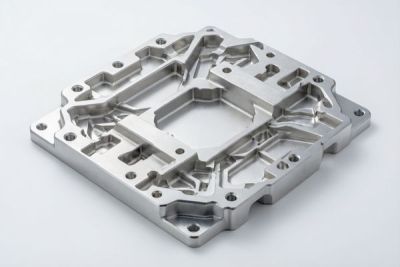
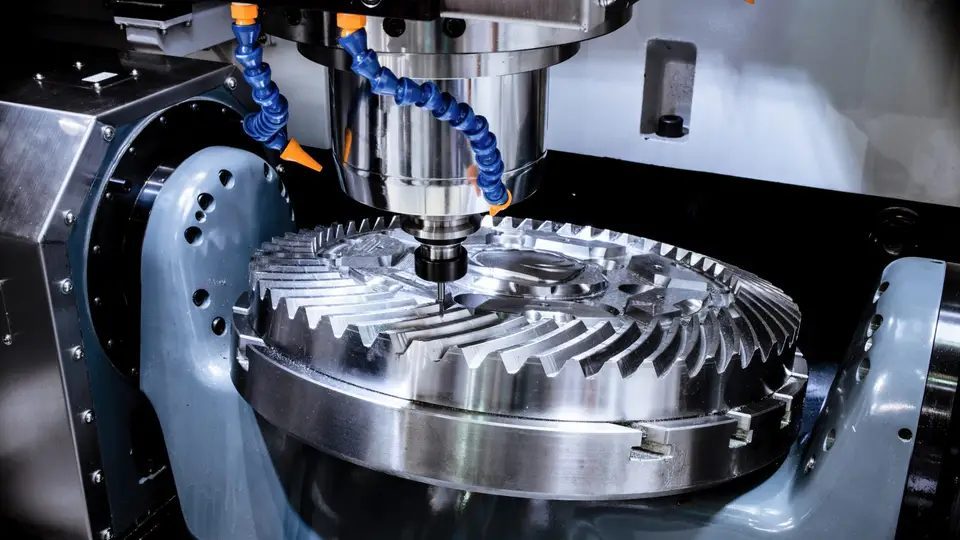
Aerospace brackets, connectors, and fittings are thin, multi-face parts. Cutting them on a 3-axis machine means re-fixturing two or three times, and every re-clamp is a chance to introduce a datum shift of 0.02 to 0.05 mm. 5-axis CNC machining cuts those features in a single setup, holding the part on one datum while the table and head rotate.
What to verify before you quote
- Do they machine on a single datum, or re-fixture between faces?
- Do they probe in-process, or only inspect the finished part?
- Can they CMM every reference face, not just the tolerance-featured ones?
- Is the cell climate-controlled so size stays stable across a shift?
- Do they run 3+2 and 5-axis, or only 3-axis with re-clamps?
| Capability | What it gives you | Our floor |
|---|---|---|
| Single-datum 3+2 / 5-axis | No datum shift between faces | 60+ CNC, incl. 5-axis |
| In-process probing | Catch drift before scrap | Standard on precision cells |
| CMM first article | Prove the process before volume | Full datum report per FAI |
| Climate-controlled cells | Stable size across a shift | Controlled shop environment |
Aerospace CNC precision component
Ti-6Al-4V Machining: What a Real Aerospace Shop Gets Right
Anyone can load titanium; few hold the tolerance after release.
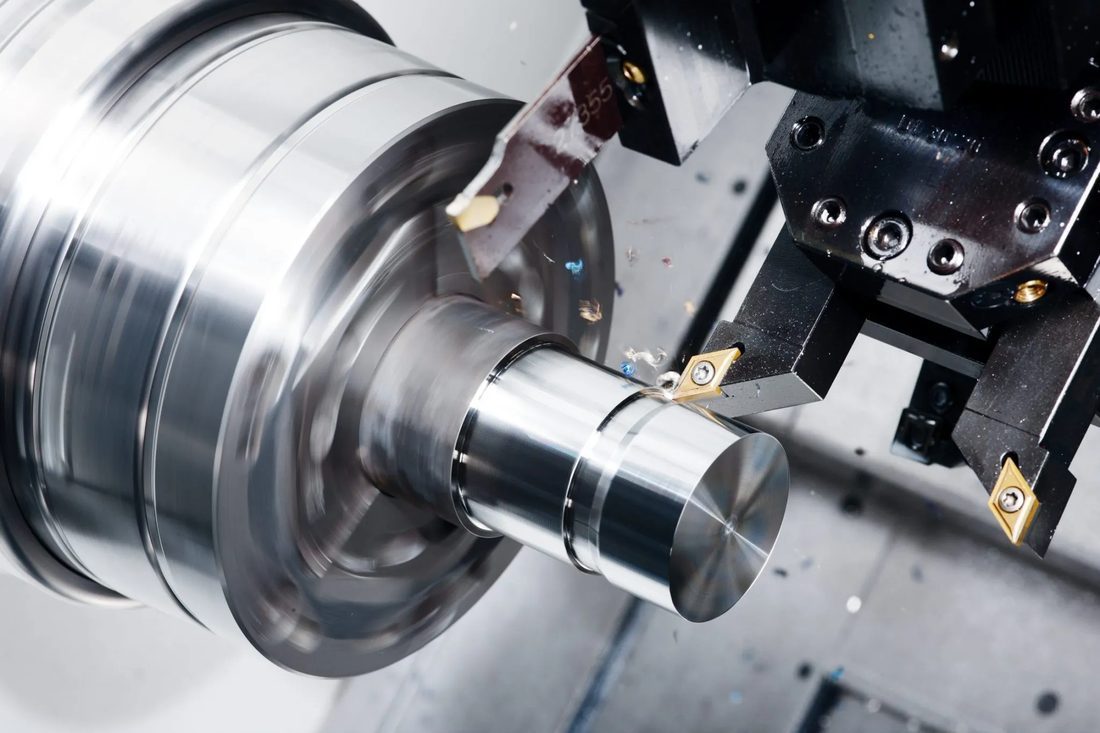
Ti-6Al-4V (Grade 5, ASTM B348) is the default for aerospace brackets because it is strong and light: around 4.43 g/cc with a modulus near 114 GPa and roughly double the strength of many aluminum alloys. The difficulty is machinability - titanium conducts heat poorly, so the cut zone heats fast and work-hardens if you let the tool rub.
Our Ti-6Al-4V machining recipe
- Keep radial engagement low, about 0.5 mm or 8 percent of the cutter diameter.
- Run sharp uncoated or AlTiN inserts - a dull edge is what starts work-hardening.
- Flood or through-spindle coolant so heat leaves with the chip, not the part.
- Hold conservative surface speeds, roughly 30-50 m/min for finishing.
- Leave 0.1 mm for a finishing pass and hold the contour to +/-0.01 mm.
- Passivate per ASTM A967 so the surface resists corrosion during service.
| Property | Ti-6Al-4V | 7075-T6 aluminum |
|---|---|---|
| Density | 4.43 g/cc | 2.81 g/cc |
| Modulus | 114 GPa | 71 GPa |
| Strength | Very high | High |
| Cycle time | 2-3x aluminum | Baseline |
Inconel Machining for Hot-Section Aerospace Components
Inconel pays you back in tool life what it costs in cycle time.
Inconel machining is its own discipline. Nickel superalloys keep their strength at temperatures that would soften titanium, which is exactly why they sit near combustors, exhaust paths, and bleed-air ducts. But they are gummy, work-harden aggressively, and conduct heat poorly, so the cutting energy stays in the tool tip. Tool life is the name of the game.
- Use rigid setups and positive-rake carbide or ceramic inserts to shear rather than rub.
- Keep feeds up and speeds moderate so the edge stays cutting, not smearing.
- Through-tool coolant to flush the work-hardened layer as it forms.
- Take a spring pass to relieve residual stress before the final dimension.
- Inspect to a relaxed-but-true tolerance; Inconel moves more than titanium after release.
Pros
- Holds strength at extreme temperature
- Excellent corrosion and oxidation resistance
- Survives thermal cycling without creep
- Right answer for hot-section parts
Cons
- 5-10x the cycle time of aluminum
- High tool consumption
- Needs rigid, well-cooled setups
- Trickier to hold final dimension
Aerospace CNC precision component
Tight Tolerance CNC: How Accuracy Is Actually Verified
A tolerance is a promise - verify it or it is just a number on a drawing.
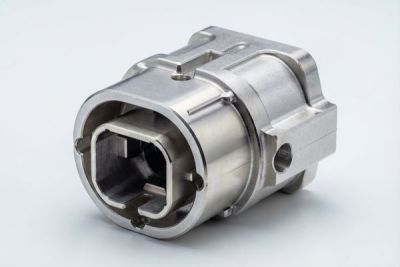
Aerospace connectors and fittings are expected to perform the same way the thousandth time as the first. Tight tolerance CNC is what makes that repeatability possible - but only if the tolerance is matched to the function and verified with instruments, not estimated. Tighter is not automatically better; it has to serve a purpose.
Typical tolerances we hold by feature
| Feature | Typical tolerance | Why it matters |
|---|---|---|
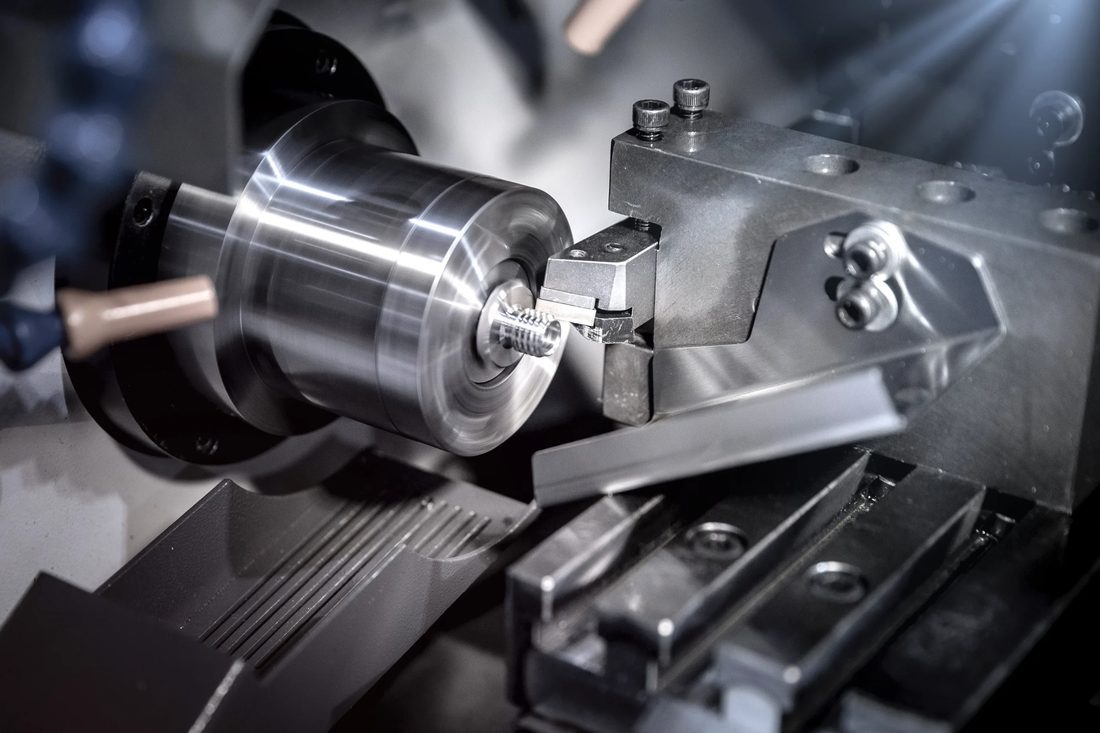
| Outer diameter (shaft) | +/-0.005 mm | Fit and rotation in a mating bore |
| Flatness (seat face) | +/-0.01 mm | Clean clamping, no rocking |
| Hole position | +/-0.02 mm | Pin and fastener alignment |
| Thread form | ISO 2 / 3A | Engagement and torque |
A Buyer's Verification Checklist for Aerospace Components
Copy this and send it to every shop on your shortlist. The answers will sort them fast.
- Can they show a real FAI (AS9102-style) with full datum references?
- Do they provide material certs traceable to the heat lot?
- Can they hold +/-0.005 mm on a single-setup 5-axis part?
- Do they machine Ti-6Al-4V and Inconel regularly, not as a one-off?
- Do they passivate per ASTM A967 and report it?
- Is every lot traceable from raw bar to finished component?
- Will they state a flatness or Ra target and verify it with instruments?
- Can they scale from prototype to volume without re-qualifying the process?
A supplier that clears all eight is rare - and worth keeping. One that stumbles on traceability or tolerance verification should not be on a flight-critical program. Send us your drawing for a free DFM review and we will return the answers with data, not a brochure.
Aerospace CNC precision component
Common Sourcing Mistakes in AS9100 Machining Programs
Most failures we see were decided at the sourcing stage, not on the shop floor.
- Chasing the lowest bid - the saving evaporates in rework, delays, and qualification restarts.
- Treating AS9100 as a box to tick instead of a system to verify with documents.
- Skipping first-article inspection to 'save time' - it is the cheapest insurance you have.
- Leaving finish as 'smooth' on the drawing, then arguing about it after shipment.
- Ignoring communication - a shop that is vague before the PO stays vague after it.
- Forgetting traceability - without it, a single complaint becomes a full program review.
The cheapest aerospace part is the one that passes qualification the first time - because the second time costs you a certification date.
Aerospace CNC precision component
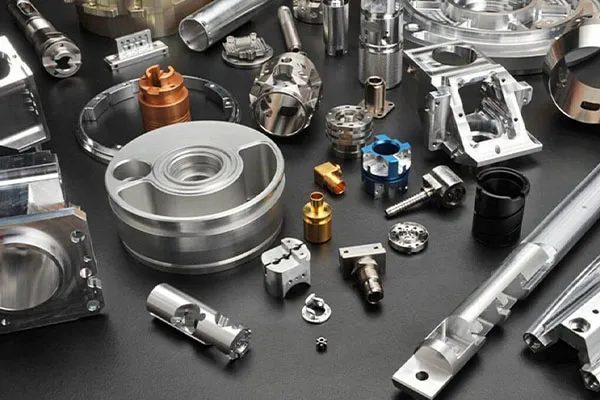
Aerospace CNC precision component
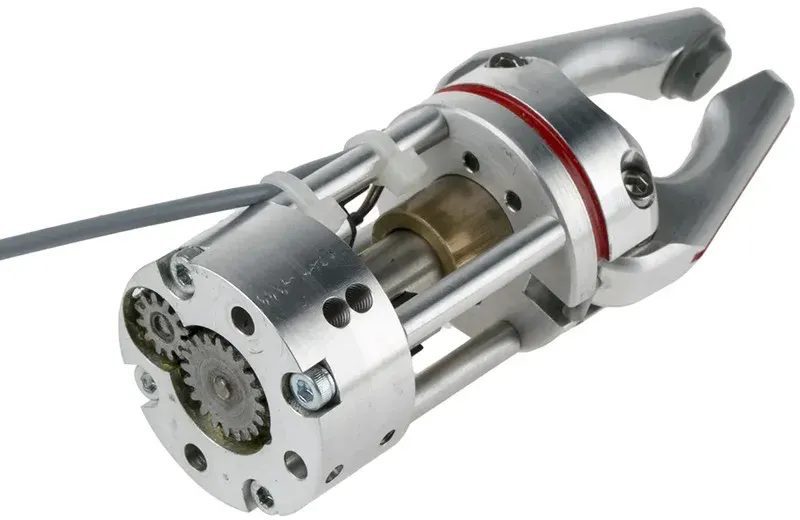
Aerospace CNC precision component
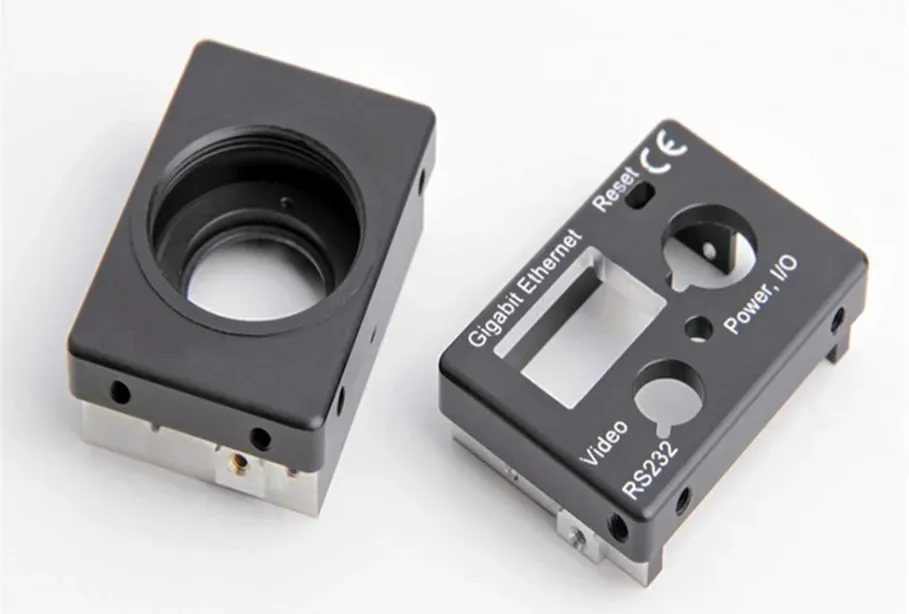
Aerospace CNC precision component
FAQ: aerospace components & Aerospace Buyer Questions
A: AS9100 is the aerospace benchmark, with ISO 9001 as the baseline. We hold ISO 9001, have completed ISO 13485, and are pursuing IATF 16949; we run the same first-article, traceability, and process-control discipline AS9100 demands and are transparent that we are not yet AS9100-certified.
A: Yes. Ti-6Al-4V (Grade 5, ASTM B348) is our workhorse for strength-limited brackets; Inconel 718 is machined for hot-section connectors with rigid setups, positive-rake inserts, through-tool coolant, and a spring pass to relieve stress. Both are passivated per ASTM A967 where stainless is used.
A: We hold +/-0.005 mm on critical diameters and +/-0.01 mm on flatness and position, verified by CMM and profilometry rather than estimated. Every new design gets a first-article inspection, and batch parts get in-process gauging plus CMM audits.
A: No, not yet. We hold ISO 9001, have completed ISO 13485, and are pursuing IATF 16949, and we apply equivalent first-article, traceability, and process-control discipline. We state the cert status plainly so you can plan your airworthiness documentation accordingly.
A: Every lot is tied to its material mill certificate, machine, operator, and inspection records, plus a Certificate of Conformance - so any shipped part can be traced back to its full history from raw bar to finished component.
A: We routinely hold +/-0.005 mm on critical diameters, +/-0.01 mm on flatness and position, and ISO class 2/3A on threads, verified by CMM. Tolerances are matched to function, not set tighter than the part needs, to keep cost sane.
Ready to qualify a CNC machining partner for your aerospace program? Send us your drawing and we will return a free DFM review with tolerance, material, and finish recommendations - plus the FAI, traceability, and CoC discipline your airworthiness file needs. No obligation, just a clear engineering answer.
Request a Free CNC Quote