How LusterControl's 60-Machine Floor Cuts CNC Lead Times
If you source precision parts for a global program, the question is rarely 'can they make it' - it is 'can they make it on my date, every month, without a fire drill.' Lead time is the single metric that decides whether your assembly line keeps moving or your warehouse fills with expedite air-freight charges. Most buyers only discover a supplier's true capacity when the first big order lands and the promise quietly slips by two weeks.
This is LusterControl news worth your attention as a procurement engineer: our Dongguan factory now runs a 60-machine CNC floor across 4,000 sqm, built specifically so volume programs do not queue behind one-off jobs. In this guide we explain, from a buyer's seat, exactly how in-house capacity, turn-mill compound machining, and tight tolerance CNC at scale translate into shorter, more predictable lead times - and what you should verify before you commit volume to any shop.
We will keep the math honest. No inflated machine counts, no borrowed certifications. Every number here is from our own floor: 60+ CNC machines, 4,000 sqm, 500,000 parts per month, Ra 0.2 um mirror finishing, and a +/-0.005 mm tolerance window we hold day after day.
Table of Contents
- 1. LusterControl News: Inside the 60-Machine Floor Expansion
- 2. How CNC Precision Machining Capacity Lowers Your Lead Time
- 3. The Dongguan Factory Footprint: 4,000 sqm and 60 CNC Machines
- 4. Why a 60-Machine Floor Matters to Global OEM Procurement
- 5. Turn-Mill Compound Machining: One Setup, Faster Turnaround
- 6. Tight Tolerance CNC at Volume: Holding +/-0.005 mm at Scale
- 7. CNC Precision Machining vs Outsourced Capacity: A Lead-Time Comparison
- 8. What Global OEM Buyers Should Verify Before Committing Volume
Company AI part image
LusterControl News: Inside the 60-Machine Floor Expansion
What a doubled floor actually buys you as a buyer - not as a factory tour.
When we tell global OEM buyers that LusterControl now operates a 60-machine CNC floor, the right reaction is not 'impressive' - it is 'show me what that means for my delivery date.' Capacity is only useful to you if it removes the two bottlenecks that actually break lead times: queue time (waiting for a free machine) and setup time (re-fixturing between operations).
What 60 CNC machines actually buy you
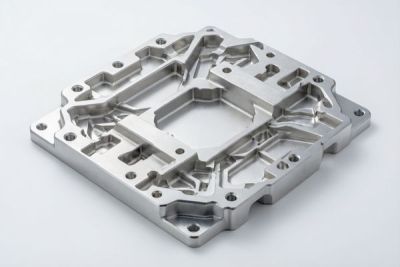
A floor of 60+ CNC machines - including turn-mill compound centers, 5-axis machines, and Swiss-type sliding-headstock lathes - means a 5,000-piece order no longer has to wait behind three prototype jobs. Work can be parallelized across machines instead of serialized on one. For you, that is the difference between a 4-week build and a 2-week build on the same part.
The 4,000 sqm footprint also matters more than it sounds. A cramped shop forces batch-and-queue logic: parts wait in totes between stages. Our expanded Dongguan factory lays out machining, polishing, inspection, and packing as a continuous flow, so a part finished at 4 pm is measured and boxed the same shift. You can read more about the team and facility on our about page.
Company AI part image
How CNC Precision Machining Capacity Lowers Your Lead Time
Capacity is a lead-time lever only when it removes queue and setup, not just when the brochure looks big.
CNC precision machining lead time has three components you can actually control as a buyer: (1) raw material and bar-stock readiness, (2) machine queue time, and (3) per-part cycle time including setup. A bigger floor attacks queue time directly; smarter process planning attacks setup. Both are in your control when you choose the right supplier.
The three lead-time drivers, in plain terms
- Material readiness: we keep common stainless (304/316L) and aluminum bar stock on hand, so your order starts cutting on day one instead of day five waiting on a mill.
- Queue time: with 60+ machines, a surge order is absorbed across the floor instead of stacking behind existing work.
- Setup time: turn-mill compound machining collapses multiple operations into one chucking, removing the re-fixture delays that dominate small-part cycles.
| Lead-time driver | Typical job shop | LusterControl 60-machine floor |
|---|---|---|
| Material wait | 3-7 days (per order) | 1 day (stocked bar) |
| Queue before first cut | 5-10 days at peak | 1-3 days |
| Setup per operation | 20-45 min x 3 ops | One chucking, ~25 min total |
| Predictability | Slips with load | Stable via parallel capacity |
The Dongguan Factory Footprint: 4,000 sqm and 60 CNC Machines
Why the building size is a process decision, not a vanity number.
A source factory in Dongguan sits at the heart of South China's precision-machining supply chain - raw material, tooling, plating, and logistics are all within an hour. That ecosystem already shortens lead times before a single chip is cut. Our 4,000 sqm footprint (expanded in 2026; the earlier 2,000 sqm layout is retired) lets us keep that ecosystem inside the building.
- Lead time
- Calendar time from purchase order to finished, inspected parts at your dock.
- DFM review
- Design-for-manufacture check that flags tolerance, finish, and feature choices that would add cycle time or scrap.
- Batch-and-queue
- A layout where parts wait in bins between operations - the main hidden cause of long lead times.
| Floor metric | LusterControl (2026) | Why it helps your lead time |
|---|---|---|
| Building area | 4,000 m2 | Flow layout, no inter-stage waiting |
| CNC count | 60+ machines | Parallelize volume, absorb surges |
| Monthly capacity | 500,000 parts | Headroom for your ramp |
| Process span | Machining + mirror polish + CMM | One roof, fewer handoffs |
Company AI part image
Why a 60-Machine Floor Matters to Global OEM Procurement
Procurement teams buy predictability; the machine count is just the receipt.
Global OEM buyers manage programs, not parts. A single component that ships two weeks late can idle an entire assembly line in another country. What you need from a machining partner is not heroics during a crisis - it is boring, repeatable on-time delivery that survives demand spikes, holiday shutdowns, and a sudden 3x order. A 60-machine floor is how a mid-size source factory delivers that boredom.
| OEM procurement concern | Small shop risk | 60-machine floor response |
|---|---|---|
| Demand spike (3x) | Weeks of slip | Absorbed across machines |
| Single-machine failure | Line stops | Work re-routed instantly |
| NPI + volume overlap | One starves the other | Dedicated cells |
| Audit / traceability | Manual, slow | Lot-level material trace |
Pros
- Stable lead times even under load
- Room to grow with your program
- In-house mirror polish and inspection
Cons
- You must still verify certifications match your claim
- A big floor is useless without disciplined scheduling
Turn-Mill Compound Machining: One Setup, Faster Turnaround
The biggest single lead-time win on small, complex parts.
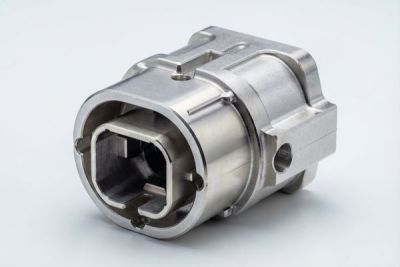
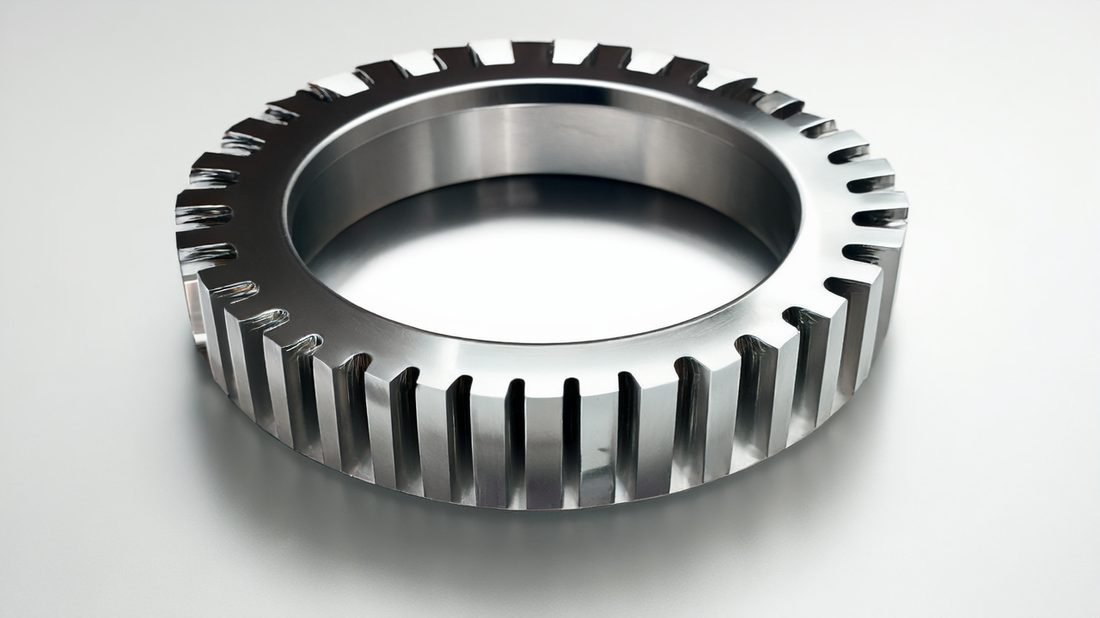
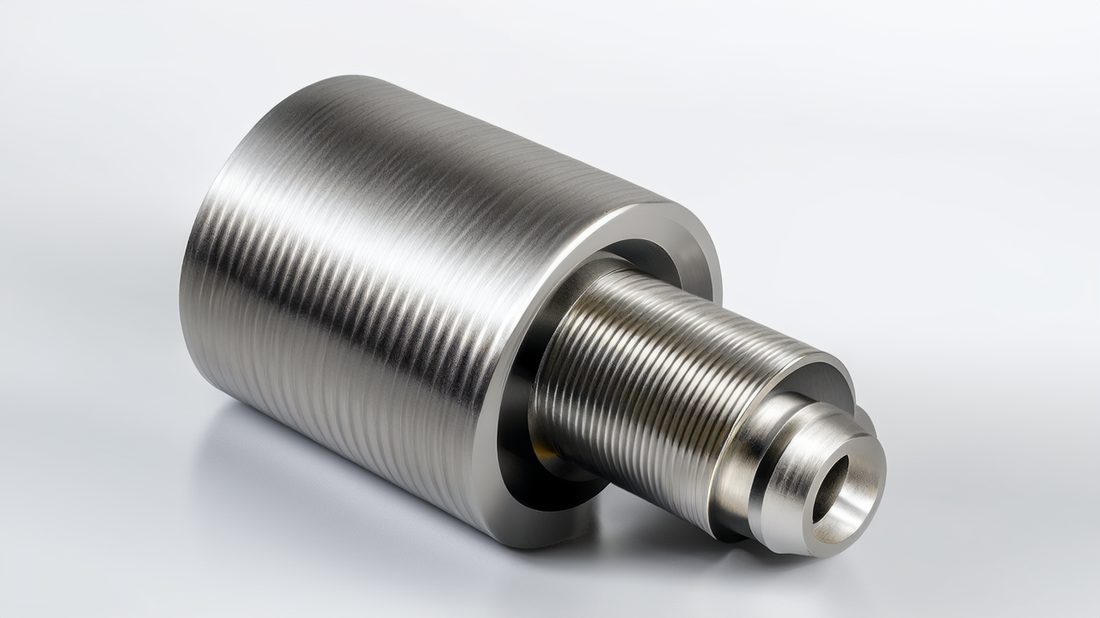
Turn-mill compound machining puts turning, milling, drilling, and sometimes gear-cutting in one chucking. For buyers, the win is simple: fewer operations mean fewer setups, fewer handoffs, and a shorter critical path. A part that needed a lathe, then a mill, then a deburr station now finishes in one cycle.
How a turn-mill cycle compresses your lead time
- Bar stock is fed and the OD/contour is turned in the same chucking that will later mill the flat or drill the cross-hole - no second fixture.
- Live tooling mills slots, faces, and features while the part is still gripped, eliminating the re-clamp error and queue time of a separate milling op.
- Final deburr and in-cycle probing confirm the feature before the part drops, so inspection backs up the build instead of blocking it.
| Method | Setups | Lead-time impact |
|---|---|---|
| Lathe + separate mill | 2-3 setups | Longer, more queue points |
| Turn-mill compound | 1 chucking | Shorter critical path |
| Swiss-type (small dia) | 1 chucking, sliding head | Best for tiny, long parts |
Company AI part image
Tight Tolerance CNC at Volume: Holding +/-0.005 mm at Scale
Holding the tolerance once is easy; holding it on 50,000 parts is the lead-time test.
Any shop can hit +/-0.005 mm on a first article. The lead-time risk appears in volume: as machines warm up, tools wear, and batches stack, tolerance drift forces rework and scrap - and rework is the silent lead-time killer. Our answer is process control baked into scheduling, not hero inspection at the end.
Tolerance tiers and where +/-0.005 mm earns its keep
| Feature | Standard window | When +/-0.005 mm matters |
|---|---|---|
| Bores / shafts | +/-0.02 mm | Sealing, bearing fit |
| Flatness (optical/base) | +/-0.01 mm | Stack-up, alignment |
| Position of holes | +/-0.05 mm | Bolt pattern interchangeability |
| Critical mating | +/-0.005 mm | Zero-play assemblies |
We apply lot-level material traceability and in-process probing so a drift is caught on part 50, not part 5,000. That is what lets a 500,000-part monthly run stay on schedule instead of stalling for a rework loop. Stainless parts destined for corrosion-sensitive service also pass through ASTM A967 passivation, done in-house to avoid an outside-vendor handoff that would add days.
CNC Precision Machining vs Outsourced Capacity: A Lead-Time Comparison
Should you spread volume across shops, or concentrate it on one capable floor?
Three ways buyers source volume, and what each does to your date
| Sourcing model | Lead-time behavior | Best for |
|---|---|---|
| Single in-house 60-machine floor | Predictable, absorbs spikes | Programs needing stable cadence |
| Pool of small job shops | Variable, depends on their load | Sporadic, low-volume needs |
| Overseas low-cost + freight | Long, customs-exposed | Price-led, non-time-critical |
For a global OEM running a recurring program, the in-house-capacity model wins on predictability. Spreading across many small shops feels like 'insurance' but actually multiplies your queue risk - each shop treats your order as one of many. A concentrated 60-machine floor treats your program as a scheduled cell. Our technical blog covers the trade-offs by industry if you want the deeper read.
- Confirm the stated machine count is real and on one floor (ask for a shop photo or video walkthrough).
- Ask how a 3x order is absorbed - parallel machines or outsourced subbing?
- Request the worst-week lead time, not the best-case quote.
- Verify in-house finishing (polish, passivation) vs outside-vendor handoffs.
- Check lot-level material traceability for your industry.
Company AI part image
What Global OEM Buyers Should Verify Before Committing Volume
A machine count is a claim until you verify the schedule behind it.
Before you move a program onto any 60-machine floor - ours or a competitor's - protect your lead time with verification. The most common mistakes buyers make are trusting the headline number and skipping the scheduling questions that actually predict delivery.
Common mistakes that quietly extend your lead time
- Believing the machine count without confirming they are on one floor and one schedule.
- Accepting a best-case quote as a contract lead time.
- Ignoring whether finishing (mirror polish, passivation) is in-house or subcontracted.
- Skipping a DFM review that would have removed days of avoidable cycle time.
- Over-tolerancing features that do not need it, paying for time you did not need.
- Get the real machine count and floor location in writing.
- Agree a contractual lead-time band, not a single best-case number.
- Map every process step - machining, polish, passivation, CMM - to in-house or vendor.
- Run a paid pilot lot before committing annual volume.
- Confirm lot-level traceability and ASTM A967 where corrosion matters.
When you are ready to test our Dongguan factory against your program, send your drawing for a free DFM review through our inquiry page. We will return a realistic lead-time band - best case and worst week - so you can plan, not hope.
Capacity you can see and schedule is the only capacity that protects your delivery date.
Company AI part image
Company AI part image
Company AI part image
Company AI part image
FAQ: LusterControl news & Company Buyer Questions
A: It attacks the two real delays: queue time and setup time. With 60+ machines, a volume order is parallelized instead of serialized, and turn-mill compound machining collapses several operations into one chucking. For many small, complex parts that cuts the critical path from roughly four weeks to about two.
A: Yes. Dongguan Licun Technology Co., Ltd. operates one expanded source factory of 4,000 sqm in Dongguan, South China, with 60+ CNC machines, in-house mirror polishing, ASTM A967 passivation, and CMM inspection all under one roof. The earlier 2,000 sqm layout was retired in the 2026 expansion.
A: We hold a proven +/-0.005 mm window using lot-level material traceability and in-process probing, so drift is caught early in a batch rather than after scrap. Tight tolerance is applied where it protects a fit; our DFM review will tell you exactly which features need it so you are not paying for unnecessary cycle time.
A: Core machining, mirror finishing, passivation, and inspection are done in-house on our own floor. We are transparent about any step that is not - and we recommend you verify this with any supplier, because subcontracted volume is the most common hidden cause of lead-time slips.
A: We hold ISO 9001 certification and have completed ISO 13485; IATF 16949 is currently in application. We state each status plainly. Our quality discipline - DFM, first-article CMM, SPC-style process control, lot traceability - is what protects your lead time and consistency, regardless of the certificate label.
A: Send your drawing through our inquiry page for a free DFM review. We return a lead-time band - best case and worst week - based on current floor load, so your planning reflects reality rather than a best-case sales number. Pilot lots are the safest way to validate the band before committing annual volume.
Send us your drawing for a free DFM review and a realistic lead-time band from our 60-machine Dongguan floor - best case and worst week, so you can plan with confidence.
Request a Free CNC Quote