How to Choose a Medical CNC Machining Supplier in China (2026 Buyer's Guide)
Sourcing surgical instruments and implanted components is not like buying brackets or housings. A part that sits inside the human body has zero room for a sloppy edge, a hidden void, or a tolerance that drifts by a few microns. When something goes wrong here, it is not a returns ticket - it is a patient, a recall, and a 510(k) timeline that just slipped six months.
So the real question is not 'who quotes the lowest price?' It is 'who can I trust to hold the line on quality, traceability, and finish, batch after batch, for the life of my program?' This guide walks through exactly how we, as a medical CNC supplier, would qualify ourselves - and how you should qualify any shop you are considering. We keep it practical and plain, the way an engineer would explain it to a colleague.
We will cover what ISO 13485 machining actually requires, why stainless steel mirror finishing is a safety issue and not a cosmetic one, how tight tolerance CNC behaves under real surgical loads, the processes behind reliable surgical instruments, a qualification checklist you can copy, and the mistakes we see buyers make most often.
Table of Contents
- 1. Why Choosing the Right Medical CNC Supplier Matters More Than You Think
- 2. What ISO 13485 Machining Really Means for Your Surgical Parts
- 3. Stainless Steel Mirror Finishing: The Difference Between Safe and Recalled
- 4. How Tight Tolerance CNC Holds Up Inside the Body
- 5. CNC Precision Machining Processes We Use for Surgical Instruments
- 6. A Practical Checklist for Qualifying a Medical CNC Supplier
- 7. Common Mistakes Engineers Make When Sourcing Surgical Instruments
- 8. Matching a Medical CNC Supplier to Your Production Volume
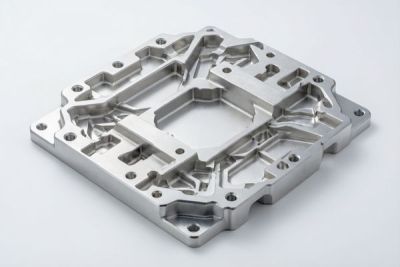
Medical components machined by LusterControl
Why Choosing the Right Medical CNC Supplier Matters More Than You Think
The cheapest quote is rarely the cheapest outcome when the part goes inside a person.
A surgical instrument or implant lives in a harsh environment: bodily fluids, repeated sterilization, mechanical load, and sometimes years of continuous service. A rough surface finish becomes a harbor for bacteria. A tolerance that is off by 0.01 mm can mean a poor fit, a weakened joint, or a tool that simply does not seat. In medical work, the cost of 'almost right' compounds fast.
What is actually at stake
- Patient safety - finish, edges, and material integrity are clinical, not cosmetic.
- Regulatory exposure - your 510(k) or MDR file depends on supplier documentation.
- Cost of a recall - one bad lot can erase a year of margin and a customer relationship.
- Lead time - a rejected batch restarts your validation clock from zero.
The good news: a disciplined medical CNC supplier makes all of this boring - in the best way. Predictable process, documented controls, repeatable finish. That is what you are really buying.
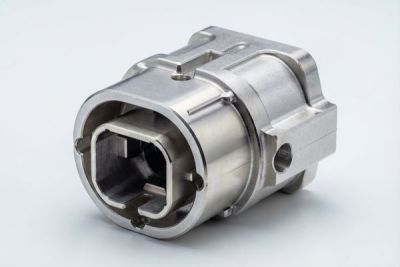
Medical components machined by LusterControl
What ISO 13485 Machining Really Means for Your Surgical Parts
ISO 13485 is not a wall plaque. It is a system for catching problems before they ship.
ISO 13485 is the quality management standard written specifically for medical device manufacturers. For a machine shop, it changes how we handle everything from incoming material to final inspection. It is less about a single certificate and more about being able to prove, months later, exactly what we did and why.
Terms you will hear (and should ask about)
- ISO 13485
- The QMS standard for medical devices - risk-based controls across design, production, and traceability.
- MDR / FDA 21 CFR 820
- Regional regulations (EU / US) that reference ISO 13485 as the baseline QMS.
- Batch traceability
- Every lot tied to material cert, machine, operator, and inspection record.
- UDI
- Unique Device Identification - the marking that links a part back to its history.
Documentation a serious supplier should hand you
| Document | What it proves |
|---|---|
| Material mill certificate | The stainless grade (e.g. 316L) is genuine and from a known melt. |
| First-article inspection (FAI) | The first run matched your drawing before volume started. |
| In-process SPC | Tolerances stayed in control across the batch, not just on one part. |
| Passivation / finish report | Surface treatment was done to spec and verified. |
| CoC (Certificate of Conformance) | The shipped lot meets every requirement on the PO. |
We treat ISO 13485 machining as the floor, not the ceiling. It is the discipline that lets a surgical instrument leave our plant with a complete, defensible history behind it.
Stainless Steel Mirror Finishing: The Difference Between Safe and Recalled
On an implant, surface roughness is a hiding place for bacteria and a starting point for corrosion.
Stainless steel mirror finishing is often dismissed as 'looks nice.' In medical parts it is a safety feature. A rougher surface (higher Ra) gives bacteria somewhere to cling and gives corrosion a place to start. A mirror finish down to Ra 0.2 µm (what we call 8K) is smoother, easier to clean, and far more biocompatible.
How we reach a true mirror finish
- Start with the correct grade - typically 316L for surgical instruments and implants.
- Machine to a clean baseline so polishing has little material to remove.
- Passivate to rebuild the chromium-oxide layer that makes stainless 'stainless'.
- Electropolish to level micro-peaks and drop Ra toward 0.2 µm.
- Verify with a profilometer - we do not guess the number.
| Finish grade | Typical Ra | Where it is used |
|---|---|---|
| Standard machined | 0.8 µm | Non-critical structural parts |
| Fine turned | 0.4 µm | Hand tools, fixtures |
| Mirror (8K) | 0.2 µm | Implants, surgical instruments, fluid paths |
When you are specifying surgical instruments, write the Ra target on the drawing. 'Smooth' is not a tolerance; 'Ra 0.2 µm max' is.
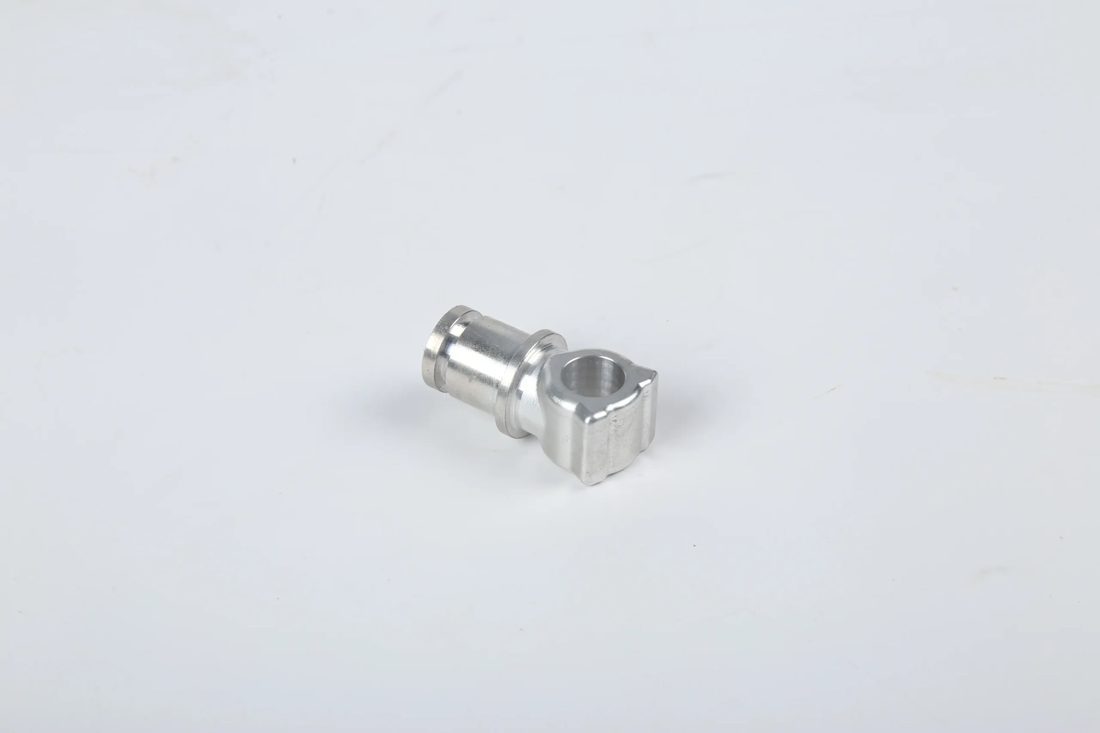
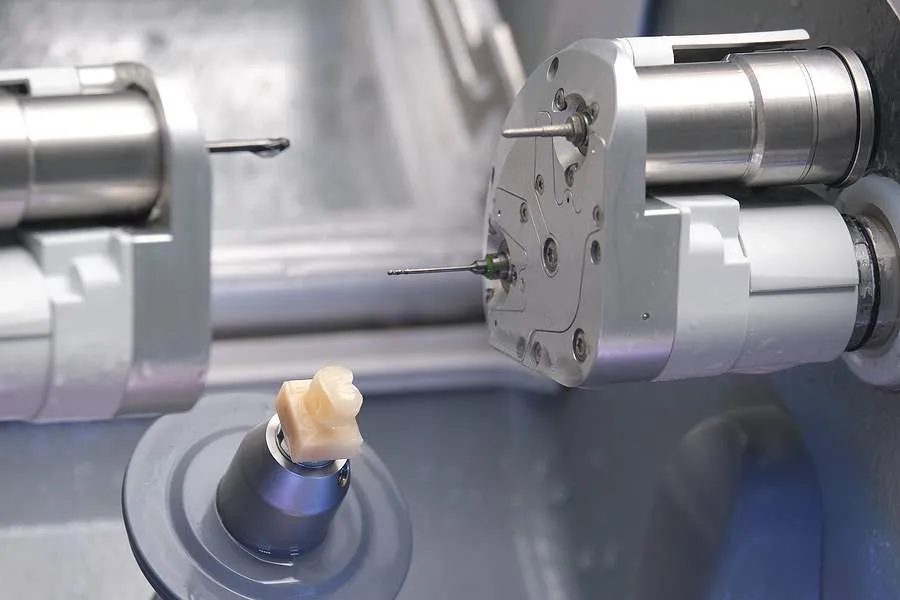
Medical components machined by LusterControl
How Tight Tolerance CNC Holds Up Inside the Body
A tolerance is a promise about how a part will behave under load, heat, and repetition.
Surgical instruments and implants are expected to perform the same way the thousandth time as the first. Tight tolerance CNC is what makes that repeatability possible - but only if the tolerance is matched to the function. Tighter is not automatically better; it has to serve a purpose.
Typical tolerances we hold by feature
| Feature | Typical tolerance | Why it matters |
|---|---|---|
| Outer diameter (shaft) | ±0.005 mm | Fit and rotation in a mating bore |
| Flatness (jaw face) | ±0.01 mm | Clean clamping, no rocking |
| Hole position | ±0.02 mm | Pin and fastener alignment |
| Thread pitch / form | ISO 2 / 3A | Engagement and torque |
Pros
- Predictable fit and function
- Lower assembly scrap
- Easier validation
Cons
- Tighter tolerances cost more to hold
- Not every feature needs them
- Inspection time grows
The right medical CNC supplier will tell you which tolerances actually matter for your part and which are wasting your money. That honesty is a qualification signal in itself.
CNC Precision Machining Processes We Use for Surgical Instruments
Matching the process to the part is half the battle in medical machining.
Surgical instruments come in every shape - slender shafts, tiny jaws, threaded bodies, and parts with features on five sides. CNC precision machining lets us pick the right process for each, often combining them in one setup to protect tolerance.
Process comparison
| Process | Best for | Tolerance | Volume |
|---|---|---|---|
| Swiss-type turning | Long, slender shafts | ±0.005 mm | Low to high |
| 5-axis milling | Complex 3D, multi-face | ±0.01 mm | Prototype to mid |
| Turn-mill | Shafts with milled features | ±0.008 mm | Mid to high |
| Electropolish + passivate | Final finish on 316L | Ra 0.2 µm | All |
The best medical part is the one that needs the least 'fixing' after machining - finish and tolerance designed in, not chased afterward.
For surgical instruments especially, combining operations in a single clamp reduces the stack-up of errors that comes from moving a part between machines. That is why process choice is a quality decision, not just a cost one.
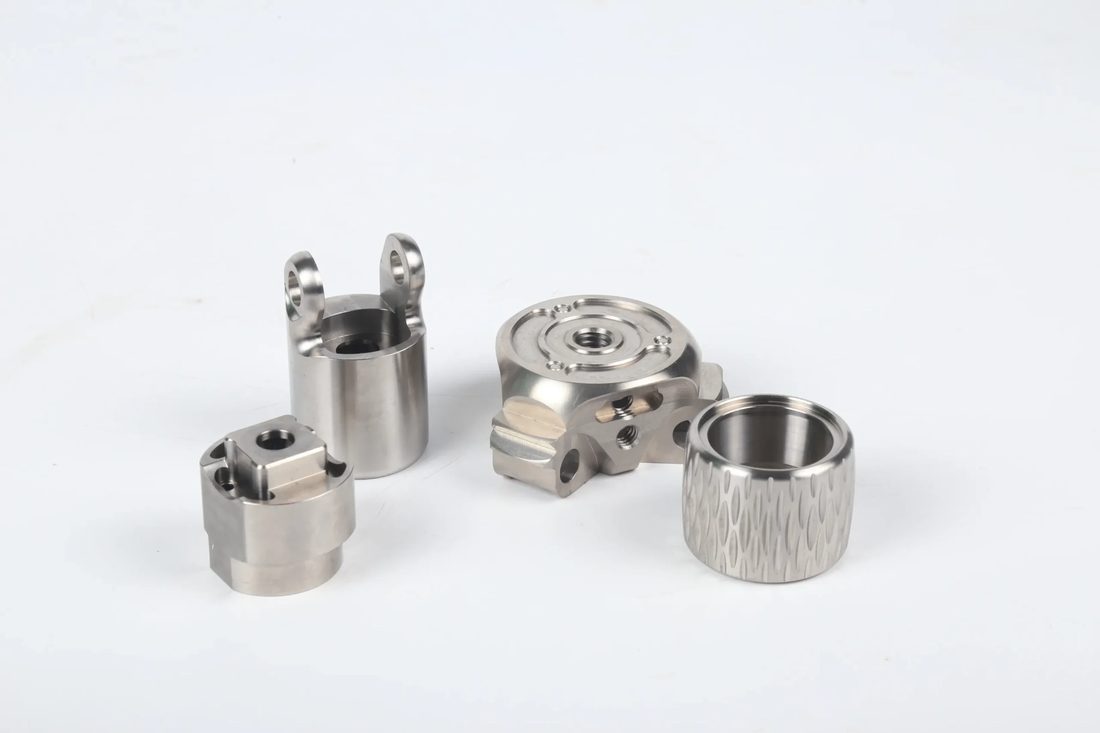
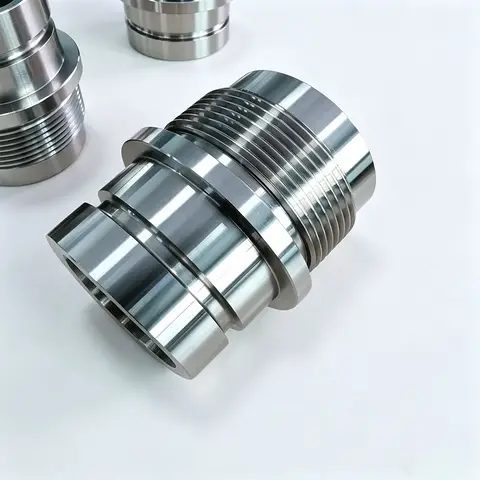
Medical components machined by LusterControl
A Practical Checklist for Qualifying a Medical CNC Supplier
Copy this and send it to every shop on your shortlist. The answers will sort them fast.
- Can they show ISO 13485 (or ISO 9001 plus a medical roadmap) with real QMS records?
- Do they machine 316L / 304 stainless regularly, not as a one-off?
- Can they state a finish target (Ra) and verify it with a profilometer?
- Will they provide FAI, SPC, and batch traceability on every lot?
- Are tolerances quoted against your drawing, not a generic 'we are precise'?
- Do they offer passivation and electropolish in-house or via a controlled partner?
- Can they support prototype to production without re-qualifying the process?
- Do they answer engineering questions directly, with specifics, not sales talk?
A supplier that clears all eight is rare - and worth keeping. One that stumbles on traceability or finish verification should not be on a surgical program.
Common Mistakes Engineers Make When Sourcing Surgical Instruments
Most failures we see were decided at the sourcing stage, not on the shop floor.
- Chasing the lowest bid - the saving evaporates in rework, delays, and validation restarts.
- Treating ISO 13485 as a box to tick instead of a system to verify with documents.
- Skipping first-article inspection to 'save time' - it is the cheapest insurance you have.
- Leaving finish as 'smooth' on the drawing, then arguing about it after shipment.
- Ignoring communication - a shop that is vague before the PO stays vague after it.
- Forgetting traceability - without it, a single complaint becomes a full recall.
None of these mistakes are technical. They are habits - and the disciplined medical CNC supplier you choose should make the right habit the easy default.
Medical components machined by LusterControl
Matching a Medical CNC Supplier to Your Production Volume
The right partner for ten prototypes is not always the right partner for a million a month.
Low-volume and prototype programs
Here you want fast engineering response, flexible lot sizes, and a shop that will run FAI and help you tune the design. Speed and communication beat raw capacity.
High-volume production
At scale, consistency is everything: locked processes, SPC on every batch, and the muscle to hold tolerance across thousands of parts without drift.
| Program type | What to weigh most |
|---|---|
| Prototype / NPI | Engineering support, fast sampling, FAI |
| Bridge production | Flexibility plus repeatable process control |
| Full volume | SPC, capacity, locked traceability, stable lead time |
Pick the supplier whose strengths match the stage you are actually in - and ask how they handle the next stage before you need it.
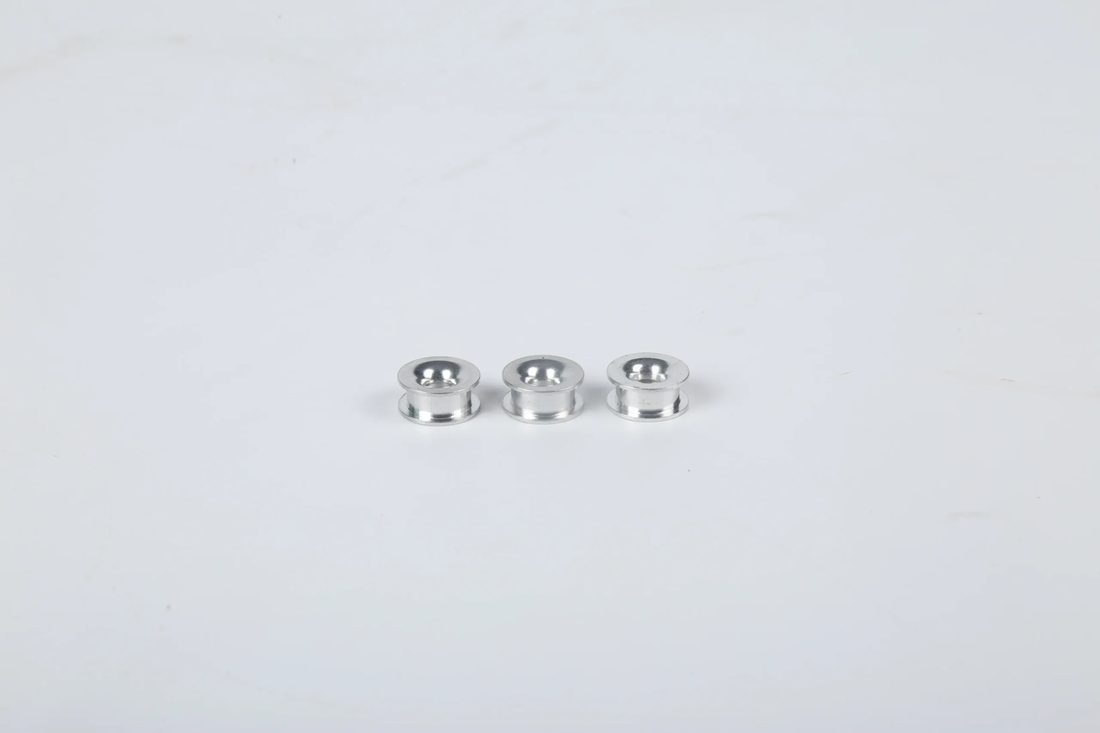
Medical components machined by LusterControl
Medical components machined by LusterControl
Medical components machined by LusterControl
Medical components machined by LusterControl
FAQ: medical CNC supplier & Medical Buyer Questions
A: ISO 9001 is the general quality standard; ISO 13485 is written for medical devices and adds risk management, traceability, and documentation specific to parts that affect patient safety. For surgical instruments, ISO 13485 is the meaningful one.
A: 316L is the most common choice for surgical instruments and implants: it is austenitic, low-carbon (better weld/polish behavior), and passivates to a strong corrosion-resistant surface. 304 is used for less demanding instruments.
A: We routinely hold ±0.005 mm on critical diameters and ±0.01 mm on flatness and position features for surgical instruments, verified by CMM and profilometry rather than estimated.
A: Yes. We run first-article inspection on new designs, support low-volume custom runs, and scale to monthly volume while keeping the same documented process and traceability.
A: Every lot is tied to its material mill certificate, machine, operator, inspection records, and a Certificate of Conformance - so any shipped part can be traced back to its full history.
A: For parts that contact tissue or sit in a sterilizer, specify Ra 0.2 to 0.4 µm (mirror / 8K) and verify it with a profilometer. 'Smooth' alone is not a controllable requirement.
Ready to qualify a medical CNC supplier for your surgical instrument program? Send us your drawing and we will return a free DFM review with tolerance and finish recommendations - no obligation, just a clear engineering answer.
Request a Free CNC Quote