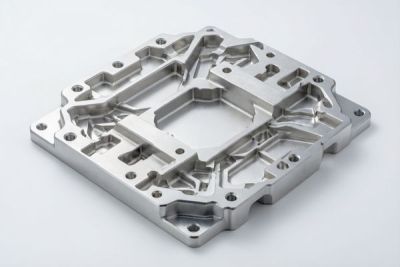
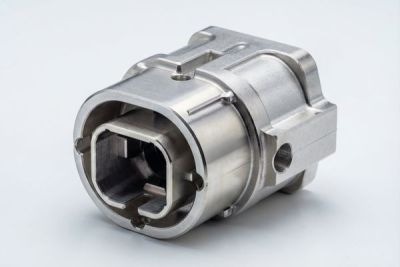
Vacuum-Compatible Parts Machining: Material Selection Taboos (2026 Guide)
If you build semiconductor equipment, the vacuum chamber is the one assembly that punishes small mistakes the hardest. A chamber that must hold 10^-6 torr does not care how pretty the part looks on the inspection table - it cares about what is trapped inside the metal and what will eventually come back out as gas, particles, or a slow pressure creep that ruins a wafer run at 2 a.m. That is the gap most sourcing teams discover only after a chamber fails qualification.
In this 2026 guide we walk through vacuum-compatible parts machining from the buyer's side: which alloys actually belong in a high-vacuum chamber, the machining taboos that create virtual leaks and outgassing hot-spots, the tolerances that matter on flanges and feedthroughs, and a sourcing checklist you can hand a supplier before you release a purchase order. We write this from a shop floor that has machined stainless mirror parts since 2015, not from a catalog.
You will leave with a decision framework - choose 316L or 6061, electropolis or just passivate, single-setup 5-axis or conventional - and the specific questions that separate a shop that understands vacuum discipline from one that simply owns a CNC machine.
Table of Contents
- 1. Why Vacuum-Compatible Parts Machining Demands a Different Ruleset
- 2. Semiconductor Precision Parts Machining: The Cleanliness Floor
- 3. Precision Machining of Chamber Walls and Bellows Seats
- 4. Tight Tolerance CNC for Vacuum Flanges and Feedthroughs
- 5. CNC Precision Machining of Vacuum-Compatible and Chamber Parts
- 6. Choosing Alloys in Precision Machining for Semiconductor Vacuum Parts
- 7. Outgassing and Bake-Out Taboos in Vacuum-Compatible Parts Machining
- 8. Surface Finish and Passivation: ASTM A967 in Semiconductor Precision Parts Machining
- 9. A Buyer's Sourcing Checklist for Vacuum-Compatible and Chamber Parts
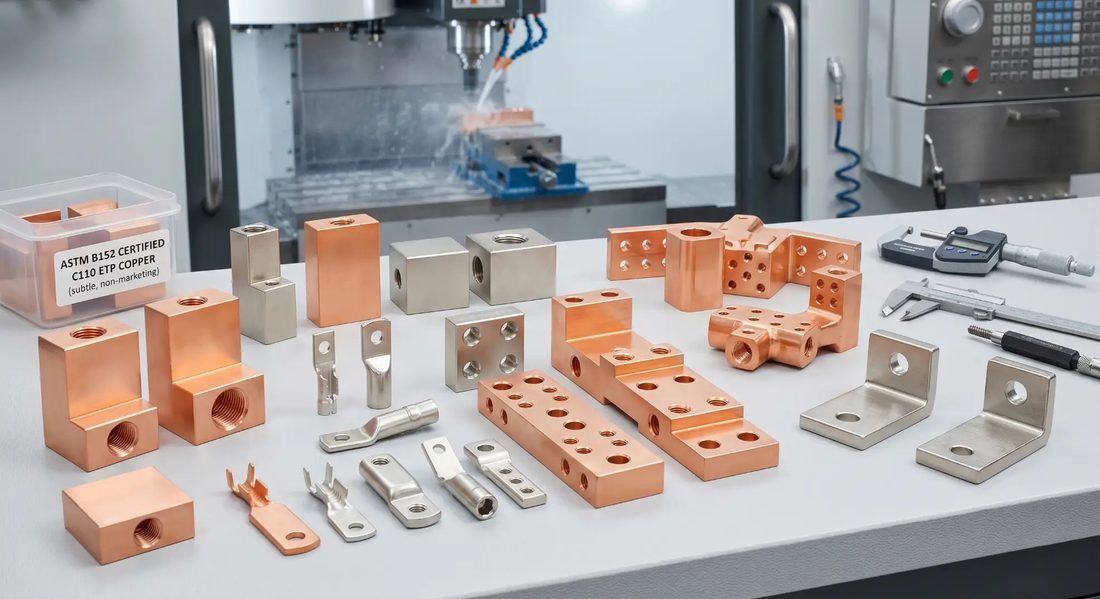
Semiconductor Equipment CNC precision component
Why Vacuum-Compatible Parts Machining Demands a Different Ruleset
You are not buying tighter tolerances - you are buying a different discipline about what stays trapped.
When you specify vacuum-compatible parts machining, the part has to behave after it is sealed, pumped down, and baked. The enemies are not dimensional errors you can measure on a CMM; they are hidden reservoirs of gas and contamination. A blind threaded hole full of cutting fluid, a sharp internal corner that traps electropolish sludge, or a porous casting can each vent for hours under vacuum and never show up on a first-article report.
We have learned this across 15 years of stainless mirror work at LusterControl's Dongguan source factory. A part that is perfect at atmospheric pressure can become the weak link of a vacuum system the moment the pump starts. The discipline is less about hitting a number and more about removing every place where gas or particles can hide.
What vacuum-compatible actually means
In plain terms, a vacuum-compatible part is one whose materials, surface, and internal geometry will not release significant gas, vapor, or particles once the system is evacuated. For semiconductor equipment the bar is high because even a monolayer of hydrocarbon on a chamber wall can migrate onto a wafer and wreck yield.
- Outgassing
- The release of gas from a material's surface or bulk when pressure drops; measured as a rate, often after a 24-hour or 100 C bake-out.
- Virtual leak
- A trapped volume - a blind hole, a thread, a crevice - that slowly bleeds gas into the chamber, mimicking a real leak on a helium test.
- Bake-out
- Heating the chamber (typically 80-150 C) to accelerate outgassing and drive trapped volatiles out before final sealing.
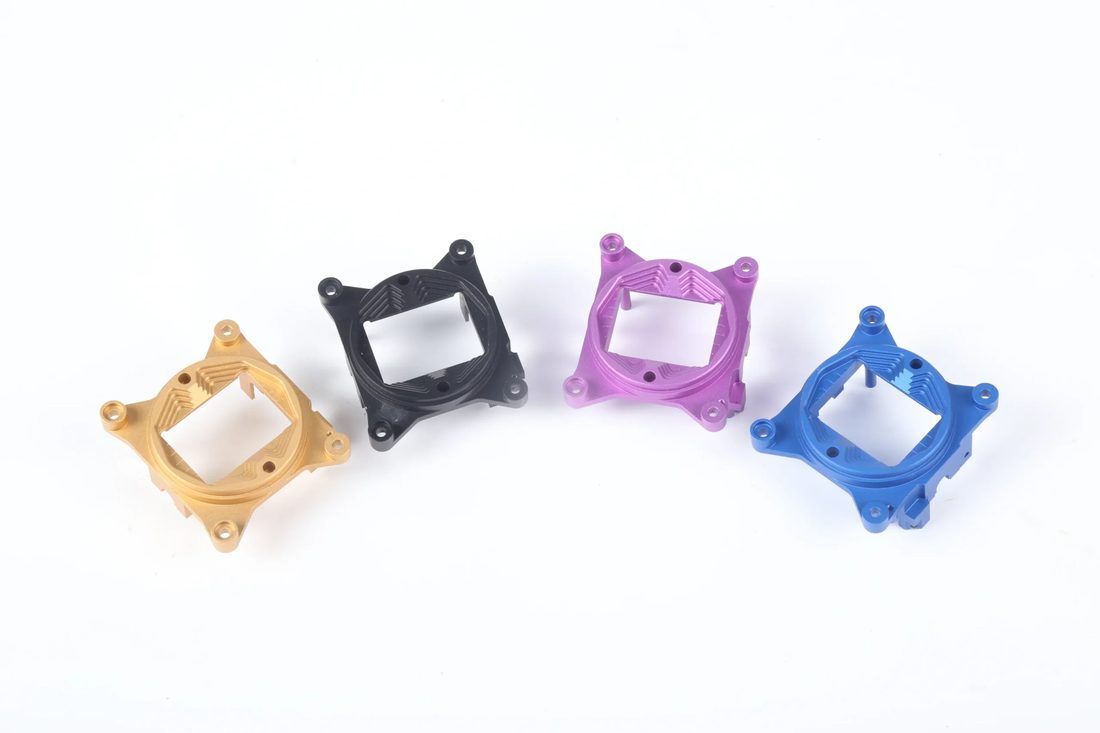
Semiconductor Equipment CNC precision component
Semiconductor Precision Parts Machining: The Cleanliness Floor
In a wafer tool, a single particle is not a blemish - it is a yield event.
Semiconductor precision parts machining carries a cleanliness floor that most general machined parts never meet. A fingerprint's oil film, a chip of abrasive left in a groove, or a residual cutting-emulsion haze can all contaminate a process chamber. The question you should ask a supplier is not 'can you hold the tolerance' but 'can you prove the part left your building clean'.
For chamber-adjacent components we clean, passivate, and package in a controlled area, then seal in anti-static, low-outgassing bags so the part arrives at your line the way it left ours. Traceability runs from the raw bar heat lot to the finished component, which is the only way you can ever do a root-cause analysis if a chamber misbehaves months later. If you are weighing suppliers, send us your drawing for a free DFM review before you release a purchase order.
| Cleanliness control | Typical shop | Vacuum-grade approach |
|---|---|---|
| Final wash | Solvent wipe | Ultrasonic + deionized rinse, verified |
| Packaging | Bubble wrap | Anti-static, low-outgassing sealed bag |
| Traceability | Lot tag | Heat-lot to finished-part record |
| Assembly env. | Open bench | Clean-area, glove-handled |
| Proof | Photo | Cleanliness + leak-test record |
Precision Machining of Chamber Walls and Bellows Seats
Thin walls and soft seats are where vacuum parts either sing or scream.
Precision machining of chamber walls and bellows seats is a thin-wall game. A chamber wall that is too thick wastes pump-down time and bake-out energy; too thin and it deflects under atmospheric load or rings under vibration. Bellows seats need a flat, low-roughness face so the weld or braze seals without a leak path, and that face is often only a few tenths of a millimeter proud of a fragile web.
Holding thin walls true
Our approach is to rough with relieved clamping, then finish the critical face in a tensioning fixture so the part cannot spring during the final pass. We measure the free-state form after the fixture is released, because that is the shape your assembly actually sees - not the clamped number on the CMM.
- Rough all features with light, even clamp load
- Relieve fixture pressure before the finish pass
- Cut the seat face to Ra 0.6 micro m or finer
- Release the fixture and measure free-state flatness
- CMM-audit the first article against full datums
Semiconductor Equipment CNC precision component
Tight Tolerance CNC for Vacuum Flanges and Feedthroughs
A flange knife-edge is a cutting tool that has to cut once and seal forever.
Tight tolerance CNC earns its keep on vacuum flanges and feedthroughs. A ConFlat-style flange seals because a sharp, continuous knife-edge bites into a copper gasket; if the edge radius varies by a few microns or the sealing plane is not flat, the seal either leaks or the flange cracks on the first bolt-up. Feedthroughs need their insulator bore and conductor concentric within a tight band so the ceramic or glass seal is not stressed into failure.
We hold the flange sealing face flat to 0.01 mm and the knife-edge radius consistent part to part, then inspect on a CMM with a full datum report. O-ring groove dimensions are cut to the gasket spec, not to a generic tolerance, because an over-wide groove is the quiet cause of soft leaks that pass a quick helium sniff but fail after thermal cycling.
| Feature | Sloppy shop | Tight tolerance CNC |
|---|---|---|
| Flange sealing flatness | 0.05 mm | 0.01 mm |
| Knife-edge consistency | Variable | CMM-verified per lot |
| O-ring groove | Generic +/-0.1 | To gasket spec |
| Feedthrough concentricity | 0.05 mm | +/-0.01 mm |
| First-article proof | Photo | Full CMM datum report |
CNC Precision Machining of Vacuum-Compatible and Chamber Parts
One setup, one datum, one fewer place for a leak to hide.
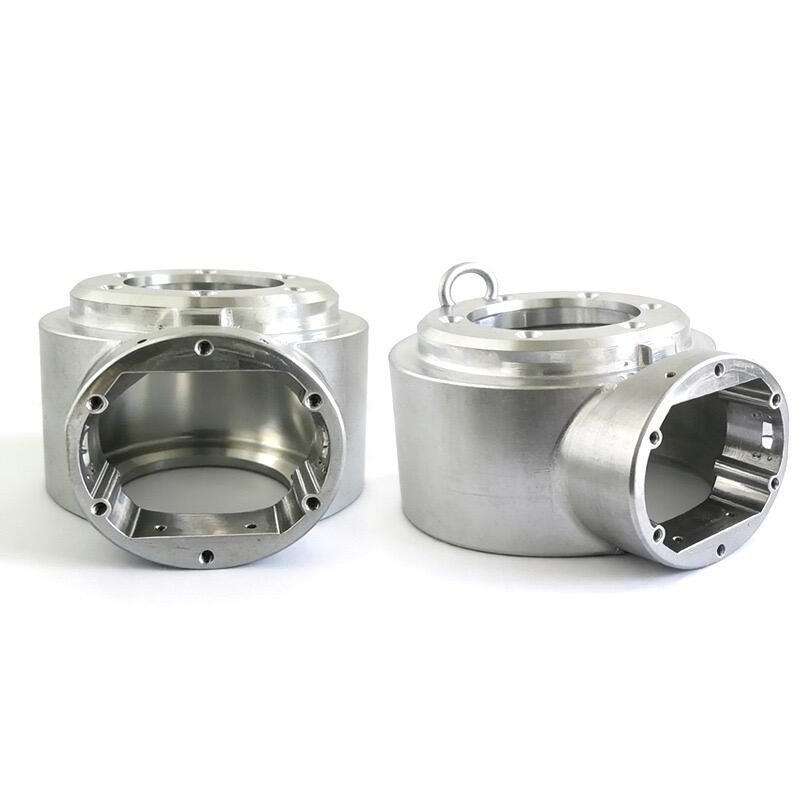
At our Dongguan source factory, CNC precision machining of vacuum-compatible and chamber parts is where process choice meets leak discipline. Multi-face parts - a flange with a bored center, an angled feedthrough boss, an internal seat - are best cut in a single 5-axis setup so the coordinate system never moves and the sealing features stay mutually true. Every re-clamp on a 3-axis machine is a chance to introduce a datum shift that you cannot see but the helium tester can.
The process flow we run
- Plan the part on the cheapest process that still meets the true-position callout
- Rough on turn-mill composite or Swiss-type lathe to control bar stock
- Finish critical faces in a single 5-axis setup to lock the datum
- Electropolis or passivate per ASTM A967 depending on the alloy
- Clean, leak-check, and seal in low-outgassing packaging
Pros
- Single-setup 5-axis kills datum shift on multi-face parts
- Turn-mill composite cuts cycle time on revolved features
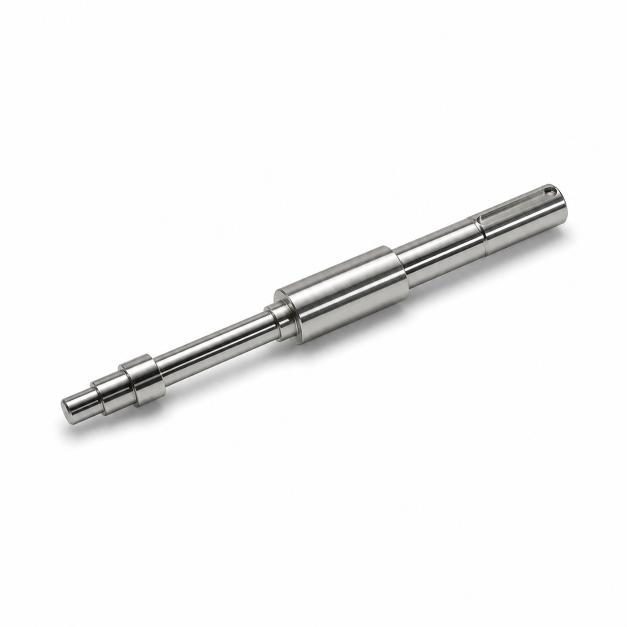
- Swiss-type lathe holds long, slender vacuum stems true
- In-process gauging catches drift before a bad lot ships
Cons
- 5-axis is costlier per hour than 3-axis for simple plates
- Electropolishing adds a step and a lead-time day
- Not every shop can prove single-setup capability
- Tight tolerances need CMM proof, not just a claim

Semiconductor Equipment CNC precision component
Choosing Alloys in Precision Machining for Semiconductor Vacuum Parts
The alloy decides your outgassing ceiling long before the cutter touches metal.
Choosing alloys in precision machining for semiconductor vacuum parts is the single biggest lever on outgassing and bake-out behavior. 316L stainless is the workhorse: low outgassing after a bake, weldable, and forgiving. 6061 aluminum is lighter and cheaper but outgasses more and needs care around alkali in cleaning. Titanium and Inconel step in for high-temperature or aggressive-process zones but cost more and machine slower.
What you must not use is the quiet trap: brass with leaded free-machining alloys, zinc die-castings, plated parts with trapped gas, or any material with a volatile coating. These look fine at atmospheric pressure and then become the outgassing source that keeps your base pressure three decades too high. For related reading, our semiconductor precision parts machining guides cover flange and feedthrough details in depth.
| Alloy | Outgassing after bake | Best for | Watch out for |
|---|---|---|---|
| 316L stainless | Very low | Chambers, flanges, lids | Heavier; slower to machine |
| 6061 aluminum | Low-moderate | Light brackets, non-critical | Alkali sensitivity in clean |
| Titanium Gr.2/5 | Low | High-temp, corrosive zones | 2-3x cycle time, cost |
| Inconel | Low | Heated process hardware | Tool wear, slow, pricey |
| Brass / zinc | High - avoid | Never in HV chamber | Lead, volatiles, gas trap |
Outgassing and Bake-Out Taboos in Vacuum-Compatible Parts Machining
Most vacuum failures are designed in on the CAD screen, not caused on the mill.
Outgassing and bake-out taboos in vacuum-compatible parts machining are the list every designer should read before releasing a drawing. They are simple to avoid and expensive to learn in the field. The theme is consistent: remove every hidden volume and every contamination path.
- Blind threaded holes that trap cutting fluid and boil off under vacuum - vent them or specify through-holes with plugs
- Sharp internal corners on parts destined for electropolishing - EP cannot reach a zero-radius corner and leaves a sludge pocket
- Residual emulsion or abrasive from machining that is only 'wiped' clean, never ultrasonically washed
- Plated or coated surfaces with microscopic porosity that outgas for days
- Porous castings or sintered parts presented as solid vacuum hardware
- Trapped O-ring grooves or undercuts that collect particles and defeat the clean claim
Semiconductor Equipment CNC precision component
Surface Finish and Passivation: ASTM A967 in Semiconductor Precision Parts Machining
A smoother surface is a smaller gas reservoir - and a cleaner one.
Surface finish and passivation: ASTM A967 in semiconductor precision parts machining is not cosmetic. A rough surface holds more trapped gas and more particle nucleation sites; electropolishing both smooths the surface and passivates the stainless so it resists fingerprint corrosion during handling. We take sealed chamber faces down to Ra 0.2 micro m on our 8K mirror line when the application demands it, and Ra 0.6 micro m as the standard mirror floor.
Passivation per ASTM A967 removes free iron from the surface and restores the chromium-rich passive layer. For vacuum hardware this is the routine finish, not a premium option, because a passive surface is also a low-outgassing one. After finishing we clean and package so the passive layer is never re-contaminated before it reaches your line.
| Finish | Typical Ra | Use it for | Notes |
|---|---|---|---|
| As-machined | 1.6 micro m | Non-sealing brackets | Avoid in chamber |
| Standard mirror | 0.6 micro m | General vacuum faces | Our floor |
| 8K mirror | 0.2 micro m | Sealed, critical faces | Electropolished |
| Passivated | Per ASTM A967 | All stainless HW | Free-iron removal |
- Confirm the alloy and its mill cert up front
- Agree on final Ra and whether electropolish applies
- Specify passivation to ASTM A967 for stainless
- Require ultrasonic clean, not a wipe
- Demand a cleanliness and leak-test record
- Insist on low-outgassing sealed packaging
A Buyer's Sourcing Checklist for Vacuum-Compatible and Chamber Parts
Hand this to a supplier and the tire-kickers filter themselves out.
Sourcing vacuum-compatible and chamber parts is less about finding a cheap machine and more about finding a shop that respects vacuum discipline. The questions below are the ones we are happy to answer with data, and the ones that separate a real precision source from a broker with a logo and a quotation.
- Ask for the cert stack: ISO 9001 minimum, ISO 13485 system established a plus, IATF 16949 applying a bonus
- Request material certs traceable to the heat lot, not just a grade label
- Confirm single-setup 5-axis or turn-mill capability, not 3-axis with re-fixturing
- Get a CMM first-article report with full datum references on sealing faces
- Require an ultrasonic clean and ASTM A967 passivation spec in writing
- Verify batch traceability and a real leak-test or cleanliness record before shipment
- Insist on low-outgassing sealed packaging so the clean claim survives transit
The cheapest vacuum flange is the one that seals on the first pump-down - because the second attempt costs you a chamber teardown and a missed tool-qualification date.
Semiconductor Equipment CNC precision component
Semiconductor Equipment CNC precision component
Semiconductor Equipment CNC precision component
Semiconductor Equipment CNC precision component
FAQ: vacuum-compatible and chamber parts & Semiconductor Equipment Buyer Questions
A: 316L stainless is the default: very low outgassing after a bake, weldable, and forgiving. Use 6061 aluminum for light, non-critical brackets, and titanium or Inconel only where temperature or corrosion genuinely drives the design. Avoid brass, zinc, leaded alloys, and any plated part with trapped gas - they outgas and defeat the vacuum.
A: A blind threaded hole traps cutting fluid and air that boil off under vacuum, creating a virtual leak that mimics a real leak on a helium test and keeps your base pressure too high. Vent the feature or specify a through-hole with a plug so nothing is sealed in.
A: Hold general vacuum faces to Ra 0.6 micro m as a floor, and take sealed, critical faces down to Ra 0.2 micro m on an electropolished 8K mirror line when the application demands it. Always passivate stainless per ASTM A967 to remove free iron and lower outgassing.
A: Yes. We supply material certs traceable to the heat lot, a CMM first-article report with full datum references on sealing faces, an ultrasonic-clean and ASTM A967 passivation spec, and lot-level traceability from raw bar to finished component, packaged in low-outgassing sealed bags.
A: Yes, on multi-face parts. Cutting the flange, bored center, and angled bosses in a single 5-axis setup removes the datum shift you get from re-fixturing on a 3-axis machine, so sealing features stay mutually true and the knife-edge seats consistently part to part.
A: Tolerance the O-ring groove to the actual gasket drawing, not a generic plus-or-minus, and require a CMM report on the sealing face flatness (we hold 0.01 mm). An over-wide or mis-sized groove is the quiet cause of soft leaks that pass a quick test but fail after thermal cycling.
Send us your vacuum chamber or flange drawing for a free DFM review - we will flag the features that should move to single-setup 5-axis, the blind holes that will outgas, and the finish call between standard mirror and 8K electropolish. Reach out and let's cut the first article.
Request a Free CNC Quote