LusterControl Supplies Precision Parts to De'Longhi, Donlim & Breville (2026 CNC News)
LusterControl (Dongguan Licun Technology Co., Ltd.) has spent 15 years since our 2015 founding turning raw bar stock into the small, precise components that sit inside the coffee machines millions of people use every morning. A quiet milestone worth sharing in this LusterControl news update: we supply precision stainless-steel and brass coffee machine parts to globally recognised appliance brands including De'Longhi, Donlim and Breville.
In this 2026 update we walk you through what those OEM programs actually demand — not the marketing, but the engineering. Holding ±0.005 mm on a brewing valve, putting an 8K Ra 0.2 μm mirror on a visible trim ring, passivating stainless to ASTM A967, and keeping every lot batch-traceable from raw stock to packed box, all while scaling from a 200-piece validation to 500,000 parts a month. If you build or source coffee-machine or food-contact components, this is the practical bar.
Serving a global appliance brand is less about one perfect part and more about repeating that part flawlessly, audit after audit, for years. That is the discipline we have built on our Dongguan floor with 60+ CNC machines across 2,000 m², and it is the reason these relationships have lasted. We share the detail so you can judge a supplier — including us — by the numbers, not the brochure.
Table of Contents
- 1. LusterControl News: Supplying Precision Parts to De'Longhi, Donlim & Breville
- 2. Coffee Machine Parts: What Global Brands Actually Ask Us to Make
- 3. Brass Machining for Coffee Machines: Tolerances That Matter
- 4. Stainless Steel Parts: Mirror Finish and Cleanability for Food Contact
- 5. Custom CNC Parts: From Small-Batch to 500K/Month Mass Production
- 6. Coffee Machine Parts Quality: ISO 9001 and Batch Traceability for OEMs
- 7. Stainless Steel Parts vs Brass Machining: Which to Choose for Your Brewer
- 8. Why Global OEMs Choose LusterControl for Custom CNC Parts in 2026
Company CNC precision component
LusterControl News: Supplying Precision Parts to De'Longhi, Donlim & Breville
Three brands, one source-factory discipline.
This LusterControl news note is about the kind of work that rarely makes a headline but defines a factory: supplying the small metal components inside premium coffee machines. De'Longhi, Donlim and Breville each specify tight tolerances, food-contact-compatible finishes, and full material traceability — and each relies on the same Dongguan floor that also serves medical, automotive and drone programs. The common thread is precision, not a single product.
- OEM (original equipment manufacturer)
- A brand that designs and sells the finished product and sources components from a specialist factory
- Coffee machine parts
- Brewing valves, housings, trim rings, dispensers and fittings inside an espresso or drip machine
- Custom CNC parts
- Components made to a customer's drawing rather than a catalogue standard
- Batch traceability
- Every lot of raw material is logged with its certificate and followed through to packing
Company CNC precision component
Coffee Machine Parts: What Global Brands Actually Ask Us to Make
Small parts, unforgiving specs.
When a brand like De'Longhi or Breville sends a coffee machine parts drawing, the components are rarely large — they are the brewing chamber, the valve body, the dispenser nozzle, the handle bracket, the visible trim ring. What makes them hard is the combination of tight tolerance, food-contact finish, and a look that has to survive millions of cycles. We make these in stainless and brass, finished to the grade each face earns.
Typical parts we machine for coffee machines
- Brewing valves and chambers that must seal at temperature and pressure
- Dispenser nozzles and spouts where finish affects flow and cleanability
- Housings and brackets that locate precisely inside the assembly
- Visible trim rings and caps where an 8K mirror finish sells the premium look
- Connectors and fittings carrying water or steam paths
| Part type | Typical material | Finish we apply |
|---|---|---|
| Brewing valve / chamber | Stainless 304 / 316 | Ra ≤0.6 μm mirror, ASTM A967 |
| Dispenser nozzle | Stainless / brass | Mirror or 8K Ra 0.2 μm |
| Trim ring / cap | Brass or stainless | 8K Ra 0.2 μm decorative |
| Bracket / housing | Stainless / aluminium | Ra ≤0.6 μm or as-machined |
Brass Machining for Coffee Machines: Tolerances That Matter
Brass is easy to cut, hard to cut perfectly.
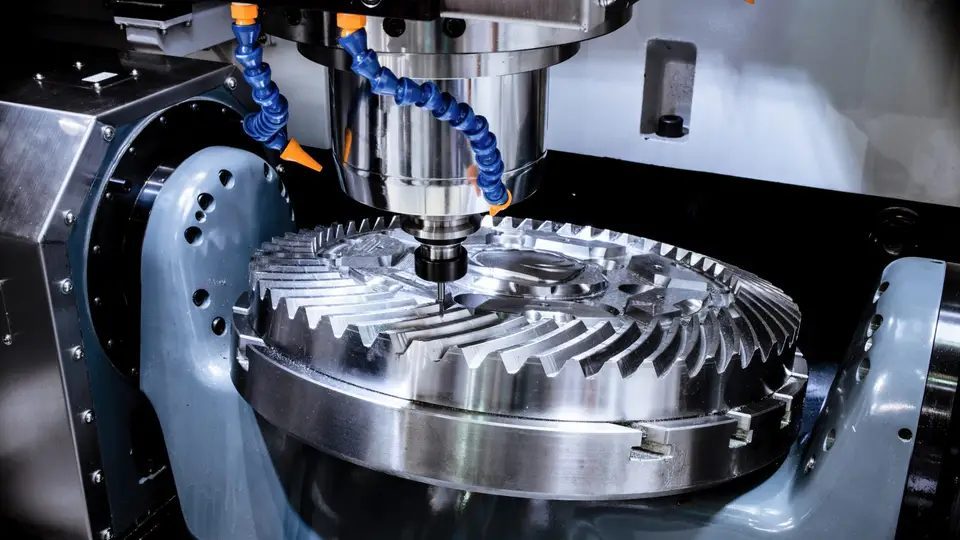
Brass is a favourite for coffee-machine trim and fittings because it machines beautifully, takes a brilliant polish, and resists corrosion in a wet, warm environment. But brass machining at OEM tolerances is unforgiving: a soft alloy work-hardens if the tool rubs instead of cuts, and thin features spring if the process is not rigid. Our turn-mill and Swiss-type lathes hold the geometry so the part is right the first time.
Why brass earns its place in a brewer
| Property | Why it matters in a coffee machine | Our control |
|---|---|---|
| Excellent machinability | Sharp features, smooth bores, low scrap | Swiss-type + turn-mill cells |
| Corrosion resistance | Survives steam and water paths | Optional passivation per spec |
| Premium look | Warm metal finish on visible trim | Mirror to 8K Ra 0.2 μm |
| Tight tolerance | Seats and threads must fit | ±0.005 mm standard |
Pros
- Beautiful, premium appearance on visible parts
- High dimensional stability and low scrap
- Good corrosion resistance in wet paths
- Takes mirror and 8K finishes cleanly
Cons
- Softer than stainless, not for high-wear seats
- Needs de-burring discipline on thin features
- Higher raw material cost than steel
Company CNC precision component
Stainless Steel Parts: Mirror Finish and Cleanability for Food Contact
On a food path, the surface is a safety feature.
For any stainless steel parts that touch water, coffee or steam, surface finish is a hygiene decision, not a cosmetic one. A smoother surface resists bacterial adhesion, simplifies cleaning validation, and seals better on fluid-path mating faces. That is why brands trust our mirror finishing — Ra ≤0.6 μm as standard, up to 8K Ra 0.2 μm on request — for components that get washed, descaled or filled.
Finish grades we hold on stainless coffee parts
- Ra (roughness average)
- Arithmetic mean surface roughness in micrometres; lower means smoother
- 8K mirror finish
- Highest stainless decorative mirror grade; near-perfect reflective surface
- ASTM A967
- Standard practice for passivating stainless steel to maximise corrosion resistance
- Cleanability
- How easily a surface can be sanitised; improves as Ra drops
| Finish grade | Typical Ra | Best for |
|---|---|---|
| As-machined | Ra 1.6 μm | Hidden structural brackets |
| Standard mirror | Ra ≤0.6 μm | Most housings, fluid parts |
| 8K mirror | Ra 0.2 μm | Premium visible trim |
| Passivated | Per ASTM A967 | Food / medical contact |
Custom CNC Parts: From Small-Batch to 500K/Month Mass Production
The same floor, prototype to volume.
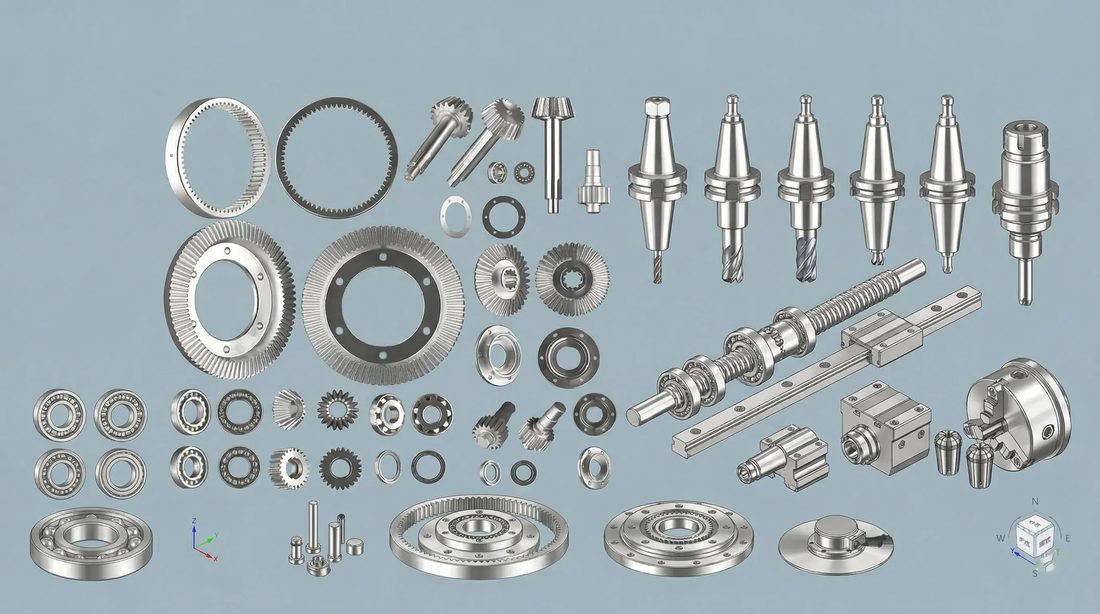
A coffee-machine program does not start at 500,000 parts. It starts at 200 validation units, grows through a pilot, then ramps. The value of a source factory like LusterControl is running custom CNC parts on the same Dongguan floor at every stage, so the 200-piece proof and the mass run share identical process control. That removes the classic risk of a prototype shop handing off to a different volume shop that cannot repeat the result.
How we scale without losing the tolerance
| Volume | Cell we use | What stays constant |
|---|---|---|
| 200-piece validation | Prototype / Swiss-type cell | ±0.005 mm, FAI record |
| Pilot 5,000-20,000 | Mixed turn-mill cell | Same finish grades |
| Mass 500,000/month | Dedicated CNC lines | Batch traceability, SPC |
- Send the drawing and the real fit tolerance your assembly needs
- State the target finish grade (Ra ≤0.6 μm or 8K Ra 0.2 μm)
- Flag any material certificate and ASTM A967 passivation need
- Share expected volume so we route prototype vs mass cell
- Confirm batch traceability and FAI before full run
- Plan the ramp from validation to 500K/month with one supplier
Company CNC precision component
Coffee Machine Parts Quality: ISO 9001 and Batch Traceability for OEMs
An OEM audit is won on paper, not on the part.
A global brand cannot recall a coffee machine because one stainless batch was wrong. That is why coffee machine parts quality for OEMs is as much about records as about metal. Our quality ladder — ISO 9001 certified, ISO 13485 completed, IATF 16949 in progress — means every lot ships with incoming batch traceability and material certificates, audit-ready on request under the relevant standard.
| Certificate | What it buys the buyer | Status at LusterControl |
|---|---|---|
| ISO 9001 | Audited quality management system | Certified |
| ISO 13485 | Medical-device quality system | Completed |
| IATF 16949 | Automotive quality system | In progress |
| ASTM A967 | Stainless passivation practice | Applied per spec |
- Every raw lot logged with its material certificate
- In-process SPC catches drift before QA
- First-article inspection approved before full run
- Packed boxes tied back to the exact stock lot
- Audit-ready documentation on request
Stainless Steel Parts vs Brass Machining: Which to Choose for Your Brewer
Pick by face, not by habit.
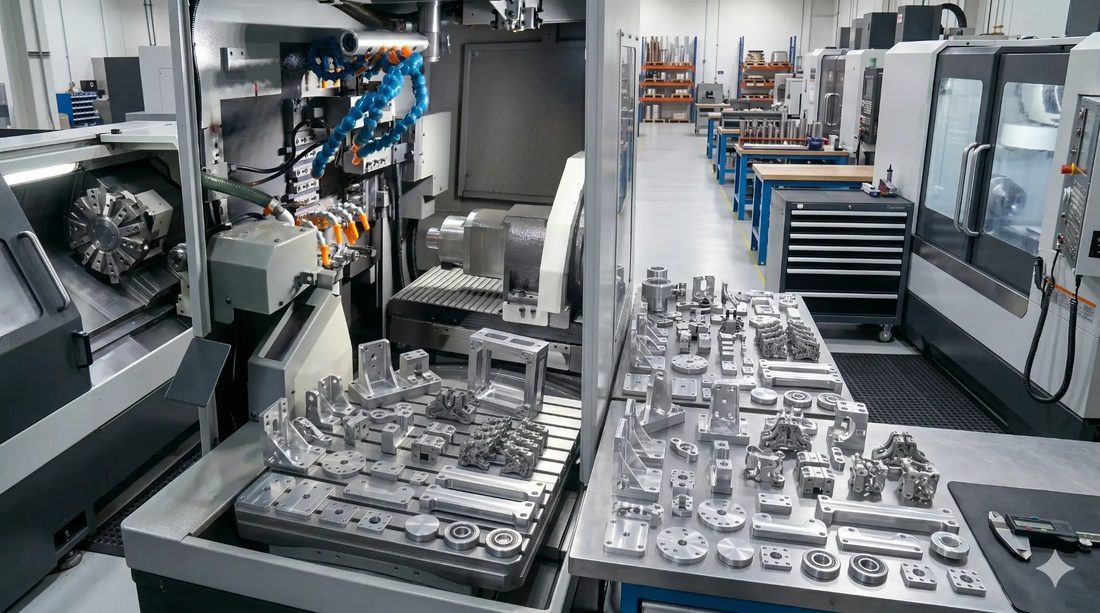
The question we get most from coffee-machine brands is simple: stainless or brass? The honest answer is material-by-face. Stainless steel parts win on fluid paths, corrosion and cleanability; brass machining wins on visible trim and cost-efficient premium looks. Choosing one for everything either overspends or under-performs. Here is the practical split.
| Where | Pick stainless | Pick brass |
|---|---|---|
| Water / steam path | Yes — corrosion + cleanability | Only if spec allows |
| Visible trim ring | If 8K mirror wanted | Yes — warm premium look |
| High-wear seat | Yes — harder | No — too soft |
| Cost-sensitive fitting | Standard | Often cheaper finished |
Pros
- Right material on the right face cuts cost
- Stainless for safety, brass for looks
- One supplier handles both on one floor
- Mix-and-match validated under one FAI
Cons
- Needs a DFM call per part, not a blanket rule
- Two materials mean two cert flows
Company CNC precision component
Why Global OEMs Choose LusterControl for Custom CNC Parts in 2026
One floor, every grade, documented quality.
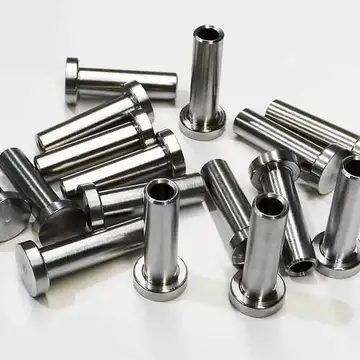
The reason De'Longhi, Donlim and Breville — and programs in medical, automotive, drone and semiconductor — keep coming back is the same: LusterControl runs custom CNC parts as a standard capability on one Dongguan source-factory floor, so a 200-piece validation gets the identical ±0.005 mm and Ra ≤0.6 μm as a 500,000-piece run. We serve 14 industries from 60+ CNC machines, 2,000 m² of zoned floor, and a monthly capacity of 500,000 precision parts, with annual output now exceeding ¥20 million.
Our quality ladder is consistent: ISO 9001 certified, ISO 13485 completed, and IATF 16949 in progress, applied from coffee-machine parts for De'Longhi, Donlim and Breville to medical and aerospace programs. Learn more in our CNC machining guides, read about Dongguan Licun Technology, or explore our custom CNC parts and other capabilities on the home page.
A component earns a brand's trust not on the first perfect part, but on the five-hundred-thousandth one that is identical to it.
Company CNC precision component
Company CNC precision component
Company CNC precision component
Company CNC precision component
FAQ: LusterControl news & Company Buyer Questions
A: Yes. LusterControl (Dongguan Licun Technology) supplies precision stainless-steel and brass coffee machine parts to these recognised appliance brands, applying the same ±0.005 mm, mirror-finishing and batch-traceability discipline used across our medical, automotive and drone programs.
A: We hold ±0.005 mm as standard on CNC lines, with mirror finishing at Ra ≤0.6 μm and 8K Ra 0.2 μm on request. Stainless fluid-path parts are passivated per ASTM A967, and visible trim can be finished to a bright 8K decorative mirror.
A: It depends on the face. Stainless steel parts win on water and steam paths for corrosion resistance and cleanability; brass machining wins on visible trim for a warm premium look and efficient finishing. We often combine both on one assembly, certified per face.
A: We are ISO 9001 certified, ISO 13485 completed, with IATF 16949 in progress. Every lot ships with incoming batch traceability and material certificates, audit-ready on request under the relevant standard — exactly what global OEMs require.
A: Yes. The same Dongguan floor runs custom CNC parts from 200-piece validation through pilot to 500,000 parts per month, so the prototype and the mass run share identical process control, first-article records and batch traceability.
A: Send us your drawing with the real fit tolerance, target finish grade, any material certificate or ASTM A967 passivation need, and expected volume. We return a free DFM review, run a first-article inspection, and route you from prototype to volume on one quality system.
Send us your coffee-machine drawing for a free DFM review, and our Dongguan engineering team will confirm the right material — stainless or brass — the tight tolerance CNC capability, and the mirror or 8K finish your next OEM component needs, scalable from validation to 500,000 parts a month.
Request a Free CNC Quote