Swiss-Type Turning at LusterControl: Small, Complex, High-Volume (2026 CNC News)
LusterControl (Dongguan Licun Technology Co., Ltd.) has spent 15 years since our 2015 founding machining parts that fit in the palm of your hand — and many that do not. A LusterControl news note for 2026: our Swiss-type turning cells are where small, complex, high-volume precision parts are made, holding ±0.005 mm on components too tiny for a conventional lathe to cut cleanly.
In this update we walk you through what Swiss turning actually is, why a Swiss lathe beats a standard lathe for slender, tiny features, and how we scale it to 500,000 pieces a month without losing the tolerance. If you buy connector pins, medical shafts, optical sleeves or any small precision part, this is the discipline behind getting a million of them identical.
A small part is unforgiving in two ways: the absolute tolerance is tiny, so ±0.005 mm is a huge fraction of the feature, and the part is flimsy, so it deflects under the tool. Swiss turning solves both by supporting the stock right at the cut. That is the whole game, and it is why these parts leave our floor consistent instead of curved.
Table of Contents
- 1. Swiss Turning at LusterControl: Small, Complex, High-Volume
- 2. Swiss Lathe: Why It Beats a Standard Lathe for Tiny Parts
- 3. Small Precision Parts: Tolerances That Survive at Volume
- 4. CNC Precision Machining on Swiss-Type Centres
- 5. High Volume CNC: Swiss Turning at 500K Parts/Month
- 6. Swiss Turning vs Turn-Mill for Small Precision Parts
- 7. Swiss Lathe Applications: Medical, Connector and Watch-Grade Parts
- 8. Why OEMs Choose LusterControl's High Volume CNC Swiss Turning in 2026
Company CNC precision component
Swiss Turning at LusterControl: Small, Complex, High-Volume
Support the stock at the cut, get a straight part.
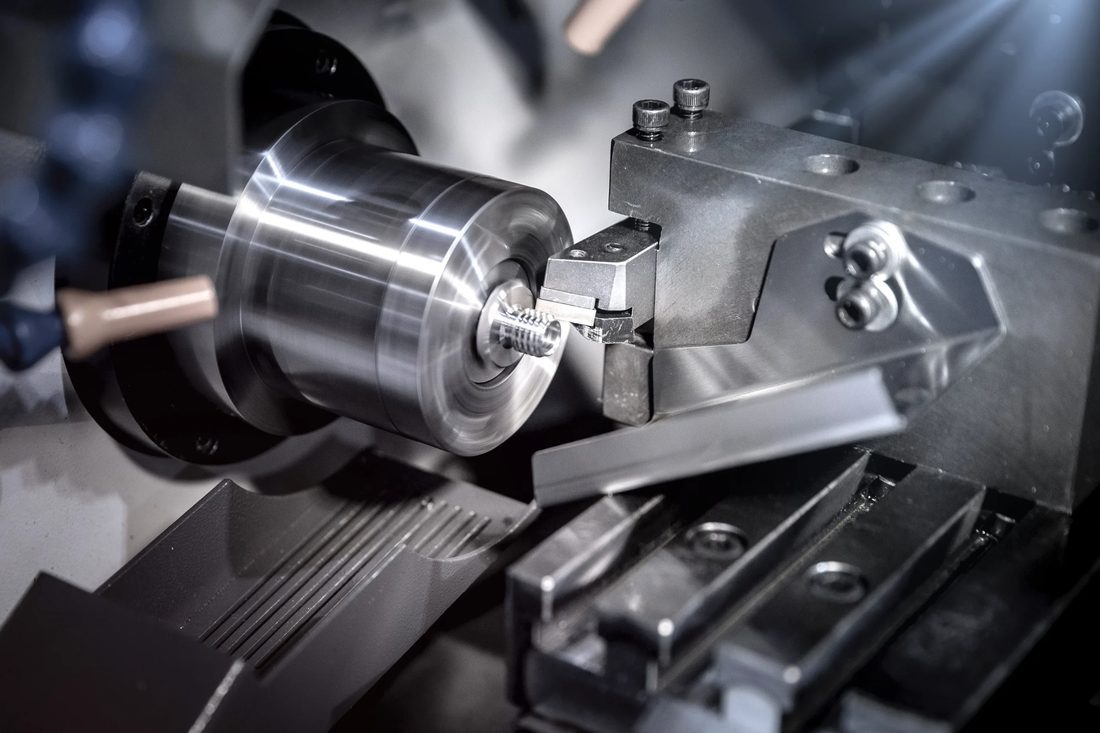
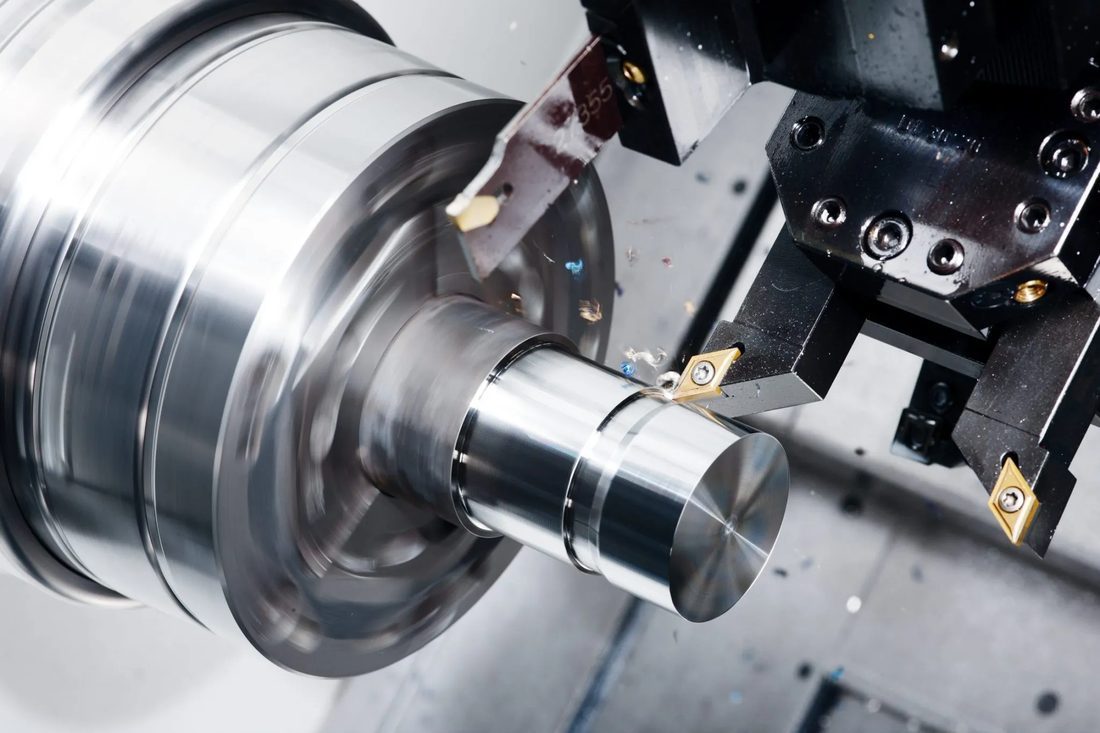
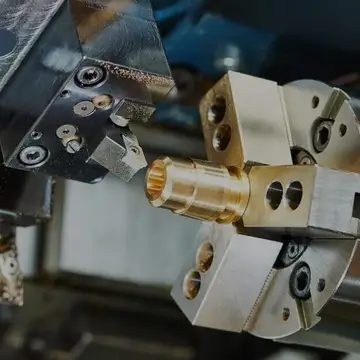
This LusterControl news note is about the machine that makes tiny parts possible. Swiss turning — also called Swiss-type or sliding-headstock turning — feeds bar stock through a guide bushing so the workpiece is supported right at the cutting tool. For a slender pin or a long thin shaft, that support is the difference between a straight part and a bent one. We run Swiss-type lathes alongside our turn-mill and 5-axis centres on one Dongguan floor.
- Swiss turning
- Sliding-headstock turning where bar stock is supported at the cut by a guide bushing
- Swiss lathe
- The machine that performs Swiss-type turning for small, slender parts
- Small precision parts
- Tiny components, often with tight tolerance, made in high volume
- Guide bushing
- The bearing that supports the bar right at the tool, preventing deflection
Company CNC precision component
Swiss Lathe: Why It Beats a Standard Lathe for Tiny Parts
Deflection is the enemy of a small part.
On a standard lathe, a long thin shaft is held at one end and cut far away — the tool pushes, the part bends, and you get a banana instead of a pin. A Swiss lathe feeds the stock through a guide bushing so the cut is always backed by support just millimetres away. The part cannot deflect, so a 2 mm diameter shaft comes out straight and to ±0.005 mm, even at length.
Standard lathe vs Swiss lathe for small parts
| Factor | Standard lathe | Swiss lathe |
|---|---|---|
| Support at cut | Far from tool, deflects | At the tool, rigid |
| Slender parts | Bend, taper | Straight, true |
| Length-to-dia | Limited | Very long thin parts OK |
| Tolerance | Hard to hold tiny | ±0.005 mm repeatable |
- Guide bushing supports stock right at the tool
- Long thin shafts stay straight, no taper
- Multiple tools cut in one pass for speed
- Back-working spindle finishes the end in the same cycle
Small Precision Parts: Tolerances That Survive at Volume
Tiny absolute numbers, held repeatedly.
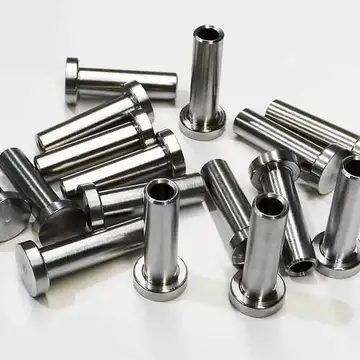
On a small precision part, ±0.005 mm is a large slice of a 1 mm feature — so holding it is harder than on a big block, and it must hold on the 500,000th piece, not the first. Our Swiss-type cells do that with in-process gauging and SPC, so a high-volume run of connector pins or medical shafts stays within band across the whole month.
What we control on a small part
- Diameter tolerance
- The allowed deviation of a small diameter; we hold ±0.005 mm
- Concentricity
- How true the turned diameter runs to the axis
- Surface finish
- Often Ra ≤0.6 μm, even 8K Ra 0.2 μm on visible small parts
- High volume CNC
- Machining at volume, here up to 500,000 parts/month
| Feature | Our control | Why it matters |
|---|---|---|
| Diameter | ±0.005 mm | Fits the mating hole |
| Length | ±0.01 mm | Seats in the assembly |
| Concentricity | Within 0.01 mm | Runs true, no wobble |
| Finish | Ra ≤0.6 μm | Clean, low-friction |
Company CNC precision component
CNC Precision Machining on Swiss-Type Centres
Swiss is one cell in a precision floor.
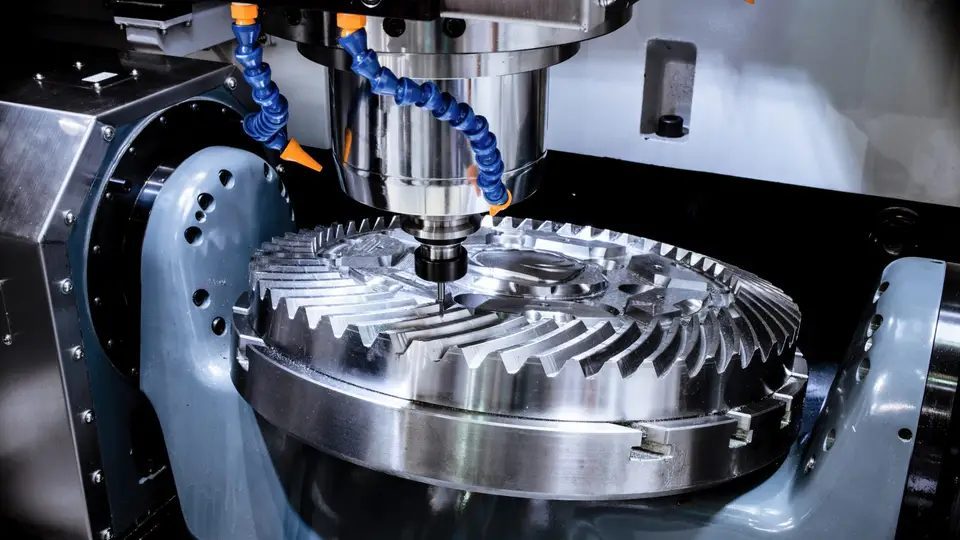
Swiss-type turning is one capability in our CNC precision machining toolkit, not a separate world. The same Dongguan floor that runs 5-axis and turn-mill also runs Swiss lathes, so a part that needs a turned shaft plus a milled feature can move between cells without changing suppliers or re-qualifying a process. That is what keeps ±0.005 mm consistent from prototype to mass run.
| Process | Best for | Our control |
|---|---|---|
| Swiss turning | Slender, tiny, high-volume | ±0.005 mm, straight |
| Turn-mill compound | Round + milled features | One setup, true datum |
| 5-axis | 3D contoured parts | Oblique, thin walls |
| Swiss + mill | Shaft with features | One floor, one FAI |
High Volume CNC: Swiss Turning at 500K Parts/Month
Volume is only valuable if tolerance survives it.
Small precision parts are almost always volume parts — a connector program is not 200 pieces, it is millions. Our high volume CNC Swiss cells run up to 500,000 pieces a month on 60+ machines across 4,000 m², with in-process gauging and SPC that catch drift on the machine rather than at final inspection. That is how a million pins stay identical to the first article.
How we scale Swiss turning without losing the tolerance
- Send the drawing and the real fit tolerance your assembly needs
- State the target finish grade (Ra ≤0.6 μm or 8K Ra 0.2 μm)
- Flag any material certificate and ASTM A967 passivation need
- Share expected volume so we route prototype vs mass cell
- Confirm batch traceability and FAI before full run
- Plan the ramp from validation to 500K/month with one supplier
Company CNC precision component
Swiss Turning vs Turn-Mill for Small Precision Parts
Pick the process by the part, not the rate.
When scoping small precision parts, the process choice shapes both cost and quality. A Swiss lathe wins the moment a part is slender or long relative to its diameter; turn-mill wins when there are significant milled features. Here is the practical split we use when advising buyers of high-volume small parts.
| Part shape | Pick turn-mill | Pick Swiss turning |
|---|---|---|
| Short, chunky with milled face | Yes — one setup | Overkill |
| Long thin shaft | Bends, tapers | Yes — supported at cut |
| Slender pin, high volume | Hard to hold tiny | Yes — ±0.005 mm |
| Shaft + cross features | Two setups | Yes — back-working op |
Pros
- Right process cuts scrap on slender parts
- Swiss holds ±0.005 mm on tiny diameters
- One supplier covers both on one floor
- Mixed routing validated under one FAI
Cons
- Needs a DFM call per part, not a blanket rule
- Swiss has higher hourly rate than a basic lathe
Swiss Lathe Applications: Medical, Connector and Watch-Grade Parts
Where Swiss turning earns its keep.
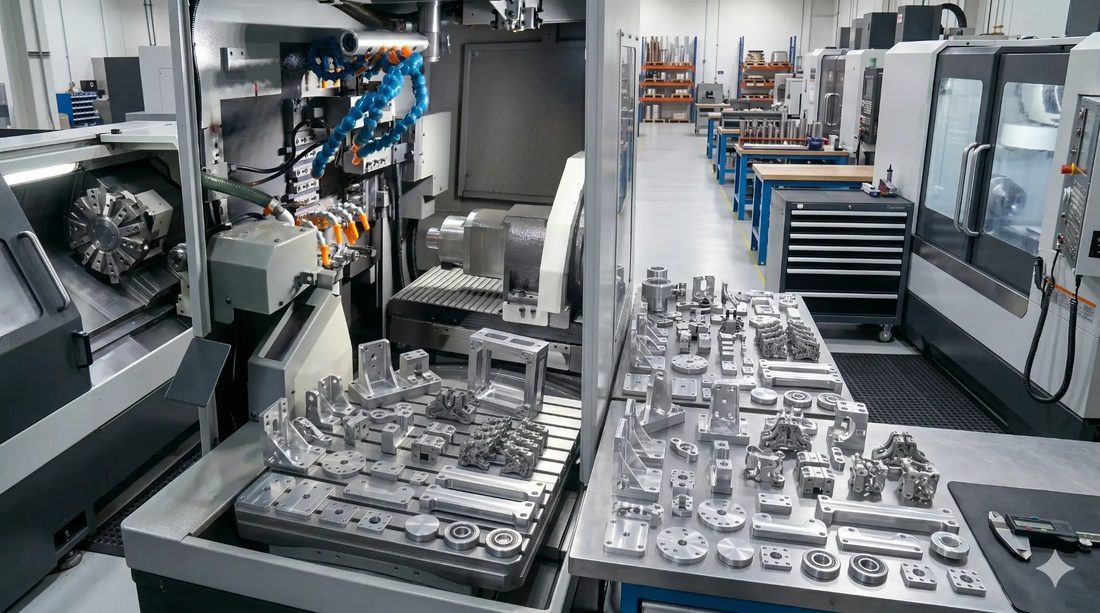
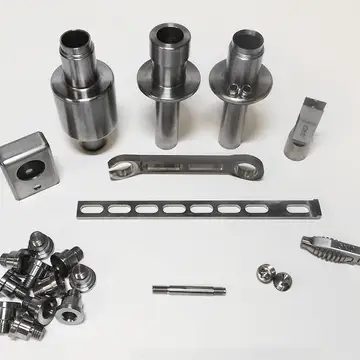
The industries that live on Swiss turning are exactly the ones where a tiny part cannot fail: medical shafts and instrument bodies, electrical connector pins, optical sleeves, and watch-grade components. Our Swiss lathes serve these from one Dongguan floor, with the finish and traceability each sector expects — Ra ≤0.6 μm mirror, ASTM A967 passivation for stainless, and full batch traceability.
| Industry | Typical small parts | Standard we apply |
|---|---|---|
| Medical | Shafts, instrument bodies | ISO 13485, batch traceability |
| Connectors | Pins, contacts | ±0.005 mm, Ra ≤0.6 μm |
| Optical | Sleeves, barrels | Sub-micron stability |
| Semiconductor | Fittings, nozzles | Ultra-clean, traceable |
Company CNC precision component
Why OEMs Choose LusterControl's High Volume CNC Swiss Turning in 2026
One floor, prototype to volume.
The reason OEMs consolidate small precision parts with us is the same across medical, connector, optical and semiconductor programs: LusterControl runs high volume CNC Swiss turning as a standard capability on one Dongguan source-factory floor, so a 200-piece validation gets the identical ±0.005 mm as a 500,000-piece run. We serve 14 industries from 60+ CNC machines, 4,000 m² of zoned floor, and a monthly capacity of 500,000 precision parts, with annual output now exceeding ¥20 million.
Our quality ladder is consistent: ISO 9001 certified, ISO 13485 completed, and IATF 16949 in progress, applied from Swiss-turned medical shafts to automotive and aerospace programs. Learn more in our CNC machining guides, read about Dongguan Licun Technology, or explore our small precision parts and other capabilities on the home page.
On a part you can barely see, straightness and tolerance are everything — and Swiss turning is how we prove both, a million times over.
Company CNC precision component
Company CNC precision component
Company CNC precision component
Company CNC precision component
FAQ: Swiss turning & Company Buyer Questions
A: Swiss turning feeds bar stock through a guide bushing so the workpiece is supported right at the cutting tool. For slender or tiny parts that would deflect on a standard lathe, this support keeps them straight and lets us hold ±0.005 mm repeatably, even at length.
A: Yes. Our Swiss-type cells hold ±0.005 mm on small diameters, with in-process gauging and SPC that catch drift on the machine, so a 500,000-piece month stays within band instead of shipping a tail of out-of-spec parts.
A: Choose Swiss turning for long, slender or high-volume tiny parts — pins, shafts, connectors — where a standard lathe would deflect. Choose turn-mill when the part is short with significant milled features. We advise the split in a free DFM review.
A: Medical, electrical connectors, optics, semiconductor and consumer programs rely on our Swiss-turned small parts, including fittings for De'Longhi, Donlim and Breville. All share the same ±0.005 mm discipline and batch traceability across 14 industries.
A: We are ISO 9001 certified, ISO 13485 completed, with IATF 16949 in progress. Every lot ships with incoming batch traceability and material certificates, audit-ready on request under the relevant standard.
A: Send us your drawing with the real fit tolerance, target finish grade (Ra ≤0.6 μm or 8K Ra 0.2 μm), any material certificate or ASTM A967 passivation need, and expected volume. We return a free DFM review, run a first-article inspection, and route you from prototype to volume on one quality-controlled floor.
Send us your small precision part drawing for a free DFM review, and our Dongguan engineering team will confirm whether Swiss turning or turn-mill is the right process, the tolerance your part truly needs, and the finish grade — scalable from validation to 500,000 pieces a month.
Request a Free CNC Quote