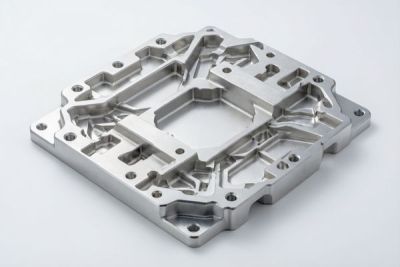
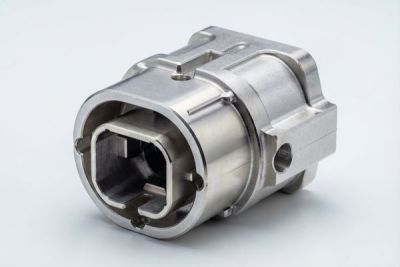
EV Brake Caliper Sourcing: Why Automotive CNC Parts Move to Dongguan (2026)
If you source EV brake calipers or automotive CNC parts, you have probably noticed the map changing. A category that buyers used to place with established tier-one suppliers in Europe, Japan or Korea is increasingly being quoted — and awarded — to precision machine shops in Dongguan, China. That is not a race to the bottom on price. It is a structural shift driven by aluminum CNC machining maturity, tighter tolerance requirements on caliper seats, and a new generation of IATF 16949 machining suppliers who can document every part.
This article is written for procurement engineers, EV platform buyers and sourcing managers. We explain why the brake caliper — a part many assumed would shrink or vanish in the electric era — remains a precision-critical component, what actually moved the work to Dongguan, and how to decide whether a shop there is the right home for your EV motor parts and calipers. We write it from inside a Dongguan source factory, LusterControl, where 60 CNC machines run automotive-adjacent precision work under ISO 9001 and ISO 13485, with IATF 16949 in progress.
By the end you will have a decision framework, a buyer's comparison table and a seven-point sourcing checklist you can send straight to any supplier. If you already have a caliper or bracket drawing, the fastest next step is a free DFM review — but first, here is what is really driving the shift.
Table of Contents
- 1. Automotive CNC Parts: Why EV Brake Calipers Still Reshape Sourcing
- 2. EV Motor Parts and Calipers: Why Sourcing Shifted to Dongguan
- 3. Aluminum CNC Machining for Brake Calipers: The Material Reality
- 4. IATF 16949 Machining: The Certification Buyers Now Require
- 5. Tight Tolerance CNC: What Caliper Seats Actually Demand
- 6. Sourcing Automotive CNC Parts: Dongguan's Cost-Structure Edge
- 7. EV Motor Parts vs Brake Calipers: A Buyer's Comparison
- 8. Aluminum CNC Machining vs Steel: Which for Your Caliper
- 9. Tight Tolerance CNC and IATF 16949 Machining: A Buyer's Checklist
- 10. Common Mistakes When Outsourcing Automotive CNC Parts
Automotive&EV AI part image
Automotive CNC Parts: Why EV Brake Calipers Still Reshape Sourcing
Regenerative braking changed the caliper's job — it did not delete it.
A common misconception in EV sourcing is that regenerative braking makes the friction brake, and therefore the brake caliper, a relic. In practice the opposite is true for the buyer. One-pedal driving and regen do reduce wear, but the parking brake, the emergency stop and the final ten percent of deceleration are still mechanical. That means the caliper must be lighter, corrosion-resistant and dimensionally stable — and it must be made to a tighter tolerance than the cast-iron parts of the combustion era, because an EV's unsprung mass directly hurts range and handling.
- Brake caliper
- The clamp that squeezes the brake pad against the rotor. In an EV it is increasingly an aluminum body with steel or stainless pins, seats and guide bores that must hold tight tolerances.
- Regenerative braking
- Using the motor as a generator to slow the vehicle and recover energy, which reduces but does not replace the mechanical friction brake.
- Unsprung mass
- Weight not carried on the suspension (wheels, brakes, hubs). Lower unsprung mass improves EV range, ride and handling, so aluminum calipers win over steel.
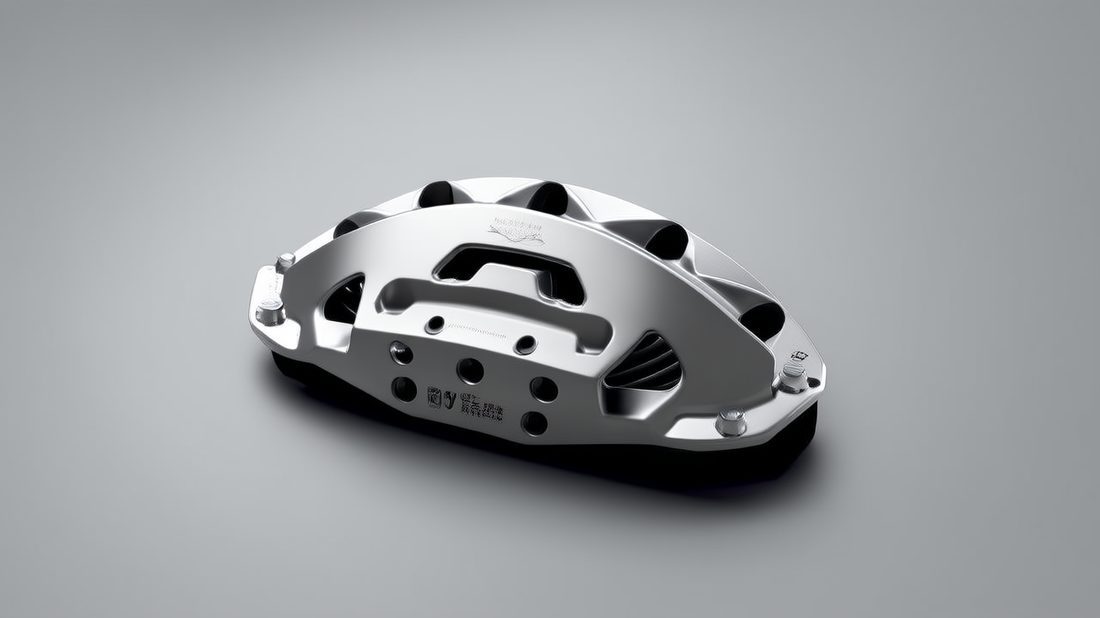
For the buyer, the consequence is concrete: the caliper migrated from a stamped-and-cast commodity to a precision-machined component where the seats, guide bores and piston bores are tolerance-critical. That is exactly the kind of work that rewards a shop with strong aluminum CNC machining and tight tolerance CNC discipline — and it is why automotive CNC parts sourcing has followed the capability, not just the cost.
You can read the broader capability picture, including 5-axis and turn-mill, on our blog and process pages before you brief a supplier.
Automotive&EV AI part image
EV Motor Parts and Calipers: Why Sourcing Shifted to Dongguan
The shift is about process maturity, not just labour cost.
Dongguan did not win EV motor parts and caliper work by being cheap. It won because the local supply chain matured around exactly the processes these parts need: high-speed aluminum CNC machining, 5-axis machining of complex bracket geometry, and batch-level traceability that tier-one programs now demand. When an EV platform needs a caliper bracket, a motor housing flange and a suspension knuckle from the same supplier cluster, the logistics math favours a region that already stocks the right bar, the right coatings and the right inspection gear.
What actually moved, and what stayed
- High-volume aluminum caliper bodies and brackets — moved first, because CNC aluminium machining is now a Dongguan strength.
- EV motor parts such as housings, end flanges and stator carriers — moved as 5-axis and turn-mill capacity scaled.
- Tolerance-critical seats, pins and guide bores — moved as shops proved tight tolerance CNC on slender, small features.
- Final assembly and system validation — often stayed with the tier-one integrator, who now sources the machined components from Dongguan.
| Work type | Where it moved | Why it moved |
|---|---|---|
| Aluminum caliper body | Dongguan CNC shops | Mature high-speed aluminum CNC machining + local bar supply |
| Brackets & flanges | Dongguan 5-axis shops | Complex geometry, single-setup accuracy |
| Seats, pins, bores | Precision CNC shops | Tight tolerance CNC, ±0.005 mm capability |
| System assembly | Tier-one integrator | Validation and traceability stay with the OEM program |
We looked at the EV thermal angle in our EV thermal-management guide, which covers the flatness discipline that the same shops apply to battery and motor cooling parts.
Aluminum CNC Machining for Brake Calipers: The Material Reality
Aluminum wins on weight, but only if the shop respects the alloy.
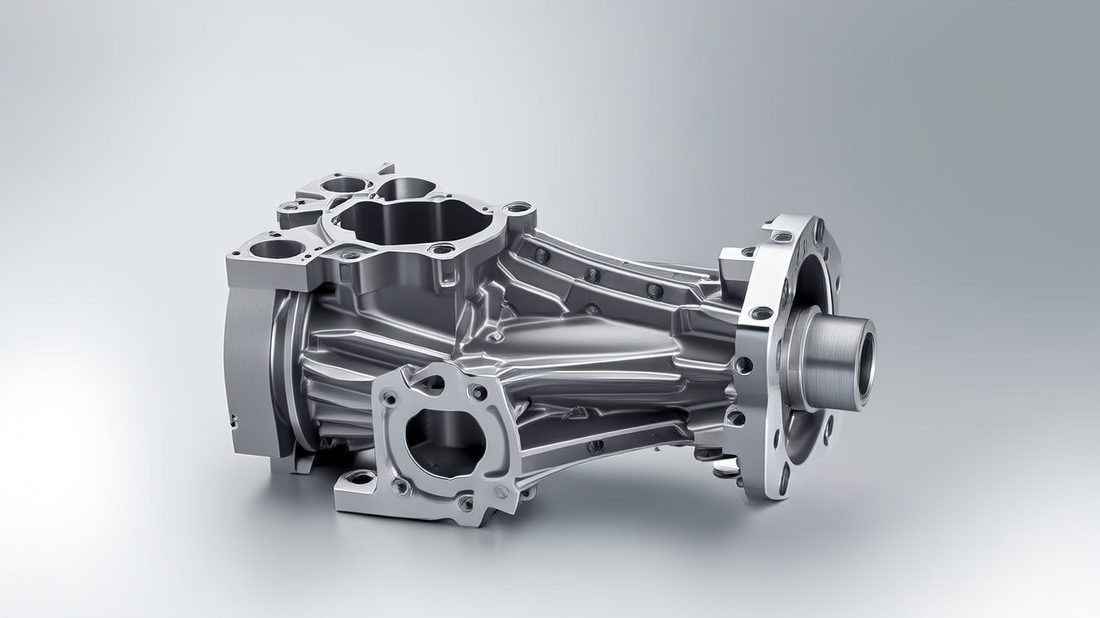
For EV brake calipers, the body is almost always a heat-treated aluminum alloy — typically a 6000-series (such as 6061-T6) for brackets and a higher-strength 7000-series for load-bearing bodies, with steel or stainless inserts for the wear surfaces. Aluminum CNC machining of these alloys is forgiving on the spindle but unforgiving on fixturing and tooling: built-in stress from heat treatment can move the part after the first cut, and a poorly planned sequence bows the thin walls that make the caliper light in the first place.
Why the alloy choice changes your supplier checklist
| Alloy | Use in caliper | Machining note for buyers |
|---|---|---|
| 6061-T6 | Brackets, light bodies | Stable, easy to hold; verify temper and cert |
| 7075-T6 | High-load bodies | Strong but stress-prone; needs stress-relief plan |
| A356 (cast) | Cast body, then CNC | Cast skin must be removed before critical cuts |
| Stainless 304/316L insert | Pins, seats, guides | ASTM A967 passivation for wet-duty corrosion |
Pros
- Aluminum cuts fast and light — lower unsprung mass, better EV range.
- Anodising and hard-coat options resist corrosion without plating.
- Local Dongguan bar and plate supply shortens lead time.
Cons
- Heat-treat stress can move thin walls after machining.
- Galvanic corrosion with steel inserts needs design care.
- Soft alloy scars easily — handling and packaging matter.
For the corrosion side, passivation to our quality page describes how stainless inserts are treated to ASTM A967 so the wet-duty surfaces do not rust at the cut edges.
Automotive&EV AI part image
IATF 16949 Machining: The Certification Buyers Now Require
ISO 9001 gets you in the queue. IATF 16949 gets you the automotive PO.
For automotive CNC parts, IATF 16949 is the quality management standard that sits on top of ISO 9001 and adds the automotive-specific discipline: advanced product quality planning (APQP), production part approval (PPAP), statistical process control and a culture of traceability. A shop that holds ISO 9001 can make good parts. A shop running IATF 16949 machining can prove, document and repeat that quality across a million-part run — which is what an EV program demands before it will release a purchase order.
- IATF 16949
- The automotive quality management standard built on ISO 9001, adding APQP, PPAP, FMEA and traceability requirements for series production.
- PPAP
- Production Part Approval Process — the evidence package (FAI, process flow, control plan, MSA) that proves a supplier can make the part consistently.
- APQP
- Advanced Product Quality Planning — front-loading the risk analysis and process design before the first serial part.
| Requirement | ISO 9001 only | IATF 16949 machining |
|---|---|---|
| Documented quality system | Yes | Yes, plus automotive layer |
| PPAP / control plan | Not required | Required for series parts |
| SPC on critical features | Optional | Expected |
| Traceability to heat lot | Good practice | Mandated |
| Customer-specific requalification | Rare | Standard at PPAP |
If your program is already past pilot, do not accept 'we are working on it' without a date. Ask for the current certificate, the IATF 16949 stage and the PPAP capability — and plan your qualification timeline around the gap.
Tight Tolerance CNC: What Caliper Seats Actually Demand
Most of the caliper is loose. A few features are brutal. Machine for those.
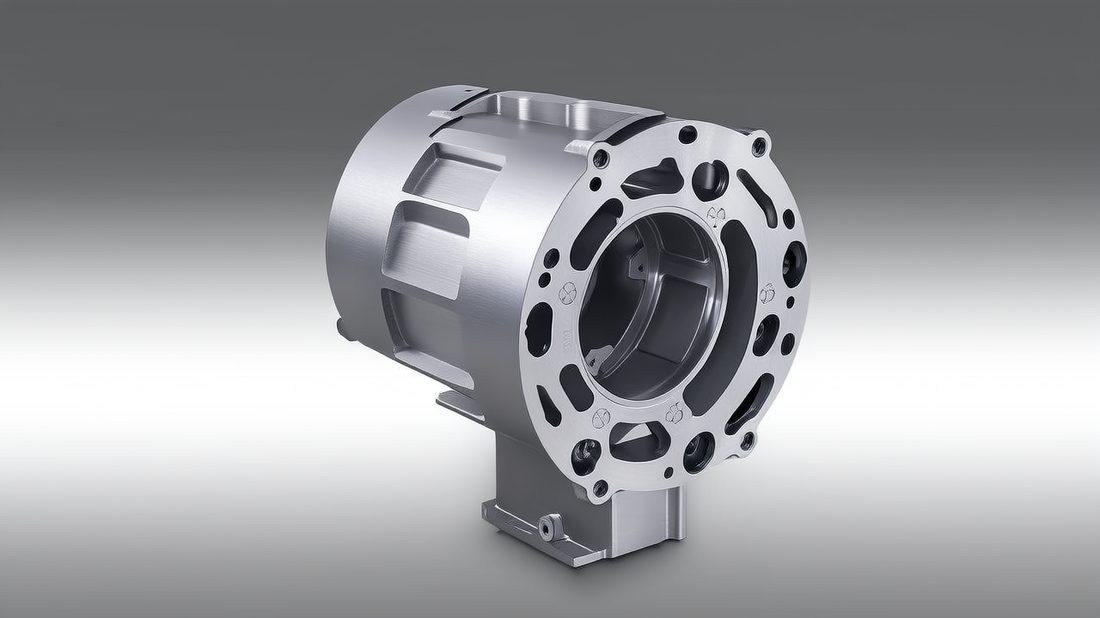
A brake caliper is a study in tolerance discipline. The outer profile can be loose; the piston bore, the pad-abutment seats and the guide-pin bores are not. Those are the features that decide brake feel, pad life and whether the assembly rattles. Tight tolerance CNC on these seats — typically ±0.01 mm on the bore and tighter on the seat faces — is what separates a shop that can quote a caliper from one that can hold it across a batch.
Which features are tolerance-critical
- Piston bore diameter and roundness — sets sealing and brake drag.
- Pad-abutment seats — set pad fit and squeal behaviour.
- Guide-pin bores — set caliper sliding freedom and corrosion resistance.
- Mounting face flatness — sets bracket alignment to the knuckle.
| Feature | Typical tolerance | What happens if it drifts |
|---|---|---|
| Piston bore | ±0.01 mm | Seal leak, brake drag, uneven wear |
| Abutment seat | ±0.02 mm | Pad rattle, squeal, premature wear |
| Guide-pin bore | ±0.015 mm | Caliper bind, uneven braking |
| Mount face flatness | 0.03 mm TIR | Bracket stress, misalignment |
LusterControl holds ±0.005 mm on critical small features within a single setup, a discipline we detailed in our tight-tolerance guide. For caliper-sized bores the relevant number is the bore roundness and seat flatness, which the same single-setup approach protects.
Automotive&EV AI part image
Sourcing Automotive CNC Parts: Dongguan's Cost-Structure Edge
The saving is in the system, not the hourly rate.
When buyers compare a Dongguan shop against a domestic tier-one, the headline hourly rate is the least interesting number. The real edge is structural: clustered raw-material supply, mature aluminum CNC machining know-how, short iteration loops for prototypes, and the ability to scale from a 500-piece pilot to a 500,000-piece month without re-sourcing. For EV programs that iterate fast and then ramp hard, that combination is why automotive CNC parts keep moving to the region.
Where the cost actually comes out
Pros
- Local bar, plate and coating supply cuts material lead time.
- Rapid prototype-to-PPAP loop shortens your development calendar.
- One shop can run caliper body, bracket and inserts together.
- Volume scale from pilot to mass production without re-qualification.
Cons
- Distance adds freight and a longer physical lead time.
- Time-zone and language gaps need a disciplined point of contact.
- Quality variance between shops is real — qualify, do not assume.
The honest framing: Dongguan is not automatically cheaper on a per-part basis at low volume. It wins when your program needs speed, scale and a single accountable machine shop for the precision components.
EV Motor Parts vs Brake Calipers: A Buyer's Comparison
Same region, different risk profiles — qualify them separately.
EV motor parts (housings, end flanges, stator carriers) and brake calipers are both automotive CNC parts, but they carry different failure modes and therefore different qualification priorities. Motor parts worry about thermal flatness and concentricity under heat; calipers worry about corrosion, bore sealing and sliding freedom. A shop strong at one is not automatically strong at the other, so qualify each on its own critical features.
| Dimension | EV motor parts | Brake calipers |
|---|---|---|
| Critical feature | Housing flatness, bore concentricity | Piston bore, seat, guide bore |
| Material focus | Aluminum, sometimes copper alloy | Aluminum body + stainless inserts |
| Top risk | Thermal leak, imbalance | Seal leak, corrosion, bind |
| Process edge | 5-axis, turn-mill | Tight tolerance CNC + passivation |
| Cert priority | IATF 16949 machining | IATF 16949 + ASTM A967 |
- Choose a Dongguan shop for motor parts if you need 5-axis aluminum housings and fast prototype-to-PPAP loops.
- Choose a shop for calipers if it proves tight tolerance CNC bores plus ASTM A967 passivation on inserts.
- Choose one shop for both only if it demonstrates both process edges on first articles.
- Choose to qualify motor and caliper lines separately if the risks differ by program.
- Choose the integrator for final assembly and keep the machined components sourced from the qualified shop.
Automotive&EV AI part image
Aluminum CNC Machining vs Steel: Which for Your Caliper
The answer is almost always 'both, in the right places'.
Buyers sometimes frame the choice as aluminum versus steel for the whole caliper. In modern EV calipers it is not either/or: the body is aluminum CNC machining for weight, while the wear and seal surfaces are steel or stainless inserts for durability. The engineering question is where each material belongs, and the sourcing question is whether your shop can machine and join both to tolerance.
| Property | Aluminum body | Steel / stainless insert |
|---|---|---|
| Weight | Light — saves unsprung mass | Heavier — localised only |
| Wear surface | Poor — needs insert | Excellent at seal and guide |
| Corrosion | Anodise / hard-coat | ASTM A967 passivation |
| Machining cost | Lower cycle time | Higher, but small volume |
| Best use | Body, bracket | Pins, seats, guides |
The decision filter
- If the feature is structural and large, machine it in aluminum to save weight.
- If the feature seals, guides or wears, make it a steel or stainless insert.
- If the joint is press- or shrink-fit, confirm the shop's interference-fit process.
- If it sees road salt and water, require ASTM A967 passivation on every stainless surface.
Tight Tolerance CNC and IATF 16949 Machining: A Buyer's Checklist
Seven points to send to any Dongguan shop before you release the PO.
- Can you hold the caliper bore and seat to my specified tolerance in a single setup? (Ask how many re-chucks.)
- Which process — 5-axis, turn-mill or tight tolerance CNC — do you recommend for my geometry, and why?
- Are you certified to ISO 9001 or ISO 13485 today, and at what stage is your IATF 16949 machining build-out?
- Will you machine aluminum and stainless inserts to one BOM, and passivate stainless to ASTM A967?
- What PPAP and first-article documentation will you supply for series release?
- Do you apply batch-level traceability to the heat lot on every automotive CNC parts order?
- What is your realistic monthly volume and lead time at my tolerance, finish and coating?
If you want a second opinion on your caliper or bracket drawing, send it for a free DFM review — we will confirm the right process, material split and tolerance scheme, and quote a fully documented build.
Automotive&EV AI part image
Common Mistakes When Outsourcing Automotive CNC Parts
Most caliper problems are designed in at the spec stage. Here are the errors we see most.
- Uniform tight tolerance — calling ±0.01 mm on the whole caliper instead of only the bore, seat and guide bore, which just adds cost.
- Skipping the stainless passivation callout — ASTM A967 forgotten, and the insert rusts at the cut edge in its first winter.
- Assuming aluminum equals light — choosing the wrong 7000-series without a stress-relief plan, so thin walls bow after machining.
- No PPAP expectation — buying series parts from a shop on ISO 9001 alone and discovering the automotive layer is missing at ramp.
- Mixing up motor-part and caliper qualification — approving a shop on housings and assuming the caliper bore is covered.
- Forgetting traceability — a field warranty claim becomes a guessing game instead of a heat-lot lookup.
If your current drawing reads 'tight tolerance everywhere', that is the flag to request a DFM review before you quote. A few minutes of re-spec saves weeks of rework on automotive CNC parts.
Automotive&EV AI part image
Automotive&EV AI part image
Automotive&EV AI part image
FAQ: automotive CNC parts & Automotive&EV Buyer Questions
A: Regenerative braking reduces wear but does not replace the mechanical friction brake. The parking brake, emergency stop and final deceleration are still mechanical, so the caliper remains critical — and it must be lighter and held to tighter tolerances because unsprung mass directly affects EV range and handling.
A: Modern EV calipers use both: an aluminum CNC-machined body for weight savings, with steel or stainless inserts for the wear and seal surfaces (pins, seats, guides). The right answer is a bill of materials that places each material where it performs, not a single material choice.
A: The piston bore is typically held to about ±0.01 mm with tight roundness, and the pad-abutment and guide-pin seats are held to roughly ±0.015 to ±0.02 mm. These few features decide sealing, brake feel and corrosion freedom; the rest of the body can be looser.
A: For series production, yes — IATF 16949 machining adds PPAP, control plans, SPC and mandated traceability on top of ISO 9001, which EV programs require before releasing a purchase order. At pilot stage, an ISO 9001 / ISO 13485 shop with a clear IATF 16949 build-out timeline can be qualified, but plan your program around the gap.
A: Dongguan won the work through process maturity — high-speed aluminum CNC machining, 5-axis complexity, tight tolerance CNC and batch-level traceability — plus a clustered local supply chain that shortens lead time and scales from pilot to mass production, not merely through lower labour cost.
A: Request a material certificate (heat lot and grade), a first-article / PPAP report, an inspection report on critical dimensions and finish, an ASTM A967 passivation cert for wet-service stainless, and a batch-level traceability record. Suppliers operating under IATF 16949 should provide these as standard.
Send us your caliper or bracket drawing for a free DFM review — we will confirm the right material split, process and tolerance scheme, and quote a single-setup, fully documented automotive CNC parts build.
Request a Free CNC Quote