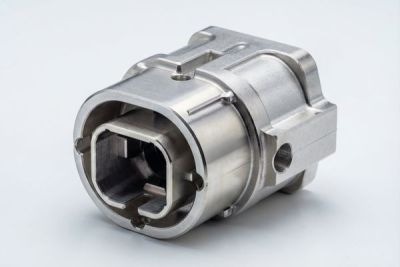
Medical Catheter Connector Machining: φ0.5 mm Micro-Hole Burr & Bore Control (2026)
If your minimally invasive surgery (MIS) or endoscope program keeps failing at the connector - a φ0.5 mm bore that comes out with a burr, a PEEK collar that cracks under the clamp, a 316L cannula that will not pass the flow test - the problem is rarely the design. It is the machining route you chose. In 2026, medical catheter connector machining has become one of the most unforgiving jobs in precision manufacturing: the hole is microscopic, the material is awkward, and the documentation burden is as heavy as the tolerance is tight.
This guide is written for the R&D engineer and procurement lead who must choose a supplier for MIS and endoscope connectors and then defend that choice to quality and regulatory. We explain what actually controls burr and bore, where Swiss-type micro machining earns its keep, how to read a supplier's real capability rather than their brochure, and what to put in an RFQ so that the quotes you get back are genuinely comparable.
LusterControl (Dongguan Licun Technology Co., Ltd.) has spent 15 years in CNC turning of stainless steel and precision micro parts. The numbers in this article are ours - 60 CNC machines, a 4,000 m² plant, ±0.005 mm held tolerance, ISO 9001 certified, ISO 13485 quality system established with certification advancing, and an IATF 16949 application in progress - and every one of them is checkable on a factory audit. No marketing arithmetic, no invented case studies.
Table of Contents
- 1. Why φ0.5 mm Micro-Holes Make MIS and endoscope connectors a Different Job
- 2. How medical catheter connector machining Holds a φ0.5 mm (and φ0.2 mm) Bore
- 3. micro parts Swiss-type machining vs Conventional CNC: 7 Factors
- 4. Swiss-type micro machining Decision Matrix: PEEK vs 316L Connectors
- 5. CNC precision machining Capability Benchmarks You Can Audit
- 6. Common Burr and Bore Mistakes in tight tolerance CNC Connector Work
- 7. Quality Framework Behind medical catheter connector machining
- 8. MIS and endoscope connectors: Buyer's Verification Checklist for 2026
- 9. Swiss-type micro machining Programs We Have Shipped
- 10. Protecting Your Design: MIS and endoscope connectors IP and NDA
Medical Catheter / Intervention Devices CNC precision component
Why φ0.5 mm Micro-Holes Make MIS and endoscope connectors a Different Job
Small bores do not scale down gracefully. They change the physics of the cut and the economics of the order.
A connector body that looks ordinary at arm's length becomes a different part the moment the internal feature drops below 1 mm. At φ0.5 mm, the drill is thinner than a human hair's width in cutting terms, chip evacuation is dominated by surface tension rather than gravity, and a raised edge that would be invisible on a 10 mm fitting becomes a meaningful obstruction. That is why MIS and endoscope connectors are specified in a different class from general fittings, and why the supplier's process route matters more than their price list.
Buyers usually feel the problem at assembly or verification, not at machining: a catheter will not pass through the bore, a guidewire catches on a cross-hole, a fluid path fails its flow test, or a sterilisation cycle reveals a crevice that traps residue. By then the tooling is paid for and the schedule is slipping. The cheapest place to fix a bore problem is at the router, before the drawing is released.
- MIS
- Minimally invasive surgery: procedures performed through small incisions or natural orifices, where every millimetre of instrument diameter and every micron of surface finish matters.
- Bore
- The internal diameter of a hole or channel in a connector - the fluid, gas or guidewire path that must stay open, round and clean from end to end.
- Burr
- A raised ridge of material left at the edge of a machined hole. At φ0.5 mm, a burr that would be negligible on a larger part can block flow or abrade a catheter.
- Ra
- Arithmetic average surface roughness, measured in microns. A smoother bore reduces friction, particulate generation and sites where residue can collect.
- Guide bushing
- The defining element of a Swiss-type lathe: a bushing supports the bar stock immediately beside the cutting tool, so slender micro features are cut without deflection.
Medical Catheter / Intervention Devices CNC precision component
How medical catheter connector machining Holds a φ0.5 mm (and φ0.2 mm) Bore
Three steps decide whether your bore passes inspection or becomes scrap.
There is no single trick to micro-bore control. It is a chain - support the stock, control the tool, finish the edge - and the chain is only as strong as its weakest link. Understanding the chain lets you ask a supplier the right questions instead of accepting a general claim of 'high precision'.
1. Swiss-type guiding: support the material at the cut
On a conventional lathe the bar is held in a chuck and the unsupported length grows as the tool moves away from it. On a Swiss-type machine the bar passes through a guide bushing only a fraction of a millimetre behind the cutting zone, so the tool cuts material that is effectively fully supported. For a long, thin connector shaft with a small coaxial bore, that difference is the difference between a repeatable part and a tapered one. Our medical connector work runs on this principle: the micro parts Swiss-type machining route is chosen for rigidity, not for speed.
2. Micro-drilling: peck cycles, runout and chip control
A φ0.5 mm drill has very little core strength and no room for a conventional flute. We use short, pecked cycles with controlled retract so chips break and clear rather than packing into the bore, and we verify tool runout at the setup rather than assuming the holder is true. For the φ0.2 mm special range this discipline becomes critical: a few microns of runout is a large fraction of the finished diameter, so the tool, the bushing and the spindle condition are all checked before the first article is cut. PEEK and 316L behave very differently here - PEEK is gentle to cut but springs and can smear; 316L work-hardens and punishes a dull tool - so feeds and speeds are set per material, not copied from a generic chart.
3. Deburring and bore finishing: the step that decides pass/fail
The drilling is the easy half. At the outlet of a cross-hole, the drill leaves a crescent of material that no amount of 'light sanding' removes predictably. We treat deburring as a defined operation with its own tooling and its own inspection, and we look at the bore rather than at the outside of the part. On stainless components we can pair the machined finish with electropolishing or a documented ASTM A967 passivation when the drawing calls for it, keeping the fluid path clean and corrosion-resistant. This is the part of medical catheter connector machining that most often separates a qualified supplier from a quoted one.
micro parts Swiss-type machining vs Conventional CNC: 7 Factors
Two valid routes, very different sweet spots. Choose on part geometry, not on what a shop happens to own.
| Factor | Swiss-type micro machining | Conventional CNC turning / turn-mill |
|---|---|---|
| Standard micro-bore | φ0.5 mm standard; φ0.2 mm special | φ1.0 mm and above is the comfortable zone |
| Bar support at the tool | Guide bushing, support immediately at the cut | Chuck support; long slender features cantilever |
| Held tolerance in production | ±0.005 mm on controlled programs | Typically ±0.01-0.02 mm on slender micro features |
| Slenderness (L/D) | High - long thin shafts stay stable | Limited by deflection and chatter |
| Secondary operations | Live tooling adds cross-holes, flats and mills in one setup | Often needs a second setup and a new datum |
| Best fit | Connectors, pins, cannulae, micro shafts | Housings, plates, larger fittings, heavy milling |
| Prototype economics | Minimal fixturing; efficient at 0 MOQ | Fixture cost can dominate a short run |
Read that table against your own drawing rather than as a league table. A supplier with only conventional equipment will still quote your connector - they will just quote it with extra setups, a looser achievable tolerance, or a fixture charge hidden in the unit price. Equally, a shop with Swiss machines is not automatically the right answer for a large machined manifold. The question is which route matches the feature that is actually driving your risk.
For the seven factors above, the practical reading is this. Factors one to four - bore size, bar support, held tolerance and slenderness - are physics: if your part lives in that corner, Swiss-type is not a preference, it is a prerequisite. Factors five to seven - secondary operations, part family and prototype volume - are economics: they decide whether the route is also commercially sensible. A φ0.5 mm catheter connector with a cross-hole and a 0 MOQ sample hits all seven in the same direction, which is why micro parts Swiss-type machining is the default recommendation for this part family.
Be honest about which specification actually protects your function. Buyers sometimes demand ±0.005 mm on a non-functional outer diameter while leaving the bore tolerance open; that inflates cost without improving performance. Put the tolerance budget on the bore, the concentricity and the deburr condition - the features that decide whether the catheter passes - and relax everything else.
Pros
- Choose Swiss-type if the bore is φ0.5 mm or smaller.
- Choose Swiss-type if you need ±0.005 mm on a slender shaft.
- Choose Swiss-type if drilling, cross-holes and milling should happen in one setup.
- Choose Swiss-type if you are prototyping at 0 MOQ and do not want to pay for fixtures.
Cons
- Choose conventional CNC if the part is a large housing or plate.
- Choose conventional CNC if ±0.05 mm or looser is genuinely sufficient.
- Choose conventional CNC if heavy milling dominates and micro turning does not.
- Choose conventional CNC if extreme volume makes cycle time the only metric that matters.
Medical Catheter / Intervention Devices CNC precision component
Swiss-type micro machining Decision Matrix: PEEK vs 316L Connectors
Material choice changes the process. Match the requirement to the route before you release the print.
| Requirement | Recommended route | Why it wins |
|---|---|---|
| φ0.2 mm special micro-bore | Swiss micro-drilling with verified runout | Tool control keeps a very small bore open and round |
| PEEK collar, 0 MOQ sample | Swiss turning, sharp tooling, light clamping | Avoids stress whitening and collet cracks |
| 316L cannula, fluid path | Swiss turning plus ASTM A967 passivation | Clean, corrosion-resistant bore with documented chemistry |
| Cross-hole and flats in one setup | Swiss with live tooling | One datum, no stack-up between operations |
| ±0.005 mm on L/D above 10 | Guide-bushing Swiss turning | Support at the cut eliminates chatter and taper |
| Mirror-smooth external surface | Turn-mill plus mirror finishing to Ra 0.2 µm | Low-friction, cleanable surface for the assembly |
PEEK and 316L are the two materials we meet most often in catheter connector programs, and they ask for opposite sensitivities. PEEK is chemically resilient and light, but it is a polymer: it springs under the tool, it can smear if the cutter is dull, and it can crack if a collet grips it too hard. 316L is dimensionally predictable and accepts a high-quality finish, but it work-hardens, it is abrasive at the cutting edge, and it needs a defined passivation step if the bore is a wetted path. The decision matrix above assumes you will tell the supplier which material and which feature is critical - a drawing that simply says 'connector' gets a generic process and a generic result.
- If your priority is a sterile fluid path, specify the bore finish and the passivation standard, not just the material grade.
- If your priority is a snap-fit assembly, specify the collar tolerance and the acceptable edge condition.
- If your priority is a first article next week, prioritise a shop that can hold stock and run 0 MOQ without a fixture programme.
- If your priority is annual volume, ask for the unit-price curve at 100 / 1,000 / 10,000 pieces before you lock the design.
CNC precision machining Capability Benchmarks You Can Audit
Spec sheets are easy to write. Here is what to ask for and what to ignore.
Most supplier capability tables are designed to be un-falsifiable: words like 'high precision', 'advanced equipment' and 'strict quality control'. A useful benchmark is something a buyer can verify during a visit or demand in writing. The table below lists the checks we would apply to any shop - including ours - before releasing a medical connector program.
| Capability | What to ask for in writing | Why it matters to you |
|---|---|---|
| Machine fleet | 60 CNC machines, in-house, named process cells | Capacity you can see, not a subcontracted promise |
| Held tolerance | ±0.005 mm with first-article CMM report | Measured evidence against your datum scheme |
| Micro-bore range | φ0.5 mm standard, φ0.2 mm special | Matches your actual design instead of a redesign |
| Material coverage | PEEK, 316L, stainless and titanium in-house | One quality record for the whole assembly |
| Traceability | Lot-level, back to material heat and machine | Root cause when a field issue appears |
| Quality system | ISO 9001 certified; ISO 13485 quality system established, certification advancing; IATF 16949 application in progress | Documented process discipline you can audit |
| Minimum order | 0 MOQ prototype | De-risk the design before committing to volume |
Now the honest part: several common specification lines tell you very little. A headline '0.001 mm machine resolution' says nothing about what the shop holds after tool wear, thermal drift and a second setup. A generic '100% inspection' claim is meaningless without a defined method and a recorded result. An ISO certificate is a statement about a management system, not about your particular bore. What does predict success is a first-article measurement report on your drawing, a named deburr operation, and a traceability flow you can follow backwards. Those three items are worth more than a page of adjectives.
We publish our numbers precisely because they can be checked. The 4,000 m² figure reflects the 2026 expansion; the earlier 2,000 m² plant is retired and should not be used in any current comparison. The capacity figure of 500,000 parts per month is a ceiling across the plant, not a promise for a single micro connector - ask for the schedule slot on your specific part. For a fuller picture of the facility, see our about page.
Medical Catheter / Intervention Devices CNC precision component
Common Burr and Bore Mistakes in tight tolerance CNC Connector Work
Five errors we see repeatedly in RFQs and first articles - all avoidable before cutting starts.
- Treating the drill size as the bore size. A φ0.5 mm tool does not reliably produce a φ0.5 mm hole in PEEK or in work-hardening 316L. Specify the finished bore and let the supplier choose the tooling route.
- Leaving the cross-hole edge undefined. If the drawing does not state the allowable edge condition, two suppliers will quote two different results - and only one of them will assemble cleanly.
- Stacking tolerances across setups. Every extra clamping is a new datum. Combining turning and live-tool operations in one Swiss setup is how tight tolerance CNC work stays tight.
- Ignoring material behaviour. PEEK smears when the tool is dull; 316L hardens when the feed is too light. A single speed-and-feed sheet for both materials is a warning sign.
- Skipping the first-article measurement. A visual check cannot confirm a φ0.5 mm bore. Ask for measured data with the report tied to your revision level.
A sixth mistake is commercial rather than technical: releasing the volume purchase order before the prototype has been through the assembly and sterilisation conditions it will actually see. A bore that passes on the bench can behave differently after a thermal cycle or a cleaning agent. Build that validation into the schedule and the supplier relationship - it is far cheaper than a recall investigation.
Quality Framework Behind medical catheter connector machining
For medical buyers, proof beats promises. This is the chain we run on a controlled program.
A quality system is only useful if it touches the part. Our chain for a regulated connector program runs from DFM review to incoming material verification, first-article CMM measurement, in-process statistical control, final inspection and lot-level traceability. Each step produces a record that can be handed to your quality team - that is the point of the system, not the certificate on the wall.
- DFM review: flag the bore, the deburr requirement and the datum scheme before any tool is ordered.
- Incoming material check: verify the PEEK or 316L heat and keep the cert with the job record.
- First-article CMM: measure the bore, concentricity and critical features against your revision level.
- In-process SPC / CPK: monitor special characteristics during the run, not only at the end.
- Final FQC / OQC: inspect edge condition and bore cleanliness on the finished lot.
- Lot traceability: link every batch back to material, machine and operator record.
- First-article CMM data on every new print, not a generic sample report.
- SPC / CPK on the features your assembly actually depends on.
- Material certificates retained with the production record.
- A defined change-control step when you revise the drawing.
Medical Catheter / Intervention Devices CNC precision component
MIS and endoscope connectors: Buyer's Verification Checklist for 2026
Five documents to demand before you place the prototype order.
The fastest way to compare two suppliers is to send the same five requests to both and watch what comes back. A capable shop answers with documents; an incapable one answers with assurances. Keep this checklist beside your RFQ for MIS and endoscope connectors and you will remove most of the ambiguity from the quotation stage.
- A sectioned sample or borescope image showing the deburr result on a φ0.5 mm cross-hole.
- A first-article CMM report measured against your datum scheme and drawing revision.
- A material certificate for the exact PEEK grade or 316L heat used in your lot.
- A written traceability flow from raw bar or resin to finished, packed part.
- A 0 MOQ sample program with a stated unit-price curve at prototype and volume quantities.
- Red flag: the supplier cannot name the deburr method.
- Red flag: 'high precision' appears but no measured tolerance data does.
- Red flag: the quality system is described only by a certificate number, with no change-control process.
- Red flag: the quoted bore is the tool size rather than the finished size.
- Red flag: the sample is made by a different route from the quoted production route.
One more practical point: ask who owns the program. In a small medical-device company the R&D engineer often carries the supplier decision alone, then hands it to quality months later. Bring quality into the checklist review from the start. It is much easier to agree on evidence requirements before a supplier is chosen than to retrofit them afterwards. Our engineering team routinely works through this list with buyers during a free DFM review, and we would rather have the uncomfortable questions early.
Swiss-type micro machining Programs We Have Shipped
Real capacity shows up in real orders, not in adjectives.
We do not claim a named catheter program we cannot document, and we do not borrow other people's case studies. What we can show is the same manufacturing model applied across demanding sectors: turning, milling, five-axis work, mirror finishing and inspection under one roof, with a single quality record. For a connector buyer that translates into control over the features that matter - bore, edge condition and traceability - without handing your drawing between three vendors.
The 15-year base in stainless steel mirror machining is directly relevant here. Holding Ra 0.6 µm as a standard and Ra 0.2 µm at 8K teaches a shop something about surface preparation that transfers to a wetted bore: cleanliness and finish are process outcomes, not final inspection luck. That is why our precision component work is not limited to one industry, and why the same route can support a connector program from sample to volume.
For your MIS and endoscope connectors, the next step is simple: send the drawing and tell us which feature decides pass or fail. We will return an achievable tolerance, a deburr plan and a price curve, and you can decide whether the route is right before committing. You can also browse related technical reading in our blog archive.
Medical Catheter / Intervention Devices CNC precision component
Protecting Your Design: MIS and endoscope connectors IP and NDA
For R&D teams, a leaked drawing travels faster than a purchase order.
Connector geometry is often the most sensitive part of an intervention device program - it is where a company's design choices become physically visible. Brand owners and R&D leads routinely tell us that confidentiality is their first concern, ahead of price. That concern is legitimate: a drawing shared with several shops is several uncontrolled copies of your design.
- NDA-backed programs are routine for our De'Longhi, Donlim and Breville-grade work and apply equally to medical projects.
- CAD files are handled under controlled access; your geometry is not re-used or re-sold.
- Prototype shipments are packed discreetly for international delivery.
- Tooling and fixtures made for your design stay tied to your program.
Medical Catheter / Intervention Devices CNC precision component
Medical Catheter / Intervention Devices CNC precision component
Medical Catheter / Intervention Devices CNC precision component
FAQ: MIS and endoscope connectors & Medical Catheter / Intervention Devices Buyer Questions
A: φ0.5 mm is our standard micro-bore on medical connectors; φ0.2 mm is achievable as a special process using Swiss-type micro machining with verified tool runout. Both are quoted against your finished-bore requirement, not the drill size.
A: Yes. Both are handled in our Dongguan plant under one quality record. For 316L wetted paths we can include a documented ASTM A967 passivation step; for PEEK we adjust tooling and clamping to avoid stress cracking and smearing.
A: Yes. We support 0 MOQ sampling so you can validate assembly, flow and sterilisation conditions first, then scale through the same process route toward our 500,000-parts-per-month plant capacity.
A: ISO 9001 certified; our ISO 13485 quality system is established with certification advancing; the IATF 16949 application is in progress. We provide first-article CMM data, material certificates and lot-level traceability on controlled programs.
A: By treating deburring as a defined operation with its own tooling and inspection, not a manual afterthought. We verify the bore outlet on a sectioned sample or by borescope before approving the first article, and flag the allowable edge condition during DFM.
A: Yes. NDA-backed programs are routine, CAD data is handled under controlled access, and prototype shipments are packed discreetly. Your geometry is not re-used or sold to another customer.
Send us your MIS or endoscope connector drawing for a free DFM review - we will return an achievable bore tolerance, a deburr plan and a unit-price curve before you commit.
Request a Free CNC Quote