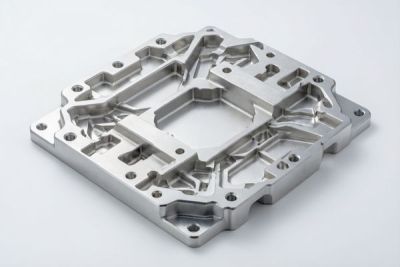
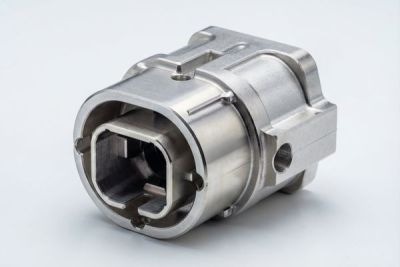
Cold Plate Channel Machining: FSW vs Deep-Groove Milling Guide (2026)
If you are sourcing liquid cooling plates and channels for an AI server or data-center program in 2026, the single decision that quietly determines your yield, your leak rate and your unit cost is how the flow channel is made. Choose the wrong cold plate channel machining route and you inherit porosity, warpage or a seam that weeps after thermal cycling — usually discovered only after the plates are sealed into an expensive assembly.
Two routes dominate serious production: FSW (friction-stir welding) of a formed or machined channel cover, and deep-groove milling of the flow path directly into a solid plate, then bonding or sealing the top. They are not interchangeable. One wins on high-flatness flow-channel control and pressure integrity; the other wins on geometry freedom, low volume and rapid iteration.
This guide is written from the shop floor at LusterControl (Dongguan Licun Technology), a source factory with 15 years in CNC precision machining of stainless steel and non-ferrous parts. We run 60 CNC machines across 4,000 m², hold ±0.005 mm, and ship 500,000 parts a month. Below we compare the two routes on real, verifiable metrics, then give you a decision table, a supplier verification checklist, and the red flags that separate a capable cold plate supplier from a brochure.
Table of Contents
- 1. Why Cold Plate Channel Machining Decisions Shape AI Server Cooling in 2026
- 2. How FSW and Deep-Groove Milling Work in Liquid Cooling Plate Machining
- 3. Liquid Cooling Plates and Channels: FSW vs Deep-Groove Milling — 7 Key Factors
- 4. Which Route Fits Your Application? A Liquid Cooling Plate Machining Decision Table
- 5. High-Flatness Flow-Channel Control: Where Tolerances Actually Matter
- 6. Tight Tolerance CNC and the Hard Numbers Behind Cold Plate Channel Machining
- 7. CNC Precision Machining and the Quality Framework Behind Every Plate
- 8. Buyer's Checklist: Vetting Liquid Cooling Plate Machining Suppliers
- 9. Real Programs: Liquid Cooling Plates and Channels at LusterControl
- 10. Protecting Your Design: Cold Plate Channel Machining IP and NDA
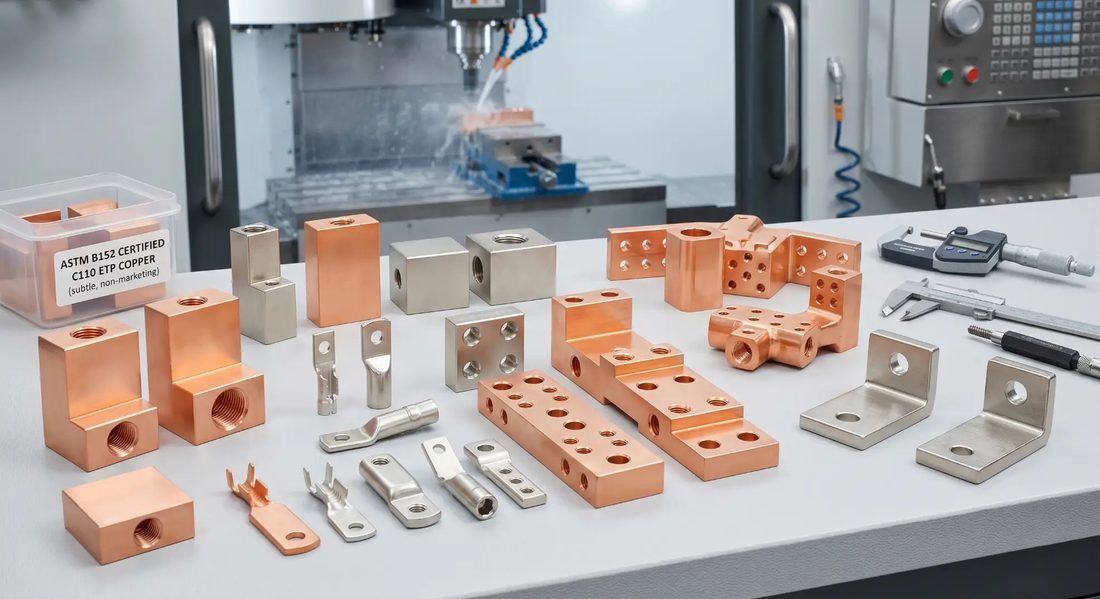
Liquid Cooling (Cold Plate) CNC precision component
Why Cold Plate Channel Machining Decisions Shape AI Server Cooling in 2026
The channel is the cold plate's functional heart — everything else is packaging.
A cold plate does one job: move heat from a high-flux source into a fluid with as little thermal resistance and pressure penalty as possible. That job is performed entirely by the flow channel — its cross-section, its surface roughness, its flatness against the heat source, and the integrity of the seal above it. Cold plate channel machining is therefore not a routine milling operation; it is the process that sets the part's performance ceiling.
In liquid cooling plates and channels for AI servers and CDUs, buyers commonly specify channel-surface finishes in the Ra ≤ 0.8 µm range and helium or pressure-decay leak rates below 0.01 mL/min. Those figures are unforgiving. A channel milled with a chatter-prone tool leaves valleys that trap debris and raise pressure drop; a cover welded with excess heat input warps the mating face and destroys flatness. Either failure shows up as a hot spot, not as a scrap part on the bench.
The practical question is not 'which method is better' in the abstract. It is which method is right for your channel geometry, your volume, your flatness budget and your qualification timeline. The rest of this guide answers that with numbers you can take into a supplier review.
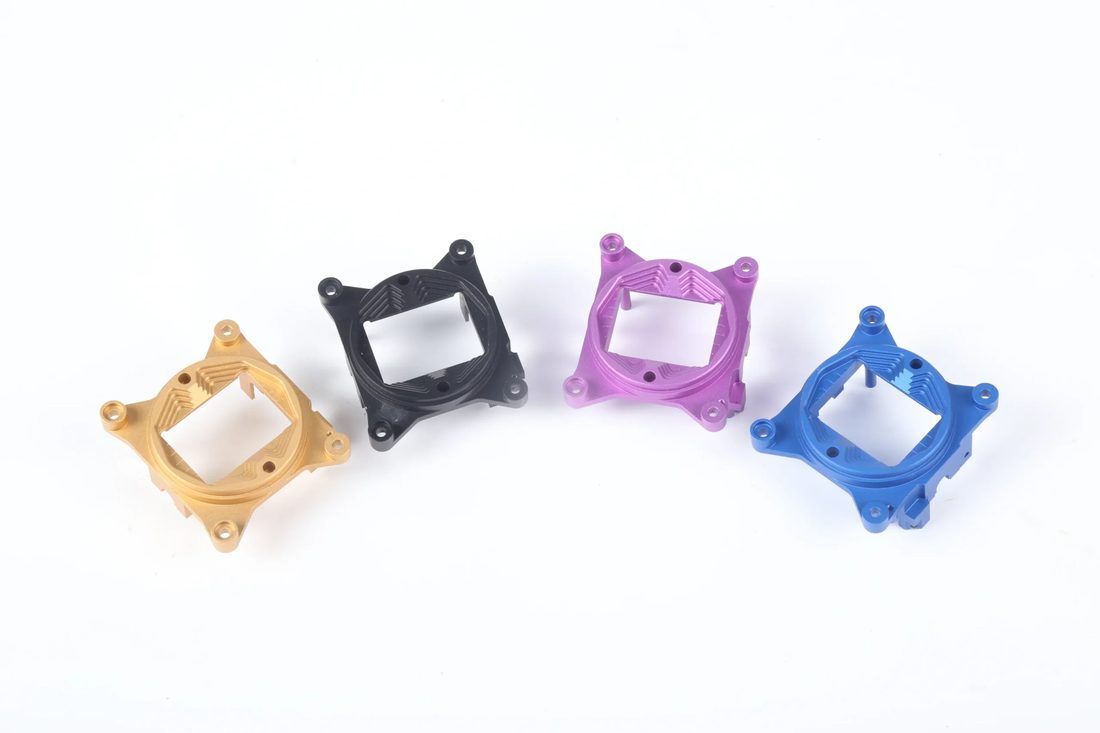
Liquid Cooling (Cold Plate) CNC precision component
How FSW and Deep-Groove Milling Work in Liquid Cooling Plate Machining
Two fundamentally different ways to create an enclosed fluid path — one joins, one cuts.
FSW (Friction-Stir Welding): Join a Cover to a Formed Channel
FSW is a solid-state joining process. A rotating shoulder-and-pin tool plunges along the joint line between a channel-bearing base and a flat cover plate. Friction softens the metal without melting it; the tool mechanically forges the interface into a continuous bond. In liquid cooling plate machining, the channel is typically formed or rough-machined in the base first, then the cover is friction-stir welded around and across the channel.
- Energy source: frictional heat from a rotating tool, not an arc or a melt pool.
- Medium: solid-state plasticized metal at the joint — no filler, no porosity from solidification.
- Result: a continuous, low-distortion seam with excellent pressure integrity, ideal for high-flatness flow-channel control when the weld is planned away from the sealing face.
Deep-Groove Milling: Cut the Channel Directly into Solid Stock
Deep-groove milling removes material to form the channel in a solid plate — using long-reach end mills, trochoidal toolpaths and often stepped passes to reach the required depth-to-width ratio. The plate is then closed with a bonded cover, a brazed lid, or a bolted-and-sealed top. It is a subtractive route, so the channel geometry is limited mainly by tool access and aspect ratio, not by forming or weld access.
- Energy source: spindle power and cutting tool engagement.
- Medium: the solid plate itself — chips leave the channel, so internal cleanliness must be managed.
- Result: high geometric freedom and fast design iteration, with more setup steps and a sealing interface that must be validated.
- FSW
- Friction-stir welding — a solid-state joining process that forges a seam using frictional heat and mechanical pressure, without melting the base metal.
- Deep-groove milling
- CNC milling of a narrow, high-aspect-ratio channel directly into solid material, normally with long-reach tooling and controlled step-downs.
- Flow-channel Ra
- The surface roughness inside the coolant path; lower Ra reduces pressure drop and debris retention, and is commonly specified at Ra ≤ 0.8 µm for server cold plates.
Both routes live or die on process control. FSW needs disciplined heat-input and tool-path management to protect flatness. Deep-groove milling needs rigid setups, sharp tooling and in-process chip evacuation to hold channel Ra. That is why the choice of supplier matters at least as much as the choice of process.
Liquid Cooling Plates and Channels: FSW vs Deep-Groove Milling — 7 Key Factors
A side-by-side against the metrics that actually move your yield and cost.
Use the table below as a first-pass screen. The hard-performance column reflects what a disciplined CNC shop can verify on a first article; your supplier should be able to put measured numbers — not adjectives — against each line.
| Factor | FSW (welded cover) | Deep-groove milling (cut channel) | What to demand as evidence |
|---|---|---|---|
| Pressure integrity | Excellent — solid-state seam, no melt porosity | Depends on lid bond/seal quality | Pressure-decay or helium leak report, target <0.01 mL/min |
| Flatness control | Very good if weld path and fixturing control heat input | Very good — no weld heat, but stress from heavy material removal | CMM flatness map on the mating face |
| Channel surface (Ra) | Set by forming/tooling of base channel | Set by tool condition and stepover; Ra ≤ 0.8 µm achievable | Surface-roughness trace inside the channel |
| Geometry freedom | Limited by cover access and weld path | High — limited mainly by tool reach/aspect ratio | Sectioned sample or CMM of channel profile |
| Best volume band | Medium to high, once tooling is proven | Low to medium; fast iteration | Quote curve at 10 / 100 / 10k units |
| Lead time to first article | Longer — weld procedure qualification | Shorter — program and cut | Dated first-article schedule |
| Change-friendliness | Low — process re-qualification needed | High — edit the CAM and re-cut | Engineering change lead time |
Reading the factors honestly
- Pressure integrity is the FSW stronghold: because there is no melt pool, the seam avoids the porosity that plagues fusion welds. If your plate runs high pressure or sees thermal cycling, this is the line to weight most heavily.
- Flatness is not automatically won by either route. FSW can distort a thin plate if the weld path and fixturing are poor; deep-groove milling can release residual stress as material is removed. Ask for a measured flatness map, not a promise.
- Channel Ra drives pressure drop and contamination. For server liquid cooling plates and channels, Ra ≤ 0.8 µm is a common buyer spec — verify it with a roughness trace taken inside the channel, not on a convenient outer face.
- Geometry freedom favors milling for complex serpentine paths, variable widths and tapered manifolds. FSW favors more regular channel layouts where the cover can be welded cleanly.
- Volume changes the answer. A 10-unit prototype program and a 100,000-unit server rollout should not use the same process by default.
- Lead time and change cost favor deep-groove milling early in a program, and FSW once the design is frozen and volume climbs.
- Evidence beats claims on every line above. A supplier who cannot produce a leak report, a CMM map and a roughness trace is not qualified, regardless of the process they recommend.
Liquid Cooling (Cold Plate) CNC precision component
Which Route Fits Your Application? A Liquid Cooling Plate Machining Decision Table
Turn the comparison into a decision you can defend to your engineering team.
Start from the requirement, not the process. The table below maps common project conditions to the route that typically wins, then the two 'choose if' lists give you a fast sanity check.
| Your project requirement | Recommended route | Why it wins |
|---|---|---|
| High-pressure loop, zero-leak mandate | FSW | Solid-state seam minimizes porosity-driven leaks |
| Thin, large-area plate needing tight mating flatness | FSW with controlled weld path, or stress-relieved milling | Both can hold flatness; verify with CMM |
| Complex serpentine or variable-width channel | Deep-groove milling | Tool path follows geometry; no weld-path constraint |
| Prototype or pilot build, design still changing | Deep-groove milling | Edit CAM and re-cut; no weld procedure re-qualification |
| High-volume, frozen design, cost per unit critical | FSW | Repeatable seam and shorter cycle once qualified |
| Aggressive channel Ra requirement (Ra ≤ 0.8 µm) | Either — depends on tooling discipline | Demand an in-channel roughness trace |
| Short qualification window | Deep-groove milling | Faster first article; simpler process validation |
Pros
- Choose FSW if your priority is pressure integrity, thermal-cycling reliability and a repeatable seam at volume.
- Choose FSW if your design is frozen and you are moving to medium–high production with a cost-per-unit target.
- Choose FSW if your team can qualify a weld procedure and wants a solid-state bond with no melt porosity.
Cons
- Choose deep-groove milling if you are iterating the channel geometry or still validating thermal performance.
- Choose deep-groove milling if your channel layout is complex and a weld path would be impractical.
- Choose deep-groove milling if you need a first article quickly and cannot absorb weld qualification time.
A mature supply chain often uses both: mill for prototype and validation, then transition to the route that fits the production profile. Ask your supplier to state plainly when a transition makes sense — and to show you the first-article data that justifies it. You can review more of our CNC precision machining technical guides for deeper reading on process selection.
High-Flatness Flow-Channel Control: Where Tolerances Actually Matter
Not every number on the drawing deserves the same scrutiny.
Buyers often over-specify cosmetic dimensions and under-specify the three that govern thermal performance: mating-face flatness, channel surface finish, and seal-interface integrity. High-flatness flow-channel control means holding all three simultaneously, because a cold plate that is flat but leaks — or sealed but rough inside — still fails in service.
Mating-face flatness
Flatness against the heat source sets contact resistance. A bowed plate leaves an air gap that can add tens of percent to interface thermal resistance. Control starts with stress management — roughing, stress-relief passes, and symmetric material removal — and ends with a CMM flatness map on the actual mating face, not a spot check.
Channel surface finish
Roughness inside the channel does two things: it raises friction factor (pressure drop for a given pump power) and it creates pockets that shed debris into the loop. A channel Ra ≤ 0.8 µm is a common target for server cold plates; mirror-grade finishes down to Ra 0.2 µm are achievable with electropolishing where the application justifies it.
Seal-interface integrity
The seal is where most field failures originate. Specify a measurable leak criterion — for example pressure-decay or helium testing to below 0.01 mL/min — and require the test method and calibration record, not just a pass/fail stamp.
- Flatness: CMM map of the mating face with datum scheme stated.
- Channel Ra: roughness trace taken inside the channel, not on an external face.
- Leak: documented method (pressure decay or helium) and acceptance limit.
- Cleanliness: deburred, flushed and capped channel with a debris-control procedure.
- Traceability: lot-linked material cert and in-process record for each batch.
A tolerance is only as good as the evidence behind it. On a cold plate, the drawing tells you the target; the CMM map and leak report tell you the truth.

Liquid Cooling (Cold Plate) CNC precision component
Tight Tolerance CNC and the Hard Numbers Behind Cold Plate Channel Machining
What a source factory can actually put behind the claim.
Tight tolerance CNC is not a slogan — it is a stack of capabilities you can audit. LusterControl (Dongguan Licun Technology), founded in 2015, has spent 15 years in CNC precision machining with a focus on stainless steel mirror finishing. The same discipline that holds 8K mirror Ra 0.2 µm on consumer parts applies to the sealing faces and channels of liquid cooling plates and channels.
Our process set — turn-mill composite, 5-axis, Swiss-type turning, mirror and electropolishing, and lot traceability — covers both routes discussed here. In-house turn-mill and 5-axis cells cut setup count and stack-up error on channel geometry; in-house finishing keeps the sealing surface and channel Ra under one quality record instead of across three vendors.
| Capability | LusterControl reality | Buyer value |
|---|---|---|
| Equipment | 60 CNC machines (35 lathes, 20 4/5-axis, 5 turn-mill; Swiss-type available) | Capacity and process redundancy |
| Facility | 4,000 m² (2026 expansion; old 2,000 m² obsolete) | Room for dedicated cells and inspection |
| Tolerance | ±0.005 mm held in production | Flatness and fit confidence |
| Surface | Standard mirror Ra ≤ 0.6 µm; up to 8K mirror Ra 0.2 µm | Low-Ra channels and sealing faces |
| Quality | ISO 9001 certified; ISO 13485 system established, certification advancing; IATF 16949 application in progress | Auditable system, not ad-hoc QC |
| Traceability | Incoming lot control and batch records | Fast root-cause on field issues |
For context on surface-finish verification standards we reference in our quality documentation: ASTM A967 covers chemical passivation treatments for stainless steel parts, which is relevant when a passivated sealing face or channel is specified. Cite the standard by number in your PO — it removes ambiguity about what 'stainless finish' means.
CNC Precision Machining and the Quality Framework Behind Every Plate
A repeatable chain, from drawing to shipped lot.
The reason a capable shop hits flatness, Ra and leak targets consistently is not luck — it is a staged quality chain applied to every order. Our CNC precision machining framework runs the same six steps whether you are buying ten prototype plates or a production release.
- DFM review: channel aspect ratio, tool reach, datum scheme and sealing strategy checked before cutting.
- Incoming material check: mill certs verified, batch recorded, stock screened before it enters the cell.
- First-article CMM: flatness, channel profile and critical dimensions measured and reported.
- In-process SPC/CPK: special characteristics monitored statistically, not spot-checked at the end.
- Final FQC/OQC: deburr, clean, flush, cap, visual and dimensional release.
- Lot traceability: each batch linked to material, machine and inspection records.
A supplier who treats the leak test as a final afterthought will eventually ship a weeping plate. Build the evidence requirements into the RFQ, and review the data pack as seriously as the price. If you want to see how this applies to your drawing, send us your drawing for a free DFM review.
Liquid Cooling (Cold Plate) CNC precision component
Buyer's Checklist: Vetting Liquid Cooling Plate Machining Suppliers
Five things to demand before you release a PO — and the red flags to reject.
The liquid cooling plate machining market has plenty of shops that can mill a channel and few that can prove the finished assembly will hold flatness and stay sealed. Use this checklist as your gate. It is the same evidence we expect you to ask of us.
- A first-article CMM report with the datum scheme and a flatness map of the mating face.
- An in-channel surface roughness trace showing the Ra actually achieved, with the measurement location stated.
- A documented leak-test method, calibration record and acceptance limit (e.g., <0.01 mL/min).
- Material certificates and batch-level traceability linking plate, channel and seal to source stock.
- A written process plan naming the route (FSW or deep-groove milling), critical steps and inspection holds.
Red flags worth walking away from
- 'We test every part' with no method, calibration or acceptance limit documented.
- Flatness quoted from a stock catalog rather than measured on your mating face.
- No material certs, or certs that cannot be tied to your batch.
- A process route that changes between sample and production without a re-qualification offer.
- Unwillingness to sign an NDA or to control access to your CAD files.
None of these are exotic demands. They are the minimum documentation a serious CNC precision machining partner will already have on file.
Real Programs: Liquid Cooling Plates and Channels at LusterControl
Evidence from work already shipped, not hypothetical capability.
What connects those programs to liquid cooling plates and channels is not the end industry — it is the transferable discipline: holding a fine surface, controlling a critical geometry, and documenting every batch. A sealing face that must reach Ra 0.2 µm for a consumer appliance is the same metallurgical and process problem as a low-Ra channel in a cold plate. The tolerances travel; the application changes.
We are a Dongguan source factory serving new-energy vehicle, medical, aerospace, smart-home, UAV, semiconductor, robotics, optics, industrial automation, fluid control, energy storage, transmission and tooling programs. Small-lot custom work and volume production run under the same quality system. Learn more about our Dongguan plant and team.
Liquid Cooling (Cold Plate) CNC precision component
Protecting Your Design: Cold Plate Channel Machining IP and NDA
Your channel geometry is intellectual property before it is a part.
For AI-server OEMs, CDU integrators and R&D teams, a cold plate drawing encodes thermal know-how: channel layout, manifold strategy, sealing approach. Sending that drawing to multiple shops multiplies disclosure risk. Confidentiality should be a precondition of cold plate channel machining, not a clause negotiated after the quote.
- NDA-backed programs as routine practice, including De'Longhi, Donlim and Breville-grade work.
- Controlled CAD access; customer designs are not reused, re-sold or offered to competing programs.
- Discreet packaging for prototype shipments so early hardware does not advertise your roadmap.
If you are planning a 2026 liquid-cooling program and want a second engineering opinion on FSW versus deep-groove milling, send your drawing for a free DFM review. We will return achievable tolerance, channel-finish and leak-test guidance, plus a unit-price curve before you commit.
Liquid Cooling (Cold Plate) CNC precision component
Liquid Cooling (Cold Plate) CNC precision component
Liquid Cooling (Cold Plate) CNC precision component
FAQ: liquid cooling plates and channels & Liquid Cooling (Cold Plate) Buyer Questions
A: Neither is universally better. FSW excels at pressure integrity and repeatable seams at medium-to-high volume; deep-groove milling excels at complex channel geometry, fast first articles and design iteration. Choose by pressure requirement, geometry, volume and qualification window.
A: Ra ≤ 0.8 µm is a common buyer specification for server liquid cooling plates and channels. Require a roughness trace taken inside the channel, not on an external face, and consider electropolishing where a mirror-grade finish is justified.
A: Typically by pressure-decay or helium leak testing against a documented acceptance limit, commonly below 0.01 mL/min for demanding programs. Ask the supplier for the test method, calibration record and actual results, not just a pass stamp.
A: We hold ±0.005 mm in production across 60 CNC machines and provide first-article CMM reports with a flatness map of the mating face. Send your drawing for a free DFM review and we will confirm what is achievable on your specific geometry.
A: LusterControl is ISO 9001 certified, has an ISO 13485 quality system established with certification advancing, and has an IATF 16949 application in progress. We supply material certs, CMM data and lot traceability on every batch.
A: Yes. NDA-backed programs are routine, CAD files are held under controlled access, and customer designs are not reused or offered to competing programs. Prototype shipments are packaged discreetly.
Planning a liquid-cooling program for 2026? Send LusterControl your cold plate drawing for a free DFM review — we will return achievable tolerance, channel-finish and leak-test guidance with a unit-price curve, backed by 15 years of CNC precision machining.
Request a Free CNC Quote