Drone Client's First Order Hits ¥1.2M: LusterControl's UAV Machining Capability (2026)
LusterControl (Dongguan Licun Technology Co., Ltd.) has spent 15 years since our 2015 founding machining precision parts across 14 industries — and one of the most demanding is unmanned aerial vehicles. A LusterControl news milestone worth sharing in 2026: a drone (UAV) client's first order with us reached ¥1.2 million, built on UAV structural components we machined on 5-axis CNC machining centres using aerospace-grade aluminum.
In this update we walk you through the capability that turned one bracket drawing into a seven-figure program: how we hold ±0.005 mm on a drone motor mount, why aerospace-grade aluminum 7075 and 6061 dominate lightweight CNC machining for longer flight, and how the same Dongguan floor scales from a prototype to 500,000 parts a month. If you build or source UAV structural components, this is the practical engineering bar.
A drone lives and dies by weight and stiffness. Every gram of structure that can be removed, and every mount that holds its position against motor vibration, directly extends flight time and reliability. That is why UAV programs demand more from machining than most consumer parts — and why a single right-sized DFM review can win the program, as it did here.
Table of Contents
- 1. UAV Structural Components: How LusterControl Won a Drone Client's First ¥1.2M Order
- 2. 5-Axis CNC Machining for Drone Frames and Brackets
- 3. Drone Motor Mounts: Tight Tolerance That Stops Vibration
- 4. Lightweight CNC Machining: Aerospace-Grade Aluminum for Longer Flight
- 5. Aerospace-Grade Aluminum: Why 7075 and 6061 Rule UAV Parts
- 6. UAV Structural Components Quality: ±0.005 mm and Batch Traceability
- 7. 5-Axis CNC Machining vs 3-Axis: A Buyer Guide for Drone Programs
- 8. Why Drone OEMs Choose LusterControl's Lightweight CNC Machining in 2026
Company CNC precision component
UAV Structural Components: How LusterControl Won a Drone Client's First ¥1.2M Order
One bracket, one honest review, one seven-figure program.
This LusterControl news note is about a real UAV program. A drone client came to us with a structural bracket drawn to an aggressive tolerance on every feature. Our free DFM review showed only the mounting bores needed ±0.005 mm; the rest could relax to ±0.01 mm. That single change cut cycle time enough to win the job — the client's first order reached ¥1.2 million, and it started with a drawing we read for free.
- UAV structural components
- Frames, brackets, arms and mounts that carry load and vibration on an unmanned aerial vehicle
- Drone motor mount
- The machined part that fixes a rotor motor to the airframe and must stay true under vibration
- Lightweight CNC machining
- Removing mass while keeping stiffness, usually in aluminium or titanium
- First-article inspection (FAI)
- A documented proof run confirming the part matches the drawing before full production
Company CNC precision component
5-Axis CNC Machining for Drone Frames and Brackets
Fewer setups, better geometry, lighter parts.
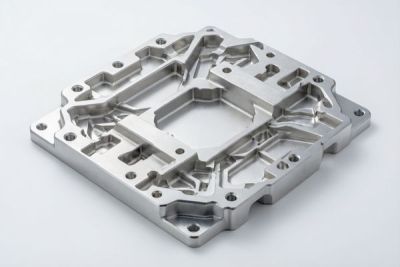
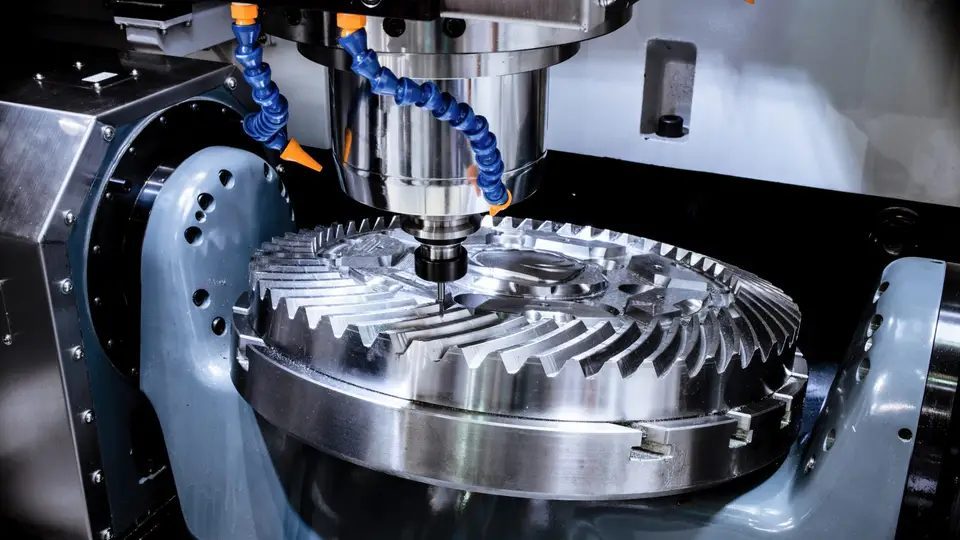
A drone frame is a 3D puzzle of angled faces, oblique bores and contoured arms. Cutting that on a 3-axis machine means flipping the part and re-clamping — each flip adds a chance of error and a bit of mass from extra stock. Our 5-axis CNC machining cuts those features in one or two setups, holding the geometry and letting us thin the walls without losing stiffness. That is the core of lightweight UAV structure.
Why 5-axis beats 3-axis for UAV parts
| Factor | 3-axis result | 5-axis result |
|---|---|---|
| Setups | Many flips, more error | 1-2 setups, less error |
| Oblique features | Hard, often avoided | Cut directly in one pass |
| Wall thickness | Thicker for safety | Thinner, still stiff |
| Accuracy | Accumulated per flip | Single datum, ±0.005 mm |
- Single-datum machining keeps the whole frame true
- Oblique bores and contoured arms cut in one setup
- Thinner walls mean lighter airframe, same stiffness
- First-article inspection before any full run
Drone Motor Mounts: Tight Tolerance That Stops Vibration
A loose mount is a shaken, shortened flight.
A drone motor mount looks simple — a plate with a bore and some bolt holes — but it does the hardest job on the airframe: it fixes a spinning motor and absorbs its vibration without drifting. If the bore is out by a few microns, the rotor runs off-axis, the frame shakes, and flight time drops. That is why our drone motor mounts are held to ±0.005 mm, verified by in-process gauging, not hoped for.
What we control on a motor mount
- Bore runout
- How far the bore axis deviates from true; drives rotor balance
- Bolt-circle position
- Where the mounting holes sit; must match the motor flange
- Flatness
- The mounting face deviation from a plane; affects clamp load
- Tight tolerance CNC
- Machining held to ±0.005 mm, verified in-process
| Feature | Our control | Why it matters |
|---|---|---|
| Motor bore | ±0.005 mm | Rotor runs true, less vibration |
| Bolt-circle | ±0.01 mm | Flange seats correctly |
| Mounting face | Flat within 0.02 mm | Even clamp, no shake |
| Wall | Thinned for mass | Lighter, still stiff |
Company CNC precision component
Lightweight CNC Machining: Aerospace-Grade Aluminum for Longer Flight
Every gram removed is flight time earned.
In a drone, mass is the enemy of endurance. Lightweight CNC machining is the discipline of removing every gram that is not earning its place — thinner walls, contoured arms, pocketed plates — while keeping the stiffness the airframe needs. On our Dongguan floor that means 5-axis cutting of aerospace-grade aluminum, with geometry locked first so the part is light and still rigid.
How we take mass out without losing stiffness
- Pocket non-load paths instead of solid plate
- Taper arms and contour to the load direction
- Keep material at the joints where stress concentrates
- Use 5-axis to reach oblique thin walls in one setup
- Verify stiffness by first-article, not by feel
Aerospace-Grade Aluminum: Why 7075 and 6061 Rule UAV Parts
Two alloys, two jobs.
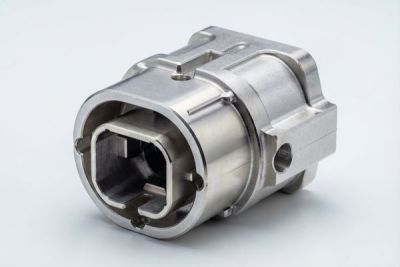
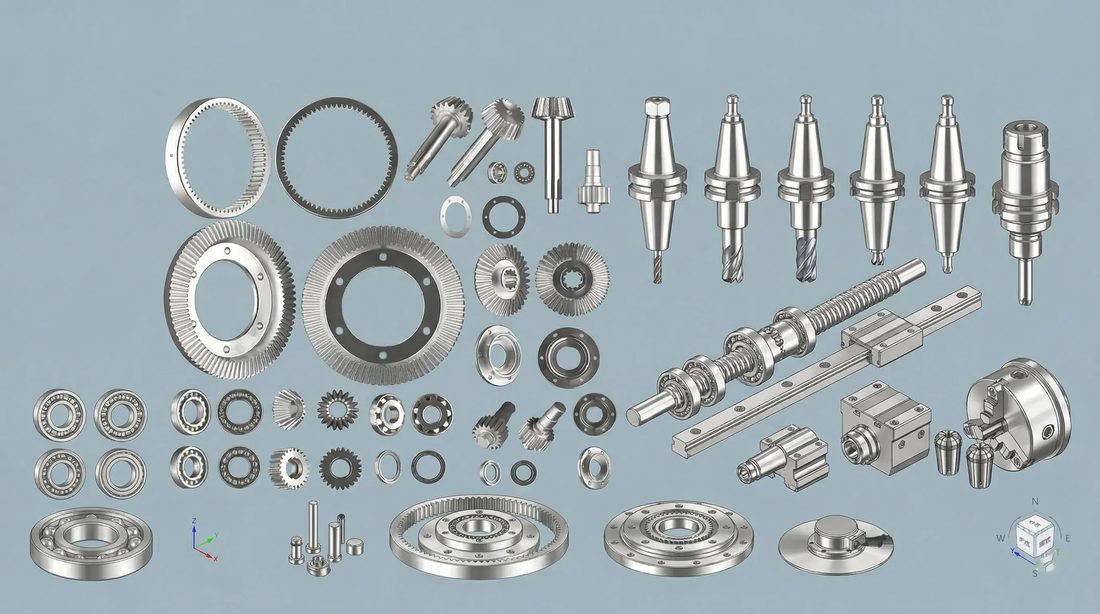
Most UAV structural components are aluminium, and most of those are 6061 or 7075. They are not interchangeable. 6061 is the all-rounder — good strength, excellent corrosion resistance, easy to anodise. 7075 is the high-strength choice for motor mounts and arms that take real load, at the cost of slightly lower corrosion resistance and tougher machining. Picking the right one is part of the DFM review we run for free.
| Alloy | Strength | Use on a drone |
|---|---|---|
| 6061-T6 | Good, versatile | Frames, plates, housings |
| 7075-T6 | High, best for load | Motor mounts, arms, joints |
| 2024 | High fatigue | Specialised structural skins |
| 5052 | Formable, corrosion-proof | Brackets, covers |
Pros
- 6061: easy anodise, corrosion resistant, cheap
- 7075: highest strength for loaded mounts
- Both machine cleanly on 5-axis
- Light, ideal for flight-time goals
Cons
- 7075 costs more and anodises less evenly
- Wrong alloy choice adds mass or risk
- Thin walls need rigid workholding
Company CNC precision component
UAV Structural Components Quality: ±0.005 mm and Batch Traceability
A drone audit is won on paper, not on the part.
A UAV program for a serious OEM cannot afford a batch where the aluminium certificate is wrong or the tolerance drifted unnoticed. Our quality ladder — ISO 9001 certified, ISO 13485 completed, IATF 16949 in progress — means every lot of aerospace-grade aluminum ships with incoming batch traceability and material certificates, audit-ready on request under the relevant standard.
| Certificate | What it buys the buyer | Status at LusterControl |
|---|---|---|
| ISO 9001 | Audited quality management system | Certified |
| ISO 13485 | Medical-device quality system | Completed |
| IATF 16949 | Automotive quality system | In progress |
| Material cert + trace | Lot tied to raw stock | Standard on every order |
- Send the drawing and the real fit tolerance your assembly needs
- State the alloy (6061 vs 7075) and any anodise spec
- Flag the flight-time and load cases for lightweighting
- Share expected volume so we route prototype vs mass cell
- Confirm batch traceability and FAI before full run
- Plan the ramp from validation to 500K/month with one supplier
5-Axis CNC Machining vs 3-Axis: A Buyer Guide for Drone Programs
Pick the process by the part, not the price.
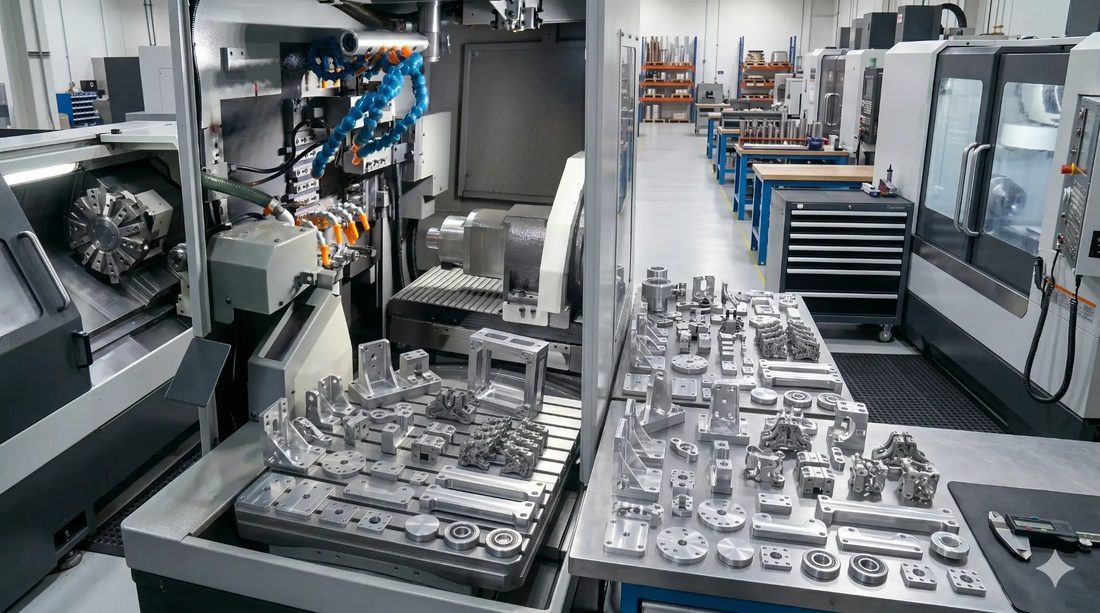
If you are scoping UAV structural components, the first process question is 3-axis versus 5-axis. For flat plates with simple holes, 3-axis is cheap and fast. For contoured arms, oblique bores and lightweighted frames, 5-axis CNC machining wins on accuracy and mass. Here is the practical split we use when advising drone buyers.
| Part shape | Pick 3-axis | Pick 5-axis |
|---|---|---|
| Flat plate, through holes | Yes — cheapest | Overkill |
| Contoured arm | Hard, many flips | Yes — one setup |
| Oblique bore mount | Inaccurate | Yes — direct cut |
| Lightweighted frame | Thicker walls | Yes — thin, stiff |
Pros
- Right process cuts cost on simple parts
- 5-axis nails complex geometry in fewer setups
- One supplier covers both on one floor
- Mixed routing validated under one FAI
Cons
- Needs a DFM call per part, not a blanket rule
- 5-axis has higher hourly rate
Company CNC precision component
Why Drone OEMs Choose LusterControl's Lightweight CNC Machining in 2026
One floor, prototype to volume.
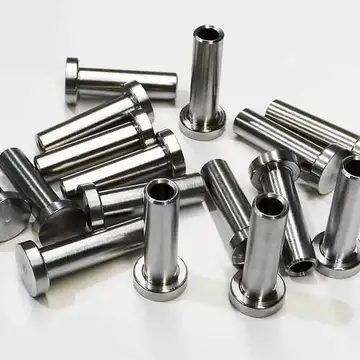
The reason a drone client's first order reached ¥1.2M with us is the same reason programs in medical, automotive and semiconductor keep returning: LusterControl runs lightweight CNC machining as a standard capability on one Dongguan source-factory floor, so a prototype UAV structural component gets the identical ±0.005 mm and 5-axis accuracy as a 500,000-piece run. We serve 14 industries from 60+ CNC machines, 2,000 m² of zoned floor, and a monthly capacity of 500,000 precision parts, with annual output now exceeding ¥20 million.
Our quality ladder is consistent: ISO 9001 certified, ISO 13485 completed, and IATF 16949 in progress, applied from UAV structural components to medical and aerospace programs. Learn more in our CNC machining guides, read about Dongguan Licun Technology, or explore our aerospace-grade aluminum and other capabilities on the home page.
On a drone, the lightest part that still holds its shape is the best part — and that is a machining problem long before it is a flying one.
Company CNC precision component
Company CNC precision component
Company CNC precision component
Company CNC precision component
FAQ: UAV structural components & Company Buyer Questions
A: Yes. A UAV client's first order with LusterControl reached ¥1.2 million, won after a free DFM review showed only the mounting bores needed ±0.005 mm while the rest could relax to ±0.01 mm — cutting cycle time enough to win the program. It started with a single bracket drawing.
A: We hold the motor bore to ±0.005 mm and the bolt-circle to ±0.01 mm, with the mounting face flat within 0.02 mm, verified by in-process gauging. That keeps the rotor running true and the airframe free of induced vibration.
A: Use 6061-T6 for general frames, plates and housings — it is versatile, corrosion resistant and easy to anodise. Use 7075-T6 for motor mounts and arms that carry real rotor load, where its higher strength earns the extra cost. We flag the split in a free DFM review.
A: 5-axis cuts contoured arms, oblique bores and lightweighted frames in one or two setups from a single datum, holding ±0.005 mm and letting walls stay thin yet stiff. A 3-axis shop would need many flips, adding error and mass — wrong for real UAV structure.
A: We are ISO 9001 certified, ISO 13485 completed, with IATF 16949 in progress. Every lot of aerospace-grade aluminum ships with incoming batch traceability and material certificates, audit-ready on request under the relevant standard.
A: Yes. The same Dongguan floor runs custom CNC parts from a 200-piece validation through pilot to 500,000 parts per month, so the prototype and the mass run share identical process control, first-article records and batch traceability.
Send us your UAV drawing for a free DFM review, and our Dongguan engineering team will confirm the right alloy — 6061 or 7075 — the 5-axis CNC machining approach, and the lightweight, ±0.005 mm drone motor mounts your next aircraft needs, scalable from validation to 500,000 parts a month.
Request a Free CNC Quote