IATF 16949 in Progress: LusterControl's Automotive Ambition (2026 CNC News)
LusterControl (Dongguan Licun Technology Co., Ltd.) has spent 15 years since our 2015 founding machining precision parts for 14 industries — and automotive is the next frontier. A LusterControl news update for 2026: we are pursuing IATF 16949, the automotive quality-management standard, building on our ISO 9001 certification and ISO 13485 completion, to serve automotive CNC parts and EV motor parts programs with the discipline the sector demands.
In this update we walk you through what IATF 16949 machining actually means for a buyer: not a plaque on the wall, but a controlled process where EV motor parts are held to ±0.005 mm, every lot is traceable, and a 500,000-piece month does not drift. If you source automotive or EV drivetrain components, this is the practical bar we are building toward on our 4,000 m² Dongguan floor with 60+ CNC machines.
Automotive is unforgiving because the cost of a field failure is recall-scale. That is why the sector standardised on IATF 16949 — it forces the supplier to prove, on paper and in process, that the part is identical every time. We are not waiting until the certificate lands to behave that way; we already run to that discipline for medical and aerospace, and IATF 16949 formalises it for automotive.
Table of Contents
- 1. IATF 16949 Machining: LusterControl's Automotive Quality Ambition
- 2. Automotive CNC Parts: What IATF 16949 Demands from a Supplier
- 3. EV Motor Parts: Tight Tolerance for the Electric Drivetrain
- 4. CNC Precision Machining for Automotive: ±0.005 mm at Volume
- 5. Quality Certification Ladder: ISO 9001, ISO 13485, IATF 16949
- 6. Automotive CNC Parts Capacity: 60+ Machines for OEM Volume
- 7. IATF 16949 Machining vs ISO 9001: What Changes for Buyers
- 8. Why Automotive OEMs Watch LusterControl's EV Motor Parts in 2026
Company CNC precision component
IATF 16949 Machining: LusterControl's Automotive Quality Ambition
The automotive standard is a process, not a plaque.
This LusterControl news note is about direction, not just a certificate. IATF 16949 is the global quality-management standard for automotive production, and pursuing it means we are aligning every CNC precision machining step — from incoming material to packed box — to its requirements: documented process control, full traceability, and continuous improvement. We are building this on top of ISO 9001 (already certified) and ISO 13485 (already completed).
- IATF 16949
- The automotive quality-management standard built on ISO 9001, with extra automotive requirements
- Automotive CNC parts
- Machined components used in vehicles, from drivetrain to chassis and electronics
- EV motor parts
- Components of the electric drivetrain, such as motor housings, rotors and mounts
- Quality certification
- An audited, documented proof that a process meets a stated standard
Company CNC precision component
Automotive CNC Parts: What IATF 16949 Demands from a Supplier
The standard is written for recall-scale risk.
When a car maker specifies automotive CNC parts, IATF 16949 is the gate. It demands more than a capable machine: it demands a managed process — control plans for every operation, measurement systems that are themselves validated, and traceability from raw stock to the VIN-level batch. For a supplier, that is the difference between 'we can make it' and 'we can prove we made it the same way every time'.
What the standard expects on the floor
| Requirement | What it means for your part | Our status |
|---|---|---|
| Control plan per process | Every op documented and monitored | Run for medical/aero today |
| Measurement systems analysis | Gauges proven capable | In-process probing + SPC |
| Full traceability | Lot tied to raw stock | Batch traceability standard |
| Continuous improvement | Drift corrected, not tolerated | Documented CAPA habit |
- Control plans for every machining and finishing operation
- Validated measurement, not 'looks close enough'
- Batch traceability from raw stock to packed box
- First-article inspection before any full run
- Corrective action that closes the loop, not a one-off fix
EV Motor Parts: Tight Tolerance for the Electric Drivetrain
The motor does not forgive a loose bore.
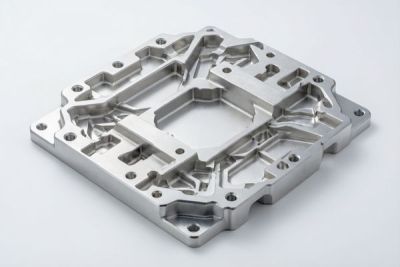
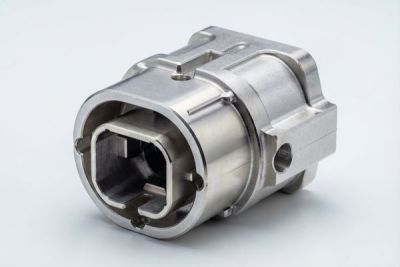
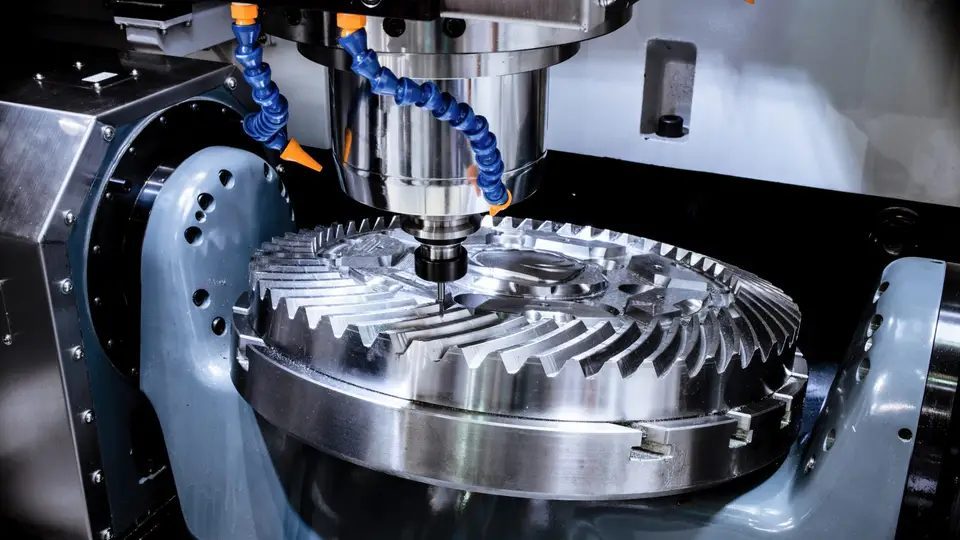
EV motor parts — housings, end caps, rotor mounts, stator carriers — live at the heart of the electric drivetrain, where heat, magnet force and vibration meet. A loose bore or an off-axis mount wastes energy as vibration and heat, cutting range. Our EV motor parts are held to ±0.005 mm on the features that matter, verified by in-process gauging so the 500,000th motor part matches the first article.
What we control on an EV motor part
- Motor housing bore
- The machined seat for the stator/rotor; must stay true under load
- Air-gap influence
- Bore runout shifts the rotor-stator gap, wasting efficiency
- Tight tolerance CNC
- Machining held to ±0.005 mm, verified in-process
- Thermal path
- How the part sheds heat; finish and flatness affect it
| Feature | Our control | Why it matters |
|---|---|---|
| Stator bore | ±0.005 mm | Keeps air gap, efficiency up |
| Mounting face | Flat within 0.02 mm | Even clamp, no shake |
| Bolt-circle | ±0.01 mm | Flange seats correctly |
| Cooling face | Ra ≤0.6 μm mirror | Better thermal contact |
Company CNC precision component
CNC Precision Machining for Automotive: ±0.005 mm at Volume
Volume is only valuable if tolerance survives it.
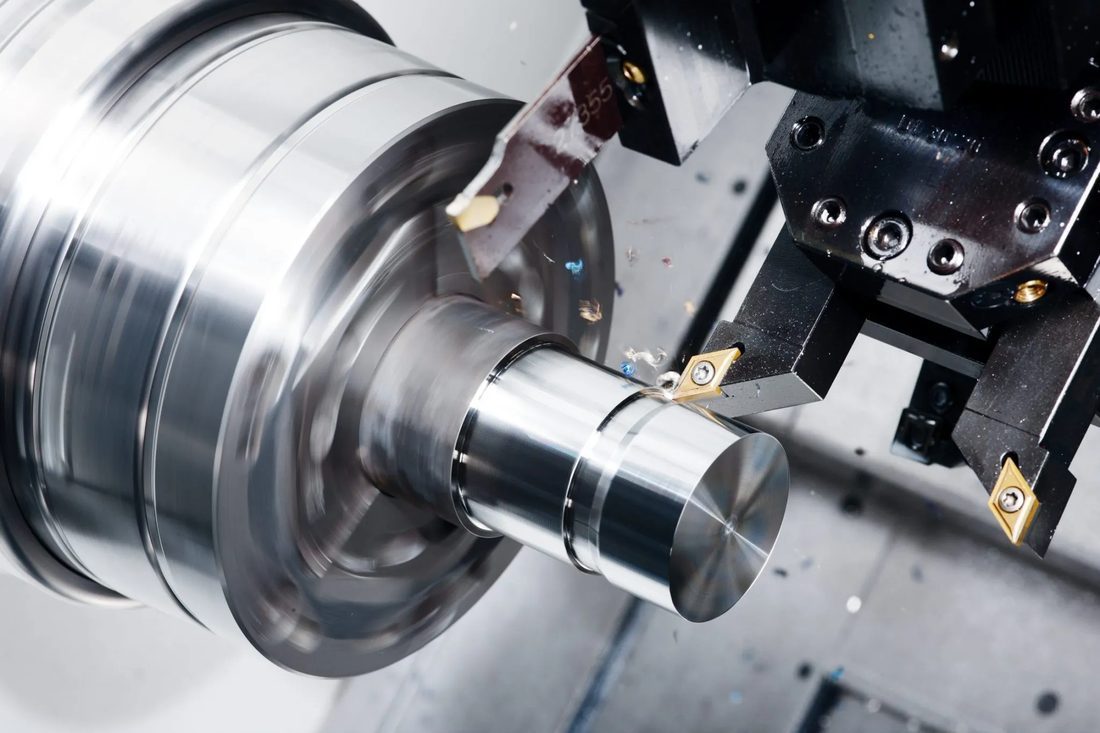
Automotive runs are volume runs. The test for CNC precision machining is holding ±0.005 mm on the 500,000th part, not the first. Our lines do exactly that: in-process probing and SPC catch drift on the machine, not at final inspection, so a monthly volume ships without a hidden tail of out-of-spec parts. That is the discipline IATF 16949 audits for, and the discipline we already run.
How we hold the tolerance at automotive volume
- Send the drawing and the real fit tolerance your assembly needs
- State the target finish grade (Ra ≤0.6 μm or 8K Ra 0.2 μm)
- Flag any material certificate and ASTM A967 passivation need
- Share expected volume so we route prototype vs mass cell
- Confirm batch traceability and FAI before full run
- Plan the ramp from validation to 500K/month with one supplier
Quality Certification Ladder: ISO 9001, ISO 13485, IATF 16949
Each rung buys the buyer something specific.
Our quality certification ladder is not decoration — each standard buys the buyer a different assurance. ISO 9001 certifies a managed quality system. ISO 13485 (completed) adds the medical-device discipline of risk control and traceability. IATF 16949 (in progress) layers the automotive requirements of control plans and continuous improvement. Together they let one Dongguan floor serve medical, automotive and aerospace from the same process discipline.
| Certificate | What it buys the buyer | Status at LusterControl |
|---|---|---|
| ISO 9001 | Audited quality management system | Certified |
| ISO 13485 | Medical-device quality system | Completed |
| IATF 16949 | Automotive quality system | In progress |
| ASTM A967 | Stainless passivation practice | Applied per spec |
- ISO 9001: the baseline managed system
- ISO 13485: risk control and lot traceability for medical
- IATF 16949: control plans and improvement for automotive
- All three share one floor, one lot-flow, one audit
Company CNC precision component
Automotive CNC Parts Capacity: 60+ Machines for OEM Volume
One floor, prototype to volume.
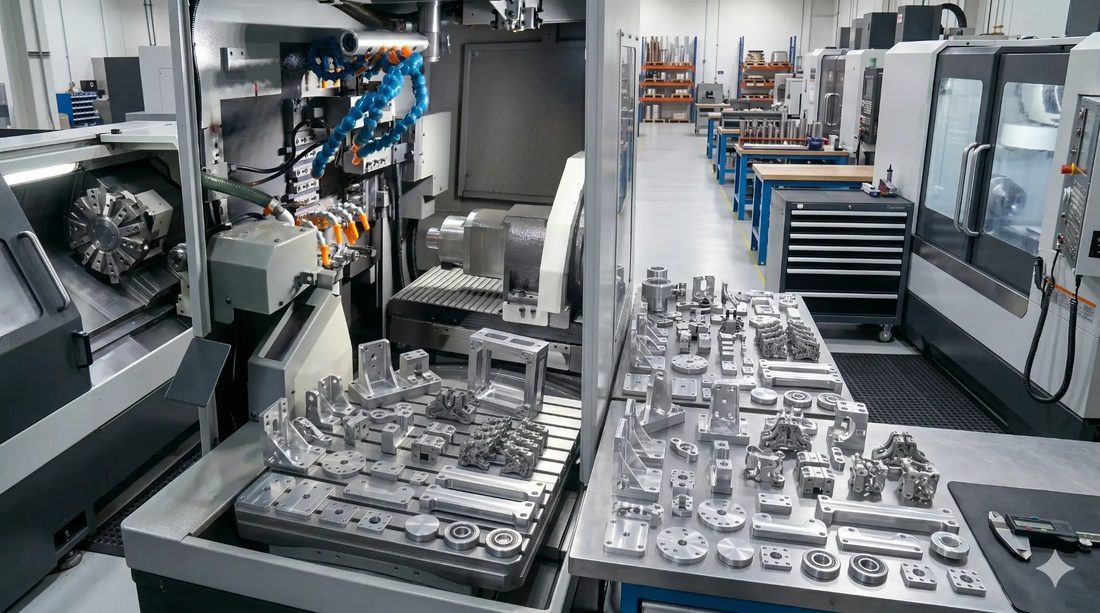
Automotive programs do not start at volume. They start at a validation batch, grow through a pilot, then ramp. The value of a source factory like LusterControl is running automotive CNC parts on the same Dongguan floor at every stage, so the validation part and the mass run share identical process control. Our 60+ CNC machines across 4,000 m² support up to 500,000 precision parts per month, with annual output now exceeding ¥20 million.
IATF 16949 Machining vs ISO 9001: What Changes for Buyers
Same machines, stricter proof.
Buyers often ask what IATF 16949 machining adds over the ISO 9001 we already hold. The machines and tolerances are the same; what changes is the proof. IATF 16949 requires control plans for every operation, validated measurement systems, and demonstrable continuous improvement — so the buyer gets not just a capable part but an auditable, repeatable process. For automotive, that proof is the product.
| Dimension | ISO 9001 (held) | IATF 16949 (in progress) |
|---|---|---|
| Process control | Managed system | Control plan per op |
| Measurement | Capable gauges | Validated MSA |
| Traceability | Lot control | Lot to VIN-level |
| Improvement | Corrective action | Documented CAPA loop |
Pros
- Auditable, repeatable process for automotive
- Control plans catch drift before it ships
- Traceability protects at recall scale
- One floor already runs medical/aero discipline
Cons
- More documentation per part
- Certificate still in progress, not yet granted
Company CNC precision component
Why Automotive OEMs Watch LusterControl's EV Motor Parts in 2026
One floor, every grade, documented quality.
The reason automotive OEMs are watching us is the same across EV, medical and drone programs: LusterControl runs EV motor parts as a standard capability on one Dongguan source-factory floor, so a validation part gets the identical ±0.005 mm and Ra ≤0.6 μm as a 500,000-piece run. We serve 14 industries from 60+ CNC machines, 4,000 m² of zoned floor, and a monthly capacity of 500,000 precision parts, with IATF 16949 in progress on top of ISO 9001 and ISO 13485.
Our quality ladder is consistent: ISO 9001 certified, ISO 13485 completed, and IATF 16949 in progress, applied from automotive CNC parts to medical and aerospace programs. Learn more in our CNC machining guides, read about Dongguan Licun Technology, or explore our automotive CNC parts and other capabilities on the home page.
In automotive, the certificate is the receipt — the discipline that earned it is the real product.
Company CNC precision component
Company CNC precision component
Company CNC precision component
Company CNC precision component
FAQ: IATF 16949 machining & Company Buyer Questions
A: LusterControl is pursuing IATF 16949 and currently holds it in progress, building on ISO 9001 (certified) and ISO 13485 (completed). We already run to IATF 16949 discipline — control plans, validated measurement and full traceability — for our medical and aerospace programs today.
A: We hold the stator bore to ±0.005 mm and the mounting face flat within 0.02 mm, with the bolt-circle at ±0.01 mm, verified by in-process gauging. That keeps the rotor-stator air gap true and efficiency high across a 500,000-piece month.
A: The machines and tolerances are the same; the proof changes. IATF 16949 requires a control plan for every operation, validated measurement systems, and documented continuous improvement, so the buyer gets an auditable, repeatable process — not just a capable part.
A: We are ISO 9001 certified, ISO 13485 completed, with IATF 16949 in progress. Every lot ships with incoming batch traceability and material certificates, audit-ready on request under the relevant standard — exactly what automotive OEMs require.
A: Yes. The same Dongguan floor runs custom CNC parts from a 200-piece validation through pilot to 500,000 parts per month, so the prototype and the mass run share identical process control, first-article records and batch traceability.
A: Send us your drawing with the real fit tolerance, target finish grade, any material certificate or ASTM A967 passivation need, and expected volume. We return a free DFM review, run a first-article inspection, and route you from prototype to volume on one IATF 16949-disciplined quality system.
Send us your automotive or EV motor drawing for a free DFM review, and our Dongguan engineering team will confirm the right process, the CNC precision machining tolerance, and the finish grade your next drivetrain part needs — built on an IATF 16949-disciplined, ISO 9001-certified floor and scalable to 500,000 parts a month.
Request a Free CNC Quote