Electrolytic Polishing Line Expands LusterControl's Mirror Finishing Capacity (2026 CNC News)
LusterControl (Dongguan Licun Technology Co., Ltd.) has spent 15 years since our 2015 founding putting bright, clean stainless surfaces on precision parts. A LusterControl news note for 2026: we have expanded our mirror finishing capacity with an electrolytic polishing line — adding electrochemical smoothing and ASTM A967 passivation to our mechanical 8K mirror at Ra 0.2 μm, so a buyer can pick the right bright, clean surface for the job.
In this update we walk you through what electrolytic polishing actually does, how it differs from a mechanically polished 8K mirror, and why the combination matters for medical, food-contact and fluid-path parts. The short version: mechanical polish wins on shine, electrolytic polishing wins on cleanability and passivation — and often you want both. If you buy stainless components that get washed, sterilised or filled, this is the practical picture.
A surface finish is a function decision, not a cosmetic afterthought. A smoother stainless surface resists bacterial adhesion, simplifies cleaning validation, and seals better on fluid-path faces. That is why our finishing discipline — mechanical mirror plus electrolytic polishing — matters far beyond looks, and why we now run both on the same Dongguan floor at volume.
Table of Contents
- 1. Electrolytic Polishing Line: Expanding LusterControl's Mirror Finishing Capacity
- 2. Mirror Finishing: Why a Bright Surface Is a Function Decision
- 3. Stainless Steel Mirror Finishing Meets Electrolytic Polishing
- 4. CNC Precision Machining Sets the Base for Electrolytic Polishing
- 5. Surface Finish Grades: From As-Machined to 8K Mirror
- 6. Electrolytic Polishing vs Mechanical Mirror: A Buyer Guide
- 7. Mirror Finishing Capacity: 60+ Machines for OEM Volume
- 8. Why Food and Medical Buyers Choose LusterControl's Electrolytic Polishing in 2026
Company CNC precision component
Electrolytic Polishing Line: Expanding LusterControl's Mirror Finishing Capacity
Two routes to a bright, clean surface.
This LusterControl news note is about capacity that earns its keep. Our new electrolytic polishing line adds an electrochemical route to our existing mechanical mirror cells, so a 4,000 m² Dongguan floor can now deliver both a brilliantly reflective 8K face and a crevice-free, passivated food- or medical-grade surface — sometimes on the same part. The line scales with the rest of the plant: up to 500,000 precision parts a month across 60+ CNC machines.
- Electrolytic polishing
- Electrochemical smoothing that removes a micro-layer of metal and improves passivation
- Mirror finishing
- Mechanical polishing that brings stainless to a reflective, low-Ra surface
- Stainless steel mirror finishing
- Our combined mechanical + electrolytic discipline on stainless parts
- ASTM A967
- Standard practice for passivating stainless steel to maximise corrosion resistance
Company CNC precision component
Mirror Finishing: Why a Bright Surface Is a Function Decision
Shine is a side effect of function.
The mistake most buyers make is treating mirror finishing as decoration. On a stainless part it is a function decision: a smoother surface resists bacterial adhesion, simplifies cleaning validation, and seals better on fluid-path mating faces. A mechanical 8K mirror at Ra 0.2 μm gives you the brightest look; electrolytic polishing gives you the cleanest, most passivated surface. Knowing which you need is the first step in a free DFM review.
What a smoother surface buys you
- Reduces bacterial adhesion on instrument and fluid-path surfaces
- Simplifies cleaning and validation for food and medical use
- Improves seal fit on mirror-finished mating faces
- Delivers the consistent premium look regulated brands expect
Stainless Steel Mirror Finishing Meets Electrolytic Polishing
Mechanical and electrochemical, on one floor.
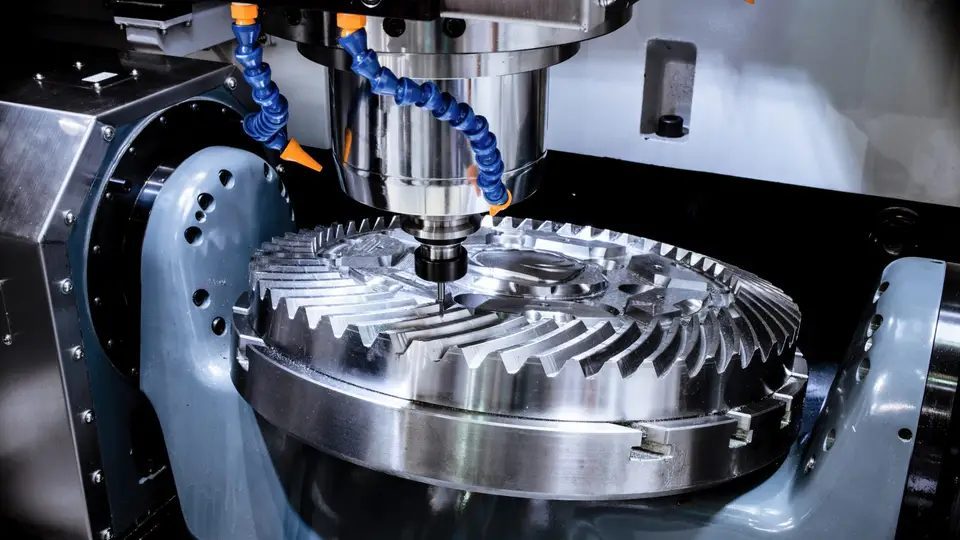
Our stainless steel mirror finishing now combines both routes. Mechanical polishing brings the part to a reflective Ra ≤0.6 μm, or 8K Ra 0.2 μm on request, where the face is visible. Electrolytic polishing then smooths and passivates complex or fluid-contact surfaces where cleanability matters more than shine. The two are planned together during DFM, so the part gets the best of both without paying for mirror everywhere.
| Method | Mechanism | Ra result | Best for |
|---|---|---|---|
| 8K mechanical polish | Abrasive mops to mirror | Ra 0.2 μm bright | Visible, premium, reflective faces |
| Electrolytic polishing | Electrochemical, removes layer | Ra ~0.2 to 0.4 μm, matte-bright | Cleanability, passivation, crevice-free |
| Passivation only | Chemical oxide stabilising | No change to Ra | Corrosion resistance, no shine |
Company CNC precision component
CNC Precision Machining Sets the Base for Electrolytic Polishing
Polish reveals; it does not repair.
The single biggest factor in a clean electrolytic-polished part is the quality of the machined blank. Our CNC precision machining discipline, run on 60+ machines in our 4,000 m² Dongguan plant, holds the geometry — ±0.005 mm as standard — that lets finishing succeed on the first attempt instead of after endless rework. Electrolytic polishing smooths a micro-layer; it cannot fix a blank that is out of flatness or poor geometry.
Tolerance and geometry that protect the finish
- Tight tolerance CNC
- Machining held to ±0.005 mm, verified by in-process and final measurement
- Flatness
- The deviation of a surface from a perfect plane; critical before finishing
- Geometric form
- Roundness, cylindricity and position that decide if a part seats cleanly
- First-article inspection (FAI)
- A documented proof run before full production begins
| Tolerance band | Typical application | Our control |
|---|---|---|
| ±0.005 mm | Medical, aerospace, fluid-path seals | Standard on all CNC lines |
| ±0.01 mm | Coffee-machine and consumer housings | Standard, faster cycle |
| Ra ≤0.6 μm | Mirror-finished visible surfaces | Standard stainless mirror |
| Ra 0.2 μm (8K) | High-visibility medical or premium parts | On request |
Surface Finish Grades: From As-Machined to 8K Mirror
Pick the grade by function, not by shine.
Not every face needs a mirror. In fact, over-finishing a hidden structural face only adds cost and lead time. The right move is to match the surface finish grade to the job: structural faces can stay as-machined, handled faces get a brushed grain, and only visible or cleanability-critical faces earn a mirror or electrolytic polish.
| Grade | Ra | Appearance | Best for |
|---|---|---|---|
| As-machined | Ra 1.6 μm | Tool marks | Brackets, internal structure |
| Brushed | Ra 0.4 to 0.8 μm | Satin grain | Handles, enclosures |
| Standard mirror | Ra ≤0.6 μm | Reflective | Instruments, fluid parts |
| 8K mirror / electropolish | Ra 0.2 μm | Near-perfect, crevice-free | Premium, medical, food |
Pros
- Brightest, most premium mechanical look
- Electropolish gives best cleanability and passivation
- Lowest bacterial adhesion on fluid paths
- Strong brand-perception signal
Cons
- Highest cycle time and cost
- Shows every handling mark
- Needs a near-perfect base blank
- Over-spec if used on hidden faces
Company CNC precision component
Electrolytic Polishing vs Mechanical Mirror: A Buyer Guide
Two routes to a bright, clean surface.
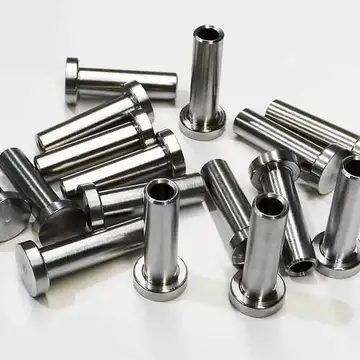
When engineers ask for a bright, clean stainless surface they usually mean one of two things: a mechanically polished 8K mirror or an electrolytically polished passivated surface. They are not the same, and picking the wrong one costs you time and money. The 8K mirror is mechanical, bright and reflective; electrolytic polishing is electrochemical, removes a thin surface layer and improves passivation more than shine.
| Need | Pick mechanical 8K | Pick electrolytic polishing |
|---|---|---|
| Maximum reflective brightness | Yes — visible premium | Matte-bright only |
| Cleanability, passivation | Less than electropolish | Yes — crevice-free |
| Complex internal passages | Cannot reach | Yes — no line-of-sight needed |
| Cost-sensitive visible part | Often enough | Adds a step |
- Choose 8K mechanical mirror if the face is visible and you need maximum reflective brightness
- Choose 8K mechanical mirror if the part is a premium consumer or instrument component
- Choose electrolytic polishing if cleanability and passivation matter more than shine
- Choose electrolytic polishing for complex internal passages you cannot mechanically polish
Mirror Finishing Capacity: 60+ Machines for OEM Volume
One floor, every grade, at volume.
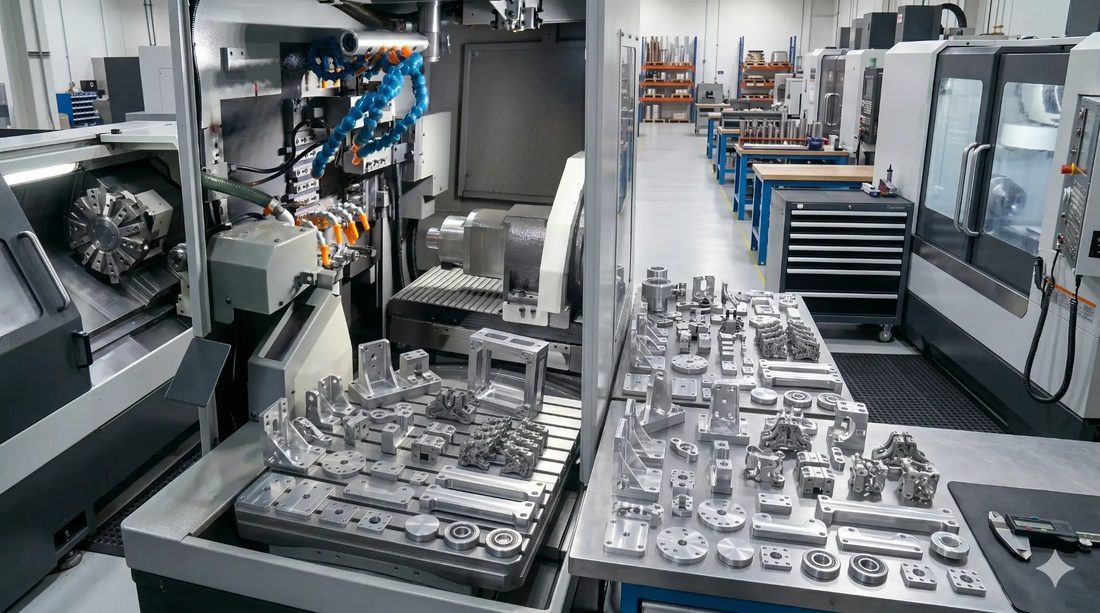
Capacity is only useful if it covers the whole product curve. Our 60+ machines and 4,000 m² floor run custom CNC parts from a 200-piece validation through pilot to 500,000 parts a month, so the prototype and the mass run share identical process control — and identical finishing discipline, mechanical or electrolytic. That removes the classic risk of a prototype shop handing off to a volume shop that cannot repeat the result.
- Send the drawing and the real fit tolerance your assembly needs
- State the target finish grade (Ra ≤0.6 μm, 8K Ra 0.2 μm, or electropolish)
- Flag any material certificate and ASTM A967 passivation need
- Share expected volume so we route prototype vs mass cell
- Confirm batch traceability and FAI before full run
- Plan the ramp from validation to 500K/month with one supplier
Company CNC precision component
Why Food and Medical Buyers Choose LusterControl's Electrolytic Polishing in 2026
One floor, every grade, documented quality.
The reason food-contact and medical buyers consolidate with us is the same across programs: LusterControl runs electrolytic polishing as a standard capability on one Dongguan source-factory floor, so a 200-piece validation gets the identical Ra ≤0.6 μm and ASTM A967 passivation as a 500,000-piece run. We serve 14 industries from 60+ CNC machines, 4,000 m² of zoned floor, and a monthly capacity of 500,000 precision parts, with annual output now exceeding ¥20 million.
Our quality ladder is consistent: ISO 9001 certified, ISO 13485 completed, and IATF 16949 in progress, applied from stainless steel mirror finishing to medical and aerospace programs. Learn more in our CNC machining guides, read about Dongguan Licun Technology, or explore our electrolytic polishing and other capabilities on the home page.
A bright surface sells the product; a passivated, crevice-free surface keeps the user safe — and the best parts have both.
Company CNC precision component
Company CNC precision component
Company CNC precision component
Company CNC precision component
FAQ: electrolytic polishing & Company Buyer Questions
A: It adds an electrochemical smoothing and ASTM A967 passivation route to our mechanical mirror cells, so we can deliver both a brilliantly reflective 8K face (Ra 0.2 μm) and a crevice-free, passivated food- or medical-grade surface — sometimes on the same part — at up to 500,000 pieces a month.
A: Electrolytic polishing is electrochemical, removes a thin surface layer and improves passivation and cleanability more than shine, and reaches internal passages with no line of sight. A mechanical 8K mirror is abrasive polishing to a bright Ra 0.2 μm reflective face, best for visible premium parts.
A: A smoother stainless surface resists bacterial adhesion, simplifies cleaning validation, and seals better on fluid-path mating faces. That is why medical, food-contact and coffee-machine parts benefit most from our mirror finishing and electrolytic polishing.
A: Yes. Our tight tolerance CNC lines hold ±0.005 mm as standard, verified by in-process and first-article inspection, and the same control applies from prototype to 500,000-piece runs. Geometry is locked at machining before any finishing begins.
A: We are ISO 9001 certified, ISO 13485 completed, with IATF 16949 in progress. Every lot ships with incoming batch traceability and material certificates, audit-ready on request under the relevant standard.
A: Send us your drawing with the real fit tolerance, target finish grade (Ra ≤0.6 μm, 8K Ra 0.2 μm, or electropolish), any material certificate or ASTM A967 passivation need, and expected volume. We return a free DFM review, run a first-article inspection, and route you from prototype to volume on one quality-controlled floor.
Send us your drawing for a free DFM review, and our Dongguan engineering team will confirm the right surface finish — mechanical 8K mirror, electrolytic polishing, or both — the CNC precision machining tolerance, and the passivation grade your next food- or medical-grade stainless part needs, scalable to 500,000 pieces a month.
Request a Free CNC Quote