Fluid Control Valves: Why Mirror Seal Surfaces Matter (2026)
If you specify fluid control valves, you have probably spent more time on the body material than on the surface the seal actually touches. That is the mistake. A valve body can be beautifully cast 316L and still weep at the seat, because the leak path is the seal surface — the machined face that compresses the gasket or O-ring — not the bulk metal behind it. Most field leaks are surface problems wearing a material alibi.
This 2026 buyer's guide is written from the purchasing side of the table. We explain why the mirror seal surface decides whether a valve is leak-free for a season or a decade, what seal surface finishing actually buys you, and how stainless steel mirror finishing and manifold blocks fit the same discipline. By the end you should be able to put the right Ra number and seat tolerance on the drawing instead of hoping.
The practice described here is how Dongguan Licun Technology (brand LusterControl) machines CNC fluid parts daily — the same 60-machine, 4,000 m2 Dongguan source factory that holds +/-0.005 mm seats for medical, automotive and semiconductor work under ISO 9001 and ISO 13485 control.
Table of Contents
- 1. Valve Bodies: Why the Seal Surface Decides Leak-Free Performance
- 2. Seal Surface Finishing: From Rough Machined to Mirror
- 3. Stainless Steel Mirror Finishing for Fluid Contact Surfaces
- 4. Manifold Blocks: Mirror Seats in Multi-Port Assemblies
- 5. CNC Fluid Parts: Holding the Seat to ±0.005 mm
- 6. Valve Bodies vs Manifold Blocks: Where Mirror Finish Matters Most
- 7. Seal Surface Finishing Buyer's Checklist
- 8. Stainless Steel Mirror Finishing: Red Flags in a Valve Supplier
- 9. CNC Fluid Parts: LusterControl's Mirror-Seal Discipline
Fluid Control&Valve AI part image
Valve Bodies: Why the Seal Surface Decides Leak-Free Performance
The leak path is the face, not the metal.
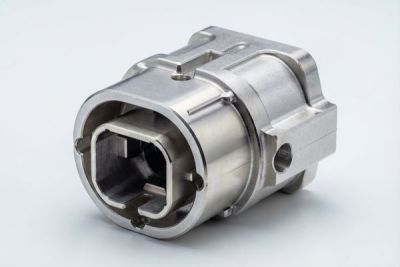
A valve body is the housing; the seal surface is the mating face that compresses the elastomer and holds pressure. When that face is rough, the gasket bridges the peaks and traps a micro-channel of fluid underneath. Pressure finds the channel. The body grade never enters the equation — the surface finish does. Buyers who obsess over 316L versus 304 and ignore Ra on the seat are solving the wrong variable.
Roughness is the leak budget
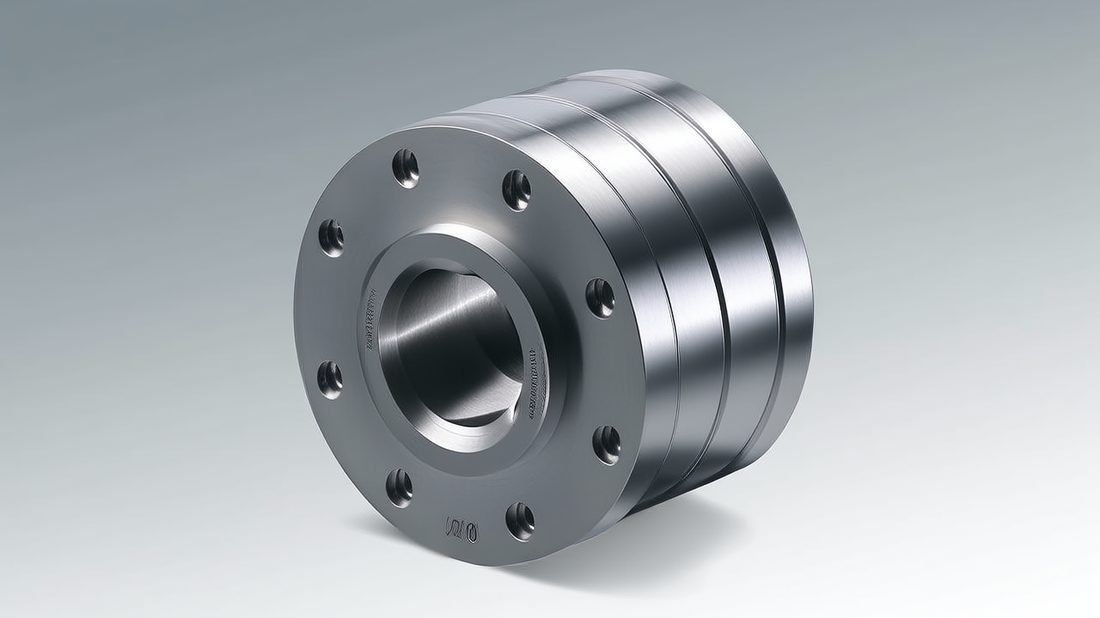
A standard machined face around Ra 0.8–1.6 µm leaves exactly the peaks a gasket cannot fully bridge. Drop that to a mirror seal surface near Ra 0.2 µm (our 8K tier) and the gasket meets a near-continuous plane, so the seal squeezes uniformly and the leak channel closes. The difference between a weeping valve and a silent one is often a few tenths of a micron of roughness on one face.
Fluid Control&Valve AI part image
Seal Surface Finishing: From Rough Machined to Mirror
Finish is a spec, not a adjective.
Buyers wreck their own valves by writing 'mirror finish' with no number. Every shop quotes a different surface, and the gasket meets whatever it meets. Seal surface finishing has to be specified as an Ra target tied to the contact face, plus the geometry truth underneath it. Without the number, you are buying hope.
The finish ladder for fluid contact
| Finish tier | Roughness (Ra) | Seal behavior | Typical fluid part |
|---|---|---|---|
| As-machined | Ra 0.8–1.6 µm | Bridges poorly, micro-leaks | Non-contact brackets |
| Standard mirror | Ra <= 0.6 µm | Good, gasket seats evenly | Valve bodies, bonnets |
| 8K mirror | Ra 0.2 µm | Excellent, near-zero channel | Seats, manifold faces |
| Electropolished + ASTM A967 | Ra 0.2 µm + passive film | Best corrosion + seal | Medical / high-purity fluid |
For any part in the fluid path, stainless still needs a passive oxide film to resist pitting, especially with chemicals or warm water. We passivate per ASTM A967 after finishing, so the seal surface you approve is the surface that survives the duty cycle, not just the first pressure test.
Stainless Steel Mirror Finishing for Fluid Contact Surfaces
Mirror is hygiene and seal, not cosmetics.
On fluid contact surfaces, stainless steel mirror finishing does two jobs at once: it gives the gasket a continuous plane to seal against, and it leaves a surface that resists fouling and cleans without trapping media. A rough bore in a dosing valve harbours residue; an 8K mirror bore wipes clean. For food, pharma and high-purity water that is the difference between a clean CIP and a biofilm.
When 8K mirror is worth the cycle time
- Seats and faces that must hold pressure without weeping
- Bores in contact with food, pharma or high-purity fluid
- Parts cleaned in place where residue cannot be tolerated
- Valves with a long duty life and a low-return expectation
Fluid Control&Valve AI part image
Manifold Blocks: Mirror Seats in Multi-Port Assemblies
A manifold is many seats, one leak budget.
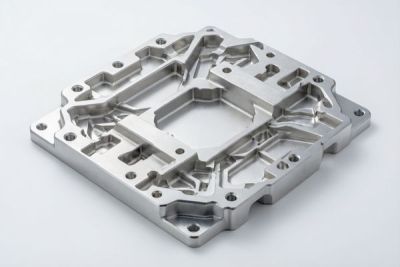
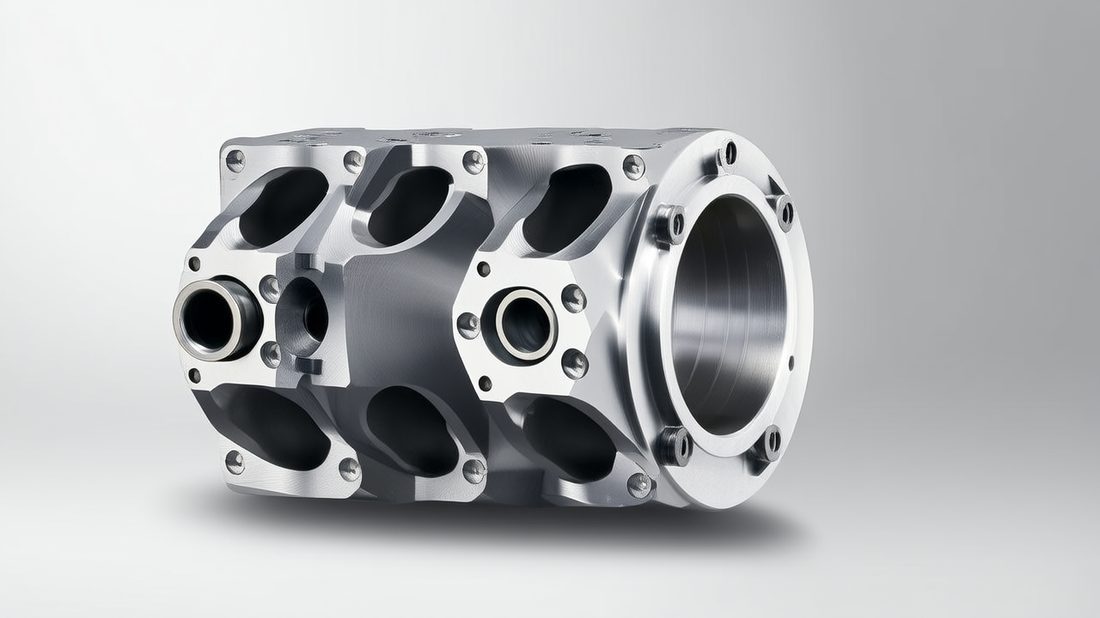
Manifold blocks are where fluid control gets unforgiving. One block carries a dozen ports, each with its own seat and seal surface, and a single rough face is a leak the whole assembly inherits. Because the ports share a common body, a wavy seat does not fail alone — it bleeds across the block. Mirror finishing every seat in one setup is what keeps a manifold quiet.
One setup, every seat references the same datum
| What the manifold needs | Routed process risk | One-setup mirror machining |
|---|---|---|
| Seat-to-seat flatness | Drifts with re-fixture | Locked in one datum |
| Port bore concentricity | Hard to hold across ports | Cut in one cell |
| Seal surface Ra | Tool access limits polish | 8K mirror reachable |
| Traceability of seats | Scattered records | Batch-level, audit-ready |
On a turn-mill compound center the seat faces and port bores of a manifold block are finished in one coordinated flow, so every seal surface references the same axis. That is why LusterControl runs manifold blocks on the same rigid cells used for medical and semiconductor work, where a leaked port is never an option.
CNC Fluid Parts: Holding the Seat to ±0.005 mm
Geometry first, then mirror.
CNC fluid parts live or die on the seat. The tolerance that matters is not the OD — it is the seat position and the bore-to-seat relationship, held to +/-0.005 mm so the gasket compresses the same way every time. A beautiful Ra on a seat that is 0.03 mm out of position still leaks, because the load is uneven. Geometry is the floor; finish is the ceiling.
Probe, finish, verify
On a modern cell a touch probe measures the seat and bore in place, the controller corrects the next cut before unchuck, and the lot ships with a CMM report. That closed loop is what turns 'capable machine' into 'capable CNC fluid parts.' LusterControl couples it with incoming-batch traceability, so the bar stock behind your valve body is documented and any deviation ties to a lot, not a finger-point.
Fluid Control&Valve AI part image
Valve Bodies vs Manifold Blocks: Where Mirror Finish Matters Most
Spend the mirror where the seal lives.
Buyers sometimes ask for 8K mirror everywhere 'to be safe.' That wastes cycle time on faces nobody seals against. The honest call is to mirror the seal surfaces and leave the structural faces at a sensible machine finish. Valve bodies and manifold blocks both want mirror seats; the bodies' outer walls and bolt pads do not.
| Surface | Finish it needs | Why |
|---|---|---|
| Seat face (valve body) | Ra 0.2 µm 8K | This is the leak path |
| Port bore (manifold) | Ra 0.2 µm 8K | Fluid contact + cleanability |
| Bolt pads / outer wall | Ra <= 0.8 µm | Structural only, no seal |
| Thread roots | Clean deburr | No crack start, no chip trap |
Seal Surface Finishing Buyer's Checklist
Seven items to put on the valve drawing.
- Ra target on every seal surface (not 'mirror' — a number)
- Seat position and bore-to-seat tolerance, in microns
- Underlying flatness / waviness spec, not just roughness
- Material grade and ASTM A967 passivation if stainless in fluid path
- Which faces are structural (skip the mirror) vs sealing (mirror them)
- Operating pressure and media so finish is chosen correctly
- Volume, phasing and quality paperwork: CMM report, first-article, batch traceability
Common mistakes buyers make
- Writing 'mirror finish' with no Ra number, so quotes diverge
- Mirroring structural faces and skipping the actual seat
- Forgetting passivation, then wondering why stainless pits in service
- Specifying only OD tolerance and hoping the seat 'comes out fine'
- No batch traceability, so a field leak cannot be tied to stock
Send those seven items and a supplier can run a free DFM review and tell you which faces earn the 8K mirror and which are wasting cycle time. That conversation before cutting beats a leak report after shipment. Start one on our inquiry page.
Fluid Control&Valve AI part image
Stainless Steel Mirror Finishing: Red Flags in a Valve Supplier
What a qualified fluid shop shows without asking.
- No Ra reading on the seal surfaces you specified
- No measured seat position, only a blanket tolerance
- No mill cert for the stainless grade on the lot
- Passivation (ASTM A967) treated as optional for fluid-path stainless
- No batch traceability tying a leak to stock and process
- Vague 'high precision' claims with no micron band or datum
CNC Fluid Parts: LusterControl's Mirror-Seal Discipline
Valves inherit the floor's hardest standard.
LusterControl machines CNC fluid parts the way we machine medical and automotive seats — because the discipline is identical. Rigid turn-mill and 5-axis cells cut the bore, the seats and the threads in one setup so concentricity is locked by the machine, then we mirror-finish the seal surfaces and passivate per ASTM A967. Every lot ships with material certs, CMM data and first-article inspection under ISO 9001 and ISO 13485 control, with IATF 16949 in progress.
One house from drawing to volume
With 60+ CNC machines across a 4,000 m2 Dongguan source factory at 500K parts per month, the same cells that build valve bodies and manifold blocks also run parts held to medical and automotive discipline — so your fluid control valves leave production-ready, not prototype-lucky. The cross-pollination is the point: the hardest standard on the floor lifts every part that touches it.
Fluid Control&Valve AI part image
Fluid Control&Valve AI part image
Fluid Control&Valve AI part image
Fluid Control&Valve AI part image
FAQ: valve bodies & Fluid Control&Valve Buyer Questions
A: The leak path is the machined face that compresses the gasket, not the bulk metal of the body. A rough face leaves peaks the elastomer cannot bridge, so fluid finds a micro-channel underneath. A mirror seal surface near Ra 0.2 µm gives the gasket a continuous plane, closing the channel regardless of whether the body is 304 or 316.
A: Specify a number, not the word 'mirror.' Standard mirror at Ra <= 0.6 µm seats the gasket evenly; 8K mirror at Ra 0.2 µm gives near-zero leak channel and is best for seats, manifold faces and fluid-contact bores. Always pair the Ra with an underlying flatness or waviness spec, because a wavy seat leaks before a rough one.
A: Mirror every seal surface that actually compresses a gasket — which is every port seat in a manifold. Because the ports share one body, a single rough seat bleeds across the block. Cutting all seats in one setup on a turn-mill cell keeps them referenced to the same datum, so the whole manifold stays quiet.
A: Our cells hold the seat position and bore-to-seat relationship to +/-0.005 mm, with Ra 0.2 µm (8K mirror) achievable on seal surfaces. Bores, seats and threads are cut and finished in one setup so concentricity is locked by the machine, and every lot ships with CMM reports and first-article inspection.
A: Yes, for any stainless in the fluid path. Passivation per ASTM A967 rebuilds the corrosion-resistant oxide film after finishing, so the seal surface resists pitting in chemicals or warm water. It also leaves a clean, bare, passive face for the gasket to meet — no coating step that could shift the seat.
A: No Ra reading on the seat, no measured seat position, no mill cert for the grade, passivation treated as optional, and no batch traceability. Any of those means the shop is quoting a shape, not a seal — and the cheapest valve body is the one that weeps on the test bench.
Send us your valve body or manifold block drawing for a free DFM review and a realistic lead-time quote — we will flag the seats and seal surfaces that actually decide leak-free life.
Request a Free CNC Quote