Fluid System Makers Push for Tighter Pump Shaft Tolerances (2026)
If you specify or buy rotating fluid systems in 2026, you have probably watched the pump shaft tolerance box on your drawing shrink. What used to read ±0.02 mm on a journal is now ±0.01 mm, and on seal-critical diameters it is sliding toward ±0.005 mm. At the same time, seal-seat surface finish requirements have jumped from a casual Ra 0.8 μm to mirror-grade Ra 0.2–0.4 μm. The pressure to tighten is real, and it is coming from every direction at once: higher system pressures, electrified coolant and hydrogen loops, longer maintenance intervals, and leakage rules that no longer forgive a sloppy seal seat.
This article explains why pump shaft tolerances are tightening, what tight tolerance CNC precision machining actually has to do to hold those numbers, how material and finish choices decide leakage and life, and — most importantly for you as a buyer — what to verify and what mistakes to avoid before you release a purchase order. We write it from the shop floor up: Dongguan Licun Technology Co., Ltd. (brand LusterControl) has machined stainless steel parts for fluid control and other demanding industries since 2015, so we see these tolerance shifts on real orders, not in theory.
By the end you will have a working decision framework and a seven-point sourcing checklist you can send straight to a supplier. If you already have a drawing, the fastest next step is a free DFM review — but first, let's understand what is changing and why it matters to your lead time, yield and warranty exposure.
Table of Contents
- 1. Why Pump Shafts Now Need Tighter Tolerances in 2026
- 2. How Tight Tolerance CNC Machining Holds Pump Shaft Geometry
- 3. Stainless Steel Parts for Fluid Control: Material Choices
- 4. Fluid Control Components: Seal Surface Finish Requirements
- 5. CNC Precision Machining vs Ground Shafts: A Buyer's Comparison
- 6. Pump Shafts Inspection: What Buyers Must Verify
- 7. Common Mistakes When Specifying Pump Shafts
- 8. Buyer's Checklist: Sourcing Reliable Pump Shafts
Fluid Control&Valve AI part image
Why Pump Shafts Now Need Tighter Tolerances in 2026
The pump shaft is the backbone of any rotating fluid system, and the backbone is being asked to do more.
Three forces are squeezing the pump shaft tolerance box at once. First, system pressure keeps climbing: electrified coolant pumps, hydrogen recirculation loops and high-pressure cleaning units all run harder than the legacy units they replace. Higher pressure magnifies every micron of runout into measurable leakage and cavitation noise. Second, maintenance intervals are stretching — operators now expect 8,000 to 20,000 service hours instead of a seasonal teardown, which means the seal seat has to stay flat and smooth far longer. Third, leakage and efficiency regulations have tightened, so the same seal that 'was good enough' five years ago now fails a spec audit.
What 'tighter' actually means on the drawing
- Runout (TIR)
- Total Indicator Reading — the maximum deviation of a surface as the shaft rotates. Drives seal and bearing life directly.
- Concentricity
- How closely a feature's axis aligns with the shaft's datum axis. Poor concentricity forces the seal to flex every revolution.
- Journal
- The precision-diameter section of the shaft that rides in a bearing or supports a seal.
- Seal seat
- The machined surface where the dynamic seal contacts the shaft. Its finish, not just its size, decides leakage.
Put in numbers buyers recognize: a general-purpose pump shaft journal that was specced at ±0.02 mm a decade ago is now commonly called out at ±0.01 mm, and seal-critical diameters on premium units are moving to ±0.005 mm. Surface finish on the seal seat has followed the same curve, from Ra 0.8 μm toward Ra 0.2–0.4 μm. These are not cosmetic upgrades — they are the difference between a seal that survives 20,000 hours and one that weeps at 2,000.
If you want to see how a source factory structures this capability, our about page lays out the ISO 9001 / ISO 13485 framework we apply to every fluid-control order.
Fluid Control&Valve AI part image
How Tight Tolerance CNC Machining Holds Pump Shaft Geometry
Geometry is won or lost in the setup, not at the measuring bench — and that is where tight tolerance CNC earns its keep.
The enemy of pump shaft runout is the re-chuck. Every time a shaft is removed and re-clamped to cut another feature, you add a small but cumulative error. Tight tolerance CNC precision machining attacks this by doing more in a single workholding: turn-mill compound centers cut OD and cross-holes in one clamp, 5-axis heads reach angled ports without resetting the part, and Swiss-type lathes support the bar right at the cut so long, slender shafts stay straight. The result is concentricity that a three-setup job simply cannot match.
Single-setup machining removes the re-chuck error
When the journal, seal seat, keyway and cross-drill are all produced without releasing the datum, the features stay referenced to the same axis. At LusterControl's Dongguan plant, 60 CNC machines including turn-mill and Swiss-type lathes let us hold ±0.005 mm on critical journals while keeping the whole part in one clamp.
In-process gauging beats end-of-line sorting
- Incoming bar stock is logged by heat lot for batch-level traceability before the first cut.
- Rough and finish passes run in one clamp on the turn-mill or Swiss-type machine.
- 5-axis heads machine angled features and ports without re-fixturing the shaft.
- In-process probing checks diameter and runout during the cycle, not after.
- A final CMM report confirms the journal, seal seat and concentricity against the drawing.
| Method | Typical tolerance | Setups | Best for |
|---|---|---|---|
| Turn-only (multi-setup) | ±0.02 mm | 3–4 | Low-cost, non-critical shafts |
| Turn-mill compound | ±0.01 mm | 1–2 | Shafts with cross-holes & ports |
| 5-axis + Swiss-type | ±0.005 mm | 1 | Seal-critical, slender, high-volume shafts |
You can review the full capability map, including 5-axis and turn-mill, on our blog and process pages before you brief a supplier.
Stainless Steel Parts for Fluid Control: Material Choices
Geometry gets the headlines, but the wrong stainless grade will quietly undo a perfect tolerance.
For pump shafts in wet service, 304 and 316L stainless dominate. 304 is the workhorse for general fresh-water and mild-chemical duty; 316L adds molybdenum for chloride and marine resistance, which is why it shows up in seawater, brine and coastal HVAC loops. For higher strength with moderate corrosion needs, 17-4PH brings precipitation-hardening muscle but machines less freely and needs careful heat treatment. The grade choice is not optional trivia — it decides whether your seal seat survives the fluid or the fluid wins.
| Grade | Corrosion resistance | Strength | Machinability | Typical use |
|---|---|---|---|---|
| 304 | Good | Moderate | Excellent | General fresh-water pump shafts |
| 316L | Excellent (chloride/marine) | Moderate | Good | Seawater, brine, food & beverage |
| 17-4PH | Good (after treatment) | High | Fair | High-load, corrosive-duty shafts |
- ASTM A967
- The US standard for passivation of corrosion-resistant steels — a chemical process that removes free iron from the surface to restore the passive chromium oxide layer.
- Passivation
- Not a coating: it cleans and activates the stainless so its native corrosion resistance returns after machining.
Passivation matters more than buyers expect. Any cut, grind or deburr disturbs the passive layer, so stainless steel parts in fluid service should be passivated to ASTM A967 after machining. LusterControl already supplies precision stainless components to brands such as De'Longhi, Donlim and Breville in food- and beverage-contact duty, where material certification and passivation are non-negotiable parts of the order, not upsells.
Material certs and passivation records should travel with the parts; we cover how to demand them in the inspection section below and on our inquiry page.
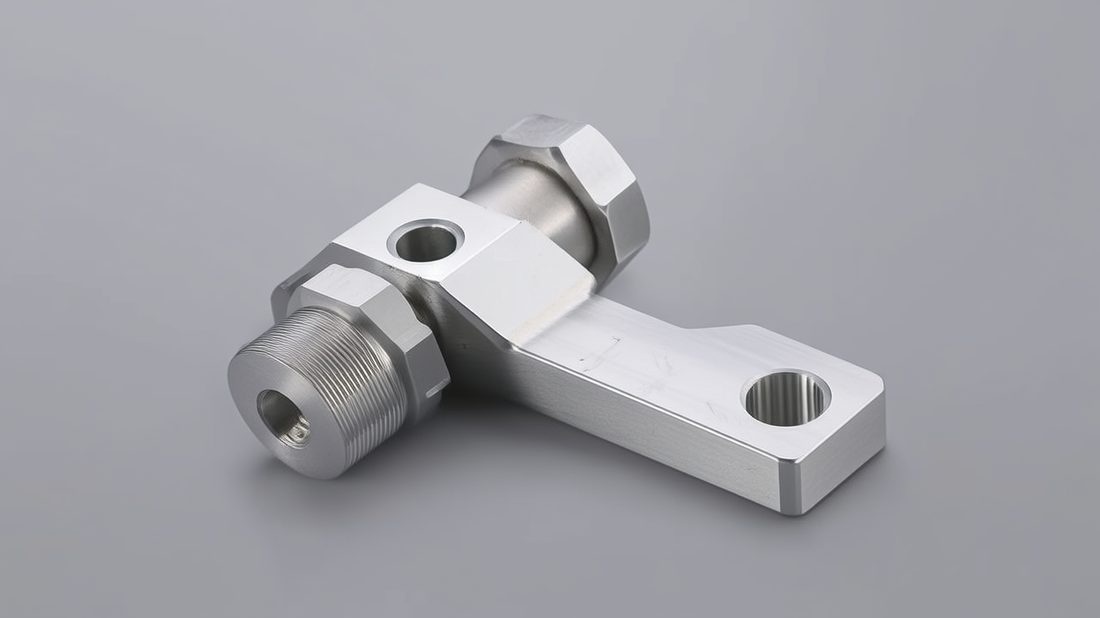
Fluid Control&Valve AI part image
Fluid Control Components: Seal Surface Finish Requirements
The seal seat finish is where leakage is won or lost — and mirror finishing is the lever most buyers under-specify.
A dynamic seal rides on a microscopic film of fluid trapped against the shaft. If the seal seat is too rough, the seal lip wears a groove; if it carries torn peaks, it leaks from day one. That is why fluid control components increasingly call for mirror-grade seats. LusterControl's standard mirror finish is Ra ≤ 0.6 μm, with the top tier reaching 8K mirror at Ra 0.2 μm — the level premium seal seats now ask for.
| Application | Seal-seat finish | Why |
|---|---|---|
| General transfer pumps | Ra 0.8 μm | Baseline leakage control |
| Pressure / process pumps | Ra 0.4 μm | Longer seal life under load |
| Premium / high-pressure seals | Ra 0.2 μm (8K mirror) | Maximum life, minimum weep |
Electropolishing vs mechanical mirror finishing
Pros
- Electropolishing smooths micro-peaks chemically and leaves a clean, passive-friendly surface.
- Mechanical mirror / superfinish gives a tightly controlled, repeatable Ra 0.2 μm seat.
- Both remove the torn layer left by the cutting tool.
Cons
- Electropolishing alone cannot guarantee a tight diameter tolerance — geometry still comes from CNC.
- Mechanical mirror adds a process step and cost if specified on every diameter.
- Over-finishing a non-seal diameter wastes money with zero leakage benefit.
Our deeper write-up on reaching Ra 0.2 μm on stainless is worth a read if you are setting a seat spec: 8K mirror finish on stainless steel.
CNC Precision Machining vs Ground Shafts: A Buyer's Comparison
Should you grind or CNC your pump shaft? The honest answer is 'it depends on the feature' — here is the decision logic.
CNC precision machining and cylindrical grinding are not enemies; they are tools for different parts of the tolerance band. Modern turn-mill and Swiss-type CNC holds ±0.005 mm comfortably, which covers the vast majority of seal-critical pump shaft journals. Grinding still wins when you need sub-micron roundness on a very hard, heat-treated shaft or a finish below what turning leaves. The mistake is assuming one method is universally 'better'.
| Factor | CNC precision machining | Cylindrical grinding |
|---|---|---|
| Tolerance | ±0.005 mm readily | Sub-micron possible |
| Lead time | Shorter (one process) | Longer (needs CNC blank first) |
| Geometry complexity | Ports, keyways, angles in one clamp | Round features mainly |
| Volume economics | Strong at 50K+/month | Better for low-volume ultra-fine |
| Cost per shaft | Lower for most specs | Higher, specialized |
- Choose CNC precision machining if your journal tolerance is ±0.005 mm or looser and the shaft has ports or keyways.
- Choose grinding if you need sub-micron roundness on a hardened, heat-treated shaft.
- Choose CNC if you need 50,000+ units a month — LusterControl's 4,000 m² plant runs that volume.
- Choose grinding if a mirror seat must be finished below Ra 0.2 μm after hardening.
- Choose a shop that does both, or sequences them, so you are not forced into one method.
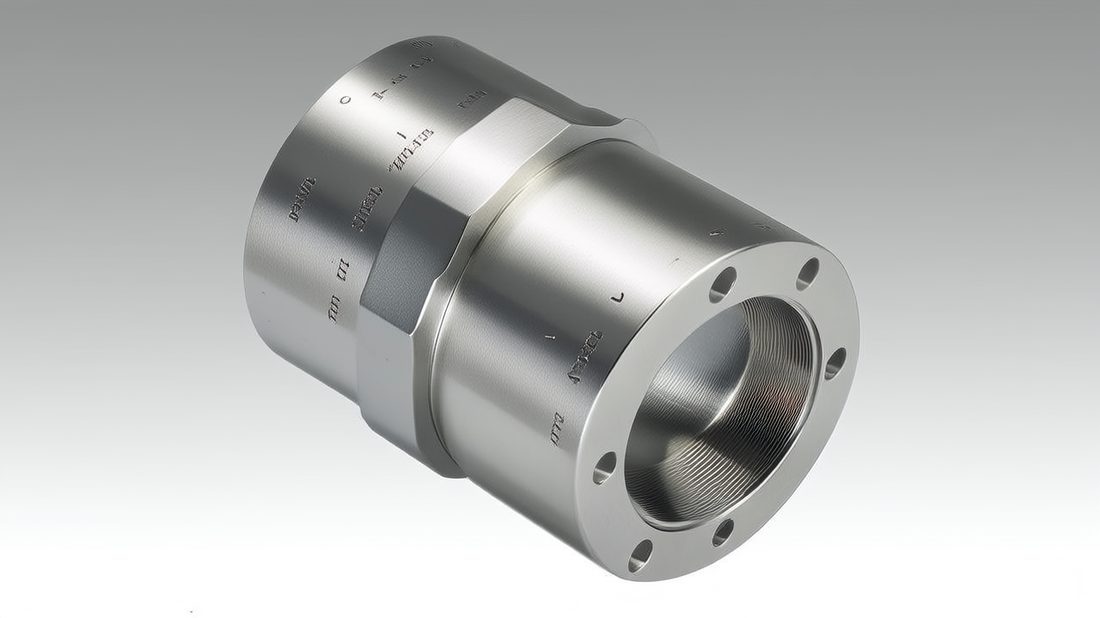
Fluid Control&Valve AI part image
Pump Shafts Inspection: What Buyers Must Verify
A tight tolerance on the drawing means nothing if you cannot prove it on the cert — so request the right documents up front.
Before you pay, you should be able to see the shaft's identity on paper. That means a material certificate (heat lot, grade, mechanicals), a first-article inspection report tying the first part to the drawing, a CMM report for the critical journal and seal seat, a passivation certificate for stainless in wet service, and batch traceability so any field failure can be wound back to its origin. Suppliers who resist sharing these are telling you something.
- Request the material certificate and confirm the grade matches the drawing (304, 316L, 17-4PH).
- Ask for a first-article (FAI) report mapped to your drawing callouts.
- Require a CMM report on journal diameter, runout and seal-seat finish.
- Demand an ASTM A967 passivation cert for any stainless part in fluid contact.
- Confirm batch-level traceability so a warranty claim can be traced to the heat lot.
| Document | What it proves | When you need it |
|---|---|---|
| Material certificate | Grade & heat lot | Always |
| FAI report | First part meets drawing | New part or revision |
| CMM report | Journal, runout, finish | Seal-critical shafts |
| Passivation cert (ASTM A967) | Corrosion layer restored | Stainless in wet service |
| Traceability record | Batch can be wound back | Safety / warranty parts |
Common Mistakes When Specifying Pump Shafts
Most pump shaft problems are designed in at the spec stage. Here are the errors we see most often.
- Over-tolerancing non-critical features — calling ±0.005 mm on a non-seal diameter just adds cost and lead time with zero leakage benefit.
- Ignoring surface finish on the seal seat — a perfect diameter with a rough seat still leaks.
- Omitting the passivation callout on 300-series stainless in wet duty — rust starts at the cut edges.
- Ambiguous runout callouts — 'make it round' is not a tolerance; specify TIR against a datum.
- No material certificate requirement — you cannot prove the grade you paid for.
- Forgetting batch traceability — a field failure becomes a guessing game instead of a fix.
If your current drawing reads 'tight tolerance everywhere,' that is the flag to request a DFM review before you quote. A few minutes of re-spec saves weeks of rework.
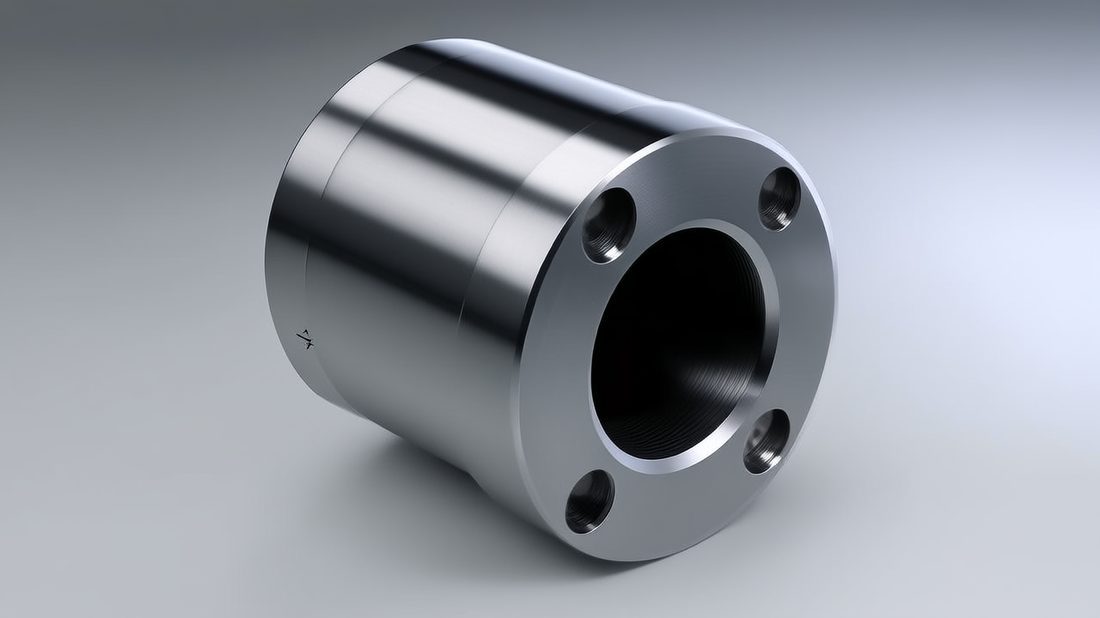
Fluid Control&Valve AI part image
Buyer's Checklist: Sourcing Reliable Pump Shafts
Seven points to send to any supplier before you release the PO — and the answers should be clear, not vague.
- Can you hold ±0.005 mm on the seal-critical journal in a single setup? (Ask how many re-chucks.)
- Which stainless grade do you recommend for my fluid, and will you certify it to the heat lot?
- Can you deliver Ra 0.2–0.4 μm on the seal seat via mirror finishing or electropolish?
- Will you passivate to ASTM A967 and supply the certificate for wet-service parts?
- What inspection docs ship with the order — FAI, CMM, traceability record?
- Do you run under a recognized quality system (ISO 9001 / ISO 13485)?
- What is your realistic monthly volume and lead time at my tolerance and finish?
If you want a second opinion on your drawing, send it for a free DFM review — we will flag over-toleranced features and confirm the finish your seal actually needs.
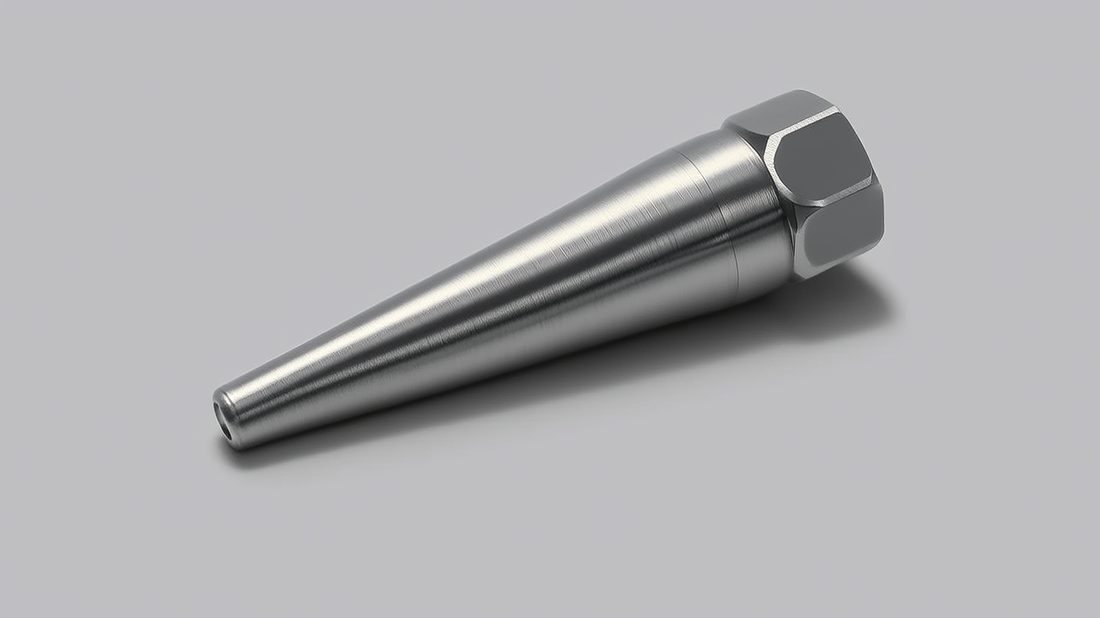
Fluid Control&Valve AI part image
Fluid Control&Valve AI part image
Fluid Control&Valve AI part image
Fluid Control&Valve AI part image
FAQ: pump shafts & Fluid Control&Valve Buyer Questions
A: Modern turn-mill and Swiss-type CNC precision machining holds ±0.005 mm on critical journals in a single setup. LusterControl applies this on fluid-control shafts; tighter sub-micron roundness would typically call for a follow-on grind.
A: Use 316L for chloride, marine and brine duty, and 304 for general fresh-water service. For high-load corrosive shafts, 17-4PH is an option. Always specify ASTM A967 passivation for wet-service stainless steel parts.
A: Usually not. CNC precision machining to ±0.005 mm covers most seal-critical journals, and a mirror finish or electropolish delivers the Ra 0.2–0.4 μm seal seat. Grinding is reserved for sub-micron roundness on hardened shafts.
A: Require a material certificate (heat lot + grade), a first-article report, a CMM report on journal and seal seat, an ASTM A967 passivation cert for wet service, and batch-level traceability. Suppliers under ISO 9001 / ISO 13485 should provide these as standard.
A: Yes. Dongguan Licun Technology (LusterControl) serves the fluid control industry among others, machining stainless steel pump shafts and related components to ±0.005 mm with mirror seal finishes, under ISO 9001 and ISO 13485, with IATF 16949 in progress.
A: General transfer pumps are fine at Ra 0.8 μm, process pumps at Ra 0.4 μm, and premium high-pressure seals at Ra 0.2 μm (8K mirror). Specify the mirror finish only on the seal seat to control cost.
Send us your pump shaft drawing for a free DFM review — we will confirm the tolerance and seal-seat finish your application actually needs, and quote a single-setup, fully documented build.
Request a Free CNC Quote