Premium Appliance Brands Specify Mirror Knob Shafts in 2026
If you design or source the control knobs on a premium coffee machine, a range cooktop or a smart-home panel, you have probably noticed the same request showing up on drawings this year: the knob shaft is no longer 'polished enough,' it has to be mirror-finished, and the surface is now called out with a real roughness number. Premium appliance brands in 2026 are quietly rewriting the spec for knob shafts, and stainless steel mirror finishing is the whole reason.
This article is written from the buyer's side. We explain what the new mirror-finish spec actually changes for your coffee machine parts, why brass machining and stainless steel are both back on the table, and how a quietly held +-0.005 mm tolerance is what keeps a knob turning silently after ten thousand cycles. If you are a procurement engineer, a mechanical designer or a brand owner, this is the spec conversation you will have with your machine shop this quarter.
Where we cite our own plant, the numbers are verifiable: 60+ CNC machines, a 4,000 m2 Dongguan source factory (expanded in 2026; the old 2,000 m2 floor is voided), 500,000 parts per month, ISO 9001 and ISO 13485 completed with IATF 16949 in progress, and real programs such as De'Longhi, Donlim and Breville.
Table of Contents
- 1. Why Premium Appliance Brands Specify Mirror Knob Shafts for Coffee Machine Parts
- 2. Stainless Steel Mirror Finishing: What the Ra 0.2 μm / 8K Spec Actually Buys You
- 3. Brass Machining vs Stainless Steel for Knob Shafts: A Buyer's Comparison
- 4. Smart Home Components: Why Knob Shaft Feel Decides Premium Perception
- 5. Custom CNC Parts: How ±0.005 mm Tolerance Keeps Knob Shafts Silent
- 6. Coffee Machine Parts Buyer's Checklist for Mirror Knob Shafts
- 7. Common Mistakes When Specifying Stainless Steel Mirror Finishing Knob Shafts
- 8. Custom CNC Parts Supply: Why De'Longhi, Donlim and Breville Choose Mirror Knob Shafts
Consumer Electronics&Smart Home AI part image
Why Premium Appliance Brands Specify Mirror Knob Shafts for Coffee Machine Parts
Because the knob shaft is the one part a customer touches every single day, and its surface decides whether the product feels premium or cheap.
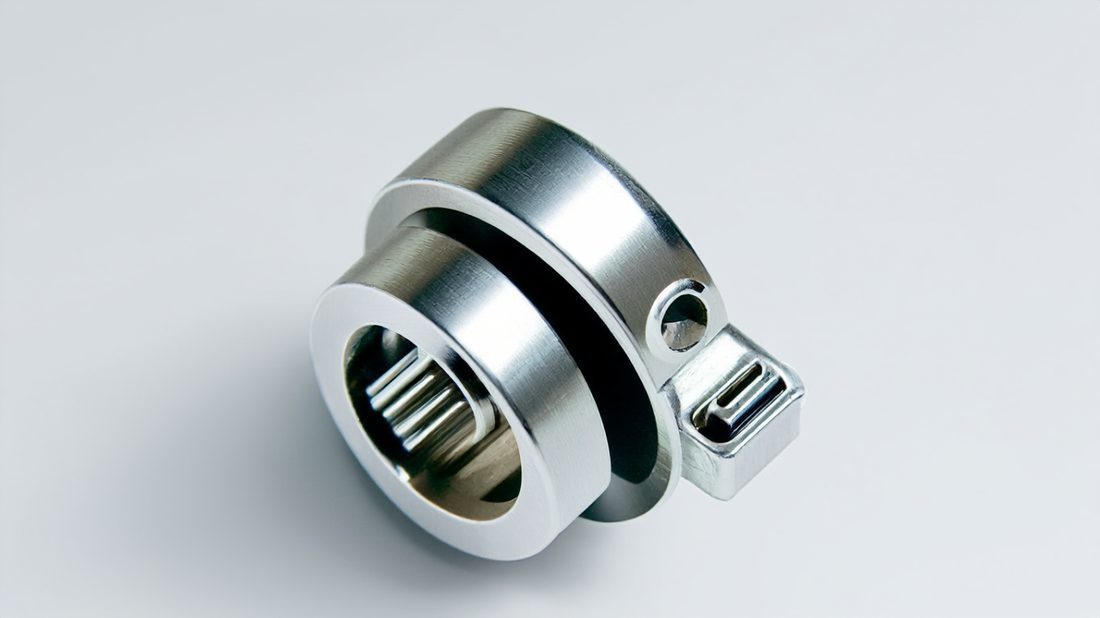
The driving force behind the new mirror-finish spec is deceptively simple. A coffee machine or a smart-home dial is judged by the hand before it is judged by the eye: the customer grips the knob, twists it, and forms an opinion about the whole appliance in the first second of contact. The shaft that the knob rides on sets that feel. When the shaft is rough, the knob drags, the detent feels gritty, and the product reads as budget, no matter how good the electronics are. Premium brands have decided that 'polished enough' is not a specification, and coffee machine parts now start with a hard surface-finish callout on the shaft.
- Knob shaft
- The cylindrical axle on which a control knob is pressed or screwed; it transmits rotation from the user's hand to the internal switch or valve.
- Coffee machine parts
- The precision components inside espresso and drip machines - brew-group shafts, steam-knob axles, flow-control spindles - where touch and corrosion resistance both matter.
- Mirror finishing
- A surface treatment that brings metal to a reflective, near-frictionless face, normally called out by a roughness average such as Ra 0.6 um or, at the ceiling, Ra 0.2 um (an '8K' mirror).
For a buyer, the practical meaning is that the knob shaft moved from a 'make it shiny' note to a first-class surface and tolerance on the drawing. The shops that win these programs are the ones that can hold the mirror finish and the concentricity in volume, not just on a single show part. The same discipline we apply to mission-critical dimensions is what a premium knob shaft demands, and you can see how we hold it in the +-0.005 mm tolerance guide.
Consumer Electronics&Smart Home AI part image
Stainless Steel Mirror Finishing: What the Ra 0.2 μm / 8K Spec Actually Buys You
A mirror face is not vanity - it is lower friction, cleaner crevices and a surface that resists corrosion in a steamy kitchen.
Heat leaves a cell through the thermal interface; heat leaves a knob shaft through its surface behavior. The resistance of a rotating interface - knob to bushing, shaft to seal - is governed mostly by how rough the shaft is. A standard mirror finish of Ra <= 0.6 um removes the high spots that catch and drag; an 8K mirror of Ra 0.2 um goes further and gives the shaft a surface that wipes clean and resists coffee oils, milk scale and steam. The table below shows why the roughness number on your drawing is worth arguing about.
| Surface finish (Ra) | Friction at the knob interface | What it means for your product |
|---|---|---|
| As-machined (~1.6 um) | High | Gritty detent, visible tool marks, oils trapped in grooves |
| Standard mirror (Ra <= 0.6 um) | Low | Smooth twist, cleanable face, good for most premium knobs |
| 8K mirror (Ra 0.2 um) | Minimal | Silent, near-frictionless feel; best in wet, food-contact zones |
| Rough + coated | Unpredictable | Coating hides the roughness but peels where the shaft flexes |
Surface finish is only half of it. A mirror shaft that is not concentric still wobbles, and a wobble reads as 'loose' to the hand even when the part is dimensionally correct. We hold a standard mirror finish of Ra <= 0.6 um and a maximum 8K mirror of Ra 0.2 um, and we pair it with tight runout so the knob rides true. The combination of a controlled surface plus concentricity is what turns a shaft from 'a metal pin' into a premium coffee machine part.
Brass Machining vs Stainless Steel for Knob Shafts: A Buyer's Comparison
The shaft material is a genuine engineering trade, not a default - brass feels warmer and machines freely, stainless survives the kitchen.
Brass machining and stainless steel both appear on premium knob shafts, and the choice is a real trade rather than a catalog default. Brass is softer, machines to a beautiful natural luster without aggressive polishing, and damps the tiny vibrations that make a knob feel 'dead' and precise. Stainless is harder, resists the acids and steam of a coffee bar, and survives a dishwasher-adjacent life without staining. The table is the short version a buyer should keep on the desk.
| Factor | Brass machining | Stainless steel mirror finishing |
|---|---|---|
| Natural surface | Warm, golden luster straight off the tool | Needs mirror finishing for the premium look |
| Corrosion in wet zones | Good, but tarnishes near acids | Excellent, ideal for steam and coffee oils |
| Machining speed | Faster, free-cutting | Slower, work-hardens if pushed |
| Food-contact rating | Lead-free grades required | Naturally food-safe, ASTM A967 passivation |
| Best fit | Dry, tactile, design-led knobs | Wet, kitchen and cafe environments |
Pros
- Brass machining gives a knob a warmer, more 'expensive-in-the-hand' feel with less polishing effort
- Stainless steel mirror finishing survives the steam, milk and acids of a real coffee bar without staining
- Both can be held to +-0.005 mm so the knob rides concentric on its bushing
Cons
- Brass tarnishes near citrus and acidic cleaners unless it is clear-coated
- Stainless costs more machine time and needs real mirror finishing to look premium
- Mixing the two without a corrosion plan invites galvanic staining at the joint
Whichever you choose, the shaft is a CNC part that has to be machined, not just turned. The seat, the flat for the setscrew and the shoulder that locates the knob all have to be held so the knob never walks off-axis. That is the same relationship control we apply across automotive and medical work, and it is why a premium knob feels tight on day one and day ten thousand.
Consumer Electronics&Smart Home AI part image
Smart Home Components: Why Knob Shaft Feel Decides Premium Perception
In smart-home panels the knob is often the only mechanical thing a user touches - so its feel carries the whole brand.
Smart home components are a strange category: a thermostat or a lighting panel may be 90% screen and silicon, but the 10% that is mechanical - the dial, the shaft, the detent - is what the hand remembers. When a premium smart-home brand wants its panel to feel like a piece of instrument, not a toy, it specifies a mirror knob shaft with a defined detent, because the alternative is a knob that feels loose the first time a customer turns it. The requirement table below is what we see brands asking for in 2026.
| Smart home component requirement | Why the shaft matters | What a good shop delivers |
|---|---|---|
| Defined detent feel | The click that says 'I am precise' | Concentric shaft + matched bushing, no rattle |
| Quiet rotation | No squeak over the product life | Mirror finish Ra <= 0.6 um, lubricity built in |
| Consistent torque | Same feel on unit 1 and unit 10,000 | +-0.005 mm held across the batch |
| Premium look | Reads as instrument, not toy | 8K mirror Ra 0.2 um where the shaft shows |
| Long life | No slop after years of use | Stable material, controlled runout |
- Choose brass machining if your knob is dry, design-led and you want a warm tactile feel with minimal polishing.
- Choose stainless steel mirror finishing if the knob lives in a kitchen, a bathroom or any humid smart-home zone.
- Choose an 8K Ra 0.2 um face only on the exposed part of the shaft - mirror the visible section, machine the hidden section to cost.
- Choose a single source that machines the shaft and the mating bushing so the feel is owned by one process, not split between two.
A panel that feels premium is a systems problem, not a plating problem. When the shaft, the bushing and the detent spring are made and measured together, the knob feels identical across every unit - and that consistency is what a brand audit is really checking for. Our take on holding that consistency is covered in the batch traceability guide.
Custom CNC Parts: How ±0.005 mm Tolerance Keeps Knob Shafts Silent
A silent knob is a concentric knob - and concentricity is a tolerance problem long before it is a polishing problem.
Most 'noisy knob' complaints are not noise at all - they are runout. When the shaft diameter varies by a few microns from one side to the other, or the shoulder that locates the knob is off-axis, the knob rides eccentric on its bushing and the detent scrapes instead of clicks. A custom CNC part that holds +-0.005 mm on diameter and runout removes that error at the source, so the knob turns true and stays silent for the life of the appliance. The table shows the chain from tolerance to feel.
| Tolerance held | What it prevents | What the customer feels |
|---|---|---|
| Diameter +-0.005 mm | Slop or binding in the bushing | Knob seats with a precise, repeatable fit |
| Runout +-0.005 mm | Eccentric ride, scrape at detent | Silent, smooth rotation |
| Shoulder squareness | Knob sits crooked | Knob stands true on the panel face |
| Setscrew flat position | Knob walks off-axis | No drift after thousands of turns |
- Choose one datum from the shaft axis up through the shoulder and the flat, so every feature agrees on 'center'.
- Choose a single setup that turns the diameter and faces the shoulder together, removing the relationship error a second setup introduces.
- Choose relationship callouts (runout, squareness) over single diameters, because the knob only feels right relative to its own axis.
- Choose a first-article report that measures runout across the full length, not just at the gauge point.
This is where turn-mill and Swiss-type machining earn their keep: cutting the diameter, the shoulder and the flat in one setup removes the error that a multi-setup process quietly adds. The capability map behind our one-setup work is in the 5-axis and turn-mill guide.
Consumer Electronics&Smart Home AI part image
Coffee Machine Parts Buyer's Checklist for Mirror Knob Shafts
Run this seven-point check before the purchase order, not after the knobs come back feeling wrong.
The mirror-finish spec only protects you if you ask for the evidence that proves it. The checklist below is the gate we recommend a buyer run on every knob-shaft quote. If a shop answers all seven with documents, your risk on that order drops to almost nothing; if it stalls on two or three, those are the risks you price in or walk away from.
- Ask for the surface-finish callout on the shaft (target Ra <= 0.6 um, 8K Ra 0.2 um where exposed) and how it is measured, not just 'polished'.
- Ask for the runout spec and a full-length runout scan from the last batch, not a single gauge-point check.
- Ask for the diameter tolerance held to +-0.005 mm across the batch, not just on the first article.
- Ask for the material cert with exact grade - lead-free brass or food-safe stainless - plus ASTM A967 passivation where stainless is used.
- Ask whether the shaft and the mating bushing are made in one shop, so the feel is owned by one process.
- Ask for the detent and torque target the shaft is designed to support, so 'feel' is a number, not an opinion.
- Ask for lot-level traceability back to the source bar and inspection record, so a feel drift is answered with 'which lot, which machine'.
Common Mistakes When Specifying Stainless Steel Mirror Finishing Knob Shafts
Most bad-feeling knobs are designed in at the spec stage, not made wrong at the machine - here are the six that cost buyers the most.
- Calling out 'polished' with no Ra number, so the shop delivers a shaft that is shiny to them and wrong to your hand.
- Checking runout at one gauge point only, missing the bow that appears along the full shaft length after assembly.
- Tolerancing the shaft and the bushing as separate purchases, so the feel relationship never closes and the knob rides eccentric.
- Skipping the material cert, then wondering why a 'stainless' shaft stains next to an acidic citrus cleaner.
- Mirroring the entire shaft when only the exposed section shows, paying for 8K finish on metal nobody will ever see.
- Choosing the lowest price across two shops, then owning a knob feel that nobody will qualify or trace.
Start the spec conversation with our engineering team on the inquiry page, read the full capability picture on the about page, or browse the blog for deep dives across coffee-machine, medical, automotive and industrial-automation programs. Send your drawing and we will return a DFM review that names the material, the finish, the tolerance and the lead time before you commit to a purchase order.
Consumer Electronics&Smart Home AI part image
Custom CNC Parts Supply: Why De'Longhi, Donlim and Breville Choose Mirror Knob Shafts
The brands that set the spec are also the ones that audit the source hardest - here is what a mirror-knob program actually requires.
When a brand like De'Longhi, Donlim or Breville specifies a mirror knob shaft, it is not asking for a shiny pin - it is asking for a part that feels identical on every unit it ships worldwide, survives a kitchen, and can be traced back to the bar it was cut from. That is a supply-chain requirement, not a cosmetic one. The table is the short version of what a qualified source has to demonstrate.
| What the brand requires | What a qualified source demonstrates | Why it protects the brand |
|---|---|---|
| Identical feel, unit to unit | Batch-held +-0.005 mm and runout | No 'bad knob' returns from the field |
| Food-safe, wet-zone survival | Stainless + ASTM A967 passivation | No staining near coffee and citrus |
| Worldwide traceability | Lot-level bar-to-inspection record | A drift is answered with 'which lot' |
| Volume without drift | 60+ CNC, 500K parts/month | Scale without re-qualifying the feel |
Consumer Electronics&Smart Home AI part image
Consumer Electronics&Smart Home AI part image
Consumer Electronics&Smart Home AI part image
Consumer Electronics&Smart Home AI part image
FAQ: coffee machine parts & Consumer Electronics&Smart Home Buyer Questions
A: A knob shaft is the axle a control knob rides on, transmitting rotation from the user's hand to the internal switch or valve. Its surface finish matters because the user feels the shaft through the knob on the very first twist. A mirror finish of Ra <= 0.6 um (or 8K Ra 0.2 um where exposed) removes the high spots that make a knob feel gritty, and it also resists coffee oils and steam in a wet kitchen environment.
A: It depends on where the knob lives. Brass machining gives a warmer, design-led tactile feel and machines to a natural luster with less polishing, but it can tarnish near acids unless clear-coated. Stainless steel mirror finishing survives the steam, milk and citrus of a coffee bar without staining and is naturally food-safe with ASTM A967 passivation. Choose brass for dry, tactile knobs; choose stainless for any wet or kitchen environment.
A: Specify diameter and runout held to +-0.005 mm, plus squareness of the locating shoulder and a defined position for the setscrew flat. A silent knob is almost always a concentric knob - runout is what makes a detent scrape instead of click. Ask for a full-length runout scan of the last batch, not a single gauge-point check, to prove the shaft rides true in its bushing.
A: Only the exposed section needs the 8K Ra 0.2 um mirror. The hidden section that sits inside the bushing can be machined to a standard finish to control cost, as long as the runout and diameter tolerances are held across the whole length. Specifying 8K on metal nobody will ever see simply adds machine time and price without changing the feel.
A: Yes, and it is usually the safer route. Machining the shaft and the bushing in one shop keeps them on the same datum and inside one quality system, so the feel - concentricity, detent, torque - is owned by one process. Splitting them across two low-cost shops hands the relationship fit to nobody, and that is the most common cause of knobs that feel inconsistent between units.
A: Because a mirror knob shaft is a supply-chain requirement, not a cosmetic one: the brand needs identical feel across every unit shipped worldwide, food-safe survival in a kitchen, and lot-level traceability back to the source bar. LusterControl (Dongguan Licun Technology Co., Ltd.) brings 15 years of precision mirror machining, 60+ CNC machines, a 4,000 m2 plant, ISO 9001 / ISO 13485 with IATF 16949 in progress, and real programs with De'Longhi, Donlim and Breville. Send your drawing for a free DFM review and we will name the material, finish, tolerance and lead time before you order.
Send us your knob-shaft drawing for a free DFM review and we will name the material, the mirror finish, the +-0.005 mm tolerance and the lead time before you release a purchase order.
Request a Free CNC Quote