LusterControl Expands Pivot Arms Capacity for Robotics Clients (2026)
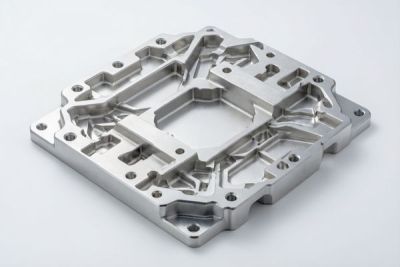
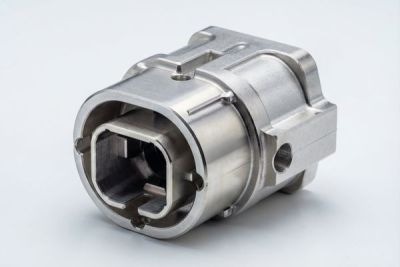
LusterControl has expanded its precision pivot arm capability for robotics clients, adding capacity and process depth at its Dongguan source factory. The move targets rising demand for the joints that actually decide how a robot arm, gimbal, actuator or articulated end-effector moves: a pivot arm that is not round where it must be round, not concentric where it must be concentric, or not repeatable across a batch quietly writes backlash, wobble and drift into the motion path. That is not a cosmetic defect. On a six-axis arm it shows up as end-point error you chase for weeks; on a gimbal it shows up as jitter the firmware can never fully cancel; on a surgical or lab robot it shows up as a repeatability number that fails first article.
For buyers, the practical upside is direct: one accountable partner that takes your pivot arm from raw bar or blank to finished, deburred, surface-treated, inspected, lot-traceable part, without the handoffs between turning, milling, finishing and inspection that quietly add cost, lead time and dimensional drift on a component most engineers treat as a simple turned boss until it costs them a rework loop.
This piece is written from the buyer's seat. We explain why the pivot arm, not the motor or the controller, often decides whether a robot repeats its motion the first time, what real specifications to demand, and how to avoid the sourcing mistakes that turn a good-looking pivot into a backlash problem you find during commissioning.
Table of Contents
- 1. Why Pivot Arms Decide Robotics Assembly Accuracy
- 2. Robotics CNC Parts: Capacity Expansion in 2026
- 3. How Pivot Arms Are Machined: A Buyer's View
- 4. CNC Precision Machining Behind Precision Pivot Arms
- 5. Tight Tolerance CNC: How We Hold +/-0.005 mm on Pivot Arms
- 6. Custom CNC Parts: Choosing the Right Pivot Arm Build
- 7. Buyer's Checklist for Robotics CNC Parts and Pivot Arms
- 8. Common Mistakes When Sourcing Precision Pivot Arms
- 9. Quality Framework Behind Robotics CNC Parts
- 10. Real Custom CNC Parts We Have Shipped
- 11. Protecting Your Design: NDA for Robotics CNC Parts
Robotics CNC precision component
Why Pivot Arms Decide Robotics Assembly Accuracy
The joint is the first thing that has to be right.
A robot is only as repeatable as the pivots that let its links rotate. The pivot arm that seats a bearing, the pivot that carries a load arm, the yaw or pitch shaft at a gimbal and the articulated joint on an end-effector all sit on the motion-critical path. If that pivot is not held round, concentric and located to a tight, repeatable budget, the link racks, the gimbal jitters, the end point drifts, and your part either passes a fit check and fails at commissioning or never clears first article on unit one. We have seen pivot arms that looked fine on a roundness check seed a 0.2 mm end-point error because the bore was out of true to the OD, not the diameter itself.
- Pivot Arms
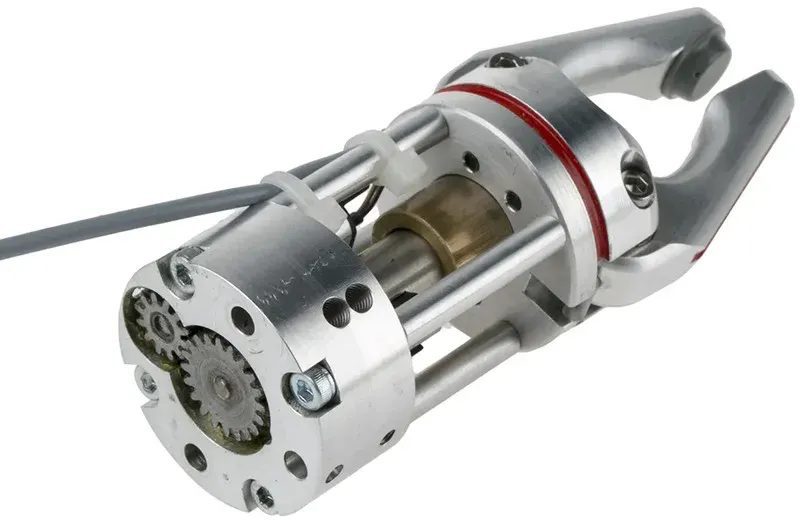
- A rotary link or bearing seat that lets one robot body rotate relative to another. A motion-critical pivot arm must hold bore roundness, concentricity and shoulder squareness together as one datum chain and stay burr-free, but only if the features are cut and measured against one reference and left without edge break that loads the bearing.
- Robotics CNC parts
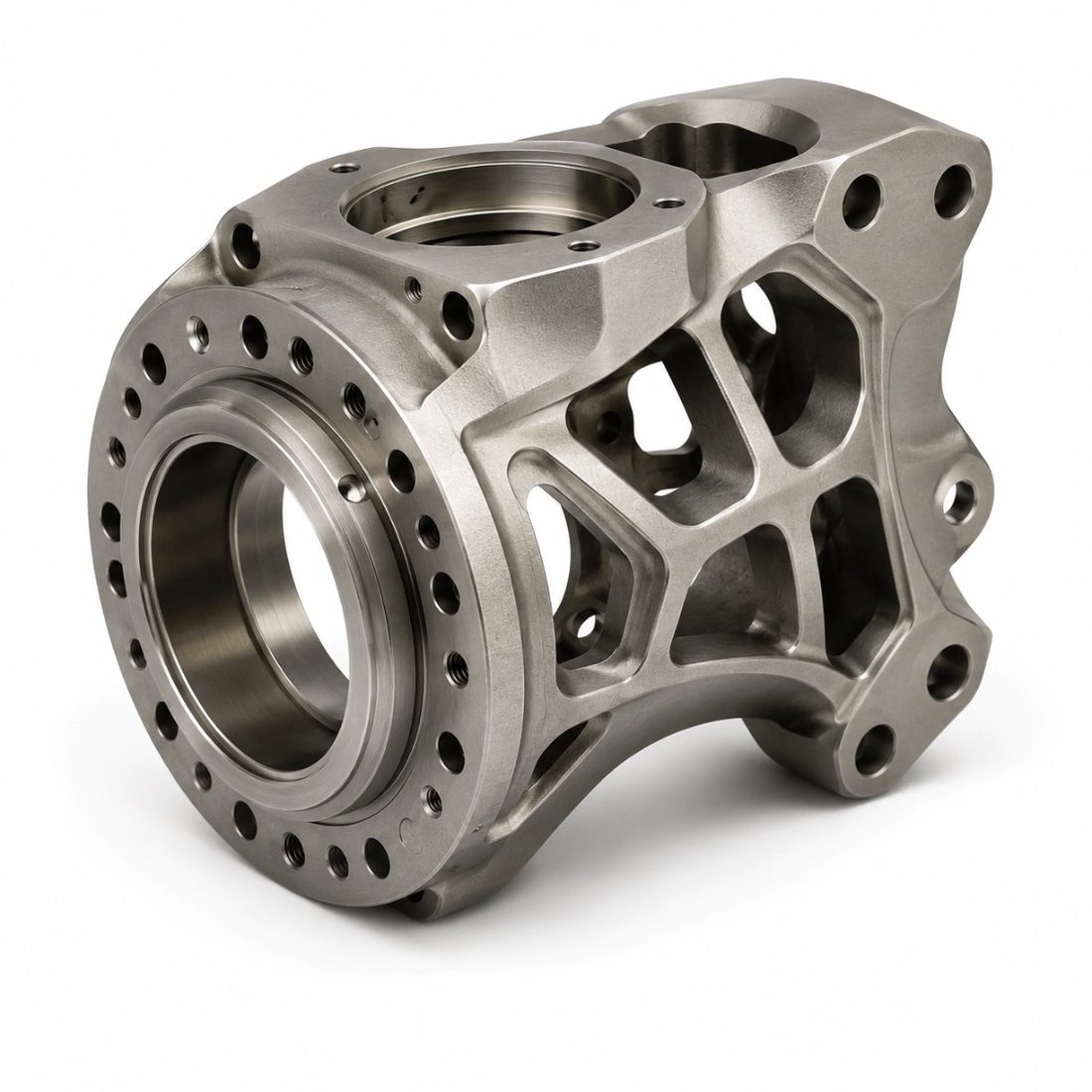
- Precision machined components built into robot links, actuators, gimbals and end-effectors. These parts are made to roundness, concentricity and repeatability standards with little tolerance for run-out, bore drift or batch variation across a production lot.
For a robotics program buyer the lesson is direct: the pivot arm specification, not the actuator drawing, often decides whether a robot repeats its motion the first time or enters a tuning loop. A bore held round instead of merely to diameter keeps the bearing seated; a shoulder square to the bore stops the link from rocking; a pivot made from a stable material keeps the joint put under load. Pivot discipline is the cheapest repeatability you can spec up front, and the easiest to skip when a supplier quotes on the outline alone.
Robotics CNC precision component
Robotics CNC Parts: Capacity Expansion in 2026
One plant, one quality record, one accountable partner.
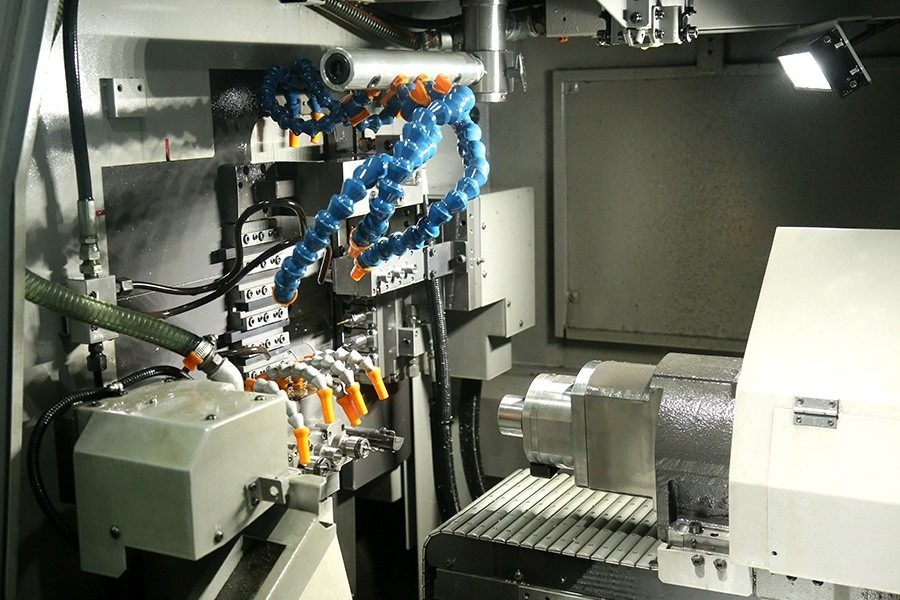
LusterControl's Dongguan plant spans 4,000 m2, expanded in 2026, with the old 2,000 m2 footprint retired, and ships 500,000 parts per month. The robotics pivot arm line runs on 5-axis machining centers, turn-mill composite cells and Swiss-type turning that cut setups and stack-up error, plus in-house mirror and electropolishing so the part leaves round, clean and finished, not half-done. For background on the factory and certifications, see our company profile.
- In-house turning, 5-axis, turn-mill and mirror/electropolishing, no outsourced finish handoffs.
- CMM first-article data on every new print, not a verbal promise.
- Lot traceability back to material batch and machine for fast root cause.
- Low-MOQ prototypes to de-risk a new pivot arm before volume.
How Pivot Arms Are Machined: A Buyer's View
A pivot is only as good as the datum it is cut from.
A pivot arm works by presenting a round, concentric bore and a square shoulder that seats and locates a bearing or bushing. The buyer's job is to specify the whole rotating interface, not just the pivot outline. A round bore is useless if it is not concentric to the OD, and a square shoulder strips its alignment if it is not true to the bore. Below is how the features interact, and what each dimension does for your motion.
| Feature | What it controls | Why it protects the motion |
|---|---|---|
| Bore roundness | Bearing seat fit | Stops bearing deflection, wobble and run-out. |
| Bore-to-OD concentricity | Joint centerline | Prevents link rack, end-point drift, gimbal jitter. |
| Shoulder squareness | Axial seat | Stops the link rocking under load, no shim loop. |
| Surface finish | Wear and contact | Clean, even bearing contact, longer joint life. |
Step 1, Set the datum and cut the bore first
We verify the pivot against its datum and run a CMM first article on bore roundness, concentricity and shoulder squareness as one chain before any volume runs. For stainless 304/316, aluminum 7075, titanium and hardened steels this also sets the baseline for surface finish and treatment later in the chain, so the bore and OD are measured against a known reference, not a hope.
Step 2, Cut the OD and shoulder in one setup
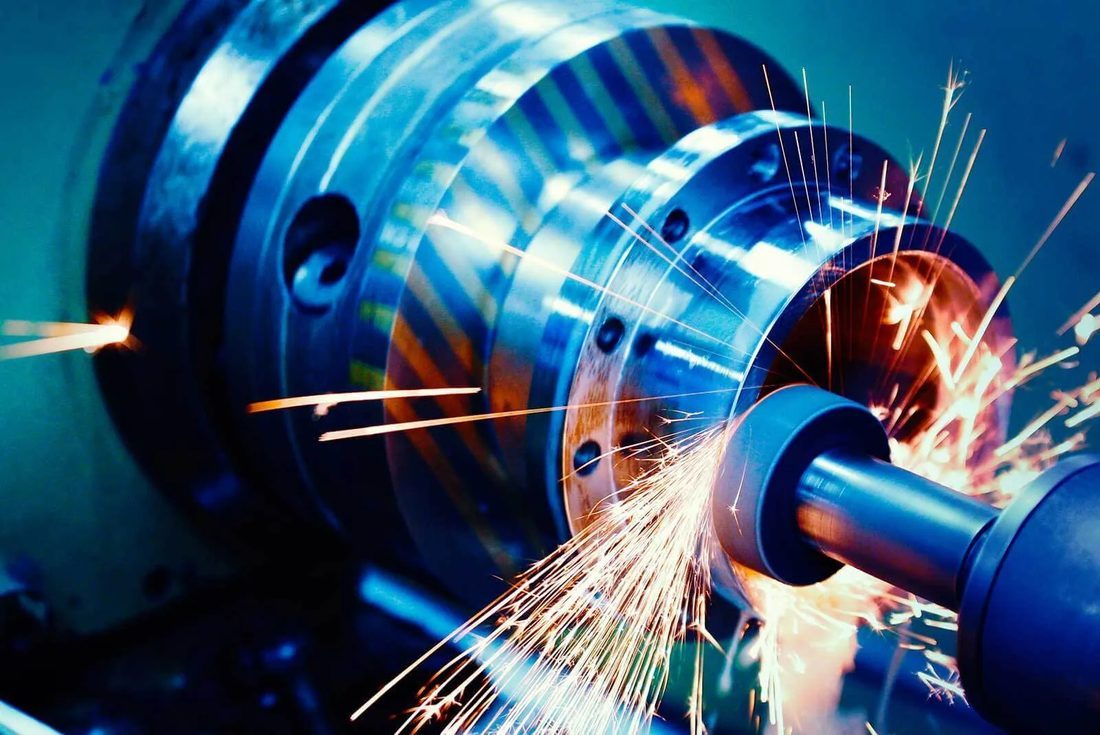
Holding the bore datum and the OD in one setup is what lets us hold +/-0.005 mm and keep concentricity within microns. 5-axis machining centers are the workhorse for contoured or pocketed pivots; turn-mill composite is used for pivots with integrated bosses; Swiss-type turning supports small cylindrical pivots, which is exactly where run-out usually sneaks into a precision pivot arm.
Step 3, Finish, deburr and treat
Standard mirror finishing reaches Ra 0.6 micrometer; the top end reaches 8K mirror at Ra 0.2 micrometer. We follow ASTM A967 for electropolish and passivation so the pivot arm stays burr-free and corrosion-resistant in a part that may live on a factory floor, an exposed arm or a clean lab. You can read more on our process approach at the LusterControl blog.
Robotics CNC precision component
CNC Precision Machining Behind Precision Pivot Arms
A pivot is only as good as the chain that made it.
CNC precision machining for a precision pivot arm is less about one magic cut and more about a disciplined chain: incoming material verification, DFM-driven fixturing, single-setup turning or turn-mill to protect the bore and OD, then mirror or electropolishing and passivation for a clean, stable surface that will not gall or shed. Each step exists to protect the next.
- Verify the bar, blank or plate cert, grade and heat lot before cutting.
- Run a CMM first article on bore, concentricity and shoulder as one chain.
- Cut in a single setup to remove re-clamp error on the datum.
- Mirror finish to Ra 0.6 micrometer, top end 8K at Ra 0.2 micrometer.
- Passivate to ASTM A967 and package for clean transfer to assembly.
Tight Tolerance CNC: How We Hold +/-0.005 mm on Pivot Arms
Tolerance is a process decision, not a number on a drawing.
A tight tolerance CNC pivot arm lives or dies on how the tolerance is distributed. A bore at roundness 0.003 mm only helps if the concentricity it carries is held to the same budget and cut in the same setup. Below is how we map tolerance to the features that actually protect a robot's motion.
| Feature | Held tolerance | Why it protects the motion |
|---|---|---|
| Bore roundness | 0.003 mm | Round bearing seat, no wobble, no run-out. |
| Bore-to-OD concentricity | +/-0.005 mm | Predictable centerline, clean motion, no drift. |
| Shoulder squareness | 0.005 mm | Square axial seat, no rocking under load. |
| OD diameter | +/-0.005 mm | Clean fit in the housing, no cross-binding. |
| Boss concentricity | +/-0.01 mm | Stable, centered mount, no play. |
- Fix the bore and OD in one setup to remove re-clamp error.
- Run SPC/CPK on roundness and concentricity, not just spot checks.
- Verify every batch on CMM against the first-article baseline.
- Passivate to ASTM A967 so the pivot survives floor and lab use.
Robotics CNC precision component
Custom CNC Parts: Choosing the Right Pivot Arm Build
Match the build to volume, material and risk, not to habit.
Most custom CNC parts decisions for precision pivot arms come down to three build paths: 5-axis milling for contoured or pocketed pivots, turn-mill composite for pivots with integrated bosses, and Swiss-type turning for small cylindrical pivots. The table below turns that into a buyer decision rather than a spec sheet.
| Your program need | Recommended build | Why it wins |
|---|---|---|
| Contoured or pocketed pivot, high mix | 5-axis milling | Cuts complex features without re-clamping and run-out error. |
| Pivot with integrated boss, tight faces | Turn-mill composite | Bore and boss in one setup, no concentricity handoff. |
| Small cylindrical pivot | Swiss-type turning | Best concentricity, lowest per-part cost at scale. |
| Low-MOQ prototype before volume | 5-axis or turn-mill | Fast first article, then scale on the same process. |
- Choose 5-axis milling if your pivot arm is contoured, pocketed or angled.
- Choose turn-mill composite if an integrated boss and a square shoulder are the whole point.
- Choose Swiss-type turning if the pivot is a small cylinder and you need volume cost down.
Buyer's Checklist for Robotics CNC Parts and Pivot Arms
Five things to demand before you release the drawing.
For robotics CNC parts the gap between a round pivot arm and one that racks a joint is usually paperwork you never asked for. Use the checklist below as your release gate.
- Material certificate with grade and heat lot, not just 'stainless' or 'aluminum'.
- CMM first-article report tied to your drawing revision, bore and concentricity.
- Bore roundness AND concentricity, not just the outline diameters.
- Lot traceability back to material batch and machine.
- Passivation to ASTM A967 documented, not assumed on a good day.
- Red flag: certs sent later, certs travel with the batch, not after.
- Red flag: bores quoted with no concentricity callout.
- Red flag: finish quoted as a word, not a measured Ra number.
Robotics CNC precision component
Common Mistakes When Sourcing Precision Pivot Arms
The failures are predictable, and avoidable.
- Specifying finish as 'smooth' instead of a measured Ra, you get whatever the shop feels like.
- Splitting turning and finishing across two vendors to save a few cents, then owning the run-out path.
- Skipping lot traceability to move faster, then having no root cause when a pivot racks.
- Quoting bores on diameter but ignoring how they stack against the OD datum.
- Choosing the cheapest treatment that is not ASTM A967 compliant on a factory floor.
None of these are exotic. They are the routine shortcuts that turn a precision pivot arm into a backlash line item on a robot program. Ask the five questions in the checklist above and most of them disappear.
Quality Framework Behind Robotics CNC Parts
Proof beats promises, here is the chain.
For program buyers, the discipline behind +/-0.005 mm matters more than the number itself. LusterControl runs a staged chain: DFM review, incoming material check, first-article CMM, in-process SPC/CPK, final FQC/OQC and lot traceability. That is what lets us stand behind ISO 9001 certified, ISO 13485 completed and IATF 16949 applying controls on every pivot arm.
- First-article CMM data on every new print before volume.
- SPC / CPK on special characteristics, not spot checks.
- Lot traceability back to material and machine for fast root cause.
- Material certs and passivation records on every batch.
Robotics CNC precision component
Real Custom CNC Parts We Have Shipped
Same model, applied to your pivot arm.
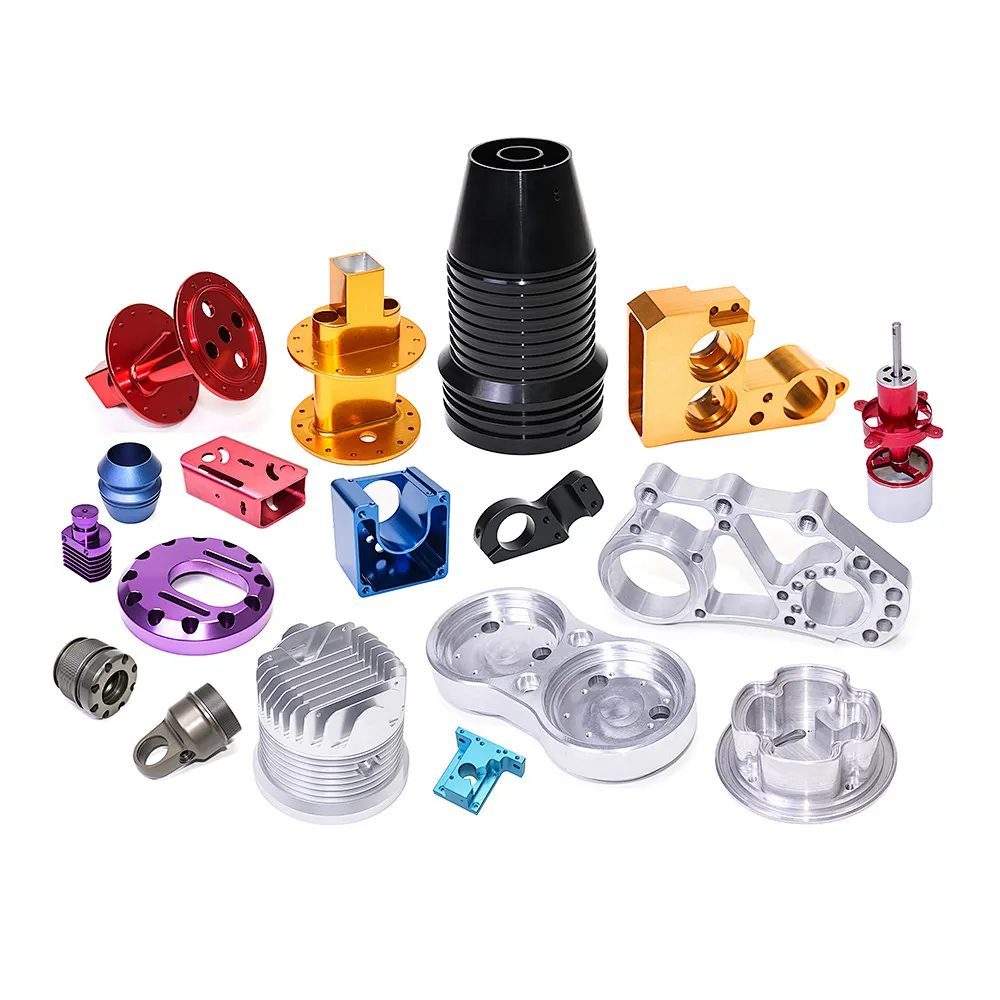
For your precision pivot arms, the same model applies: turning, 5-axis, turn-mill, mirror/electropolishing and inspection in-house, one quality record. Request a free DFM review and we will show it on your drawing at our inquiry page.
Protecting Your Design: NDA for Robotics CNC Parts
A leaked drawing travels faster than a purchase order.
For robot platform teams, Tier suppliers and R&D groups especially, releasing a pivot arm or link drawing to three shops triples the exposure of your design. LusterControl runs customer-NDA programs and handles CAD files on controlled access, so your tooling and process designs stay yours.
- NDA-backed programs for De'Longhi, Donlim and Breville-grade work.
- Controlled CAD access, no re-use or re-sale of your design.
- Discreet international packaging for prototype shipments.
Robotics CNC precision component

Robotics CNC precision component
Robotics CNC precision component
FAQ: pivot arms & Robotics Buyer Questions
A: Yes. Turning, 5-axis, turn-mill, mirror/electropolishing and inspection are all in-house across our 4,000 m2 Dongguan plant with 60 CNC machines.
A: We hold +/-0.005 mm on bore-to-OD concentricity and shoulder squareness, with bore roundness to 0.003 mm, cut in a single setup to control run-out.
A: ISO 9001 certified, ISO 13485 completed and IATF 16949 applying. We provide material certs, CMM first-article data and lot traceability on every batch.
A: Standard mirror finishing reaches Ra 0.6 micrometer and the top end reaches 8K mirror at Ra 0.2 micrometer, followed by electropolish and passivation per ASTM A967 to resist corrosion on factory floors and labs.
A: Yes. NDA-backed programs are routine for us, including De'Longhi, Donlim and Breville-grade work, with controlled CAD access and discreet prototype packaging.
A: We target a fast first article from drawing to sample for many programs and accept low-MOQ prototypes, then scale to 500,000 parts per month in volume.
Want the same round, concentric precision on your next pivot arm? Send LusterControl your drawing and our engineering team will return a free DFM review with achievable roundness, concentricity budget and lead time.
Request a Free CNC Quote