5-Axis and Turn-Mill Compound: LusterControl's Capability Map (2026 CNC News)
LusterControl (Dongguan Licun Technology Co., Ltd.) has spent 15 years since our 2015 founding building a machining floor that covers almost every geometry a precision buyer can draw. A LusterControl news note for 2026: our capability map is built around two machines — 5-axis CNC machining centres and turn-mill compound lathes — that together handle UAV structural components, TC4 titanium and aerospace-grade aluminum from prototype to volume.
In this update we lay out the capability map so you can pick the right process for your part: where 5-axis wins on contoured, oblique geometry, where turn-mill wins on round-plus-milled features, and why TC4 titanium and aerospace-grade aluminum each need their own discipline. If you build drone, aircraft or any lightweight structural part, this is the practical picture of what our 4,000 m² Dongguan floor can do.
A capability map is only useful if it tells you what NOT to use. The expensive 5-axis centre is the wrong tool for a flat plate; the turn-mill is overkill for a simple shaft. Knowing the map is how we keep your part right-sized, traceable and on cost — and how a drone client's first order reached ¥1.2 million with us.
Table of Contents
- 1. 5-Axis CNC Machining: The Backbone of LusterControl's Capability Map
- 2. Turn-Mill Compound Machining: One Setup, Tighter Geometry
- 3. UAV Structural Components: Where 5-Axis and Turn-Mill Meet
- 4. TC4 Titanium Machining: Hard Metal, Right Process
- 5. Aerospace-Grade Aluminum: Lightweight UAV and Aircraft Parts
- 6. 5-Axis CNC Machining vs 3-Axis: A Buyer Guide
- 7. Turn-Mill Compound Machining vs Swiss Turning for Mixed Parts
- 8. Why Aerospace Programs Trust LusterControl's TC4 Titanium Machining in 2026
Company CNC precision component
5-Axis CNC Machining: The Backbone of LusterControl's Capability Map
Cut oblique geometry in one setup.
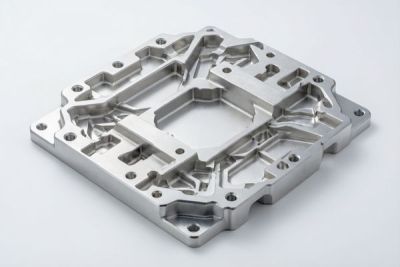
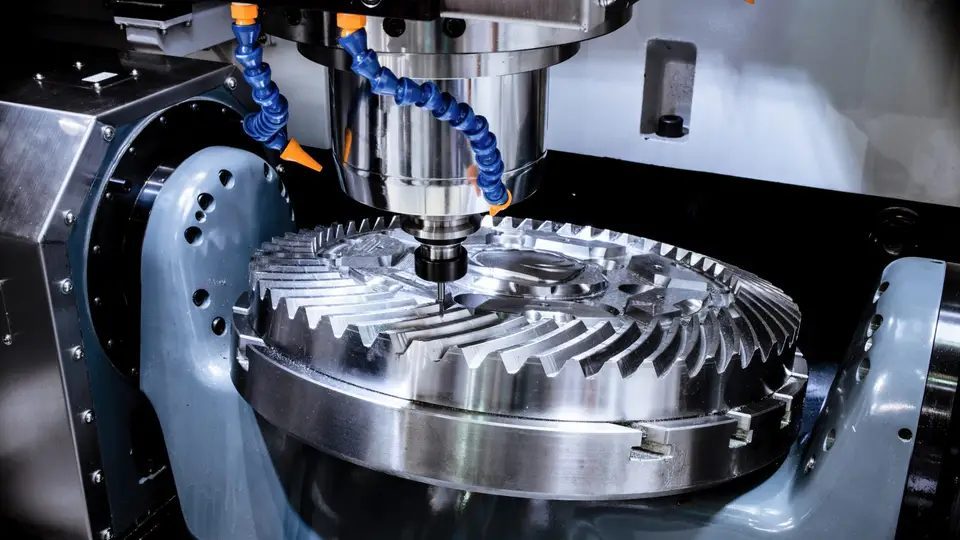
At the centre of our capability map is 5-axis CNC machining — a centre that moves the tool or the part on five axes so it can reach oblique faces, undercuts and contoured surfaces in one or two setups. For UAV structural components and aircraft brackets, that single-datum discipline is what holds ±0.005 mm across a complex shape instead of accumulating error through a dozen re-clamps.
- 5-axis CNC machining
- Cutting on five axes so the tool reaches oblique and contoured faces in few setups
- Turn-mill compound machining
- A machine that turns and mills in one setup, holding geometry without re-clamping
- UAV structural components
- Frames, brackets, arms and mounts that carry load and vibration on a drone
- Single datum
- One reference frame for the whole part, so features stay true to each other
Company CNC precision component
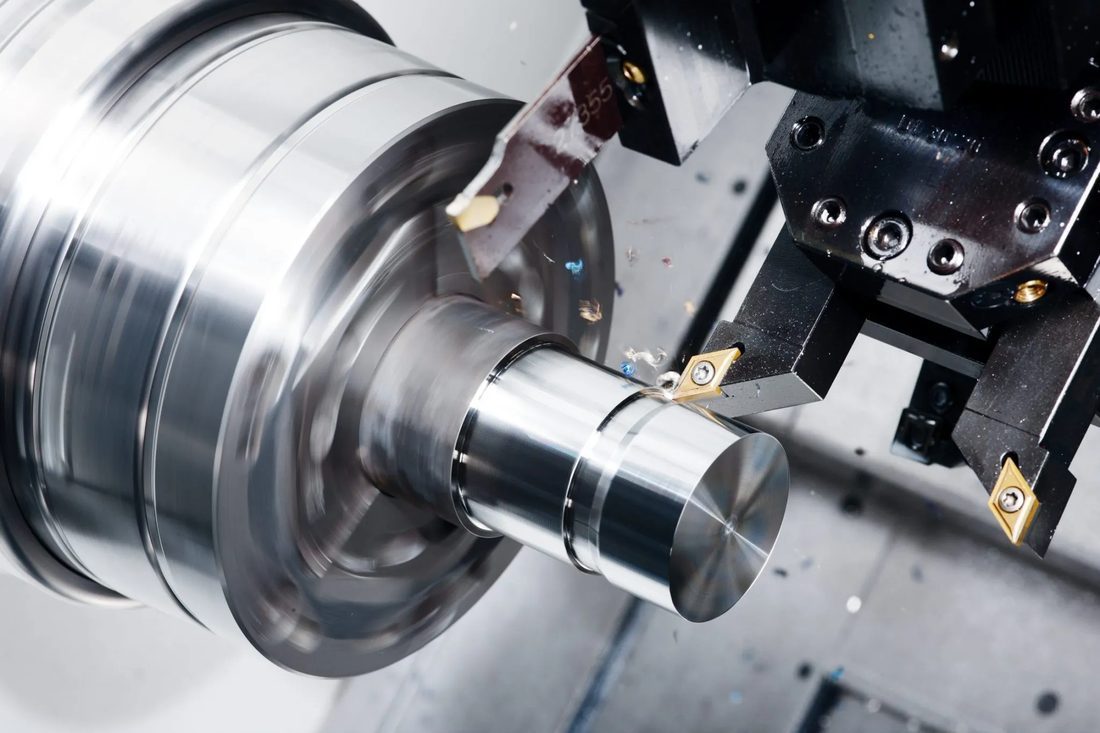
Turn-Mill Compound Machining: One Setup, Tighter Geometry
Fewer clamps, better parts.
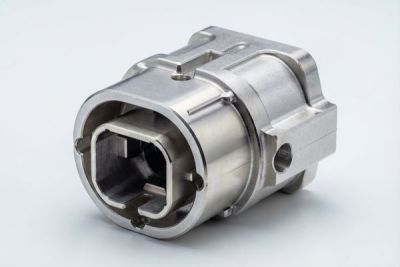
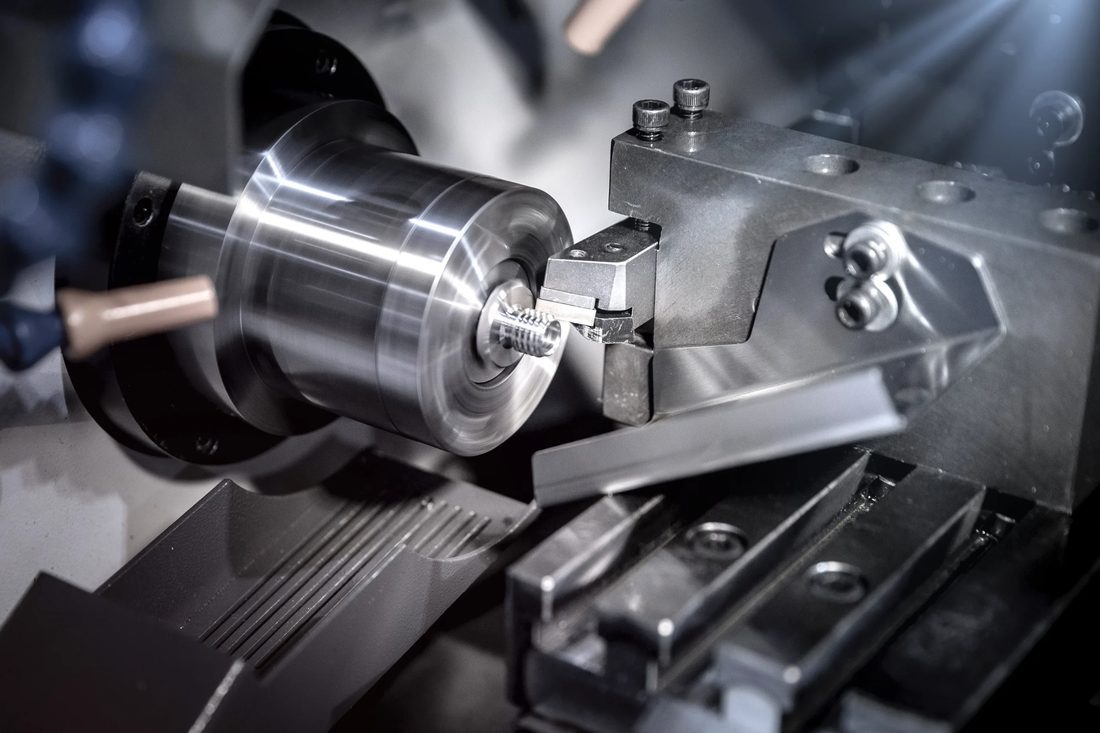
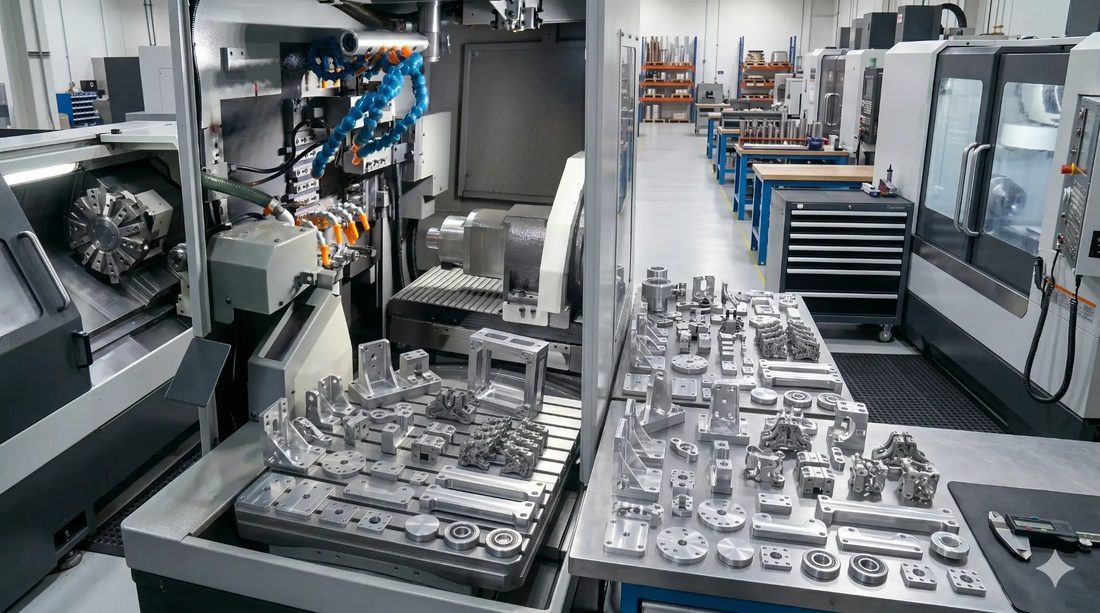
The other pillar of the map is turn-mill compound machining. A part that is mostly a shaft but has a milled flat, a cross-hole or a hex is ideal for it: turning and milling happen in one setup, so the datum never changes and the feature stays true to the bore. For high-volume round-plus-milled parts, that single-setup discipline is what keeps ±0.005 mm across a 500,000-piece month.
Why turn-mill beats lathe-then-mill
| Factor | Lathe then mill | Turn-mill compound |
|---|---|---|
| Setups | Two, re-clamp error | One, same datum |
| Accuracy | Accumulated per setup | Held to ±0.005 mm |
| Cycle time | Longer, two fixtures | Shorter, one fixture |
| Consistency | Drift between ops | Stable across volume |
UAV Structural Components: Where 5-Axis and Turn-Mill Meet
A drone part is rarely one process.
Most UAV structural components are a mix: a contoured arm cut on 5-axis, a motor mount with a turned bore finished on turn-mill. Our capability map lets the same Dongguan floor route each feature to the right machine without changing suppliers, so a bracket that is 5-axis on the arm and turn-mill on the boss stays one part, one first-article, one lot flow. That is how a drone client's first order reached ¥1.2 million with us.
- Contoured arms and oblique bores → 5-axis CNC machining
- Motor mounts and turned bosses → turn-mill compound
- Thin walls lightened on 5-axis for flight time
- Bores held to ±0.005 mm on turn-mill for true rotors
- One floor, one FAI, one traceable lot
Company CNC precision component
TC4 Titanium Machining: Hard Metal, Right Process
Titanium rewards the disciplined shop.
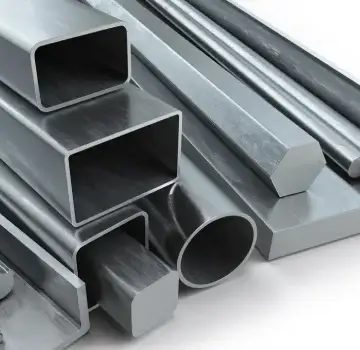
TC4 (the Chinese grade for Ti-6Al-4V) is the workhorse of aerospace and high-end UAV structure: strong, light, corrosion-proof. It is also nasty to cut — it work-hardens, springs, and holds heat at the tool. TC4 titanium machining demands rigid machines, sharp tools and the right parameters, which is exactly why it belongs on our 5-axis and turn-mill centres rather than a lightly-rigged lathe. Done right, it gives you a part lighter than steel and stronger than aluminium.
What TC4 demands from the process
- TC4 titanium
- Chinese grade for Ti-6Al-4V, the standard aerospace titanium alloy
- Work-hardening
- The surface strengthens if the tool rubs instead of cutting cleanly
- Springback
- Titanium deflects under load and returns, so fixtures must be rigid
- Heat at tool
- Titanium holds cutting heat at the edge, blunting tools fast
| Challenge | Our control | Why it matters |
|---|---|---|
| Work-hardening | Sharp tool, positive rake | Clean cut, no hardened skin |
| Springback | Rigid workholding | Holds ±0.005 mm |
| Tool heat | Coolant + speed | Longer tool life, better finish |
| Chatter | Stiff 5-axis / turn-mill | Good surface, true geometry |
Aerospace-Grade Aluminum: Lightweight UAV and Aircraft Parts
Two alloys, two jobs.
Where weight matters most and load allows, aerospace-grade aluminum wins. Most of our UAV and aircraft parts are 6061 or 7075: 6061 for general structure, 7075 for the motor mounts and arms that carry real load. Both machine cleanly on 5-axis and turn-mill, and both anodise for corrosion resistance — 6061 more evenly than 7075. Picking the right one is part of the free DFM review we run.
| Alloy | Strength | Use on a drone / aircraft |
|---|---|---|
| 6061-T6 | Good, versatile | Frames, plates, housings |
| 7075-T6 | High, best for load | Motor mounts, arms, joints |
| 5052 | Formable, corrosion-proof | Brackets, covers |
| 2024 | High fatigue | Specialised structural skins |
Pros
- 6061: easy anodise, corrosion resistant, cheap
- 7075: highest strength for loaded mounts
- Both machine cleanly on 5-axis / turn-mill
- Light, ideal for flight-time goals
Cons
- 7075 costs more and anodises less evenly
- Wrong alloy adds mass or risk
Company CNC precision component
5-Axis CNC Machining vs 3-Axis: A Buyer Guide
Pick the process by the part, not the price.
When scoping a structural part, the first process question is 3-axis versus 5-axis. For flat plates with simple holes, 3-axis is cheap and fast. For contoured arms, oblique bores and lightweighted frames, 5-axis wins on accuracy and mass. Here is the practical split we use when advising drone and aerospace buyers.
| Part shape | Pick 3-axis | Pick 5-axis |
|---|---|---|
| Flat plate, through holes | Yes — cheapest | Overkill |
| Contoured arm | Hard, many flips | Yes — one setup |
| Oblique bore mount | Inaccurate | Yes — direct cut |
| Lightweighted frame | Thicker walls | Yes — thin, stiff |
Turn-Mill Compound Machining vs Swiss Turning for Mixed Parts
Two ways to make a shaft-with-features.
Many parts are a shaft plus features, and two machines can make them: turn-mill compound and Swiss turning. Turn-mill wins for shorter, chunkier parts with significant milled faces; Swiss turning wins for long, slender parts that would deflect on anything else. Both live on our floor, so the choice is process, not supplier — validated under one first-article.
| Part shape | Pick turn-mill | Pick Swiss turning |
|---|---|---|
| Short, chunky + milled face | Yes — one setup | Overkill |
| Long thin shaft | Bends, tapers | Yes — supported at cut |
| Shaft + cross features | One setup | Back-working op |
| High-volume tiny | Hard to hold tiny | Yes — ±0.005 mm |
Company CNC precision component
Why Aerospace Programs Trust LusterControl's TC4 Titanium Machining in 2026
One floor, every process, documented quality.
The reason aerospace and drone programs trust us is the same across UAV, medical and automotive work: LusterControl runs 5-axis CNC machining and turn-mill compound as standard capabilities on one Dongguan source-factory floor, so a TC4 titanium validation part gets the identical ±0.005 mm as a 500,000-piece run. We serve 14 industries from 60+ CNC machines, 4,000 m² of zoned floor, and a monthly capacity of 500,000 precision parts, with annual output now exceeding ¥20 million.
Our quality ladder is consistent: ISO 9001 certified, ISO 13485 completed, and IATF 16949 in progress, applied from TC4 titanium UAV parts to medical and automotive programs. Learn more in our CNC machining guides, read about Dongguan Licun Technology, or explore our aerospace-grade aluminum and other capabilities on the home page.
The right process is the cheapest process that still holds the tolerance — and a capability map exists so you never pay for more machine than the part needs.
Company CNC precision component
Company CNC precision component
Company CNC precision component
Company CNC precision component
FAQ: 5-axis CNC machining & Company Buyer Questions
A: Our map centres on 5-axis CNC machining and turn-mill compound centres, supported by Swiss-type turning, across 60+ machines on a 4,000 m² Dongguan floor. Together they cover UAV structural components, TC4 titanium and aerospace-grade aluminum from prototype to 500,000 parts a month.
A: Choose 5-axis for contoured arms, oblique bores and lightweighted frames — it cuts them in one or two setups from a single datum, holding ±0.005 mm and letting walls stay thin yet stiff. For flat plates with simple holes, 3-axis is cheaper and sufficient.
A: Yes. TC4 titanium machining runs on our stiff 5-axis and turn-mill centres with sharp tools, rigid workholding and proper cooling, so we avoid work-hardening and hold ±0.005 mm on this strong, light aerospace alloy.
A: Use 6061-T6 for general frames, plates and housings — versatile and easy to anodise. Use 7075-T6 for motor mounts and arms that carry real rotor load, where its higher strength earns the extra cost. We flag the split in a free DFM review.
A: We are ISO 9001 certified, ISO 13485 completed, with IATF 16949 in progress. Every lot ships with incoming batch traceability and material certificates, audit-ready on request under the relevant standard.
A: Send us your drawing with the real fit tolerance, target alloy (TC4, 6061 or 7075), any anodise or passivation spec, and expected volume. We return a free DFM review mapping the right process, run a first-article inspection, and route you from prototype to volume on one quality-controlled floor.
Send us your structural-part drawing for a free DFM review, and our Dongguan engineering team will map it onto the right process — 5-axis, turn-mill or Swiss — the alloy your part needs, and the ±0.005 mm tolerance, scalable from validation to 500,000 pieces a month.
Request a Free CNC Quote