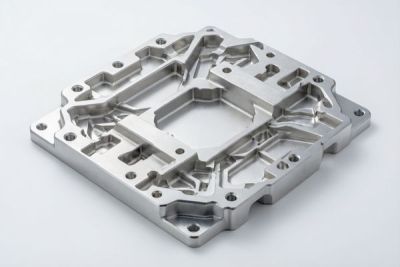
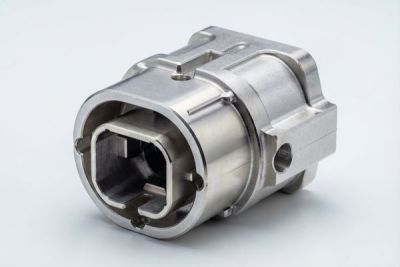
Drone Lightweighting Push Drives Demand for 5-Axis CNC Machining
If you design or source drones in 2026, the single number your whole program is fighting is mass. Shave a gram from a rotor arm, a motor mount or a bracket and you convert it directly into flight time, payload headroom or range. That is the lightweighting push — and it has quietly rewritten how UAV structural components get made.
The old answer was cast aluminum and a lot of post-machining. The 2026 answer, for anything that has to be both light and stiff, is 5-axis CNC machining of TC4 titanium and thin-wall aluminum, held to tight tolerance so the part behaves the same on the thousandth unit as on the first. At LusterControl (Dongguan Licun Technology Co., Ltd.), drones are a permanent part of the floor: we cut UAV structural components and drone motor mounts on 60+ CNC machines across our 4,000 m² Dongguan plant at up to 500,000 precision parts a month, and one of our UAV clients opened with a ¥1.2 million first order.
This guide explains, from the buyer's side, why lightweighting is pulling the industry toward 5-axis and titanium, where the real trade-offs sit, and which questions to put to a supplier before you commit a tooling run. The short version: lightweighting is not a material choice alone — it is a machining-capability choice, and the wrong shop will hand you a part that is light on the scale but heavy on scrap, drift and rework.
Table of Contents
- 1. UAV Structural Components: Why Lightweighting Changed the Design Rules
- 2. 5-Axis CNC Machining for Drone Lightweighting: How It Removes Setup Variance
- 3. TC4 Titanium Machining for UAV Parts: Strength-to-Weight Without the Weight
- 4. Drone Motor Mounts and Lightweight CNC Machining: Holding Tolerance Under Vibration
- 5. Lightweight CNC Machining vs 3-Axis: What Drone Buyers Actually Gain
- 6. TC4 Titanium Machining vs Aluminum: A Buyer's Weight-and-Cost Tradeoff
- 7. UAV Structural Components: A Drone Buyer's Sourcing Checklist
- 8. Why 5-Axis CNC Machining Wins for Drone Lightweighting in 2026
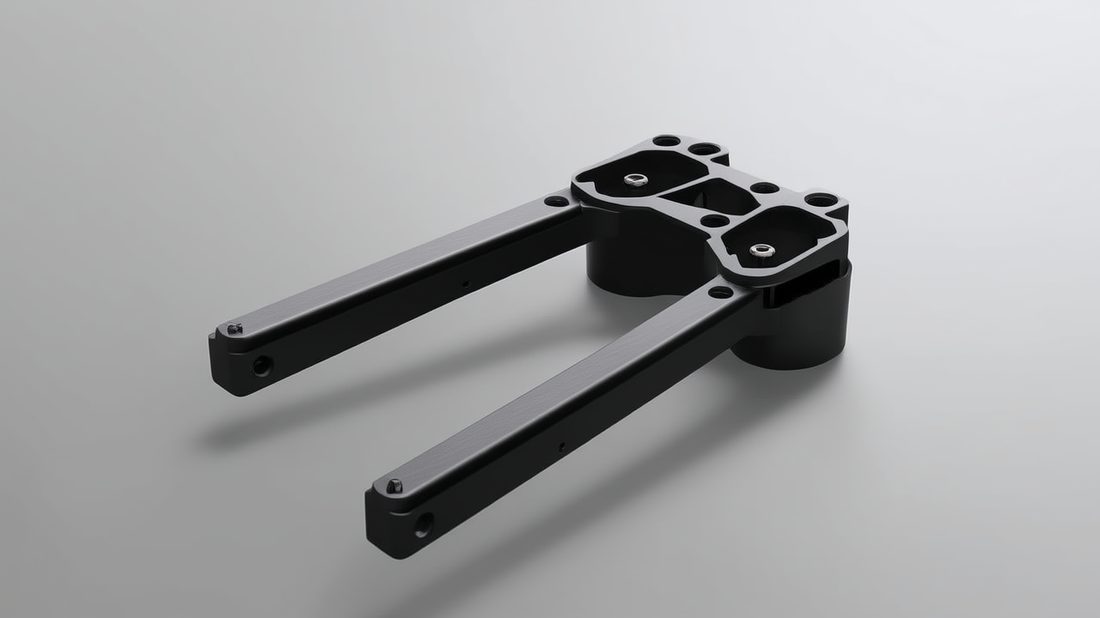
UAV/Drone AI part image
UAV Structural Components: Why Lightweighting Changed the Design Rules
Lightweighting turned every bracket into a stiffness problem.
UAV structural components used to be sized for 'strong enough and cheap enough'. Lightweighting changed the rule: now they are sized for 'stiff enough at the lowest possible mass'. That single shift moves the design off castings and thick-wall extrusions and onto machined thin-wall sections where the wall thickness, rib geometry and material grade are all load-bearing decisions. A rotor arm is no longer a stick of metal — it is a tuned structure where every gram of removal has to preserve bending and torsional stiffness.
- UAV structural components
- Load-bearing machined parts of a drone — arms, brackets, frames, housings — where mass and stiffness both matter
- Lightweighting
- Reducing part mass to gain flight time, payload or range without losing stiffness
- Stiffness-to-weight ratio
- How much load a part carries per unit of its own mass — the real metric for aerospace-grade structures
- Thin-wall machining
- Cutting walls thin enough to save mass while controlling vibration and deflection
The catch is that thin-wall sections are unforgiving to machine. A part that is light on paper becomes scrap on the floor if the cutting path induces chatter, if the clamping distorts the wall, or if the tolerance drifts a few microns across a 50,000-piece run. That is exactly why lightweighting is a machining-capability question as much as a material question — and why buyers are now screening suppliers on 5-axis and titanium experience, not just on price per kilogram.
UAV/Drone AI part image
5-Axis CNC Machining for Drone Lightweighting: How It Removes Setup Variance
The fewer times you touch the part, the truer it stays.
5-axis CNC machining is the workhorse of drone lightweighting because it reaches compound angles, undercuts and contoured surfaces in a single setup. Every time you re-fixture a thin-wall part, you add a chance for misalignment, and misalignment on a sub-millimeter wall is the difference between a stiff arm and a part that twists in flight. On a 5-axis cell the part is fixtured once and the tool comes to it from every needed direction — so the geometry you designed is the geometry you get.
What 5-axis changes on the floor
- Single-setup cutting of compound angles and contoured arms, no re-fixturing drift
- Shorter tool reaches into thin walls, less chatter and deflection
- Better surface finish straight off the machine, less hand work
- Tighter geometric tolerance (perpendicularity, position) on assembly faces
- Fewer setups means fewer chances to introduce variance across a run
For a drone buyer the practical meaning is simple: a 5-axis supplier can hold the assembled fit of a motor mount or a frame node without 'shimming it to make it work' at your line. We run 5-axis and turn-mill cells on our Dongguan floor so UAV structural components move from drawing to finished part in minimal setups — and the same gauges verify the geometry from a 200-piece validation to 500,000 pieces a month. Read more in our CNC machining guides.
TC4 Titanium Machining for UAV Parts: Strength-to-Weight Without the Weight
Titanium buys stiffness per gram — at a machining cost.
TC4 titanium machining (Ti-6Al-4V, the grade most drone programs mean by 'titanium') is the material answer to lightweighting when the part must be both light and strong. Titanium's strength-to-weight ratio lets you thin the wall and still carry the load, and it shrugs off corrosion without coatings — useful on airframes that live outdoors. The trade is that titanium is hard to cut: it work-hardens, it holds heat, and it chews tools if the speeds, feeds and coolant are wrong.
Why TC4 titanium machining needs a disciplined floor
- Rigid fixturing so the thin wall does not deflect under the cut
- Sharp, appropriate tooling and controlled speeds/feeds to avoid work-hardening
- Effective coolant delivery to pull heat out of the cut zone
- Light, consistent passes that preserve the wall and the surface
- First-article and in-process inspection to confirm tolerance before volume
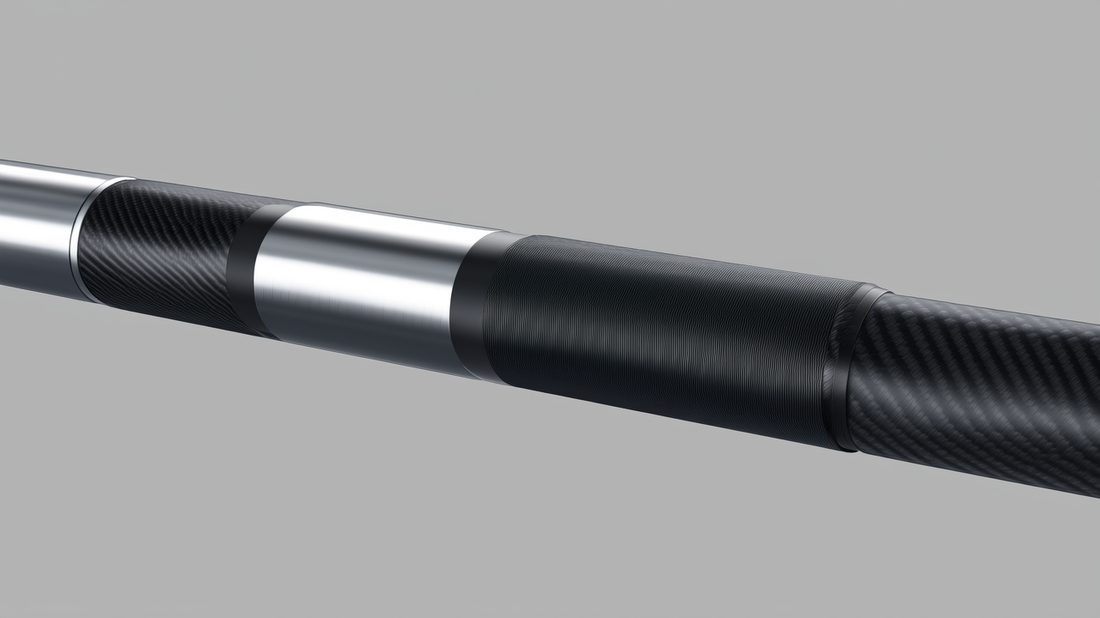
UAV/Drone AI part image
Drone Motor Mounts and Lightweight CNC Machining: Holding Tolerance Under Vibration
The mount is where vibration meets the airframe.
Drone motor mounts sit at the worst intersection on the aircraft: a spinning load, continuous vibration and a thin-wall structure that must not shift. Lightweight CNC machining is what keeps the bearing seat, the bolt pattern and the mounting face true so the rotor spins where it was designed to. A mount that is a few microns off on the bore runs hot, wears the bearings and shortens the motor's life — exactly the failure you cannot see on a scale.
| Feature | Why it matters on a motor mount | What good machining delivers |
|---|---|---|
| Bearing bore | Rotor must spin concentric under load | Tight roundness and position, ±0.005 mm class |
| Bolt pattern | Even clamp load, no induced stress | Position tolerance held across the pattern |
| Mounting face | No twist into the arm or frame | Flatness verified, not assumed |
| Wall thickness | Mass saved without losing stiffness | Thin-wall cut without chatter or spring |
Because a motor mount is light and load-bearing at once, it is the clearest example of why lightweight CNC machining and tight tolerance go together on drones. Our floor cuts mounts from aluminum and TC4 titanium on the same quality system that holds ±0.005 mm and verifies flatness, roundness and position lot by lot — so the mount that flies on unit one flies the same on unit 50,000. Learn about Dongguan Licun Technology and the disciplines behind it.
Lightweight CNC Machining vs 3-Axis: What Drone Buyers Actually Gain
The gain is geometry fidelity, not just cycle time.
Buyers often frame the choice as '5-axis is faster'. It usually is not, per part — but for lightweight CNC machining it is far more capable, because the parts that save mass are the ones with compound angles and contoured walls that 3-axis simply cannot reach without re-fixturing. The table below shows where the real difference lands for a drone program.
| Factor | Lightweight CNC (5-axis) | 3-axis machining |
|---|---|---|
| Compound-angle features | Cut in one setup, no drift | Multiple setups, drift at seams |
| Thin-wall stability | Short tool reach, less chatter | Longer reach, more deflection |
| Assembly fit | Tight geometric tolerance held | Depends on re-fixturing accuracy |
| Scrap risk | Lower on complex parts | Higher on complex parts |
| Best use | Arms, mounts, nodes, brackets | Simple plates and blocks |
Choose 5-axis if / choose 3-axis if
- Choose 5-axis lightweight CNC machining if the part has compound angles, contoured walls or a thin-wall structure that must stay stiff
- Choose 5-axis if the part is load-bearing and the assembly fit must hold at volume
- Choose 3-axis if the part is a simple plate, a block or a non-critical bracket
- Choose 3-axis only if you still keep your own first-article verification
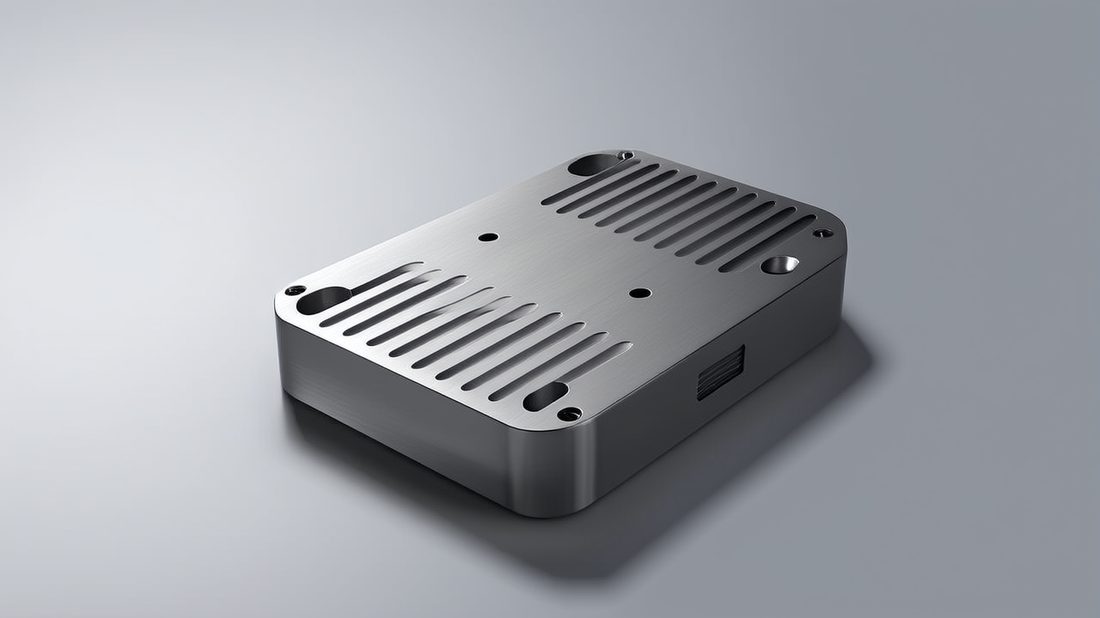
UAV/Drone AI part image
TC4 Titanium Machining vs Aluminum: A Buyer's Weight-and-Cost Tradeoff
Titanium is not 'better' — it is 'right' for the loaded parts.
The titanium-versus-aluminum decision is where drone buyers lose the most money by guessing. Aluminum is lighter to machine, cheaper and fast — perfect for the many non-critical parts of an airframe. TC4 titanium costs more to buy and far more to machine, but it carries more load per gram and resists corrosion without coatings. The right answer is usually a mix: aluminum where it is enough, titanium where the load demands it.
| Factor | TC4 titanium machining | Aluminum machining |
|---|---|---|
| Strength-to-weight | High — thin walls still carry load | Good — thicker walls needed |
| Machining cost | High (tools, heat, cycle) | Low (fast, forgiving) |
| Corrosion resistance | Excellent, no coating needed | Needs anodize or coating |
| Best use on a drone | Loaded arms, mounts, nodes | Housings, covers, light brackets |
Pros
- Titanium: highest stiffness per gram on loaded parts
- Titanium: corrosion-resistant without extra coatings
- Aluminum: cheap, fast, ideal for non-critical mass
- A mixed BOM trims total cost without losing performance
Cons
- Titanium: higher material and machining cost
- Titanium: needs a disciplined, experienced floor
- Aluminum: thicker walls to match titanium stiffness
- Wrong split inflates cost or undermines the airframe
UAV Structural Components: A Drone Buyer's Sourcing Checklist
Five things to demand before you approve a run.
Before you move UAV structural components or drone motor mounts to a supplier, a short buyer's checklist prevents most of the failures that show up later as scrap, drift or a delayed certification. None of these cost you anything to ask; all of them cost you plenty if you skip them.
- Ask for the ISO 9001 / ISO 13485 certificate and confirm it is current
- Request a first-article report proving the thin-wall tolerance and finish are reachable
- Require incoming material certification (Ti-6Al-4V grade, lot-traced) on every batch
- Confirm 5-axis single-setup capability on your compound-angle features
- Ask for a free DFM review before any quote is fixed
- Verify batch traceability so any drift can be contained, not recalled blind
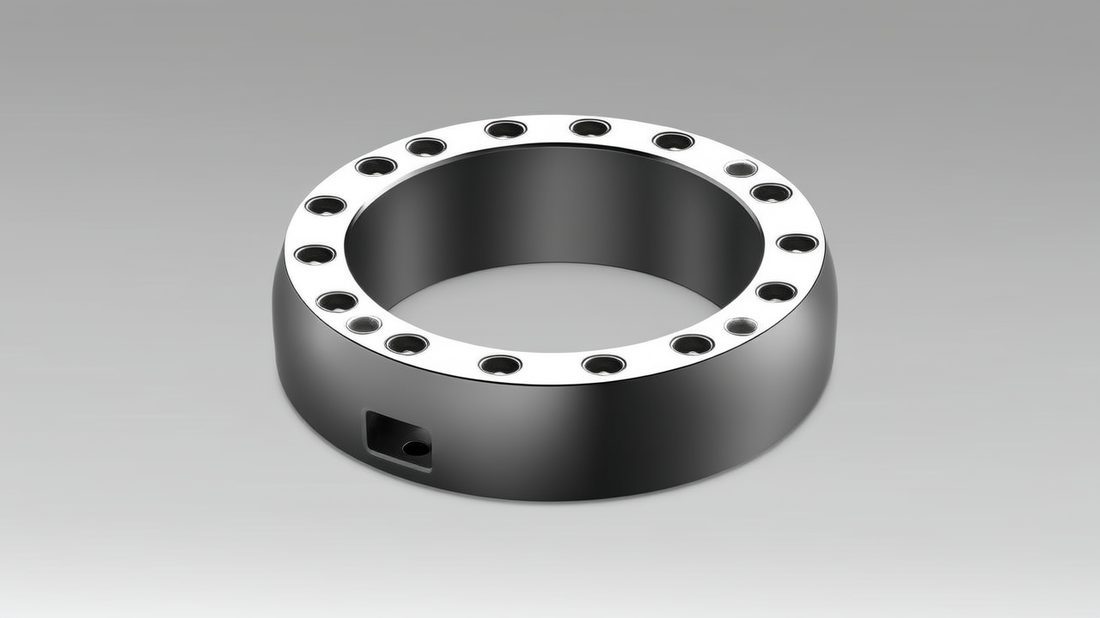
UAV/Drone AI part image
Why 5-Axis CNC Machining Wins for Drone Lightweighting in 2026
One floor, every grade, documented.
Buyers choose 5-axis CNC machining for drone lightweighting in 2026 because it is the only practical way to cut compound-angle, thin-wall UAV structural components and drone motor mounts while keeping the assembly fit identical from prototype to volume. Our Dongguan floor runs that discipline on one quality system — ISO 9001 certified, ISO 13485 completed, IATF 16949 in progress — so an arm, a mount and a bracket ship from the same accountable partner at up to 500,000 pieces a month, each with its material cert and inspection log attached.
On a drone, the gram you remove is range you earn — but only if the part that lost the mass still holds its shape, and 5-axis CNC machining is how you make sure it does.
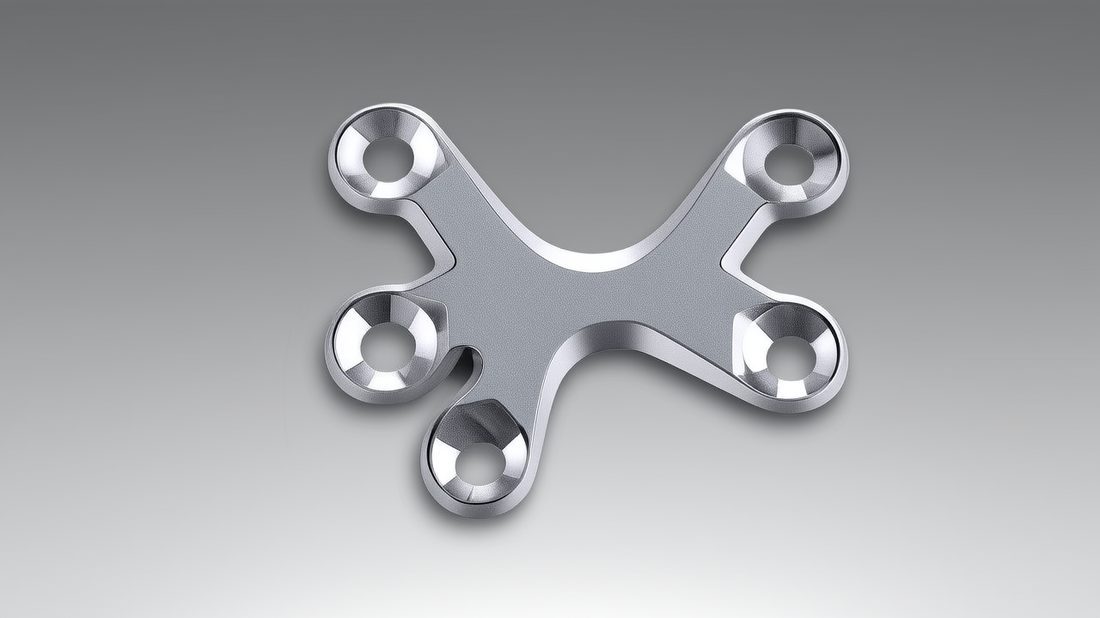
UAV/Drone AI part image
UAV/Drone AI part image
UAV/Drone AI part image
UAV/Drone AI part image
FAQ: UAV structural components & UAV/Drone Buyer Questions
A: Lightweighting pushes UAV structural components onto thin-wall, compound-angle geometries that 3-axis cannot reach without re-fixturing. 5-axis CNC machining cuts those features in a single setup, removing the misalignment drift that would otherwise distort a sub-millimeter wall — so the light part you designed is the light part you get.
A: For loaded parts — arms, motor mounts, frame nodes — yes. TC4 titanium (Ti-6Al-4V) carries more load per gram than aluminum and resists corrosion without coatings, so you can thin the wall and still hold stiffness. For non-critical covers and brackets, aluminum is cheaper and fast enough. The right airframe is usually a mix of both, machined to the same tolerance.
A: On a disciplined 5-axis floor, drone motor mounts are held to a ±0.005 mm class tolerance on bores, bolt patterns and mounting faces, with flatness, roundness and position verified lot by lot. That is what keeps the rotor spinning concentric and the bearings from running hot across a full production run.
A: Ask for the current ISO 9001 / ISO 13485 certificate, a first-article report proving the thin-wall tolerance and finish are reachable, incoming material certification on every batch, confirmation of 5-axis single-setup capability on your features, a free DFM review before the quote, and batch traceability. All are free to ask and costly to skip.
A: Yes. Our Dongguan floor (Dongguan Licun Technology, founded 2015) runs TC4 titanium machining and aluminum lightweight CNC machining on 60+ CNC and 5-axis cells, holding ±0.005 mm and verifying flatness, roundness and finish lot by lot. We serve the drone sector with small-batch customization and mass production up to 500,000 pieces a month.
A: Send your drawing with the tolerance, finish and material callouts (including Ti-6Al-4V grade if titanium), expected volume, and any certification needs. We return a free DFM review and first-article inspection, then route you from prototype to volume on one quality system. Start at our <a href='https://www.lustercontrol.com/sendinquiry.htm'>inquiry page</a>.
Send us your drawing for a free DFM review, and our Dongguan engineering team will confirm the material split, tolerance and traceability your next UAV structural components or drone motor mounts need — whether TC4 titanium or lightweight aluminum, cut on 5-axis CNC machining and scalable to 500,000 pieces a month.
Request a Free CNC Quote