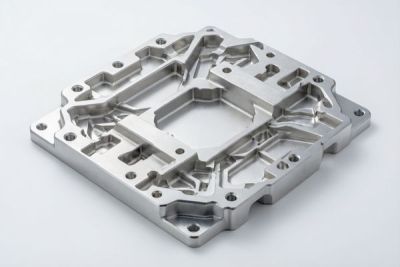
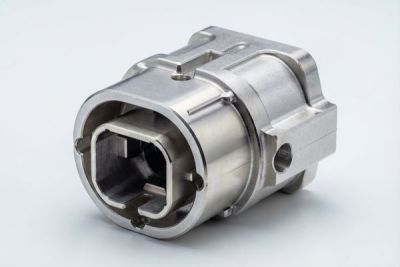
Battery Cooling Plates 2026: A Thermal Management Buyer's Guide
If you source parts for an EV pack or a grid-scale energy-storage cabinet, you have probably seen the same request land on your desk this year: the cooling plate is no longer 'flat enough,' it has to be flatter, and the flatness is now on the drawing with a real number. Battery makers in 2026 are quietly rewriting the spec for CNC cooling plates, and thermal management is the whole reason.
This article is written from the buyer's side. We explain what the new flatness spec actually changes for your battery box parts, why copper bus bars and aluminum bus bars are back in the spotlight, and how aluminum CNC machining holds the tolerances that keep a cell stack cool and a thermal-runaway event contained. If you are a procurement engineer or a mechanical designer, this is the spec conversation you will have with your machine shop this quarter.
Where we cite our own plant, the numbers are verifiable: 60+ CNC machines, a 4,000 m2 Dongguan source factory (expanded in 2026; the old 2,000 m2 floor is voided), 500,000 parts per month, ISO 9001 and ISO 13485 completed with IATF 16949 in progress, and real programs such as De'Longhi, Donlim, Breville and a UAV client whose first order reached RMB 1.2M.
Table of Contents
- 1. Why Battery Makers Are Rewriting the Spec for Thermal Management
- 2. How Flatter CNC Cooling Plates Improve Thermal Management
- 3. Battery Box Parts: What the New Flatness Spec Actually Changes
- 4. Copper Bus Bars vs Aluminum Bus Bars in Battery Thermal Loops
- 5. Aluminum CNC Machining for Cooling Plates: Why Flatness Wins
- 6. CNC Power Parts and the Cooling Plate Supply Chain
- 7. CNC Power Parts Buyers: Aluminum vs Copper Cooling Plate Decision Guide
- 8. Battery Box Parts Buyer's Checklist for Flat Cooling Plates
- 9. Common Mistakes When Specifying Aluminum CNC Machining Cooling Plates
Energy Storage AI part image
Why Battery Makers Are Rewriting the Spec for Thermal Management
Because flatness of the cooling plate is no longer a cosmetic note - it is the number that decides whether every cell sees the same temperature.
The driving force behind the new flatness spec is simple: energy-density targets keep climbing, pack layouts keep getting tighter, and the cooling plate is the one part that touches nearly every cell. When the plate is not flat, the thermal interface material (TIM) layer between the cell and the plate varies in thickness. A thicker TIM gap insulates; a thinner one conducts. The result is a temperature spread across the pack that shortens cell life and, in the worst case, pushes the hottest cell toward thermal runaway. Battery makers have decided that 'flat enough' is not a specification, and thermal management now starts with a hard flatness callout.
- Thermal management
- The control of heat generation and removal in a battery pack so every cell stays inside its safe operating temperature window.
- Cooling plate
- A flat, usually aluminum, plate with internal channels that carries coolant past the cells; its flatness sets the TIM gap and therefore the heat path.
- Flatness
- The deviation of a plate's surface from a perfect plane, normally called out as a total tolerance across the part (for example +-0.05 mm over the full plate).
For a buyer, the practical meaning is that the cooling plate moved from a 'make it roughly flat' note to a first-class tolerance on the drawing. The shops that win these programs are the ones that can hold the flatness in volume, not just on a single show part. Our work on dimension control for mission-critical parts is documented in the +-0.005 mm tolerance guide, and the same discipline is what a flat cooling plate demands.
Energy Storage AI part image
How Flatter CNC Cooling Plates Improve Thermal Management
A flatter plate means a thinner, more uniform TIM gap, which is the single biggest lever on pack temperature spread.
Heat leaves a cell through the TIM and into the cooling plate. The resistance of that path is governed mostly by the TIM thickness, and the TIM thickness is governed by the plate flatness. Hold the plate within a tight flatness window and the TIM gap becomes predictable everywhere on the plate, so the coolant removes heat at the same rate under every cell. The table below shows why the flatness number on your drawing is worth arguing about.
| Flatness spec (full plate) | TIM gap variation | What it means for your pack |
|---|---|---|
| Loose (e.g. +-0.15 mm) | Wide | Hot and cold cells in the same pack; faster aging of the hottest cells |
| Moderate (e.g. +-0.08 mm) | Noticeable | Acceptable for low-rate storage; risky for high-discharge EV cells |
| Tight (e.g. +-0.05 mm or better) | Small | Even cooling, longer cell life, lower runaway margin |
| Mirror-faced contact (Ra 0.2 um / 8K) | Minimal | Best TIM wet-out; used where the interface is critical |
Flatness is only half of it. The surface finish of the contact face matters because a rough face traps air and breaks the TIM bond. We hold a standard mirror finish of Ra <= 0.6 um and a maximum 8K mirror of Ra 0.2 um, which is the same surface discipline we apply to coffee-machine brew groups for De'Longhi and Donlim. The combination of tight flatness plus a controlled surface is what turns a cooling plate from 'a piece of aluminum' into a thermal management component.
Battery Box Parts: What the New Flatness Spec Actually Changes
The flatness callout does not stop at the plate - it ripples into the housing, the mounts and the way you tolerance the whole box.
A battery box is an assembly: the housing, the cooling plate, the bus-bar mounts and the cell retainers all have to agree on where 'flat' is. When the cooling plate gets a tighter flatness spec, the housing datum and the mounting faces inherit the same demand, because the plate can only be flat relative to the box it sits in. Buyers who treat the plate and the box as separate purchases discover the hard way that the assembly tolerances do not close.
| Battery box parts | Old habit | 2026 spec change | Why it matters |
|---|---|---|---|
| Cooling plate | Flatness noted loosely | Hard flatness callout, often +-0.05 mm | Even TIM gap, even cooling |
| Housing datum | Referenced to itself | Referenced to the plate datum | Plate seats true in the box |
| Bus-bar mounts | Loose position | Tighter position to plate | Copper bus bars land square |
| Cell retainers | Press-fit guess | Locating features held to +-0.005 mm | Cells sit evenly on the plate |
- Choose one datum chain from the cooling plate up through the housing so every part agrees on 'flat'.
- Choose a single source that machines the plate, the mounts and the box so the relationship is owned by one process.
- Choose relationship tolerances (position callouts) over single dimensions, because the plate only seats right relative to the box.
- Choose a first-article report that measures the flatness across the full plate, not just at three points.
This is where one-setup 5-axis and turn-mill machining earns its keep: cutting the plate and its mounting features in a single setup removes the relationship error that a multi-setup process introduces. Our 5-axis and turn-mill capability map explains how a single setup keeps features true to each other.
Energy Storage AI part image
Copper Bus Bars vs Aluminum Bus Bars in Battery Thermal Loops
The bus bar is the other half of the loop: it carries current, and its choice shifts weight, cost and how the whole plate is machined.
Copper bus bars and aluminum bus bars both appear in battery thermal and power loops, and the choice is a genuine engineering trade, not a default. Copper carries more current in less cross-section and resists corrosion better in wet environments, but it is heavier and more expensive per kilogram. Aluminum is lighter and cheaper and machines faster, but it needs careful surface treatment and plating at joints to avoid galvanic corrosion against copper terminals. The table is the short version a buyer should keep on the desk.
| Factor | Copper bus bars | Aluminum bus bars |
|---|---|---|
| Conductivity | Higher (~100% IACS) | Lower (~60% IACS) |
| Weight | Heavier | About one-third the weight |
| Raw cost | Higher | Lower |
| Machining speed | Slower, tougher tooling | Faster, easier to cut |
| Joint corrosion risk | Low on its own | Needs plating at Cu/Al joints |
| Best fit | High-current, compact packs | Weight-sensitive EV packs |
Pros
- Copper bus bars let you shrink the cross-section and free space in a dense pack
- Aluminum bus bars cut both weight and material cost on a per-pack basis
- Both can be held to +-0.005 mm so they land square on the plate mounts
Cons
- Copper adds mass and cost that a weight-limited EV pack may not absorb
- Aluminum needs plated joints or it corrodes against copper terminals
- Mixing both without a corrosion plan invites field failures
Whichever you choose, the bus bar is a CNC power part that has to be machined, not just cut. Holes, steps and contact faces held to tight tolerance are what let the bar seat on the plate without inducing stress that later warps the assembly.
Aluminum CNC Machining for Cooling Plates: Why Flatness Wins
Aluminum is the default plate material, and the machining process - not the alloy - is what decides whether the flatness holds.
Most cooling plates are aluminum because it is light, conducts well and machines cleanly. But a large, thin aluminum plate is exactly the part that wants to warp: clamping stress, cutting heat and residual material removal all fight the flatness callout. Aluminum CNC machining for a flat plate is therefore a process-control problem before it is a cutting problem. Rigid fixturing, balanced stock removal, thermal-stable measurement and a stress-relief step where needed are what keep the plate flat after it leaves the machine.
| Process control | What it prevents | What you should see from the shop |
|---|---|---|
| Rigid, symmetric fixturing | Clamp-induced bow | A fixture plan, not 'we clamp it down' |
| Balanced stock removal | Internal stress release warp | Roughing then finish passes, symmetric |
| Thermal-stable measurement | Morning-vs-afternoon drift | CMM at cut temperature, full-plate scan |
| Managed tool life | Mid-batch size drift | Tool-life plan, not 'change when worn' |
| Optional stress relief | Late warpage after shipping | Documented relief step for thin plates |
When you audit a shop for an aluminum CNC cooling plate, ask to see a full-plate flatness scan of the last batch, not a three-point check on a show part. A shop confident in its process will show you the spread across the whole plate; a shop that only shows the center is hoping you do not ask about the edges. Our batch-level traceability work, covered in the batch traceability guide, is the operational backbone that lets us answer 'which lot, which machine' on any flatness drift.
Energy Storage AI part image
CNC Power Parts and the Cooling Plate Supply Chain
Bus bars, terminals and housings are CNC power parts that belong to the same tolerance world as the plate - split them across shops and the assembly pays.
Cooling plates do not ship alone. The bus bars, the terminal blocks, the housing and the retainers are CNC power parts that must all agree on the same datum and the same flatness language. When a buyer splits these across three suppliers to chase the lowest line item, nobody owns the relationship between the plate and the box, and the assembly tolerance quietly breaks. A single source that machines the plate and its neighbors keeps that relationship inside one quality system.
| Sourcing model | Relationship risk | What it costs you |
|---|---|---|
| One source, one setup family | Low - all parts share datum | Faster qualify, one audit, one lot trace |
| Two shops, plate + box | Medium - datum handoff | Extra first-article reconciliation |
| Three+ shops, split parts | High - nobody owns fit | Assembly rework, finger-pointing, scrap |
CNC Power Parts Buyers: Aluminum vs Copper Cooling Plate Decision Guide
Two real decisions sit in front of you - the plate material and the bus-bar material - and the right answer depends on the pack, not the catalog.
For the plate itself, aluminum is the default for weight and cost; copper plates appear only where conductivity or a compact footprint overrides mass. For the bus bars, the decision is current density versus weight. The decision table below turns that into a one-glance call, and the two checklists after it tell you when to commit to each.
| Project requirement | Recommended material | Why it wins |
|---|---|---|
| Weight-limited EV pack, moderate current | Aluminum plate + aluminum bus bars | Lowest mass and cost per pack |
| High-discharge, space-constrained pack | Aluminum plate + copper bus bars | Copper shrinks the bar cross-section |
| Stationary storage, cost-first | Aluminum plate + aluminum bus bars | Thin plates, relaxed weight budget |
| Wet or harsh environment | Copper bus bars with plating | Best corrosion resistance at joints |
| Maximum flatness, thin plate | Aluminum, stress-relieved | Machines flat and stays flat |
- Choose aluminum plate if your pack is weight-limited and your current density is moderate - it is the safe default.
- Choose copper bus bars if you need more current in less space and can carry the extra mass.
- Choose a plated aluminum-to-copper joint plan whenever the two metals meet, so corrosion never starts at the terminal.
- Choose stress-relieved aluminum for any plate thinner than roughly 3 mm that must hold tight flatness after shipping.
Energy Storage AI part image
Battery Box Parts Buyer's Checklist for Flat Cooling Plates
Run this seven-point check before the purchase order, not after the plates arrive warped.
The flatness spec only protects you if you ask for the evidence that proves it. The checklist below is the gate we recommend a buyer run on every cooling-plate quote. If a shop answers all seven with documents, your risk on that order drops to almost nothing; if it stalls on two or three, those are the risks you price in or walk away from.
- Ask for the flatness callout on the drawing and a full-plate scan from the last batch, not a three-point center check.
- Ask for the contact-face surface finish spec (target Ra <= 0.6 um, 8K Ra 0.2 um where critical) and how it is measured.
- Ask for the datum chain: plate-to-housing-to-mounts, so the assembly tolerances actually close.
- Ask for the material cert with exact alloy and temper, plus ASTM A967 passivation where the part is stainless-adjacent.
- Ask for bus-bar material and the copper/aluminum joint corrosion plan before you mix metals.
- Ask for +-0.005 mm capability on the locating features, held across the batch, not just on the first article.
- Ask for lot-level traceability back to the source bar and inspection record, so a flatness drift is answered with 'which lot, which machine'.
Common Mistakes When Specifying Aluminum CNC Machining Cooling Plates
Most flat-plate failures are designed in at the spec stage, not made at the machine - here are the six that cost buyers the most.
- Calling out 'flat' with no number, so the shop delivers a plate that is flat enough for them and wrong for your TIM gap.
- Checking flatness at three center points only, missing the edge bow that appears after the plate ships.
- Tolerancing the plate and the housing as separate purchases, so the datum chain never closes and the plate seats crooked.
- Skipping the surface-finish spec, then wondering why the TIM bubbles and the hot cell ages early.
- Mixing copper and aluminum bus bars with no joint corrosion plan, inviting galvanic failure at the terminal.
- Choosing the lowest price across three shops, then owning an assembly nobody will qualify or trace.
Start the spec conversation with our engineering team on the inquiry page, read the full capability picture on the about page, or browse the blog for deep dives across automotive, medical, optical and industrial automation programs. Send your drawing and we will return a DFM review that names the material, the tolerance, the process and the lead time before you commit to a purchase order.
Energy Storage AI part image
Energy Storage AI part image
Energy Storage AI part image
Energy Storage AI part image
FAQ: battery box parts & Energy Storage Buyer Questions
A: A cooling plate is a flat aluminum plate with internal channels that carries coolant past the cells. Its flatness sets the thickness of the thermal interface material (TIM) gap between each cell and the plate. A tighter, more uniform flatness means an even TIM gap, so every cell cools at the same rate - which protects cell life and lowers the risk of thermal runaway. Loose flatness turns the plate into a temperature gradient.
A: It depends on the pack. Copper bus bars carry more current in less cross-section and resist corrosion better, but add weight and cost. Aluminum bus bars are lighter and cheaper and machine faster, but need plated joints where they meet copper to avoid galvanic corrosion. Choose copper when current density or space is tight, aluminum when the pack is weight-limited and cost-first.
A: Specify a hard flatness callout across the full plate - commonly around +-0.05 mm or better for high-rate packs - and a full-plate scan, not a three-point center check. For the contact face, call out a surface finish such as Ra <= 0.6 um standard, with an 8K mirror of Ra 0.2 um where the TIM interface is critical. Both numbers belong on the drawing, not in a note.
A: It is process control, not just cutting. Rigid symmetric fixturing, balanced stock removal, thermal-stable CMM measurement at cut temperature, managed tool life, and an optional stress-relief step for thin plates are what keep a large aluminum plate flat after it leaves the machine. Ask the shop for a full-plate flatness scan of the last batch to prove it holds in volume.
A: Yes, and it is usually the safer route. Machining the plate, the bus bars, the terminals and the housing in one shop keeps them on the same datum and inside one quality system, so the assembly tolerances actually close and lot-level traceability covers the whole program. Splitting them across several low-cost shops hands the relationship fit to nobody.
A: LusterControl (Dongguan Licun Technology Co., Ltd.) has 15 years in precision mirror machining, 60+ CNC machines, a 4,000 m2 Dongguan plant, and ISO 9001 / ISO 13485 with IATF 16949 in progress. We hold +-0.005 mm in volume, mirror finishes to Ra 0.2 um (8K), and lot-level traceability, and we supply De'Longhi, Donlim and Breville plus a UAV client whose first order reached RMB 1.2M. Send your drawing for a free DFM review and we will show the evidence before you order.
Send us your cooling-plate drawing for a free DFM review and we will name the material, the flatness callout, the surface finish and the lead time before you release a purchase order.
Request a Free CNC Quote