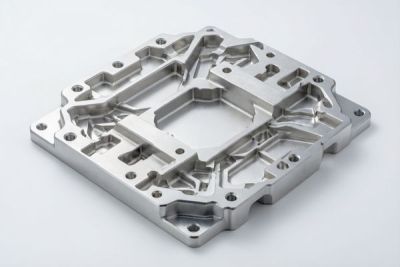
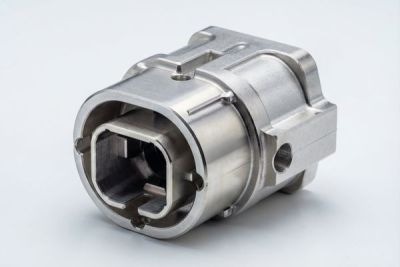
Gas Distribution Plate Precision Machining: Taming 200+ Micro-Holes (2026)
If you specify or buy gas distribution plates for plasma etch, CVD or deposition chambers, the number that quietly decides wafer uniformity is not the hole diameter on the drawing. It is the hole-to-hole consistency across 200 or more micro-holes, because every hole is effectively a tiny flow orifice. If diameters, depths or positions drift by a few microns from one hole to the next, gas flow per hole drifts with them, and the process becomes uneven across the wafer long before any single dimension looks out of spec.
This is a buyer's and process engineer's view, not a shop-floor brag. We walk through what gas distribution plates and fluid blocks actually have to achieve, why 200+ holes are a consistency problem rather than a drilling problem, and how to choose the machining route and tolerance plan that holds uniform flow without paying for precision you cannot use or under-buying the consistency your chamber truly demands.
LusterControl (Dongguan Licun Technology Co., Ltd.) is a Dongguan, China source factory with 15 years in precision CNC machining, 60 CNC machines and a 4,000 m2 plant. We run turning, 5-axis milling, turn-mill composite, grinding and electropolishing in-house, so the tolerance and deburr choices below are measured on the same CMM and the same shop floor, not quoted from a subcontractor.
Table of Contents
- 1. What Gas Distribution Plates and Fluid Blocks Must Achieve in a Reactor
- 2. Gas Distribution Plate Precision Machining: Holding 200+ Micro-Holes to Uniform Flow
- 3. Precision Fluid Block Machining for Burr-Free Internal Channels
- 4. Turn-Mill Composite: One Setup for Holes, Ports and Reference Faces
- 5. CNC Precision Machining Paths to Micro-Hole Consistency
- 6. Tight Tolerance CNC for Hole Pitch, Depth and Flow Uniformity
- 7. Gas Distribution Plates and Fluid Blocks: 316L Stainless vs Aluminum
- 8. Gas Distribution Plates and Fluid Blocks Buyer's Checklist
- 9. Common Mistakes in Gas Distribution Plate Precision Machining
- 10. CNC Precision Machining Roadmap: Send Us Your Drawing for DFM
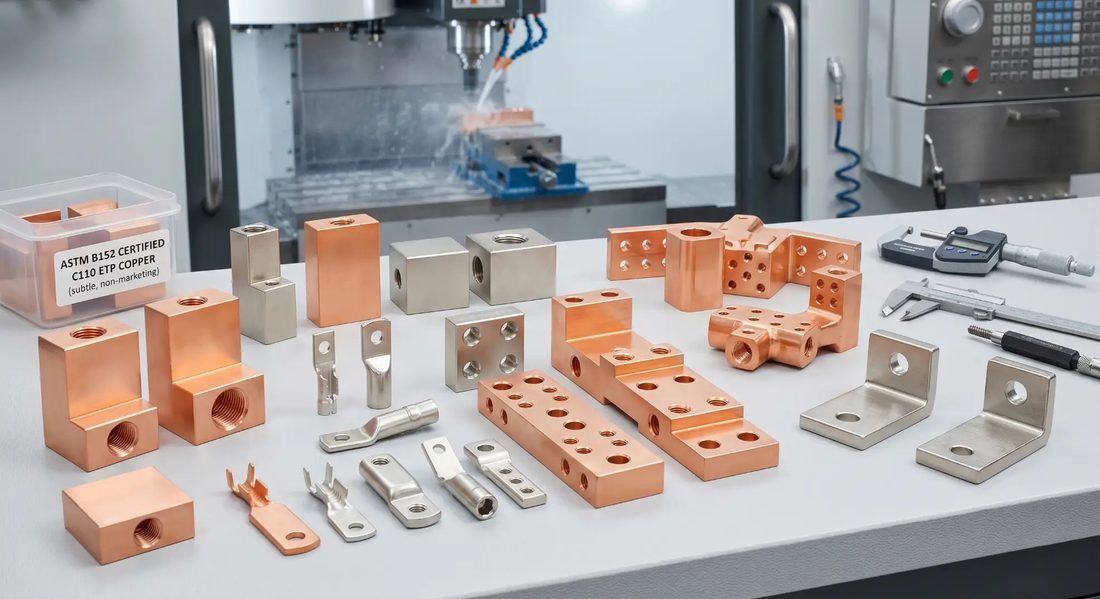
Semiconductor Equipment (Gas / Fluid) CNC precision component
What Gas Distribution Plates and Fluid Blocks Must Achieve in a Reactor
Before any single hole dimension matters, you have to know what the plate is really doing in the chamber.
Gas distribution plates and fluid blocks sit at the heart of semiconductor process equipment. In a reactor the plate — often called a showerhead — spreads process gas evenly across the wafer so every die sees the same chemistry and the same residence time. A fluid block does the same job for coolant, solvent or secondary gas: it splits one inlet into many metered passages. In both parts the 200-plus through-holes or internal channels are not decorative; each one is a calibrated orifice whose flow is set by its diameter, length and entry geometry.
- Gas distribution plate (showerhead)
- A perforated plate that meters process gas from a plenum into the reactor. Uniform hole geometry across the array is what makes wafer-to-wafer and across-wafer process uniform.
- Precision fluid block
- A manifold that divides one inlet into many internal channels for gas, coolant or liquid. Internal cross-drilled passages must be burr-free so flow stays predictable and particle-free.
- Micro-hole critical dimension (CD)
- The hole diameter and depth that set flow rate. For uniform flow the CD must be consistent hole-to-hole, not just correct on average.
The practical question for a buyer is not 'what hole diameter did you drill' but 'how consistent is that diameter, position and depth from hole 1 to hole 200, with a report I can audit.' A plate where the average hole is perfect but every fifth hole is a few microns off will still wreck uniformity, and a spec sheet that lists one number hides the problem. Confusing average dimension with hole-to-hole consistency is the most expensive mistake in this category.
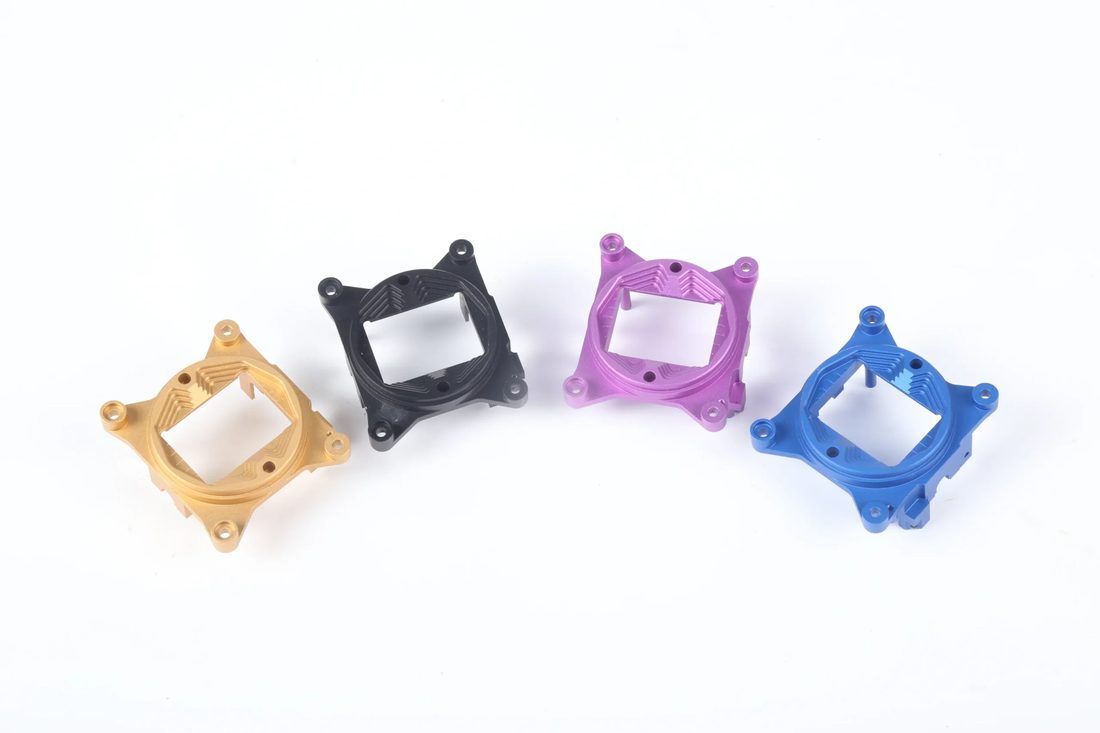
Semiconductor Equipment (Gas / Fluid) CNC precision component
Gas Distribution Plate Precision Machining: Holding 200+ Micro-Holes to Uniform Flow
A showerhead is a metering array; the machining route is what keeps every orifice identical.
Gas distribution plate precision machining reaches uniform flow two ways: drilling the holes with a repeatable process, then finishing the sealing face and bore entries on the same CNC cell so position and diameter are controlled together. Keeping drilling, facing and deburring in one plant is the difference between a single quality record and a broken one. The table below shows what each route realistically delivers in our Dongguan facility across 60 CNC machines.
| Step | Capability as run | Best for |
|---|---|---|
| Laser / EDM micro-drilling | Hole CD repeatable to low single-digit microns, +/-0.005 mm position | High-aspect, tight-CD hole arrays |
| CNC mill / turn facing | Sealing face flat to +/-0.005 mm, Ra 0.8 um as machined | Reference face, port seats |
| Precision grinding | Flatness to single-digit microns, Ra 0.2-0.8 um | Sealing and reference planes |
| Electropolish + passivate | Ra 0.2 um mirror possible, burr-free bores | Clean, corrosion-safe flow paths |
Two things jump out. First, hole CD consistency is set by the drilling process and then protected by how carefully the face is finished — aggressive facing can smear or bell-mouth a bore and change its flow. Second, a true mirror Ra 0.2 um surface only appears after electropolishing or flat-lapping; no cutting process gets you there alone. For most showerheads the smart move is to drill and CNC-finish the geometry, then apply a light in-house electropolish only on the flow-critical faces, so 60 machines and 4,000 m2 of capacity run as one auditable line.
Precision Fluid Block Machining for Burr-Free Internal Channels
A burr you cannot see is the fastest way to block a channel or seed a particle.
Precision fluid block machining is as much about what is NOT there — burrs at cross-drilled intersections, chips trapped in a blind passage, ragged bore entries — as what is. A single raised edge at a channel junction can constrict flow, shed a particle into the stream, or shift the pressure balance the design assumed. The reliable route at LusterControl is machining plus in-house deburring and electropolishing so the part keeps one lot-traceable quality record instead of being shipped to a second shop for finish.
| Factor | In-house CNC + polish (LusterControl) | Outsourced manual finish |
|---|---|---|
| Lead time | Single PO, ~7-day first article | +5 to 10 days on a handoff |
| Traceability | Lot-to-machine, one record | Chain breaks at the subcontractor |
| Edge consistency | SPC / CPK controlled | Operator-dependent |
| Cleanliness | Passivated, burr-free bores | Hard to verify across shops |
Pros
- Choose in-house CNC + deburr + electropolish if you need burr-free internal channels and a single auditable flow record on a recurring manifold program.
- Choose 316L + passivation per ASTM A967 if the fluid is corrosive or must stay particle-clean.
Cons
- Avoid outsourcing the finish if your program requires lot traceability back to the cutting machine — the handoff usually severs it.
- Avoid electropolishing a purely structural block where Ra 0.8 um would have passed and only added cost.
For most fluid blocks the right model is a drilling and CNC pass for geometry, then a light in-house polish only on the flow path. See how our plant is laid out for single-record production.
Semiconductor Equipment (Gas / Fluid) CNC precision component
Turn-Mill Composite: One Setup for Holes, Ports and Reference Faces
The positional relationship between holes and ports is what flow uniformity lives on.
Turn-mill composite is the discipline that makes a showerhead consistent: drilling the holes, cutting the inlet ports and facing the reference plane on one machine in one clamping. Every hole position is then defined against the same datum the ports and sealing face share, so there is no stack-up from moving the part between operations. On a 200-plus-hole array, eliminating that stack-up is often the single biggest lever on hole-to-hole consistency.
Swiss-type turning and 5-axis milling under the same composite workflow also let us hold round features and non-round carriers to the same datum, which is why the same cell can make a rotational insert and a rectangular manifold without re-fixturing. The buyer takeaway: ask whether the supplier machines holes and reference faces in one setup, because that answer predicts your positional repeatability more than any single tolerance claim.
CNC Precision Machining Paths to Micro-Hole Consistency
Pick the route by what threatens your flow uniformity, not by what is cheapest per hole.
CNC precision machining for micro-hole arrays usually comes down to three routes, and each has a different consistency driver. Laser drilling is fast and repeatable but needs controlled dross and recast; EDM drilling gives excellent CD control on hard materials but is slower; mechanical drilling with a guide bushing is economical at volume but leans on tool wear management. The consistency story is the same in every case: control the drilling process, then protect the CD with a careful finish and a verified datum.
| Route | Hole CD control | Best for | Watch-out |
|---|---|---|---|
| Laser drill + CNC finish | Low single-digit microns | Thin plates, high hole counts | Recast / dross at entry |
| EDM drill + CNC finish | Excellent on hard stock | 316L, high-aspect holes | Cycle time |
| Mechanical drill + CNC | Tool-wear dependent | Volume, softer alloys | Bell-mouth at exit |
| Drill + electropolish | Smooth, burr-free bores | Clean-flow applications | Stock removal budget |
| If your plate needs... | Recommended route | Why it wins |
|---|---|---|
| Tightest CD spread | EDM or laser + CNC finish | Process repeatability beats tool wear |
| Volume at moderate CD | Mechanical drill + bushing | Cost per hole, with wear control |
| Clean, particle-free flow | Any + electropolish | Burr-free, passivated bores |
| Shared datum for holes + face | Turn-mill composite | No re-fixturing stack-up |
For most showerhead programs the deciding factor is which route protects the CD while preserving the positional datum — and that is why we keep drilling and finishing on the same composite cell. See our related technical guide on semiconductor fixture flatness and ESD.

Semiconductor Equipment (Gas / Fluid) CNC precision component
Tight Tolerance CNC for Hole Pitch, Depth and Flow Uniformity
Position and depth are what make every hole meter the same flow, every time.
Tight tolerance CNC and hole consistency are partners here, not rivals. The plate must hold each hole at its pitch position within a tight tolerance so the array is geometrically even, and each hole must reach a consistent depth so its effective length — and therefore its flow — matches its neighbours. Aggressive drilling to hit a diameter can leave a rough bore; polishing to clean it can remove just enough stock to shift a critical dimension. The discipline is to hold +/-0.005 mm position first, then plan the finish allowance so polishing lands you inside both the CD and the positional spec at once.
The buyer takeaway: request a hole-map or air-gauge report that shows CD and depth variation across the array, not a single average. LusterControl issues first-article CMM data on every new print so you can see hole position, depth and reference-face flatness on the same report.
Gas Distribution Plates and Fluid Blocks: 316L Stainless vs Aluminum
The material table that decides corrosion safety, weight and how you finish the flow path.
Gas distribution plates and fluid blocks usually come down to two workhorses: 316L stainless and aluminum. Both machine cleanly in our shop; they just serve different masters. 316L resists the corrosive process gases and clean fluids that wreck lesser alloys, and it passivates per ASTM A967 to lock in that resistance — but it is heavier and slower to cut. Aluminum is lighter, faster to mill in volume and thermally friendly, but it needs a controlled coating or anodize to survive corrosive service and to stay particle-clean.
| Property | 316L stainless | Aluminum |
|---|---|---|
| Corrosion resistance | Excellent, passivates per ASTM A967 | Good only with coating / anodize |
| Weight | Heavier | Lighter (handler friendlier) |
| Machinability / speed | Slower, harder tooling | Fast, high volume |
| Thermal behaviour | Stable | Expands more under heat |
| Best use | Corrosive gas / clean fluid | Light, high-volume manifolds |
| If your block needs... | Recommended material + route | Why it wins |
|---|---|---|
| Corrosive process gas | 316L + passivation + electropolish | Resists chemistry, stays clean |
| Light, high-volume coolant | Aluminum + controlled anodize | Fast, light, charge-safe |
| Burr-free clean flow | Either + electropolish | Mirror Ra 0.2 um, no edge transfer |
| Tight hole position | Either + tight tolerance CNC | +/-0.005 mm, single record |
For most chamber programs the deciding factor is service environment, not unit price: a 316L plate that survives the chemistry may beat a cheaper aluminum block that needs re-coating every service cycle. Read more process breakdowns on our blog.
Semiconductor Equipment (Gas / Fluid) CNC precision component
Gas Distribution Plates and Fluid Blocks Buyer's Checklist
Five things to demand in writing before you release a drawing.
Showerhead and fluid-block quotes vary wildly because suppliers quietly assume different things about hole consistency, deburr route and material cert. Lock these five down in the RFQ and you remove most of the risk before the first hole is drilled.
- Hole CD and hole-to-hole position tolerance in writing (e.g. holes 0.20 mm +/-0.005 mm pitch, CD spread reported).
- Deburr and finish spec: electropolish, passivation per ASTM A967 for stainless, burr-free bores required.
- Reference datum and finish allowance on the drawing, not just the two end numbers.
- First-article CMM or air-gauge report showing CD, depth and position across the array.
- NDA and controlled CAD access if the plate geometry is proprietary to your chamber.
If a supplier cannot tick all five, the cheap quote is the expensive one. Send us your drawing for a free DFM review and we return achievable tolerances, route, material and a unit-price curve before you commit.
Common Mistakes in Gas Distribution Plate Precision Machining
The errors that turn a hole-diameter spec into a flow-uniformity problem.
- Specifying hole diameter but forgetting position tolerance — flow uniformity lives on pitch, not just bore size.
- No deburr or passivation call-out, then wondering where particles came from.
- Forgetting the reference datum, then arguing about a number measured from the wrong plane.
- Outsourcing finish and losing lot traceability needed for automotive or medical-grade audit.
- Choosing the wrong material (e.g. bare aluminum where 316L + passivation was the real need).
Every one of these is avoidable at the RFQ stage. A 15-minute DFM call saves the rework, the scrap and the finger-pointing later. That is exactly the conversation we have with De'Longhi, Donlim and Breville-grade programs before any steel or aluminum is cut.
Semiconductor Equipment (Gas / Fluid) CNC precision component
CNC Precision Machining Roadmap: Send Us Your Drawing for DFM
From a hole-array callout on paper to a plate you can audit.
For your gas distribution plate or fluid block the same model applies: turning, 5-axis milling, turn-mill composite, grinding, mirror and electropolishing all in-house, one quality record, one accountable partner in Dongguan. Read more process breakdowns on our blog or start with a drawing.
Semiconductor Equipment (Gas / Fluid) CNC precision component
Semiconductor Equipment (Gas / Fluid) CNC precision component
Semiconductor Equipment (Gas / Fluid) CNC precision component
FAQ: gas distribution plates and fluid blocks & Semiconductor Equipment (Gas / Fluid) Buyer Questions
A: Uniform flow depends on hole-to-hole consistency of diameter, position and depth, not just a correct average. LusterControl drills and CNC-finishes arrays on 60 machines and reports the CD and depth spread across the plate; holding +/-0.005 mm position plus a tight CD spread is the typical target for even across-wafer process. The right numbers come from your chamber model, not a generic 'as small as possible'.
A: Yes. Hold +/-0.005 mm hole position first, then plan the finish allowance so electropolishing lands you inside both the positional and the diameter spec at once. LusterControl issues first-article CMM data showing hole position, depth and reference-face flatness on one report, so you can verify both together.
A: A single plant keeps one lot-traceable quality record and one controlled cleanliness window. Outsourcing the polish or electropolish usually severs traceability back to the cutting machine and makes particle verification harder — a real problem for automotive or medical-grade programs where the audit trail matters as much as the part.
A: It depends on service environment. 316L resists corrosive process gases and clean fluids and passivates per ASTM A967, but is heavier and slower to cut. Aluminum is light and fast in volume but needs a controlled anodize or coating to survive corrosive service. For most chamber showerheads the chemistry decides the material, not the unit price.
A: Yes. Every batch ships with lot-level traceability back to material and machine, plus first-article CMM data and material certification; stainless parts can be passivated to ASTM A967. We are ISO 9001 certified, run an ISO 13485 quality system (certification advancing) and apply IATF 16949 controls.
A: We verify with first-article CMM measurement and, where appropriate, air-gauge or hole-map reporting that shows diameter, depth and position variation across the array rather than a single average. That spread is the number that predicts flow uniformity, and we report it before volume production begins.
Want the right material and machining route on your next gas distribution plate or fluid block? Send LusterControl your drawing and our engineering team will return a free DFM review with achievable tolerances, deburr route, material plan and a unit-price curve.
Request a Free CNC Quote