Quick-Swap Gripper Jaws: 2026 Guide for Industrial Automation Parts
If you build or buy robotic end-effectors, you already feel the pressure: every minute a cell spends swapping a gripper is a minute it is not making parts. The old answer was a drawer of single-purpose tools and a technician with an Allen key. The new answer automation OEMs are settling on is the quick-swap gripper jaw - a jaw that clicks on and off a base in seconds, repeats to within a few microns, and lets one robot serve three product families on the same shift.
That sounds simple until you source it. A jaw that swaps fast but lands half a millimetre off is worse than a slow one that is always right. Repeatability is not a feature of the latch; it is a feature of the precision brackets that locate the jaw, the CNC fixtures that held the base while it was cut, and the fixture machining tolerances nobody sees on the sales photo. In this 2026 guide we walk through what actually makes a quick-swap jaw worth buying, how aluminum 6061 machining keeps it light without giving up stiffness, and exactly what to put on the drawing before you release a purchase order.
We write this from the buyer's side. You get a mounting-style comparison with real numbers, a process walk-through, a material decision table, a seven-item sourcing checklist, and the common mistakes that turn a clever quick-swap design into a scrap batch. Where we cite our own plant, the numbers are verifiable: 60+ CNC machines, a 4,000 m2 Dongguan source factory, 500,000 parts per month, ISO 9001 / ISO 13485, and IATF 16949 in progress.
Table of Contents
- 1. Why Quick-Swap Gripper Jaws Are the New Standard in Industrial Automation Parts
- 2. How Precision Brackets Make a Gripper Jaw Truly Quick-Swap
- 3. CNC Fixtures Behind Repeatable Gripper Jaw Changeovers
- 4. Fixture Machining Tolerances That Decide Jaw Performance
- 5. Aluminum 6061 Machining for Lightweight Gripper Jaws
- 6. Industrial Automation Parts: Pick A or Pick B
- 7. Precision Brackets and CNC Fixtures: The Buyer's Checklist
- 8. Common Mistakes When Sourcing Industrial Automation Parts
- 9. Why a Dongguan Source Factory Makes Your CNC Fixtures
Industrial Automation AI part image
Why Quick-Swap Gripper Jaws Are the New Standard in Industrial Automation Parts
Changeover time, not cycle time, is where most robotic cells quietly lose money.
Quick-swap gripper jaws are the fastest-growing segment of industrial automation parts for one boring reason: labour and downtime. A cell that runs one part all day does not need a quick-swap jaw. A cell that changes over four times a shift does, because the savings compound. When a jaw clicks on and repeats, the technician stops touching the robot, the risk of a mis-seated tool drops, and the line keeps running. That is why OEMs from collaborative-robot startups to tier-one integrators are now designing the swap into the base, not bolting it on later.
- Quick-swap gripper jaw
- A gripper finger or jaw set that mounts to a standardised base with a tool-less or single-action latch, so it can be exchanged in seconds without re-zeroing.
- Changeover
- The time and steps required to switch a cell from running one part family to another, including tool swaps, re-teaching and first-article checks.
- Industrial automation parts
- The machined components - jaws, brackets, fixtures, end plates - that make a robot grip, locate and move real parts in production.
The buyer's trap is assuming 'quick-swap' is a property of the latch alone. It is not. The latch gets you speed; the precision brackets under it get you repeatability. A jaw that snaps on in two seconds but lands 0.3 mm out still needs a re-teach, which eats every second you saved. So when an OEM tells you they want quick-swap, the real question is how they plan to hold the location - and that is a machining question, not a spring question.
This is the same discipline behind our Swiss-type high-volume work, where small, repeated, tightly located parts are the whole game. A gripper jaw is just a very small, very repeated part that has to land in exactly the same place every time.
Industrial Automation AI part image
How Precision Brackets Make a Gripper Jaw Truly Quick-Swap
Repeatability lives in the locating features, not in the handle you pull.
Precision brackets are the locating interface between the quick-swap base and the jaw. When they are cut accurately and hardened where needed, the jaw returns to the same plane and the same rotation every time you seat it - no dowels to fumble, no shim to sneak in. When they are cut loosely, the jaw seats differently each swap and you are back to re-teaching. The table below is the one we show procurement when they ask why two 'quick-swap' quotes are not the same product.
| Locating method | Repeatability (typical) | Swap speed | Why it matters to you |
|---|---|---|---|
| Hardened precision bracket + cone locator | +-0.01 to +-0.02 mm | Seconds, tool-less | Jaw returns to the same place; no re-teach |
| Dowel-pin + screw | +-0.05 to +-0.10 mm | Minutes, tool needed | Cheap but slow and operator-dependent |
| Plain slip-fit + clamp | +-0.10 mm or worse | Fast but loose | Speed without repeatability; scrap risk |
| Magnetic seat (no locator) | Uncontrolled | Fast | Fine for light, non-critical pick only |
Read that table for your own cell: if the gripper only ever picks light, identical blanks, a slip-fit is acceptable and you save cost. If the jaw positions a part for a subsequent operation - drilling, vision, welding - the locator accuracy decides whether the downstream step still works after a swap. Most automation OEMs underestimate how often a 'just a gripper' is actually a locating datum for the next station.
- Choose a hardened precision bracket locator if the jaw position feeds any downstream tolerance.
- Choose dowel-and-screw only for low-rate cells where a re-teach is affordable.
- Choose a slip-fit or magnetic seat only for non-critical, light pick-and-place.
- Choose to put the locating datum on the bracket, not on the latch, so wear in the latch never moves the part.
- Choose to spec the repeatability as a callout, not a marketing claim, so the shop must prove it.
CNC Fixtures Behind Repeatable Gripper Jaw Changeovers
The base that the jaw swaps onto was itself held by a CNC fixture - that is where the accuracy is born.
CNC fixtures are the unsung heroes of a quick-swap jaw. The base plate the jaw clicks onto has to be cut so its locating features are true to its mounting face, in one clamp, every time. If the base was fixtured sloppily, the jaw will swap cleanly and still be wrong, because the error was baked in before the first jaw ever existed. A good shop treats the base as the master datum and builds the CNC fixtures to protect it.
| Capability | LusterControl spec | What it buys your jaw program |
|---|---|---|
| Dimensional tolerance | +-0.005 mm | Locating faces and bores hold across the batch |
| Mirror finish available | Ra <=0.6 um std, Ra 0.2 um (8K) max | Clean seats, less debris in the locator |
| Plant and machines | 4,000 m2, 60+ CNC (5-axis, turn-mill, Swiss-type) | Prototype-to-volume without re-qualifying |
| Monthly capacity | 500,000 parts | One supplier from first article to scale |
| Quality system | ISO 9001, ISO 13485 done, IATF 16949 in progress | Audit-ready traceability on every base |
| Passivation | ASTM A967 available | Corrosion resistance on stainless bases |
For gripper-jaw bases the two capabilities that decide success are relationship accuracy and traceability. Relationship accuracy means we cut the locator true to the mounting face in one setup, so the jaw always meets the robot at the designed point. Traceability means every base ties back to its source bar and inspection record, so if one jaw family drifts you can answer 'which lot, which machine' in minutes instead of tearing down the whole cell.
Our 5-axis and turn-mill capability map explains why doing more in one clamp protects relationship accuracy, which is exactly the property a quick-swap jaw base depends on.
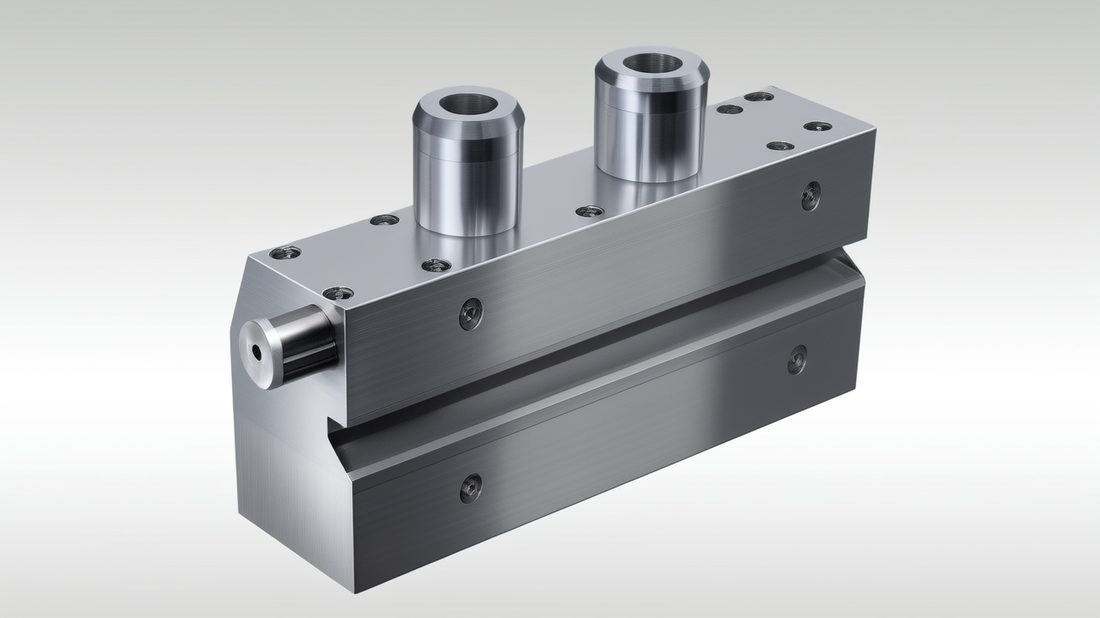
Industrial Automation AI part image
Fixture Machining Tolerances That Decide Jaw Performance
Three tolerances on the base decide whether your quick-swap jaw is a productivity win or a re-teach loop.
Fixture machining is where the tolerance language of a quick-swap jaw gets decided. Most buyers focus on the jaw tip and ignore the base, but the base is what the robot actually sees. Three numbers matter more than any other: the locator-to-mount relationship, the locator bore diameter, and the flatness of the seating face. Get those right and the jaw repeats; get them wrong and no latch design saves you.
| Tolerance | What it controls | Loose vs tight consequence |
|---|---|---|
| Locator-to-mount relationship | Where the jaw meets the robot | Loose = re-teach every swap; tight = true on arrival |
| Locator bore diameter | Fit of the cone or pin | Loose = rocking jaw; tight = smooth, repeatable seat |
| Seating-face flatness | Even clamp load | Loose = tilt under load; tight = no part shift |
| Surface finish on seat | Debris and wear | Rough = particles wreck repeatability; smooth = stable |
The practical rule for a buyer: write the relationship tolerance on the drawing as a position callout, not a note. A note gets skipped under price pressure; a position tolerance is a spec the shop must meet or reject. And pair it with a first-article CMM report that shows the actual relationship numbers, because a shiny base with no measurement is just a hope with a nice finish.
Pros
- A tight locator relationship removes the re-teach step entirely
- Documented flatness speeds first-article approval for automation programs
- One setup during fixture machining protects the relationship you are paying for
Cons
- Over-specifying every face inflates cost with no function gain
- Assuming the shop infers 'quick-swap' from the shape usually ends in rework
- Tolerancing only the tip and not the base hides the real error source
Aluminum 6061 Machining for Lightweight Gripper Jaws
Weight at the end of a robot arm is paid for in every cycle, so material choice is a performance decision.
Aluminum 6061 machining is the default for gripper jaws for a reason: it is light, stiff enough, easy to cut, and cheap. On a six-axis robot, every gram at the wrist changes the achievable acceleration and the cycle time, so a jaw that is 40 percent lighter than the same part in steel lets the cell run faster or carry a bigger payload. But 6061 is not free lunch - it work-hardens, it moves more with temperature than steel, and its anodised surface is what actually resists wear at the contact face.
| Material | Density (relative) | Machining ease | Wear at contact | When to pick it |
|---|---|---|---|---|
| Aluminum 6061-T6 | 1.0 (light) | Easy, gummy chips | Needs hard coat / anodise | Most jaws; weight-sensitive cells |
| Stainless 304 | 2.8x heavier | Work-hardens | Good as-is | Corrosive or food-contact cells |
| Brass (CW617N) | 3.1x heavier | Easy, smooth | Excellent | Low-force, decorative or instrument jaws |
| Titanium (TC4) | 1.7x, very strong | Hard, slow | Excellent | High-strength, weight-critical only |
When you spec aluminum 6061 machining for a jaw, two details decide whether it lasts. First, the contact face usually wants a hard-coat anodise or a pressed-in steel insert, because bare 6061 galls against the part it grips. Second, hold the locating features in 6061 to the same +-0.005 mm you would in steel - the alloy is perfectly capable, it just needs sharp tooling and the right feed. We cover the wider material picture in our brass and stainless guide for buyers who cross-shop alloys.
- Choose aluminum 6061 if weight and cost dominate and the grip force is moderate.
- Choose stainless if the cell is wet, corrosive, or food-adjacent.
- Choose brass for low-force, smooth-contact instrument jaws.
- Choose titanium only when strength-to-weight truly justifies the cost and cycle time.
- Choose to anodise or insert the contact face so the 6061 does not gall the part.
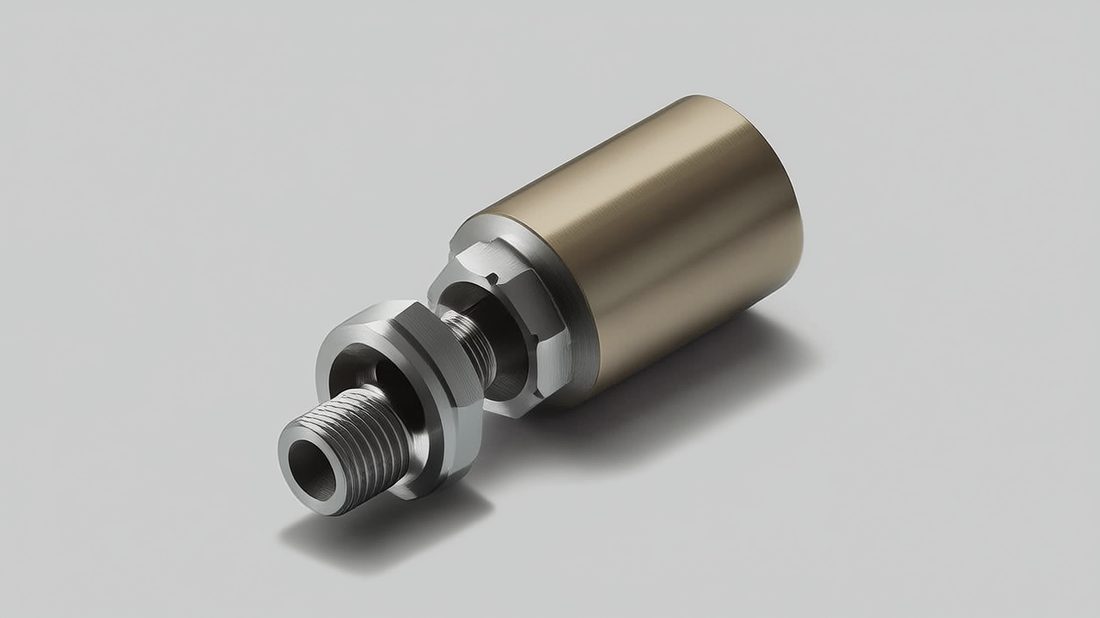
Industrial Automation AI part image
Industrial Automation Parts: Pick A or Pick B
Use this decision table to stop paying for precision you do not need and stop risking drift where you do.
Most arguments over a quick-swap jaw are really arguments over how much accuracy the next station requires. The table below maps common automation programs to the base and material that fit, so you can defend the choice to both procurement and engineering at once.
| Your cell | Recommended base + material | Why |
|---|---|---|
| Pick-and-place, light blanks | Slip-fit base, aluminum 6061 | Speed and cost win; no downstream tolerance |
| Machine-tending, located part | Precision-bracket base, 6061 or stainless | Jaw position feeds the machine datum |
| Vision or laser align | Hardened locator, 6061 anodised | Any shift breaks the alignment |
| Food / wet cell | Stainless 304 base and jaw | Corrosion resistance on the shop floor |
| High-rate, mixed product | Quick-swap + precision bracket, 6061 | Fast changeover with repeatability |
| High-payload arm | Stainless or inserted jaw | Wear and strength at the contact face |
- Choose a precision-bracket base if any downstream station depends on where the jaw puts the part.
- Choose a slip-fit base only when the grip is non-critical and speed is everything.
- Choose stainless when the environment, not the tolerance, is the hard constraint.
- Choose aluminum 6061 for the majority of weight-sensitive jaws and anodise the contact face.
- Choose to document the decision in the DFM record so a future engineer knows why the base was specified.
Precision Brackets and CNC Fixtures: The Buyer's Checklist
Seven items to request before you approve a quick-swap jaw and base order.
Repeatability is easy to claim on a quote and hard to prove in a batch. Before you release the purchase order, ask the supplier for these seven items. If they cannot produce them, the low price is the warning, not the win.
- Ask for the locator-to-mount relationship as a position callout, not a note, on the drawing.
- Ask for +-0.005 mm on the locating features and a first-article CMM report with the real numbers.
- Ask for the seating-face flatness documented, not just 'machined flat'.
- Ask for the material cert - 6061-T6 or the specified alloy - with the actual temper.
- Ask for anodise or insert spec on the contact face if the jaw is aluminum 6061.
- Ask for ASTM A967 passivation where the base or jaw is stainless.
- Ask for lot-level traceability back to the source bar and inspection record.
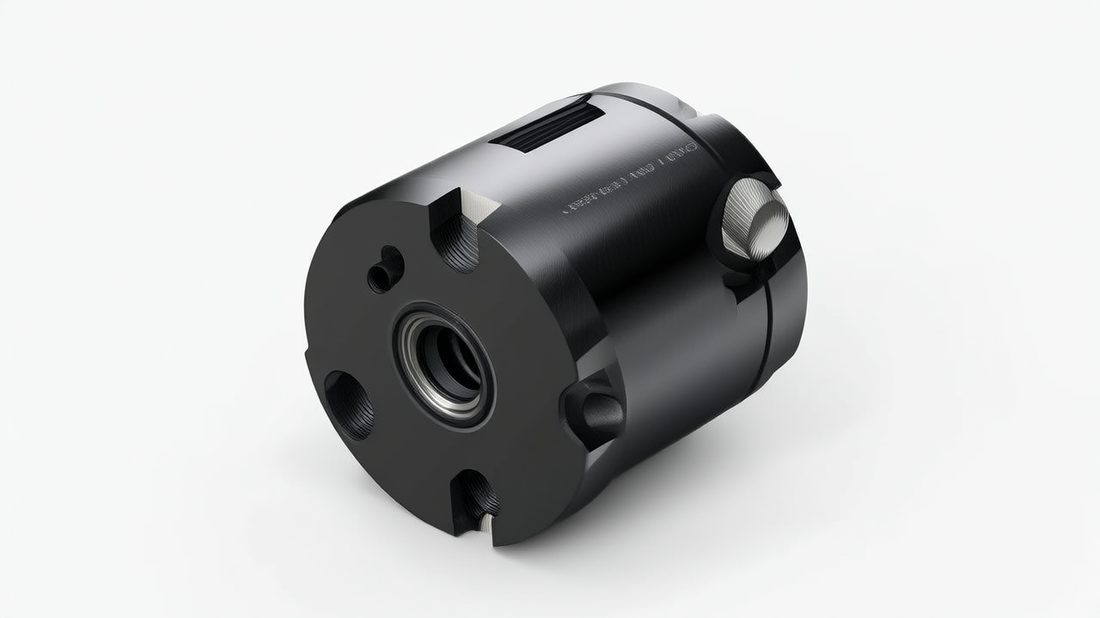
Industrial Automation AI part image
Common Mistakes When Sourcing Industrial Automation Parts
These errors cost automation buyers the most money and the most credibility.
- Specifying 'quick-swap' with no repeatability number, so the shop supplies a fast latch on a loose base.
- Machining the jaw and the base at two different shops, then wondering why they do not agree.
- Tolerancing only the jaw tip and ignoring the locator relationship that actually controls position.
- Running bare aluminum 6061 at the contact face until it galls the part and the jaws have to be replaced early.
- Trusting a shiny photo instead of a first-article CMM report that proves the relationship.
- Choosing the lowest price with no lot-level traceability, then failing an audit when a cell drifts.
If you want the wider context on holding tight tolerances in volume, our +-0.005 mm tolerance guide covers the process chain - rigid fixturing, sharp tooling, thermal-stable measurement and traceability - that a quick-swap base depends on.
Why a Dongguan Source Factory Makes Your CNC Fixtures
A buyer's view of what our plant actually brings to a quick-swap jaw program.
CNC fixtures and precision brackets for quick-swap jaws are where a Dongguan source factory earns its place in a global automation supply chain. We are not the lowest-cost shop on aluminum, and we do not claim to be. We are the shop that holds +-0.005 mm on the locating features that matter, documents every relationship dimension, and scales from a first article to 500,000 parts a month inside one quality system. For an automation OEM that combination is rarer than it should be.
We do not claim an automation-specific certification, and we will not pretend one exists. What we offer is verifiable: ISO 9001 and ISO 13485 completed, IATF 16949 in progress, real client programs such as De'Longhi, Donlim and Breville for precision machined parts, and a UAV client whose first order reached RMB 1.2M. For your quick-swap jaw base, that means a supplier who can prove the process and trace the batch, which is what repeatability actually requires.
Start on our inquiry page or read more on the about page and the blog for the full capability map across industrial automation, medical, automotive and optical programs.
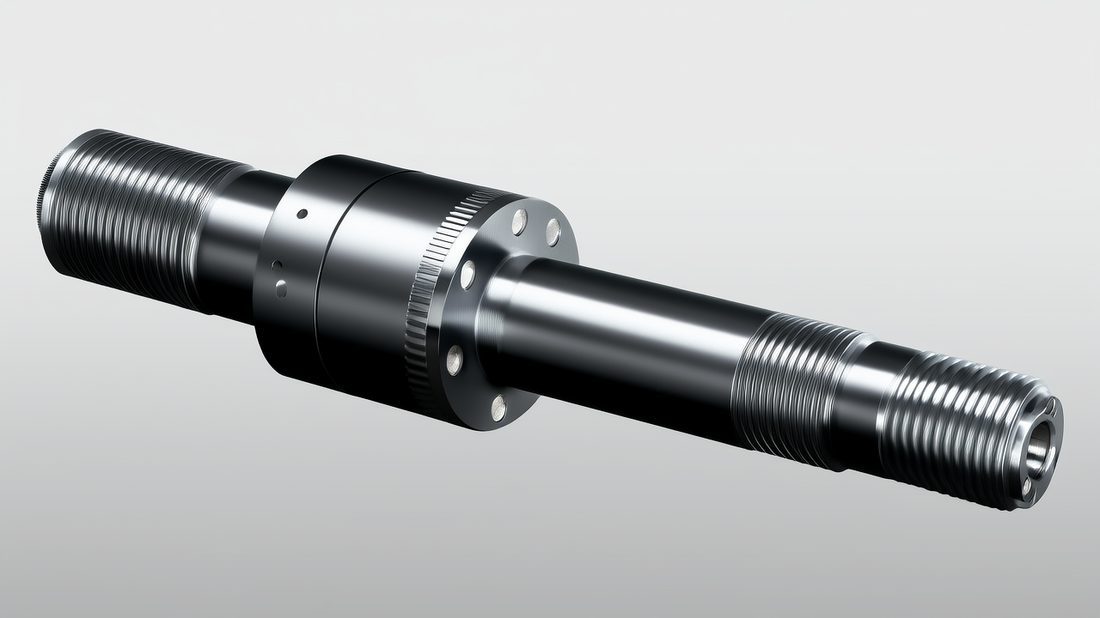
Industrial Automation AI part image
Industrial Automation AI part image
Industrial Automation AI part image
Industrial Automation AI part image
FAQ: industrial automation parts & Industrial Automation Buyer Questions
A: Speed plus repeatability. A truly quick-swap jaw seats on a precision bracket locator and returns to the same position within roughly +-0.01 to +-0.02 mm, so the robot does not need re-teaching. A jaw that is merely removable but hand-located with dowels still costs minutes and introduces variability every swap.
A: Because 6061-T6 is light, stiff enough for gripping, easy to cut, and inexpensive. Weight at the robot wrist is paid for in every cycle, so a lighter jaw lets the cell accelerate faster or carry more. The contact face usually needs a hard-coat anodise or a pressed-in insert so the aluminum does not gall the part it grips.
A: Specify the locator-to-mount relationship as a position callout at +-0.005 mm, the locator bore to a controlled fit, and the seating-face flatness separately - all on the drawing, not in a note. Require a first-article CMM report showing the actual relationship numbers, because that is what proves the jaw repeats.
A: Yes, ideally. Sourcing the jaw and its base from two different shops is the fastest way to get a jaw that seats true on the bench and drifts in production, because the relationship tolerance lives across both parts. Treat the base and jaw as one assembly on a single drawing with one supplier responsible for the relationship.
A: When the cell is wet, corrosive, or food-adjacent, or when the contact face sees high wear that anodised aluminum cannot survive. Stainless 304 is about 2.8 times denser than 6061, so it costs payload and cycle speed, but it resists corrosion as-is and can be passivated to ASTM A967 for field durability.
A: We machine precision brackets, CNC fixtures and gripper-jaw bases in aluminum 6061, stainless and brass using 5-axis and turn-mill centres, holding +-0.005 mm with documented relationship metrology and lot-level traceability. We hold ISO 9001 and ISO 13485 (IATF 16949 in progress) and do not claim an automation-specific cert; we prove the process and trace every batch instead. Send your drawing for a free DFM review to confirm the material and process fit.
Send us your drawing for a free DFM review and we will tell you the exact material, tolerance, fixture design and lead time your quick-swap gripper jaw needs before you commit to a purchase order.
Request a Free CNC Quote